
Growing Life in Martian Conditions: Harvard Scientists Pioneer Biological Space Habitats
If humans are ever to establish permanent settlements beyond Earth, they will need to construct habitable structures capable of supporting life in extremely hostile environments. However, transporting large quantities of industrial materials into space poses significant logistical and financial challenges that could render extraterrestrial colonization prohibitively expensive. Scientists at the Harvard John A. Paulson School of Engineering and Applied Sciences are exploring a revolutionary biological alternative that could transform our approach to building in space.
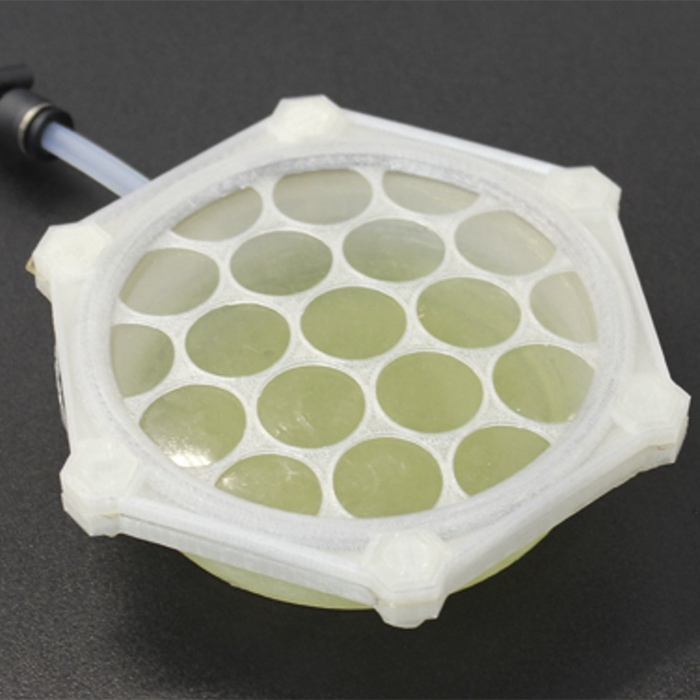
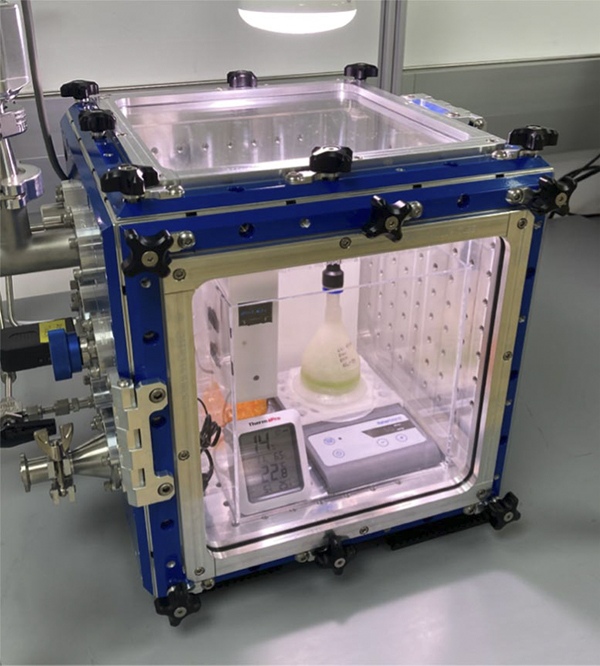
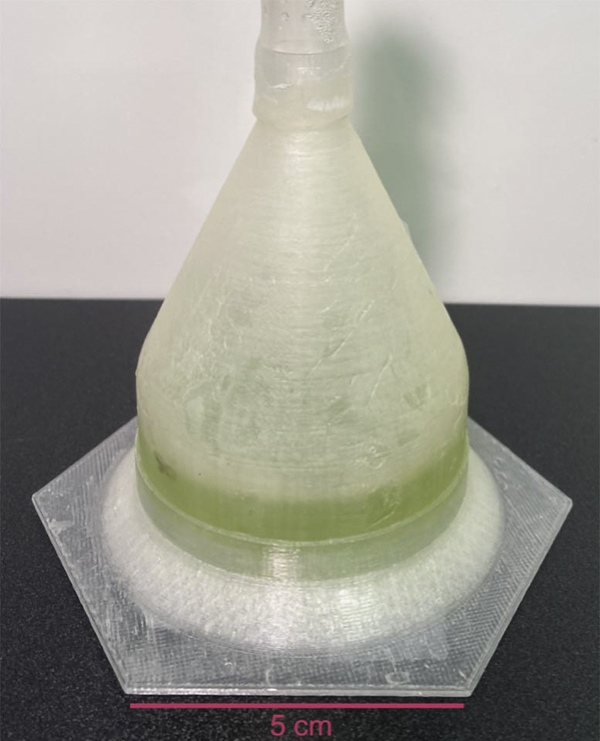
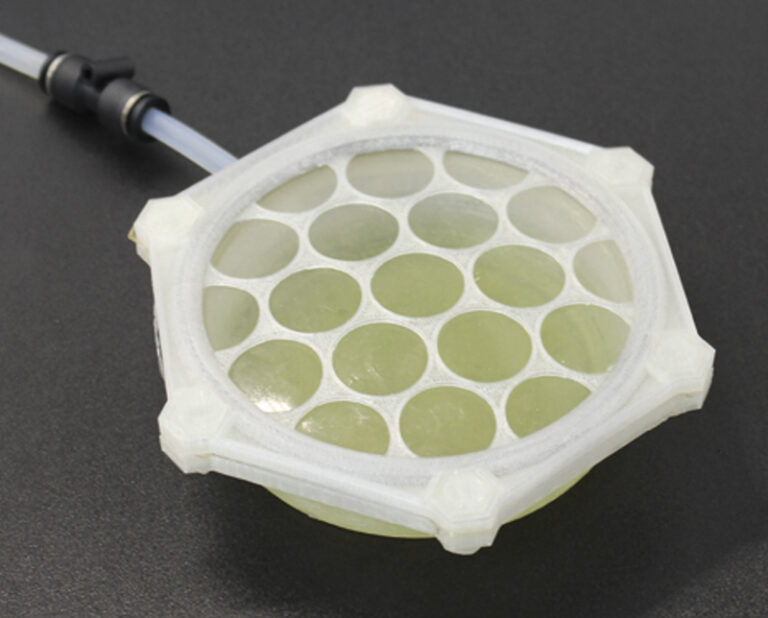
Led by Robin Wordsworth, Gordon McKay Professor of Environmental Science and Engineering and Professor of Earth and Planetary Sciences, an international research team has successfully cultivated green algae inside shelters made from bioplastics under atmospheric conditions similar to those found on Mars. These pioneering experiments mark an initial step toward developing autonomous, life-supporting habitats that do not rely on Earth-based materials. The research demonstrates the possibility of creating regenerative biological systems that can grow and sustain themselves over time.
“If you have a habitat that is composed of bioplastic, and it grows algae within it, that algae could produce more bioplastic,” explained Wordsworth. “So you start to have a closed loop system that can sustain itself and even grow through time.” This approach emulates natural biological processes while directly addressing the engineering and sustainability challenges of colonizing other planets. Published in Science Advances, the work opens new possibilities not only for space exploration but also for sustainable technologies on Earth.
Recently, we had the privilege of speaking with Professor Wordsworth about these discoveries, the future of space habitation, and the lessons they hold for sustainability at home.
Your Background
Could you share a bit about your academic journey and research focus? What led you to explore planetary habitability and sustainability in space?
I am a physicist by training, but I have always been passionate about both astronomy and biology. That naturally led me to planetary science, particularly the question of what makes a planet habitable over its lifetime. Much of my work still focuses on that question. Exploring habitability and sustainability in space is a natural extension. Instead of asking what makes a planet habitable, we are now asking how we might support humans and other forms of life beyond Earth. I am especially interested in creative solutions that adapt the biosphere to local conditions, rather than relying on large scale industrial systems.
Closed Loop Futures
Your recent experiment envisions a closed loop habitat where algae thrive and contribute to material regeneration. How close are we to building truly self-sustaining life support systems for space, and what are the main barriers that remain?
There is still progress to be made before we can build fully self-sustaining life support systems in space, but many of the basic principles are now well understood. What is surprising is how little attention this area receives, despite its importance. Conventional life support systems based on industrial technology are extremely expensive. The International Space Station, for example, requires resupply missions delivering around two and a half tons per astronaut per year, at a total cost of several billion dollars annually. Clearly, we need to shift our focus toward developing more sustainable approaches if we are to make long term space habitation viable.
Designing for Mars and Earth
The bioplastic habitat both shields against ultraviolet radiation and supports photosynthesis in extreme conditions. What lessons from designing for Mars might inform the way we build more adaptive and sustainable structures on Earth?
The same principles apply whether we are building on Earth or beyond. The primary difference is that Earth already has a functioning biosphere, whereas in space we must bring one with us in order to survive. Nevertheless, the sustainable technologies developed for space exploration will have valuable applications here. They may help guide innovations in architecture, renewable materials, and resource efficiency.
The Choice of Dunaliella Tertiolecta
Why did you select this particular species of algae? Could it become a standard model organism for space-based life support systems?
We chose Dunaliella because it is hardy and grows quickly. Other strains have also been studied for space applications, so it is not unique in that regard. But it served our proof of concept purposes well.
From Terraforming to Microforming
Your earlier work with silica aerogels simulated Martian greenhouse conditions. How might aerogels and bioplastics be integrated into a functional architecture for local biospheres?
In simple terms, aerogels help regulate temperature, while bioplastics control pressure and maintain liquid water. Combined, these materials can support Earth-like life across a wide range of extreme planetary conditions.
Material Intelligence
Is it conceivable that future space habitats will be grown rather than built? Could algae, bacteria, or fungi become the construction materials of tomorrow? What kinds of bioengineering advances would be needed?
We do not yet know how to grow habitats, but there are no physical or chemical laws preventing it. The major challenges are in the realm of bioengineering. Growing habitats off Earth would be an elegant and potentially transformative way to solve the problem of life support in space.
The Psychology of Space Living
Beyond physical survival, how might algae-based environments contribute to the mental and emotional well-being of space settlers?
In our study, algae served as a proof of concept. But the same approach could eventually support larger plants or even trees. Besides keeping us alive through oxygen production and carbon capture, plants provide psychological comfort and a sense of connection to nature—something that will be crucial for people living far from Earth.
Lunar and Deep Space Applications
You mentioned that the next phase involves testing in vacuum conditions. What differences do you anticipate between the Martian atmosphere and the vacuum of space or the Moon? How might algae performance vary?
The main challenge in vacuum conditions is creating a completely impermeable barrier to prevent the loss of gases and water. On Mars, this is less of a problem because the atmosphere is mostly carbon dioxide. On the Moon, however, we would need to find alternative carbon sources, perhaps from polar craters or near Earth asteroids.
The Philosophy of Terraforming
Do you view this line of research as a shift from terraforming entire planets to creating modular, breathable microworlds? How does that change the ethical landscape of space colonization?
Yes, I strongly prefer the concept of localized biospheres over global terraforming. There is still so much we do not understand about planetary climates. Building small, self-contained habitats allows for a gradual, adaptable approach that requires fewer resources. It also raises fewer ethical concerns. Of course, even with small scale ecosystems, we must ensure there is no existing life before introducing our own.
Spinoff Technologies
What kinds of Earth-based industries or applications could benefit from this research? Might it influence green architecture, water purification, or food security?
Absolutely. The effort to create renewable life support systems for space could yield major benefits for sustainability on Earth. The harsh conditions of space drive innovation in ways that often lead to practical technologies. Just as space exploration has in the past, these efforts can lead to breakthroughs in environmental design, materials science, and resource management.
Conclusion
The research pioneered by Professor Wordsworth and his team represents more than a novel method of constructing shelters on Mars. It signals a potential paradigm shift in how humanity approaches habitation itself. By growing structures from biological systems rather than transporting industrial materials, this work reframes space exploration as a biological opportunity rather than an engineering burden.
Through modular, self-sustaining biospheres, this research offers an ethically thoughtful and logistically feasible alternative to the concept of planetary scale terraforming. It reflects a vision of intelligent expansion—one that prioritizes regeneration, adaptability, and cohabitation with living systems. Perhaps the most profound reward of this effort will not be the creation of new worlds, but the rediscovery of how to live more sustainably on the one we already inhabit.