


What Bumblebee Time Perception Reveals About Intelligence
A new study published in Biology Letters has revealed that bumblebees, with brains smaller than a cubic millimeter, are capable of perceiving and processing time intervals with surprising accuracy. Researchers at Queen Mary University of London have discovered that the bumblebee (Bombus terrestris) can make foraging decisions based solely on the duration of a visual signal, a cognitive feat previously thought to require the massive neural architecture found in the cortex of mammals.
The findings document for the first time that an insect can choose where to search for food by evaluating how long a light cue lasts.
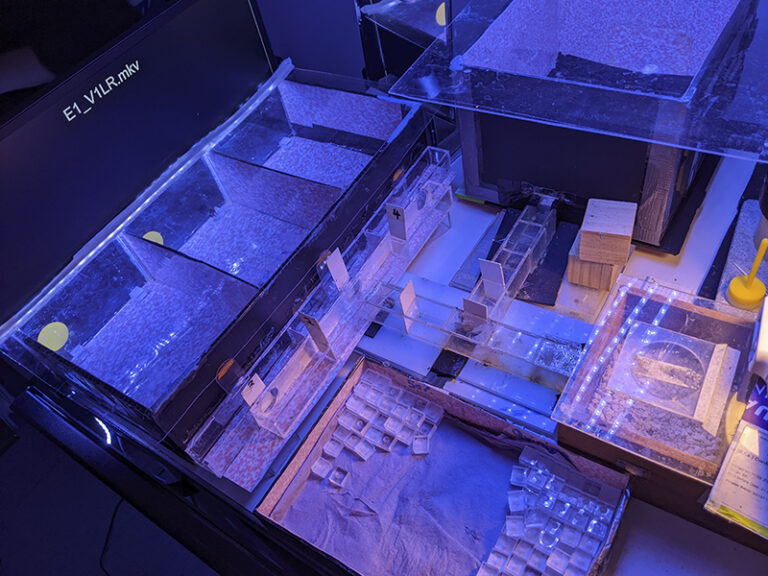
The "Morse Code" Experiment
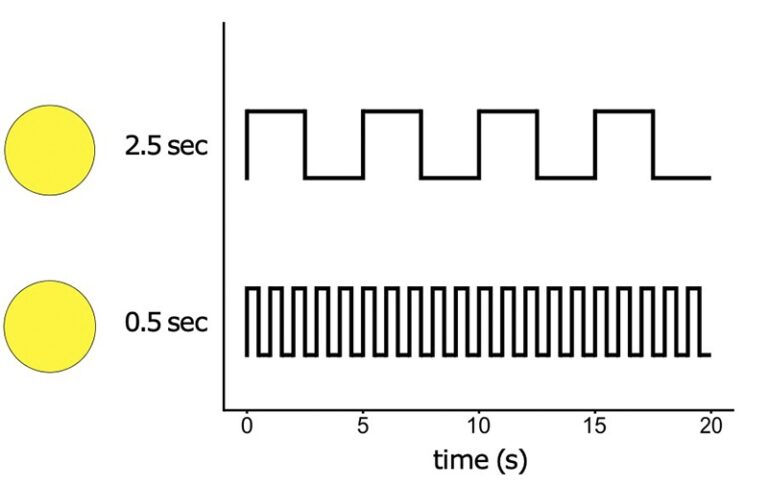
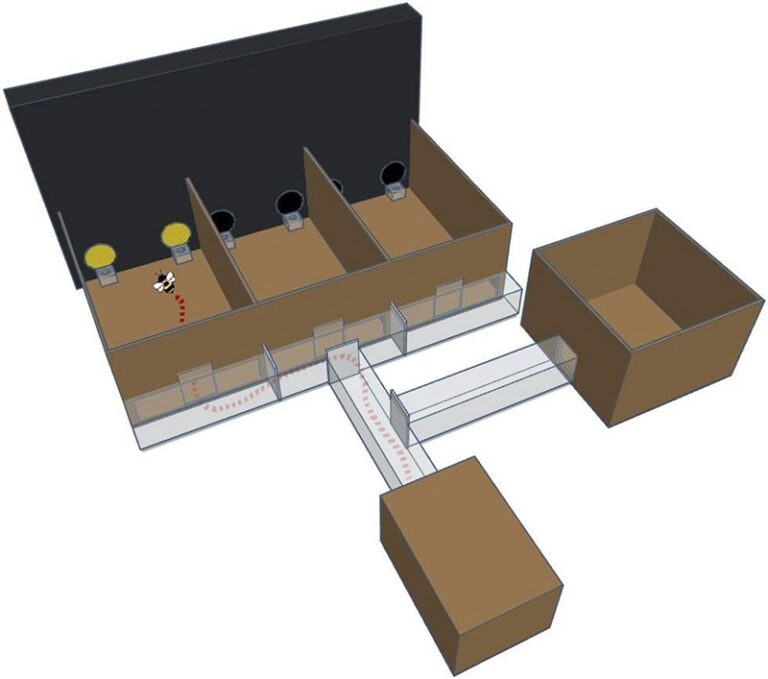
PhD student Alex Davidson and his supervisor, Dr. Elisabetta Versace, Senior Lecturer in Psychology at Queen Mary, created a custom maze to test this capacity. In the experiment, bees learned to locate a sugar reward at one of two circles emitting light flashes. A brief flash, similar to a “dot” in Morse code, signaled sugar, while a longer flash, or “dash,” indicated a bitter quinine solution that bees naturally avoid.
To ensure the bees weren’t cheating, the researchers constantly shifted the locations of the signals in every section of the maze, preventing the insects from relying on simple positioning. Once the bees consistently headed toward the duration linked to sugar, the team removed the rewards entirely. Even without the sugar presence, the bees continued to fly toward the specific light duration they had been trained to recognize.
“We wanted to find out if bumblebees could learn the difference between these different durations, and it was so exciting to see them do it,” said Alex Davidson. “Since bees don’t encounter flashing stimuli in their natural environment, it’s remarkable that they could succeed at this task.”
Alex Davidson discusses his research on duration discrimination in bumblebees (Bombus terrestris), revealing how these insects can distinguish between different light flash durations—a temporal perception ability previously seen only in humans and certain vertebrates. Co-authors: Ishani Nanda, Anita Ong Lay Mun, Lars Chittka, Elisabetta Versace.
Implications for AI and Neuroscience
The ability to distinguish these signals had previously been documented only in humans and a few vertebrate species, such as macaques and pigeons. That an insect can perform this task challenges our understanding of biological intelligence. If a bee can house a “stopwatch” in such a tiny brain, it raises profound questions about neural economy and the future of Artificial Intelligence.
“Processing durations in insects is evidence of a complex task solution using minimal neural substrate,” explained Dr. Versace. “This has implications for complex cognitive-like traits in artificial neural networks, which should seek to be as efficient as possible to be scalable, taking inspiration from biological intelligence.”
We recently caught up with Dr. Elisabetta Versace to discuss how insects perceive the fourth dimension and what it tells us about the internal worlds of animals.
Interview with Dr. Elisabetta Versace
Your research highlights that bumblebees can process time intervals with a brain smaller than one cubic millimeter. Does this discovery challenge the prevailing assumption that complex temporal processing requires large neural structures, such as the cortex found in mammals?
Although we live in time, the understanding of time remains difficult to fully grasp. As Augustine of Hippo reflected: “What then is time? If no one asks me, I know what it is. If I wish to explain it to him who asks, I do not know; yet I say boldly that I know…” Time remains an intangible dimension, a multifaceted aspect of the physical environment that can’t be navigated as easily as space, and that until recently could not be measured in a straightforward way as we do with space. This is clear if we consider that while geometry has been formally developed already around 300 BCE (Euclid’s work), formal mathematical tools to deal with time have been developed much later by Newton. Lately, physicists have shown that the conception of “absolute time” put forward by Newton, namely the ideas that time flows from its own nature without regard to anything external, is indeed false.
For its intangible features, time is particularly interesting to investigate in order to understand the internal world of animals. Discovering that duration can be promptly mastered by insects, even when they are assessed with novel tasks that they have not encountered during the course of evolution, is fascinating. For this reason, we focused on insects, with the aim to better grasp their internal worlds, including the ability of bees to encode and process time duration, one of the aspects of time.
You mention in the paper that known mechanisms like circadian rhythms are too slow to explain this “Morse code” differentiation. If bees possess a separate, faster “stopwatch” mechanism, how might this relate to neural economy in such a constrained brain? Are they repurposing neurons used for other tasks, like navigation, or do they have dedicated temporal processing systems?
Although we speak about “time” in general, when we measure time and deal with it, we use different scales, even in our daily lives: to deal with the passing of years we use a 365-day scale, while for months we use a scale based on 12, but we also use a scale based on 60 when we talk about minutes and seconds, and we also use decimals to subdivide seconds. Why don’t we just use a single scale or at least commensurate scales that can easily flow into one another? This is not just a historical accident. We use different systems to track different aspects of time that are differently connected to nature, like the alternation of day and night, or the change in seasons, or when we need to measure events that are independent from astronomical facts.
When we look at the building blocks of circadian rhythms that entrain us to the daily cycle of light and dark, we discover that, similarly to what happens with the presence of multiple scales of time in our cultural world, the circadian clock cannot contribute to the ability to deal with time on the short scale of seconds and subseconds. This is because the biochemical processes triggered by daily light alternation are too slow to determine whether it’s time to check whether the water is boiling or whether we have brushed our teeth for the necessary time. Indeed, we don’t even have time receptors in the same way that we have sensory receptors for vision, sound, or tactile sensation. In a sense, this is not surprising, because time does not change like the frequency in the electromagnetic spectrum, or the pressure exerted on our skin. And this is true not only for our human experience, but for that of all animals. Hence comparative studies to understand how different species deal with time are fascinating, as there isn’t a single objective way to keep track of time.
Insects have been instrumental in discovering the existence of circadian rhythms (with important studies on the fruit fly Drosophila melanogaster or cricket stridulation, which have helped us to crack the neurobiological and genetic basis of circadian rhythms). However, insects too must use different systems to track the passing of time, if they deal with scales in the level of seconds or minutes. These include tasks in communication, foraging and navigation.
So our experiments really open new questions, as what we have shown regarding the ability of bees to discriminate between short and long flashes of light cannot rely on the mechanisms that allow them to eclose from eggs in the early morning to avoid desiccation due to the hot sun. For this reason, I am pretty confident that there are multiple clocks also in bees, although we haven’t started to address this yet. It will be interesting to investigate whether time duration is encoded by single neurons or by populations of neurons, and which sensory modalities have independent systems.
As for neural economy, this question invites further investigation. One prominent theory proposes that time and space are evolutionarily connected, suggesting that the ability to track time may have evolved from spatial cognition. In insects, time and space are closely linked during navigation. Many species, including bees, ants, and flies, estimate travel distance by integrating the apparent motion of visual features across their eyes, a process known as optic flow. For example, when traveling in a tunnel with denser vertical stripes on the walls, insects perceive greater displacement than in a less patterned environment, or in the presence of horizontal stripes. Thus, the frequency of events, which reflects the number of events in a given time interval, is inherently connected to spatial displacement.
The connections between time and space are multiple including the cases in human language and cognition. Across cultures there are many differences how time is conceived and on which terms can be used for time, but people frequently use spatial metaphors to describe temporal concepts: we speak of “long days,” events “far in the past,” anticipating a holiday, or approaching a deadline. Similarly, physics has unified these dimensions: Einstein’s theory of spacetime demonstrates that time and space are not separate entities, but aspects of a single physical reality. So although our intuition separates time and space, this might be a human interpretation. Although the temporal and spatial scales at which humans and bees operate are insufficient to directly observe the relativistic effects predicted by Einstein, neuroscience offers a way to test the functional relationship between time and space. This includes investigating how neural systems encode magnitudes of different kinds, such as time, space, and quantity. Identifying whether single neurons or populations of neurons are responsible for these computations remains an important empirical question.
Since bees rarely encounter flashing lights in the wild, you suggest this skill might be an extension of other evolutionary needs. What ecological pressures might have driven the development of duration perception in bees?
When we speak of “time,” we refer to a multifaceted concept. This includes the ability to track the duration elapsed from a certain point, to assess whether two events are simultaneous, to track rhythmic patterns, or to discriminate between different sequences of stimuli. In our experiment, we focused on the ability to estimate the duration of external visual cues, on the basis of the duration of flashes of lights (and pauses between them). The fact that bees can discriminate between different durations of flashing lights and use these cues to locate food rewards demonstrates their capacity for internal representation of duration, their ability to store this “intangible” dimension of reality, and to use this information to guide their foraging responses.
I was surprised to see that sometimes with a couple of dozen trials, bees could very promptly grasp these patterns. Each bee was introduced to the real task and test within a single foraging day! We used flashing lights to test bees in novel tasks for which they did not specifically evolve, allowing us to probe the flexibility of their temporal cognition abilities.
How the ability to track time on the scale of seconds and subseconds evolved across different species and taxa, including insects, remains unclear. One possibility is that temporal abilities evolved to monitor elapsed time as a strategy for scheduling foraging routes, optimizing visits after flowers have had time to replenish following a previous visit. Indeed, bees can strategically control the frequency of their visits to flowers. Another, not mutually exclusive, possibility is that bees use these systems to monitor movement and calculate position during navigation, relying on the optic flow mechanisms I mentioned earlier. Bumblebees are social animals that live in colonies: communication is another domain in which duration tracking is potentially useful. Yet another possibility is that the capacity to track time may be a general feature of neurons, as the nervous system inherently needs to compute incoming signals in temporal sequences, integrating them.
The ability to distinguish “dots” from “dashes” was previously documented in primates and pigeons. Do you suspect that insects and vertebrates evolved this specific type of temporal processing independently to solve similar survival problems, or is this a fundamental trait of all nervous systems?
Insects and vertebrates have evolved independently for more than 600 million years, and we still know very little about duration processing in insects. For this reason, it is difficult to determine how widespread this ability is across insect species. When only one or a few species have been investigated, as in this case, it is not possible to answer questions about evolutionary pathways without venturing into speculation. Nevertheless, understanding temporal cognition in insects is a fascinating area of research, and expanding such studies is possible at the behavioral and neurobiological levels. It would be interesting to investigate not only how widespread these abilities are among insects and whether species that track specialized temporal signals, such as crickets, can transfer these skills across different sensory modalities, but also whether similar or distinct neural systems are employed across these modalities.
In the context of foraging, how might a bee utilize duration perception in a flower meadow? Could this ability help them assess how long they have been feeding or how long a flower has been occupied by a competitor?
Bees are highly flexible learners, and it has been hypothesized that this flexibility aids them in foraging. “The Mind of A Bee” by our co-author Lars Chittka explains this masterfully. When faced with a wide variety of flowers differing in color, salience, location, nutritive quality, and scent, and at different distances from the hive, bees must identify the most rewarding resources: those that maximize intake for the colony while minimizing effort and risk. Honeybees can even extract abstract regularities, such as the presence of “same” versus “different” patterns, which can guide their foraging decisions. They also possess strong memory and can learn to shift between resources flexibly based on changing conditions. As research on bumblebees and honeybees expands, we are discovering the extent of their flexibility and learning skills at both the individual and social levels. It appears that general learning abilities might provide these animals with advantages allowing them to optimize foraging and potentially other tasks.
You noted that bees use a “minimal neural substrate” to solve complex tasks. How can this biological efficiency serve as a blueprint for Artificial Neural Networks, which currently rely on massive computational power? What architectural changes might we see in future AI models if we successfully mimic the bee’s approach?
The original inspiration for artificial neural networks was, as the name suggests, the nervous system. At the moment, the mainstream AI industry is moving in the direction of training larger and larger models as a strategy to increase accuracy and trustworthiness. However, this strategy appears inefficient, and not only in terms of energy and time required for training. Despite the efforts, catastrophic failures continue to occur, from life-threatening contexts like object recognition in the road for vehicles and medical contexts, or implausible answers that expose logical flaws of Large Language Models.
When we look at the skills exhibited by animals that differ by several orders of magnitude in neural complexity from humans (86 billion neurons in humans vs. 1 million in bees, a difference of about five orders of magnitude), we wonder whether an understanding of reality based on nature, including physics, could be more efficient and more likely to produce a genuine understanding of reality, that can generate trustworthiness when tasks are based on interaction with the actual terrestrial world.
This is one of the reasons why I like to focus on relatively small brains, such as those of bees, and inexperienced brains, such as newly hatched chicks and tortoises. Chicks are particularly interesting because, as a precocial species, they can move around and make choices soon after hatching, when they are completely inexperienced. Studies have revealed that they possess innate preferences and biases that orient their choices and can be used to make adaptive decisions in the wild, for instance, approaching their mother or siblings more than inanimate objects. For example, we recently showed their innate preference for upward movement, at the first experience with visual objects. Interestingly, upward movement is a feature typically associated with animate living beings. Other precocial animals, such as tortoises, similarly to chicks and human babies, are attracted to face-like patterns, which typically carry important information.
Overall, the synergistic effect of these simple preferences for rare but crucial patterns and stimuli can help guide adaptive choices even without prior experience. We are therefore interested in understanding whether similar basic features of the nervous system can inform the development of AI with a closer resemblance to the structure and architecture of neural systems that have evolved under specific constraints. Understanding which biases and architectures can support adaptive choice, prediction, and learning may also help improve scalability and trustworthiness in artificial systems. We are interested in this line of research, that we believe can bring back animal insight into artificial intelligence in a more concrete sense.
Now that we know bees can track visual duration, does this open the door to testing if they can cross-reference senses? For example, could a bee associate a “long flash” with a “long buzz,” implying a more abstract concept of time?
Yes, you hit an interesting point. Another important avenue of discovery is related to multisensory integration and information derived from different modalities. In the specific case of bees, they are not particularly sensitive to what we label as acoustic stimuli (although they do have sensitivity to vibrations), so our first experiments likely will not include acoustic stimuli. However, the ability to transfer information across modalities is an interesting way to test for generalization, the ability to “abstract” from the specific experience learned, and to apply what is acquired to novel contexts or novel stimuli. We also know that bumblebees can transfer cross-modally, at least when they have previous experience with tactile and visual modalities, as shown by my colleagues. At the same time, we must be careful because stimuli that are peripherally separate, such as mechanosensory and visual inputs, might in some cases be centrally connected in interesting ways. For instance, we showed that chicks with no prior experience with visual stimuli are able to associate tactile stimuli with corresponding visual stimuli. It’s another interesting story!
You stated that the specific neural mechanisms remain mostly unknown. Is the next step in your research to physically map the neural activity during these tasks, and do you expect to find a specific “pulse accumulator” in the insect brain?
We are currently seeking funding to expand our studies both at the behavioral to the neurobiological level, as we have several new and interesting ideas for investigating the underlying neural circuits. This research on duration perception in bees has inspired not only our colleagues but also the general public. It will be strategic to support basic, curiosity-driven research that can benefit society with a better understanding of nature, and how living organisms are connected to fundamental concepts in physics and psychology, like time.
Conclusion
Augustine’s ancient question, “What then is time?” finds an unexpected answer in a bumblebee navigating a laboratory maze, distinguishing between flashes of light with a brain smaller than a cubic millimeter. The philosopher struggled to articulate what he intuitively knew. The bee, with one million neurons compared to our 86 billion, simply does it.
This achievement challenges assumptions about the neural requirements for complex cognition and offers a provocative alternative to the current trajectory of Artificial Intelligence, which builds ever-larger models with exponentially growing energy demands. If temporal processing can be accomplished in less than a cubic millimeter of biological tissue, perhaps the path forward lies not in scaling up but in architectural elegance: neural systems evolved under severe constraints, where innate biases guide learning and time might be encoded through the fundamental properties of neurons themselves.
Dr. Versace’s lab is now seeking funding to map these neural circuits and understand whether duration emerges from centralized processing or distributed systems. The answers will matter beyond entomology. As AI systems continue to produce catastrophic failures despite their massive scale, the question of how a bee navigates reality with such neural economy becomes urgent. The stopwatches in the bee brain tick on, measuring not just milliseconds but the distance between our current understanding of intelligence and the elegant solutions that evolution discovered across 600 million years. As we build machines that aspire to intelligence, perhaps we should pay closer attention to the creatures already achieving it with a fraction of the resources we consider necessary.