

How Hubble's dark matter-dominated gas cloud offers a rare window into cosmic structure
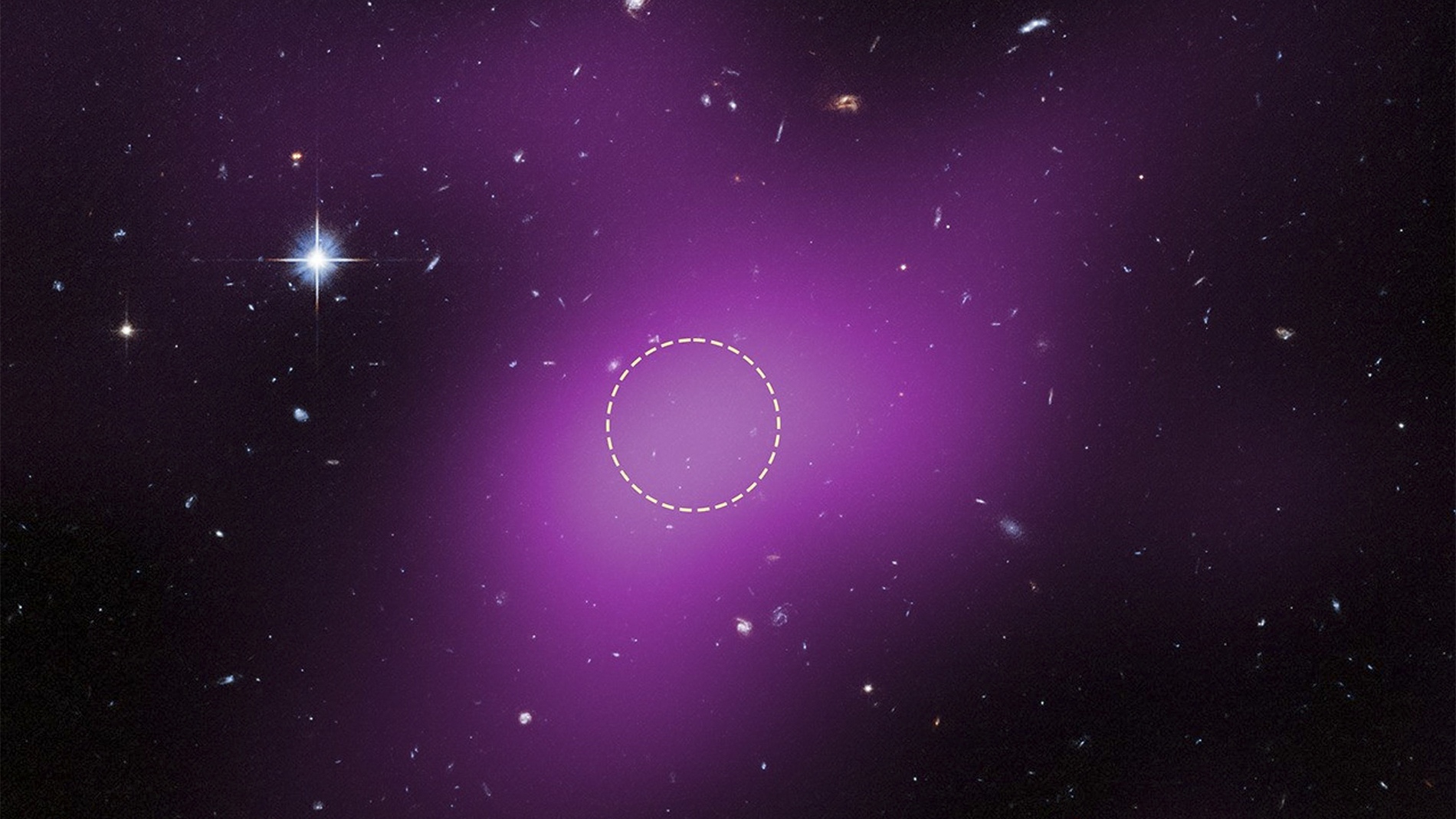
In the vast cosmic tapestry where galaxies blaze with the light of billions of stars, astronomers have discovered something profoundly different: a starless ghost. Known as Cloud-9, this peculiar object represents the first confirmed example of a failed galaxy, a dark matter-dominated gas cloud that never ignited into stellar fire. The discovery, published in The Astrophysical Journal Letters and announced by NASA on January 5, 2026, offers a rare observational window into structures shaped by dark matter alone. It preserves conditions from the Universe’s earliest epochs in a state of suspended animation.
Cloud-9 belongs to a long-predicted yet previously unconfirmed class of objects known as Reionization-Limited H I Clouds, or RELHICs. First detected three years ago by China’s FAST telescope during a radio survey near the spiral galaxy Messier 94, and later confirmed by Hubble’s Advanced Camera for Surveys along with the Green Bank Telescope and the Very Large Array, the compact, nearly spherical cloud spans roughly 4,900 light-years. Its visible gas contains only about one million solar masses, yet the system behaves as though it possesses the gravitational pull of five billion suns, a stark signature of dark matter’s invisible dominance.
“This is a tale of a failed galaxy,” explains principal investigator Alejandro Benitez-Llambay of the University of Milano-Bicocca. “In science, we often learn more from failures than from successes. In this case, the absence of stars is precisely what proves the theory right.” Cloud-9 exists in what researchers describe as a narrow middle range, too small to collapse into star formation, yet too massive to disperse into ionized gas. This precarious equilibrium has allowed it to survive as a pristine relic, offering scientists an unprecedented laboratory for studying dark matter without the interference of stellar feedback, and suggesting that the Universe may harbor many more such “abandoned houses” than previously imagined.
Credit: Alejandro Benítez-Llambay
A Conversation with Alejandro Benitez-Llambay
On the Significance of “Failure”
The Value of Null Results
Q: You mentioned that in science, we often learn more from failures than from successes. What, exactly, can a “failed” galaxy reveal about the early Universe that a fully formed galaxy cannot?
This apparent “failure” is, in fact, a major success for our theories. Interpreted as a Reionization-Limited H I Cloud, or RELHIC, Cloud-9 provides tangible proof that a minimum threshold mass of dark matter is required to ignite star formation. Fully formed galaxies may have undergone multiple episodes of gas accretion and star formation over billions of years, erasing their primordial properties while reshaping their underlying dark matter halos in the process. Cloud-9, by contrast, is a true fossil. It sits precisely on the edge, containing gas but no stars. This allows us to place a direct lower limit on the critical mass required for a galaxy to be born in the local Universe. Its existence validates a cornerstone prediction of the Lambda Cold Dark Matter model: that the Universe should be populated by large numbers of low-mass halos that never became luminous galaxies.
Defining the Threshold
Q: Cloud-9 exists in a “narrow middle range,” too small to collapse into stars yet too large to disperse. What physical mechanisms have kept it in this state of suspended animation for billions of years?
I often describe Cloud-9 as existing in a state of arrested development. The key mechanism is a balance between gravity and the cosmic ultraviolet background. Shortly after the Big Bang, the first stars and quasars flooded the Universe with ultraviolet radiation, heating the intergalactic gas. For a galaxy to form, a dark matter halo must exert enough gravity to compress this heated gas into stars. Cloud-9’s gravity is too weak to win that battle, yet just strong enough to prevent the gas from evaporating entirely. As a result, the gas is trapped in hydrostatic equilibrium, with the inward pull of dark matter precisely balanced by the outward thermal pressure generated by ultraviolet heating. Such conditions can exist only in the presence of the cosmic UV background, which consists of the collective ultraviolet radiation emitted by all luminous sources in the Universe today.
The “Missing Link” of Cosmology
Q: Astronomers have predicted the existence of RELHICs for years. Why has it taken so long to find convincing observational evidence for one? Is this primarily a technological issue, or are these objects rarer than expected?
Although we had long considered the possibility of such systems, it was not until our work in 2017 that we began examining their expected properties in detail within the framework of the Lambda Cold Dark Matter model. That said, the delay in identifying a compelling candidate like Cloud-9 reflects a combination of both factors.
First, these systems are intrinsically rare. Our simulations indicate that fewer than ten percent of dark matter halos in this mass range remain in a pristine, starless state today. Most have either formed stars or lost their gas through interactions with their environment. As a result, the majority of halos of comparable mass now host galaxies.
Second, detecting them poses a significant technological challenge. These are effectively “dark” objects that require extremely sensitive radio telescopes, such as FAST, a single dish 500 meters in diameter, to detect their gas content. This must then be followed by exceptionally deep optical imaging, using instruments like the Hubble Space Telescope, to confirm the absence of stars. Without the ability to demonstrate this negative result, it is impossible to distinguish a RELHIC from a faint dwarf galaxy. Simulations also show that, under certain conditions, faint galaxies and RELHICs can share several observational properties, making confusion likely. The need for both high-sensitivity radio observations and space-based optical imaging makes detection and confirmation difficult and costly.
On Dark Matter and Composition
A Pristine Laboratory
Q: Because Cloud-9 lacks stars, stellar feedback and supernova explosions do not complicate the picture. How does this quiet environment change the way dark matter can be studied?
I regard systems like this as the holy grail of dark matter research using astrophysical observations. In ordinary galaxies, gas physics, star formation, and stellar evolution, including supernova explosions, continually redistribute both gas and dark matter, making it difficult to infer the underlying dark matter distribution. Because Cloud-9 is pressure-supported and lacks these disruptive stellar processes, it allows us to probe the dark matter structure directly and compare it with well-established theoretical predictions. With future high-resolution observations, we hope to map the central distribution of dark mass in detail, potentially constraining the nature of the dark matter particle itself and determining whether it has a finite interaction cross section. Different dark matter models predict markedly different central mass concentrations, making this a powerful diagnostic.
The Mass Discrepancy
Q: The gas suggests a mass of about one million suns, yet the system behaves as though it has the gravity of five billion. How confident are we that this excess mass is dark matter rather than undetected cold gas?
Our confidence comes from the physical size of the cloud. Radio observations show that the gas is highly extended, with a radius of roughly 1.4 kiloparsecs. If Cloud-9 were bound solely by the gravity of its visible gas, internal pressure would cause it to expand and dissipate. Reconciling such a large, diffuse cloud with the inferred pressure, indicated by random gas motions of roughly 10 to 20 kilometers per second, requires a massive gravitational component that is not directly observed. If colder gas were present, it should be forming stars, which would be detectable even with ground-based telescopes. It is therefore highly unlikely that the missing mass consists of undetected cold gas. Assuming it is dark matter, we find that a halo with a total mass of approximately five billion solar masses is required to provide the necessary gravitational support.
Cosmic Isolation
Q: Environmental processes such as ram-pressure stripping typically destroy objects like this. How did Cloud-9 survive while remaining relatively close to a large galaxy such as Messier 94?
Cloud-9 is not entirely intact, and that fact actually supports its proximity to Messier 94, reinforcing our confidence in the inferred distance. While it has survived until now, Very Large Array observations reveal that its outer layers are being disturbed. We observe gas compression on one side and a tail-like structure on the other, clear signatures of ram pressure exerted by the environment around Messier 94. The system likely survived for so long because it remained isolated for most of its history and only recently moved close enough to experience this “wind,” which is now beginning to strip away its gas.
On Methodology and the Role of FAST
The Global Relay
Q: This discovery began with China’s FAST telescope and was later confirmed by observatories in the United States. Why was combining radio and optical astronomy essential?
The combination was indispensable. FAST acted as a scout, detecting neutral hydrogen gas and identifying its unusually large mass and extent. Radio observations alone, however, cannot demonstrate that an object is starless. Hubble was required to perform the decisive test by targeting the precise location identified by our Very Large Array data and confirming the absence of stars. Without integrating FAST, the Green Bank Telescope, and the Very Large Array with Hubble’s exceptional optical sensitivity, it would not have been possible to characterize the system while ruling out the possibility that it was simply an extremely faint dwarf galaxy.
Beyond this, Cloud-9 likely contains additional components that remain invisible to radio telescopes. A substantial fraction of the gas is expected to be warm and highly ionized by the cosmic background radiation. Although undetectable in radio wavelengths, this ionized gas emits light in a narrow spectral line known as H-alpha. We have made specific predictions for this emission, which should appear as a ring surrounding the central neutral hydrogen core. Detecting this faint signal using narrow-band filters would confirm the presence of a warm gas envelope and represents a natural next step in verifying the object’s nature. The properties of this emission would also place further constraints on the distribution of dark matter within the cloud.
The “Needle in a Haystack” Challenge
Q: Now that Hubble has provided a blueprint for identifying such objects, do you expect to find many more, or is Cloud-9 a unique case?
At present, Cloud-9 is the most convincing candidate and serves as a benchmark. While we do not expect these systems to be common, since most halos either formed stars or lost their gas, Cloud-9 demonstrates that they do exist. Knowing what to look for, namely isolated, compact, non-rotating gas clouds, allows us to target other candidates already detected by FAST. We are actively searching for additional examples, but they are likely to remain rare needles in the cosmic haystack for some time.
On the Future and Evolution
A Sleeping Giant?
Q: Is Cloud-9 permanently locked in this state, or could future interactions eventually trigger star formation?
Cloud-9 is not necessarily frozen forever. It exists in a delicate balance. If it were to merge with another halo or gradually accrete additional dark matter, it could cross the critical mass threshold. Once gravity overcomes internal pressure, the gas would collapse and the cloud would “turn on,” becoming a late-forming galaxy, a class of systems we have previously predicted. Alternatively, continued interaction with Messier 94 could strip the remaining gas entirely, leaving behind an invisible dark matter halo.
The existence of Cloud-9 also raises the possibility that some galaxies may be forming for the first time in the present-day Universe. Although theoretical predictions for late-forming galaxies exist, no compelling detections have yet been made. Observing one would provide additional evidence for the existence of a critical mass threshold at which halos become capable of forming stars.
The “Abandoned House” Analogy
Q: If similar dark objects exist, could they be hiding within our own Local Group?
That is quite likely. In fact, the Lambda Cold Dark Matter model predicts that our cosmic neighborhood should be filled with such objects, though most are probably empty. To survive as a gas-rich dark cloud like Cloud-9, a system must remain isolated. In the Local Group, environmental pressure from the Milky Way and Andromeda likely stripped gas from small halos long ago, leaving behind naked dark matter halos that are invisible to current radio telescopes. This effect was explored in detail in our 2017 simulations of the local cosmic environment, which showed that the vast majority of starless halos contain no gas at all.
A Fossil at the Threshold
Cloud-9 stands as a cosmic anomaly that proves the rule: a failed galaxy that validates decades of dark matter theory. In its arrested development, suspended between collapse and dispersal, it offers astronomers what Benitez-Llambay calls the holy grail of dark matter research, a pristine laboratory free from the confounding effects of stellar feedback, where the invisible architecture of the Universe can be measured directly.
The discovery underscores a fundamental truth of modern cosmology. The Universe’s most profound revelations often emerge not from what shines brightest, but from what remains stubbornly dark. As radio surveys expand and optical telescopes probe ever deeper, Cloud-9 may prove to be only the first confirmed member of a hidden population, rare needles in the cosmic haystack that preserve primordial cosmic conditions. Whether Cloud-9 will eventually ignite as a late-forming galaxy or lose its remaining gas to Messier 94 remains uncertain. For now, it persists in delicate equilibrium, a fossil at the threshold between existence and erasure, reminding us that in a dark matter-dominated cosmos, failure can be the most illuminating success of all.
Publication Information
Research published in The Astrophysical Journal Letters.
Discovery announced by NASA on January 5, 2025.
Principal Investigator: Dr. Alejandro Benitez-Llambay, University of Milano-Bicocca, Italy.
Lead Author: Gagandeep Anand, Space Telescope Science Institute, Baltimore, USA.