
There is a particular kind of attention that comes from having watched a work grow. Jiyong Lee, Professor of Art and Design at Southern Illinois University, served on the thesis committee of Nancy Yu (NC Qin) — which means he encountered Crowns of Glass not as a stranger walking into a gallery, but as someone who had accompanied the work through its becoming. What he offers here is not a retrospective judgment but something closer to a continuing conversation: the observations of a witness who was present before the work knew what it was.
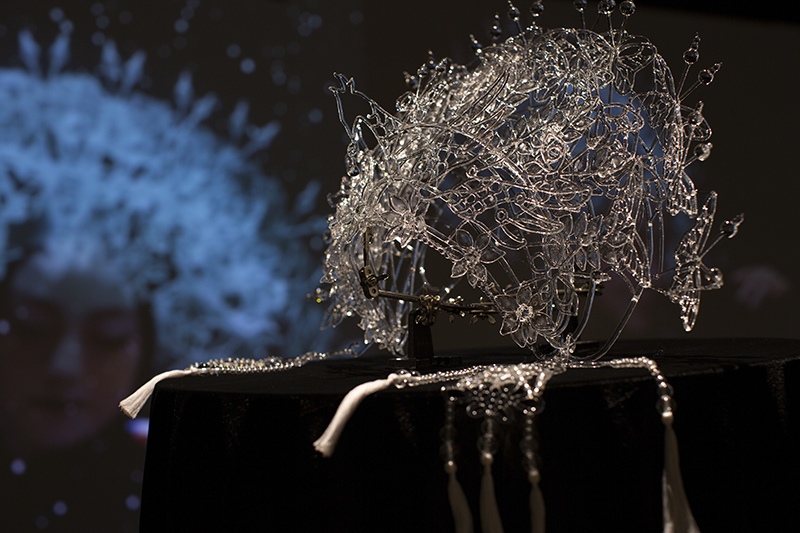
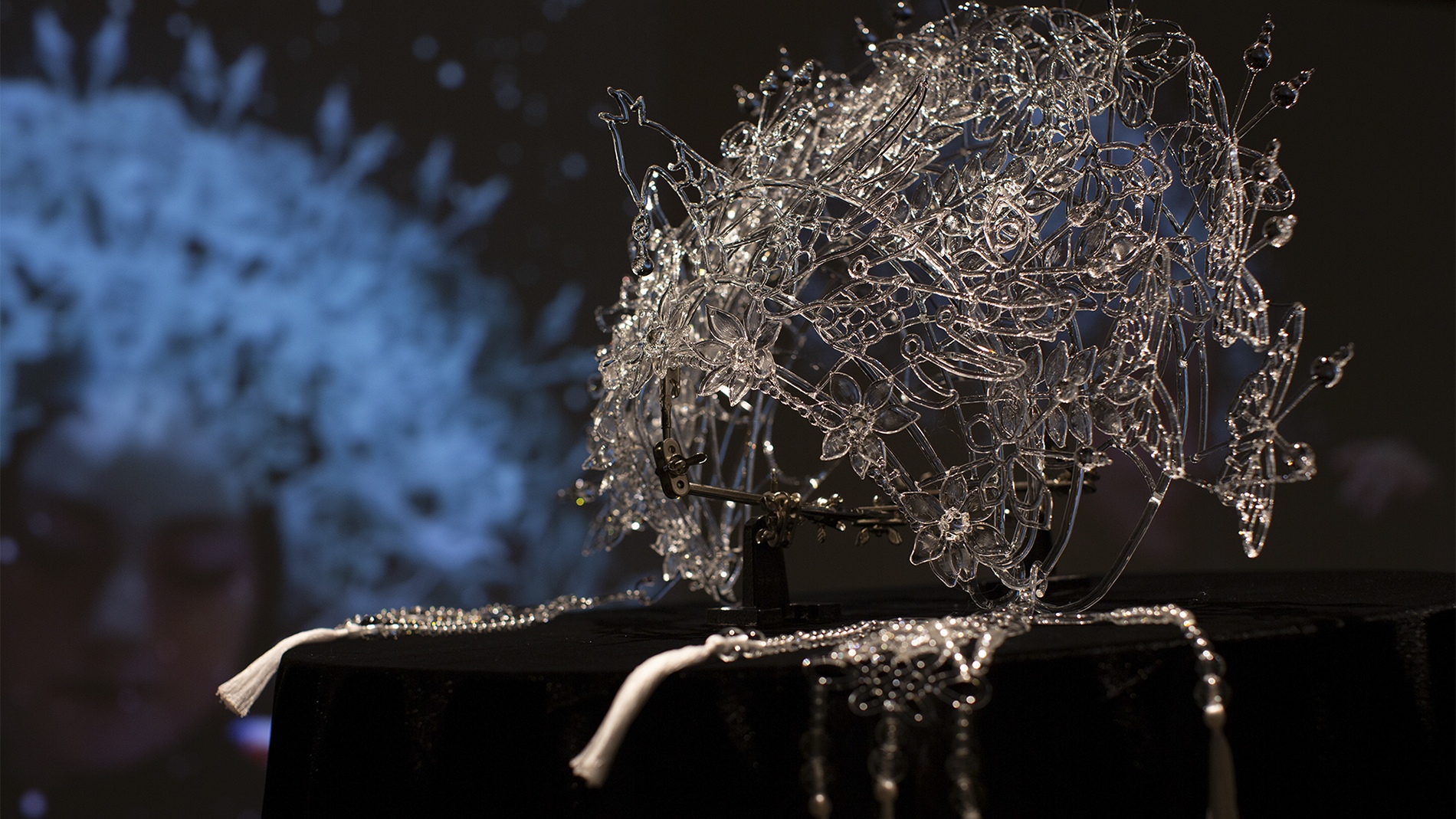
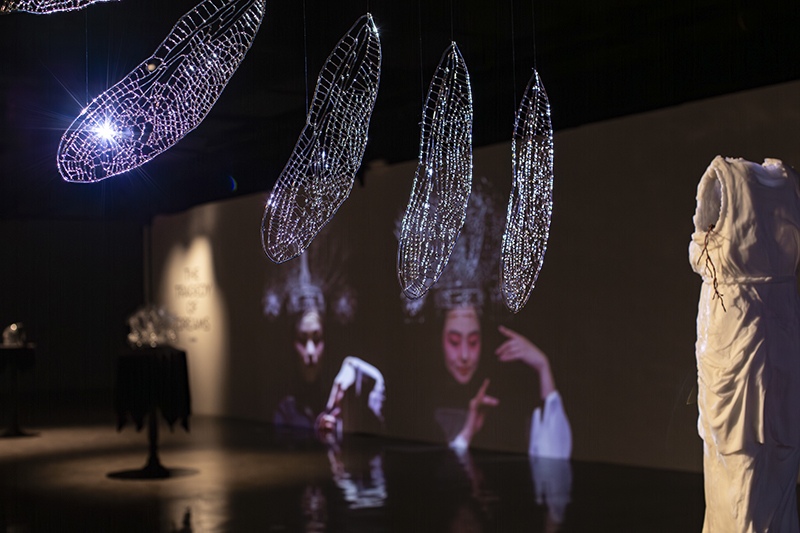
“In Crowns of Glass, the interplay between the AI-generated video, the artist's performance, and the glass headdresses is particularly compelling. The AI suggests an idealized form of ambition — something that begins to move beyond the artist's control. In contrast, the artist's body, wearing a fragile glass headdress that embodies the realization of that ambition, appears constrained, limited to careful and restricted movement.
There is a tension here where ambition feels both generative and burdensome, producing not only aspiration but pressure. This becomes especially apparent in the contrast between the AI's fluid, uninhibited motion and the physical reality of a body negotiating risk and fragility. At the same time, the work surfaces a subtler tension: between the labor-intensive process of making the glass objects and the immaterial, projected imagery. Within the space, the projections seem to dominate, while the physical objects appear almost secondary — as if they were traces of the ambition the projections fully realize.
The work also echoes the trajectories of the historical figures it references. Ambition, lived reality, and a growing awareness of their consequences unfold in similar ways. These dynamics don't feel distant or historical. They feel present. Altogether, the piece creates a layered dialogue between ambition and reality, control and instability.”
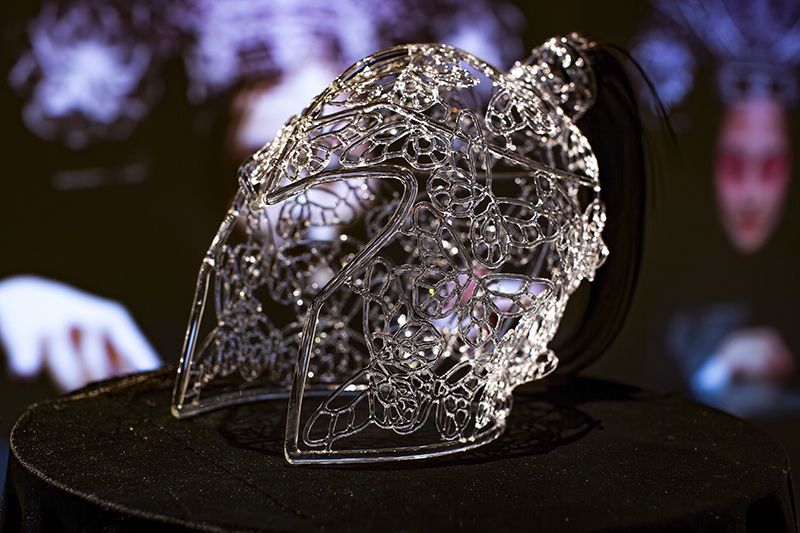
What stays with this description is its final word: instability. Crowns of Glass does not resolve the tension it creates between the projected ideal and the body that must carry it. It holds that tension open — as the best works do — and asks the viewer to remain inside the discomfort of it. That the glass headdresses are at once beautiful, precarious, and entirely real, while the AI's vision of ambition moves freely and without consequence, is not a metaphor Lee imposes on the work. It is what the work itself insists on.
Jiyong Lee is Professor of Art and Design at Southern Illinois University, where he served on the thesis committee of Nancy Yu. This reflection was written for Our Narratives.
There is a particular kind of attention that comes from having watched a work grow. Jiyong Lee, Professor of Art and Design at Southern Illinois University, served on the thesis committee of Nancy Yu (NC Qin) — which means he encountered Crowns of Glass not as a stranger walking into a gallery, but as someone who had accompanied the work through its becoming. What he offers here is not a retrospective judgment but something closer to a continuing conversation: the observations of a witness who was present before the work knew what it was.
“In Crowns of Glass, the interplay between the AI-generated video, the artist's performance, and the glass headdresses is particularly compelling. The AI suggests an idealized form of ambition — something that begins to move beyond the artist's control. In contrast, the artist's body, wearing a fragile glass headdress that embodies the realization of that ambition, appears constrained, limited to careful and restricted movement.
There is a tension here where ambition feels both generative and burdensome, producing not only aspiration but pressure. This becomes especially apparent in the contrast between the AI's fluid, uninhibited motion and the physical reality of a body negotiating risk and fragility. At the same time, the work surfaces a subtler tension: between the labor-intensive process of making the glass objects and the immaterial, projected imagery. Within the space, the projections seem to dominate, while the physical objects appear almost secondary — as if they were traces of the ambition the projections fully realize.
The work also echoes the trajectories of the historical figures it references. Ambition, lived reality, and a growing awareness of their consequences unfold in similar ways. These dynamics don't feel distant or historical. They feel present. Altogether, the piece creates a layered dialogue between ambition and reality, control and instability.”
What stays with this description is its final word: instability. Crowns of Glass does not resolve the tension it creates between the projected ideal and the body that must carry it. It holds that tension open — as the best works do — and asks the viewer to remain inside the discomfort of it. That the glass headdresses are at once beautiful, precarious, and entirely real, while the AI's vision of ambition moves freely and without consequence, is not a metaphor Lee imposes on the work. It is what the work itself insists on.
Jiyong Lee is Professor of Art and Design at Southern Illinois University, where he served on the thesis committee of Nancy Yu. This reflection was written for Our Narratives.