How Almudena Romero learned to grow a photograph
Trained as a specialist in nineteenth-century photographic processes, Almudena Romero has spent years asking a question most photographers never think to ask: what if the image were not captured, but cultivated?
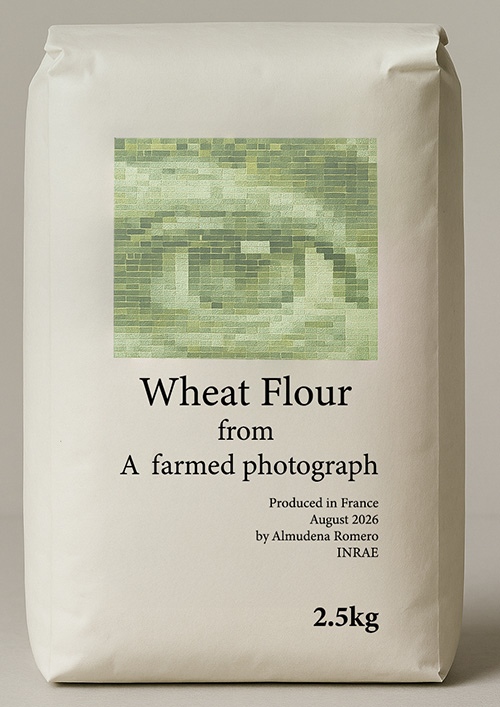
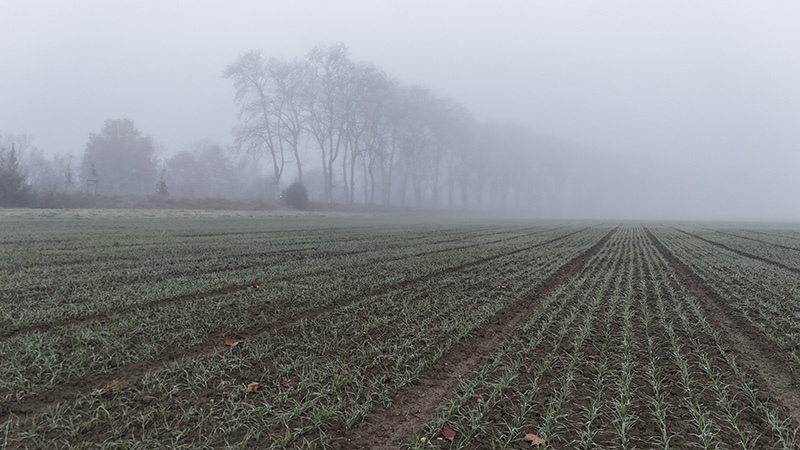
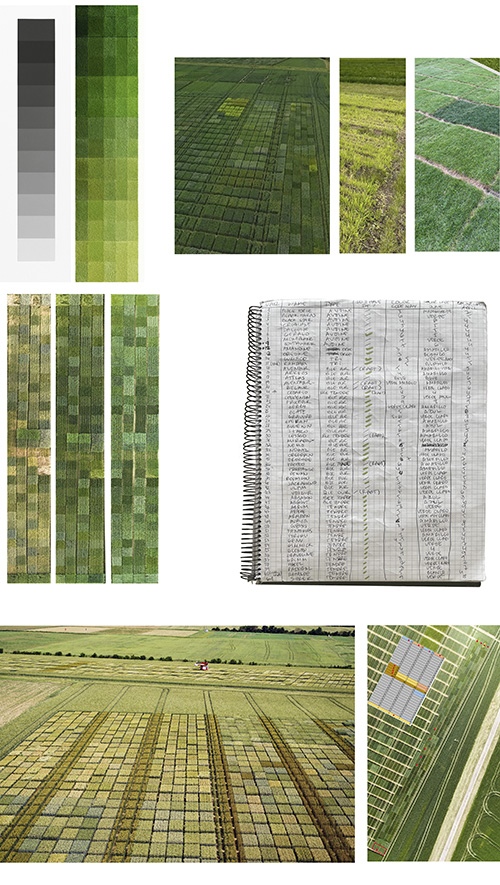
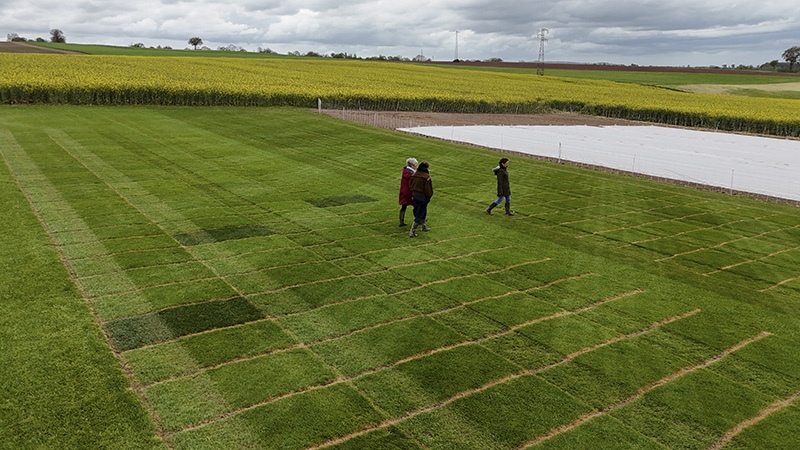
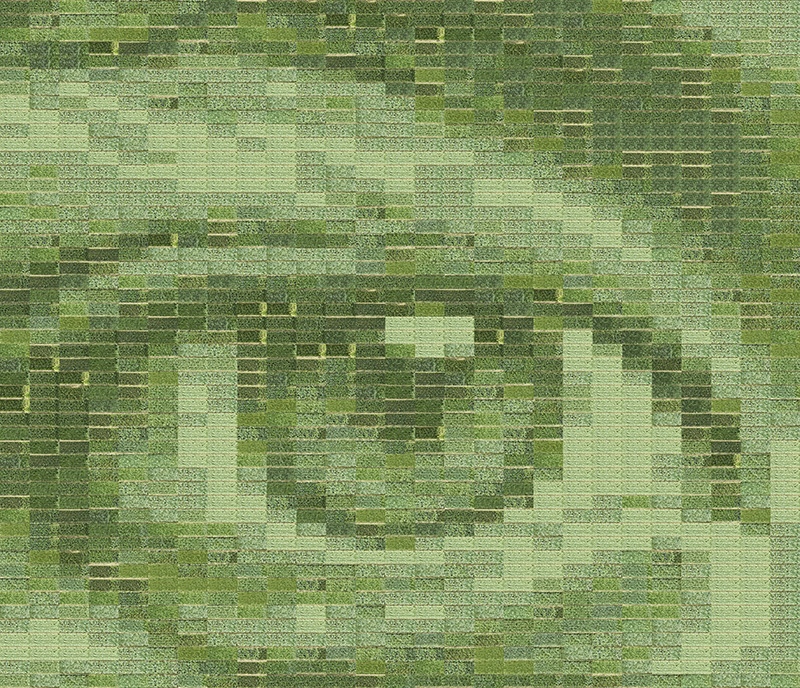
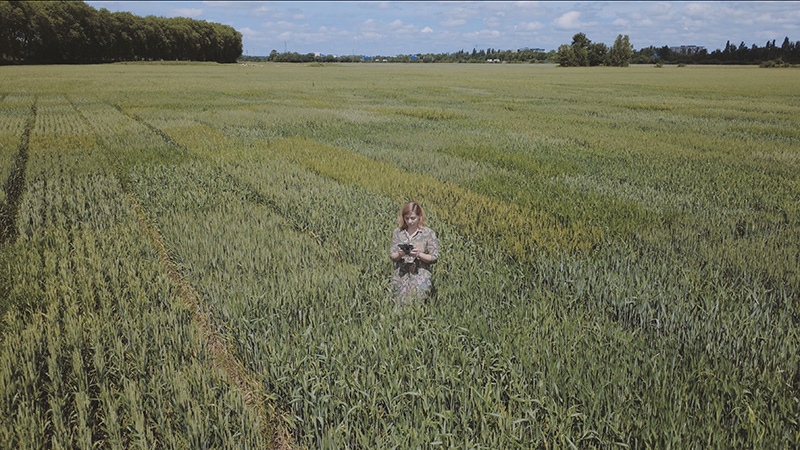
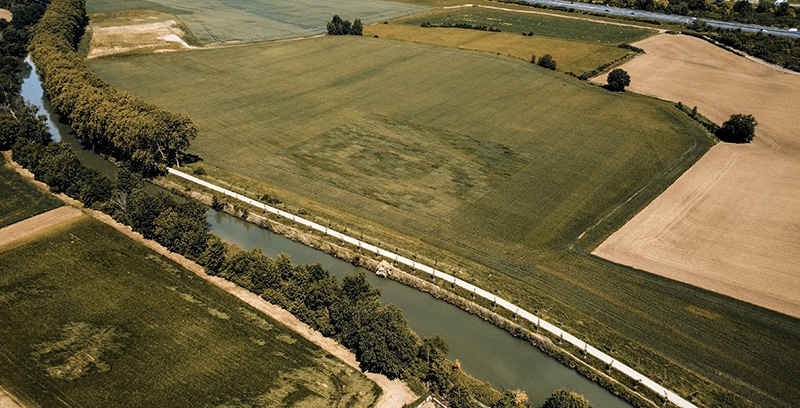
Working with plants, photosynthesis, organic pigments, and living matter, Romero makes photographs that grow, transform, and eventually disappear. Her most ambitious work to date, Farming Photographs, translates a single image into 1,350 agricultural plots sown across approximately 11,000 square metres of farmland near Toulouse, France. The image is a human eye, composite, collective, composed across races, genders, and ages, and it can only be seen from the air.
A work that moves across photography, agriculture, and ecological research, Farming Photographs turns the act of looking itself into a question about land, responsibility, and coexistence. In conversation with Our Narratives, Romero reflects on slowness as a material, collaboration as a method, and why the future of photography might always have been present at its very beginning.
The Conversation
Part I: The Medium Itself
Almudena Romero It arrived gradually, through making, although there were some important moments. One of them was seeing the V&A exhibition Shadow Catchers in 2011, an exhibition on camera-less photography that, for Romero, encapsulated the broad, experimental spirit already present in the medium during the nineteenth century. "That exhibition helped me understand photography beyond the camera, as a field of possibilities: light acting on matter, images produced through exposure, chemistry, and time." The anthotype process she works with, in which plant pigments are used as light-sensitive emulsions, belongs to that expanded history. It reminds us, she says, that photography did not begin as a single technological path. It contained many possible futures.
A talk by the artist Tom Lovelace also stayed with her. He asked the audience: "Where does photography exist?" The question took time to settle. At its most essential, photography is an encounter between light and a sensitive surface, and working with plants made this especially clear. Leaves, pigments, living tissues: all affected by light, all registering it, transforming it, metabolising it. Through practice, the camera became only one possible episode in a much longer history.
Almudena Romero "That is exactly why it interests me." Anthotypes were abandoned because they did not conform to what photography was becoming: fast, stable, reproducible, commercially viable. Romero sees those so-called limitations differently. Slowness, ephemerality, biological dependency, these are not deficiencies but the fundamental qualities of future materials. They allow photography to behave differently, to exist in relation to the world rather than in extraction from it.
She returns the question back: what does it mean to produce art in the midst of environmental crisis using materials that deepen that crisis? Silver nitrate extraction for analogue photography. Rare minerals for digital sensors. "What's the point?" Working at the roots of the medium is not, she insists, an act of nostalgia. It is a way of questioning the values that shaped photography's dominant history. Why was permanence privileged over transformation? Why was control valued over collaboration? Could photography have taken a different path, one closer to life itself?
Part II: Growing the Work
Almudena Romero "The precision is a structure, something that enables the image to be translated into plots and plants, but it is not a guarantee." Once the work is seeded, it depends on weather, disease, germination, accident, and other biological factors that all participate in the making of the image. Control and uncontrollability are not opposites in the project. They are the two conditions that allow the work to exist at all.
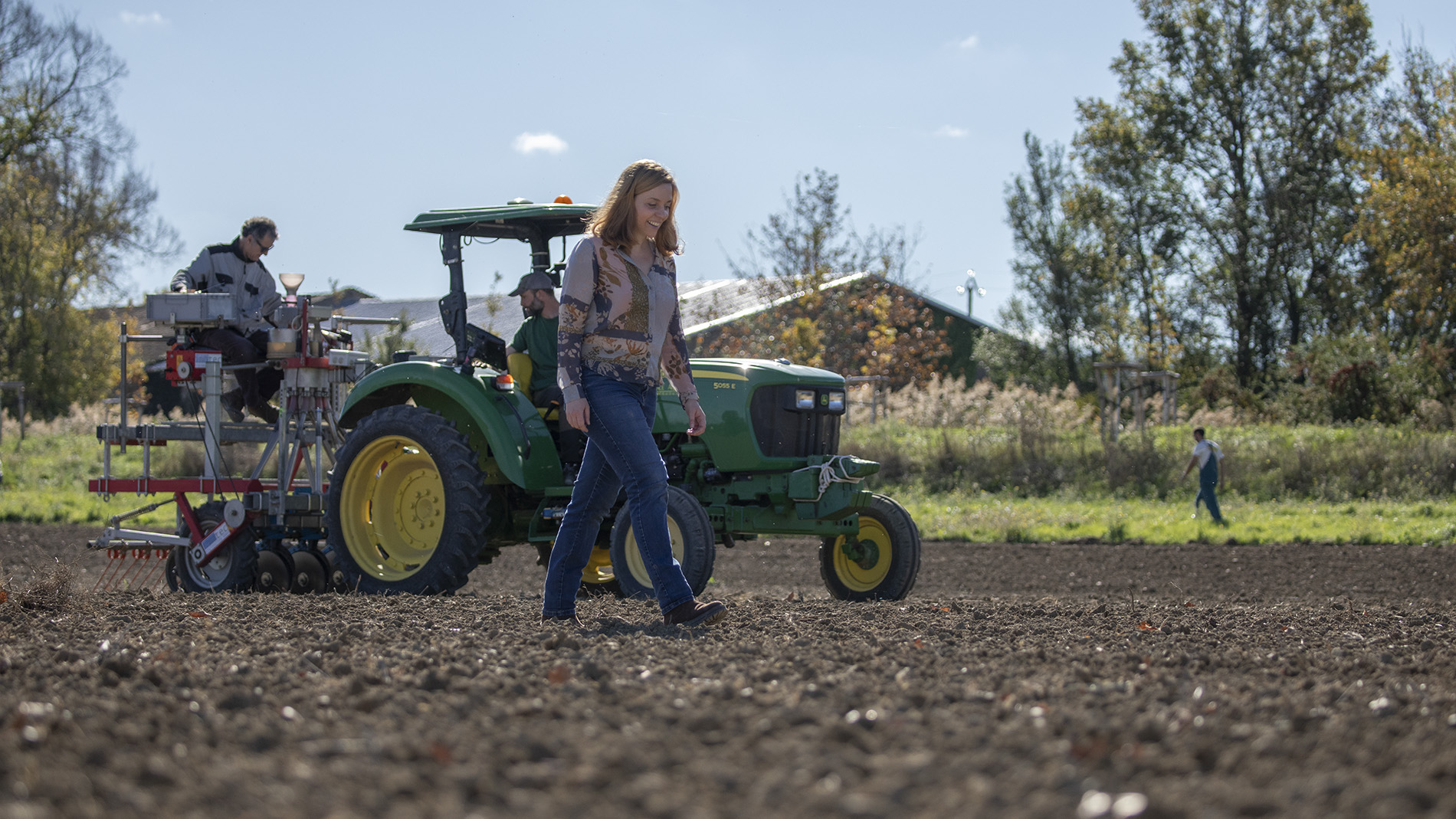
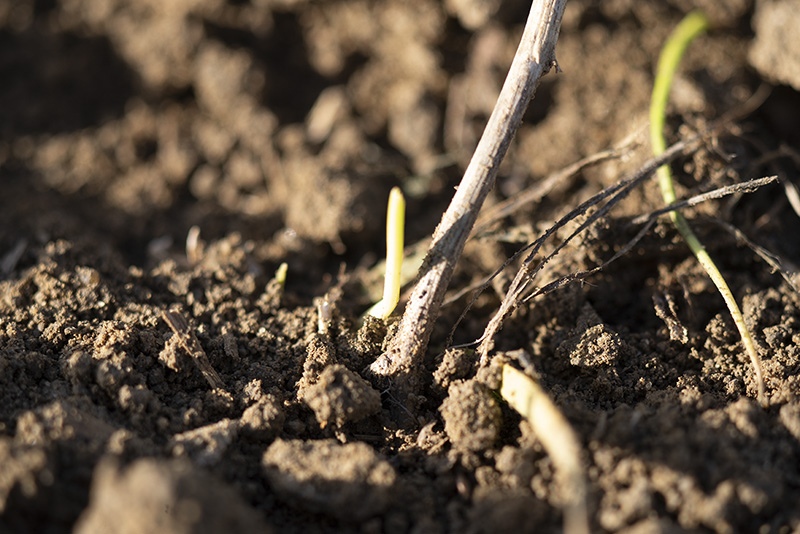
Developed in close collaboration with scientists and agricultural researchers at INRAE, the project moves fluidly between photography, land art, cultivation, and ecological research. The resulting sowing plan functions almost like a biological pixel map stretched across the field, a form of image-making rooted in care, patience, and interdependence. "Rather than cutting leaves or petals, rather than extracting pigments, I wanted to plant the photograph. With Farming Photographs, the field itself becomes the photographic surface."
Almudena Romero Photography has often been tied to identity, recognition, and possession. It fixes a face, names a subject, turns that subject into an image. The eye in Farming Photographs resists that logic entirely. It is drawn from the natural phenomenon of ocular mimicry, the defence strategy by which prey display the eyes of their predators on their skin to deter attack. Romero repositions this strategy at the scale of the Earth. "If the land could draw an eye of its biggest threat, that would be a human eye. No one's particular eye, ego is irrelevant here, but a human eye representing all of us, as a collective threat to Earth."
Removing the individual subject resists the idea of photography as capture. The image becomes less about identification, display, and possession and more about shared responsibility. It is an eye made of many eyes, and it is grown by plants.
Almudena Romero During the winter of 2026, the field experienced severe flooding following record rainfall across southern France. For weeks, the project appeared close to collapse. "To spend years developing a work only to see it mirror so precisely the environmental reality it addresses, to the point of possibly not happening at all, has been devastating. And revealing."
The flood did not interrupt the concept. It exposed it. A living thing, in this case a photograph, but the observation extends further, cannot pretend to be separate from the conditions that sustain it. The work is vulnerable because it is alive. "The work, food, plants, us: everything depends on ecological stability." The near-failure also foregrounded something specific about the materials: some traditional European wheat varieties used in the field struggled to survive the unusually wet conditions, exposing how agricultural histories rooted in particular climates are becoming increasingly unstable. The photograph, it turned out, was farming the same anxieties as everyone else.
Part III: Form, Scale, and the Future
Almudena Romero "We do not always speak the same language, and that is precisely what makes the collaboration important." The scientists bring agronomy, field management, plant behaviour. Romero brings questions about image-making, climate emergency, visibility, and non-human agency. But there is common ground. "Both the scientists and I are farmers. And some words mean the same to us: experiment, failure, resilience, patience."
Almudena Romero It is both an ethical and an aesthetic decision, and she does not want to separate them. "I did not want the work to end as a monumental image detached from the land and labour that produced it. If the photograph is grown as wheat, then it should continue to behave as wheat." The transformation of the image into flour is part of the form of the work. The photograph does not disappear when it is harvested. It changes state. "The work is not the aerial image. It is the growing, the vulnerability, the harvest, the redistribution."
Almudena Romero Yes, and it serves more than one purpose. "I did want to make people feel small when they entered the work, and also create this hyperobject that surpasses us." The false perception of humanity as something detached from and superior to nature is among the claims the work quietly dismantles. We are one more inhabitant, causing disproportionate trouble.
The aerial condition also complicates the idea of photographic visibility in a more formal sense. "We are used to thinking that an image is something we can possess visually. Here, the image is larger than the viewer." The photograph exists, but not always for the human body standing in front of it. It exceeds ordinary perception. There is a productive discomfort in that.
Almudena Romero Both. These possibilities were already present in the early history of the medium. Plants, pigments, light-sensitive matter, impermanence, slow exposure, they were not outside photography. They were part of its origins. But we return to them from a different historical moment: after industrial photography, after digital photography, after a long history of images being produced, consumed, and discarded at enormous speed, and in the midst of ecological crisis. "So to work with plants and light now is not simply to revive an old process. It is to ask what photography can become when it is no longer organised around speed, control, permanence, and capitalism."
The future of photography, for Romero, is not more advanced technology. It is a deeper rethinking of the relationships that make an image possible.
Conclusion
Farming Photographs will remain visible through summer 2026 before harvest in August. When the wheat is milled and redistributed, the image will cease to exist as an image, and continue to exist as everything else. For Romero, that is not an ending. It is the point.