
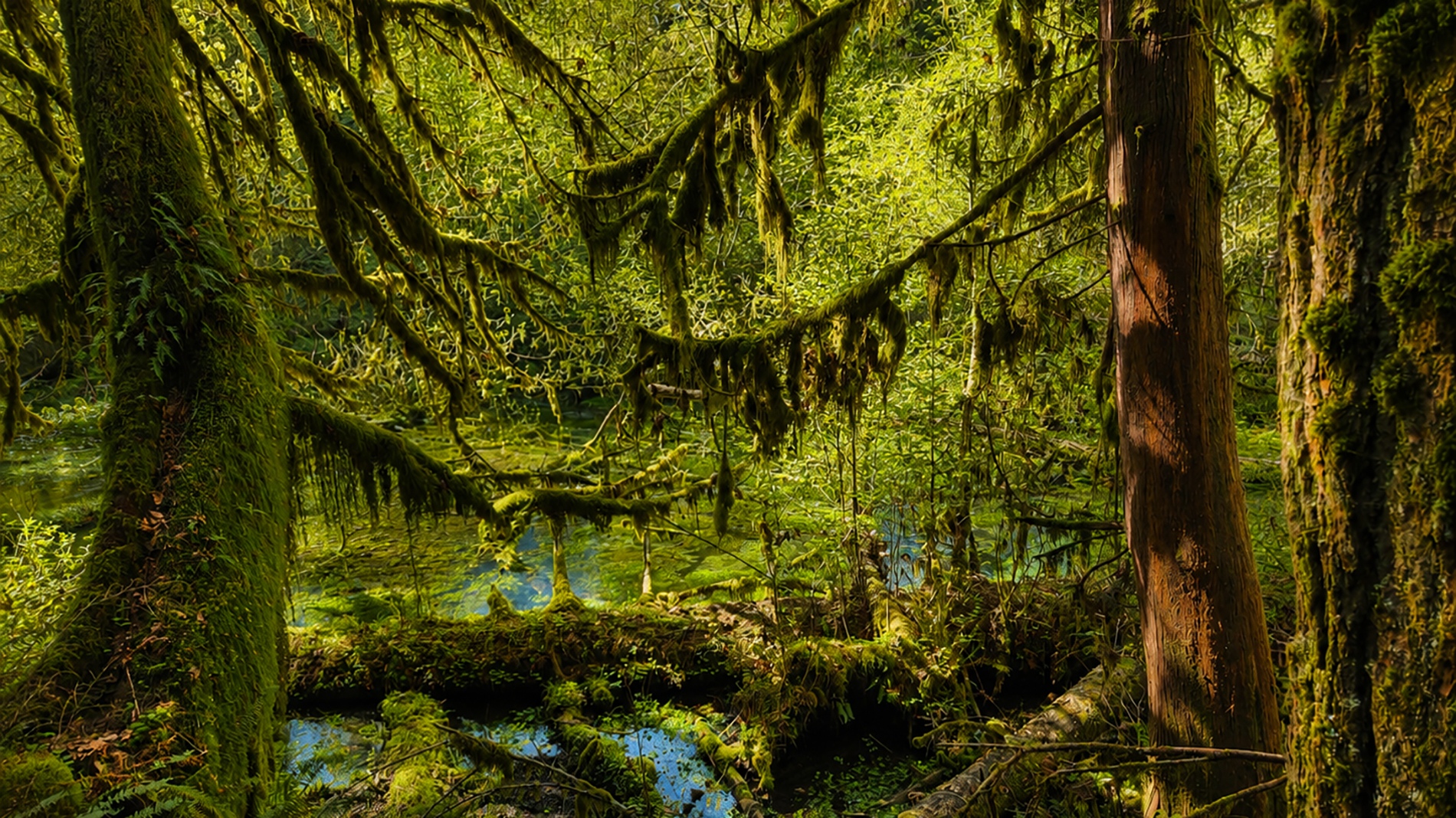
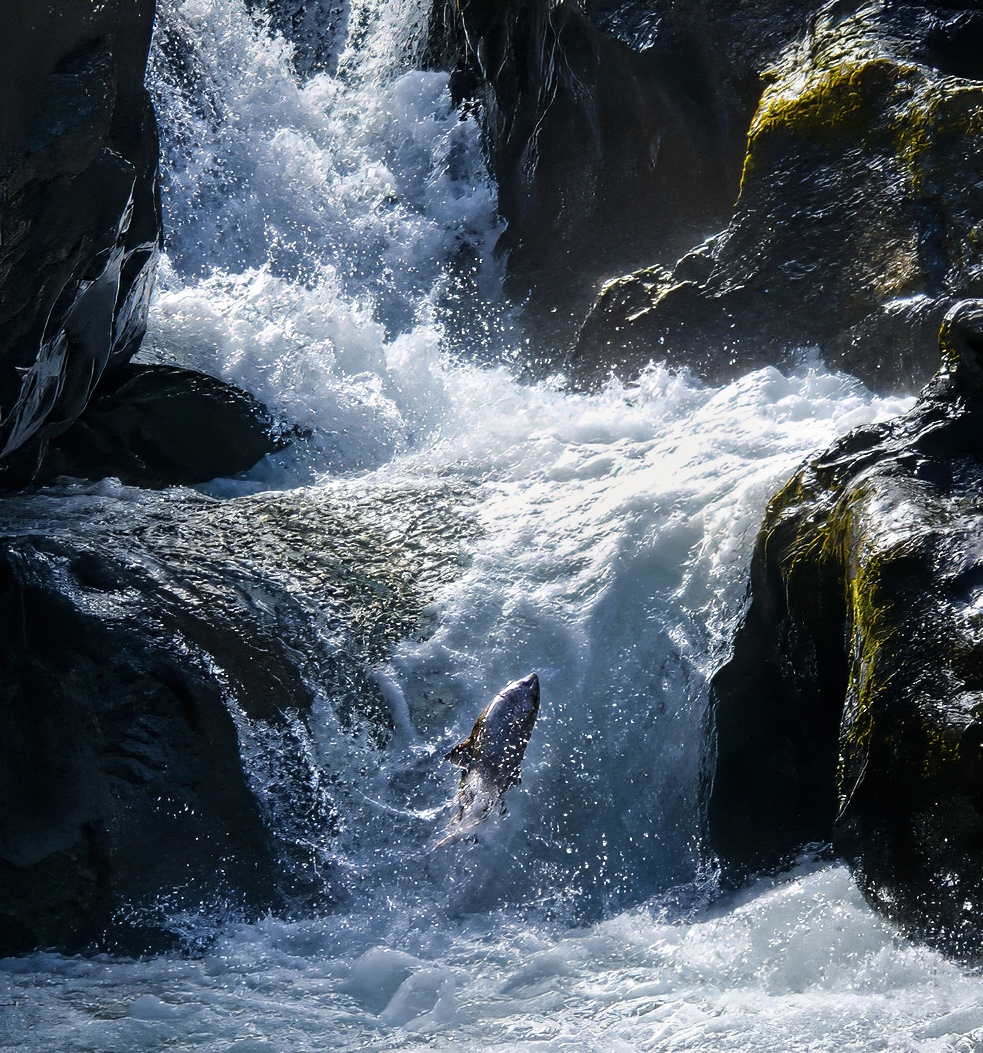
Salmon ascending the falls, October · © Adelina Gowdy
The Cycle of Life
As the inaugural chapter of the Encounters series, this essay is rooted in the old-growth forests near Olympic National Park. Time spent here inevitably returns to a question without a definitive answer: how should we respond to a world of such abundance, and what might we learn from it?
— Adelina
Long before roads were cut through the landscape and rivers appeared on maps, the forests of the Olympic Peninsula were already alive. For the Coast Salish, Klallam, and Quinault peoples, forest, river, and wildlife have never existed as separate realms. Together they belong to a larger living order sustained through continuous cycles of connection and renewal.
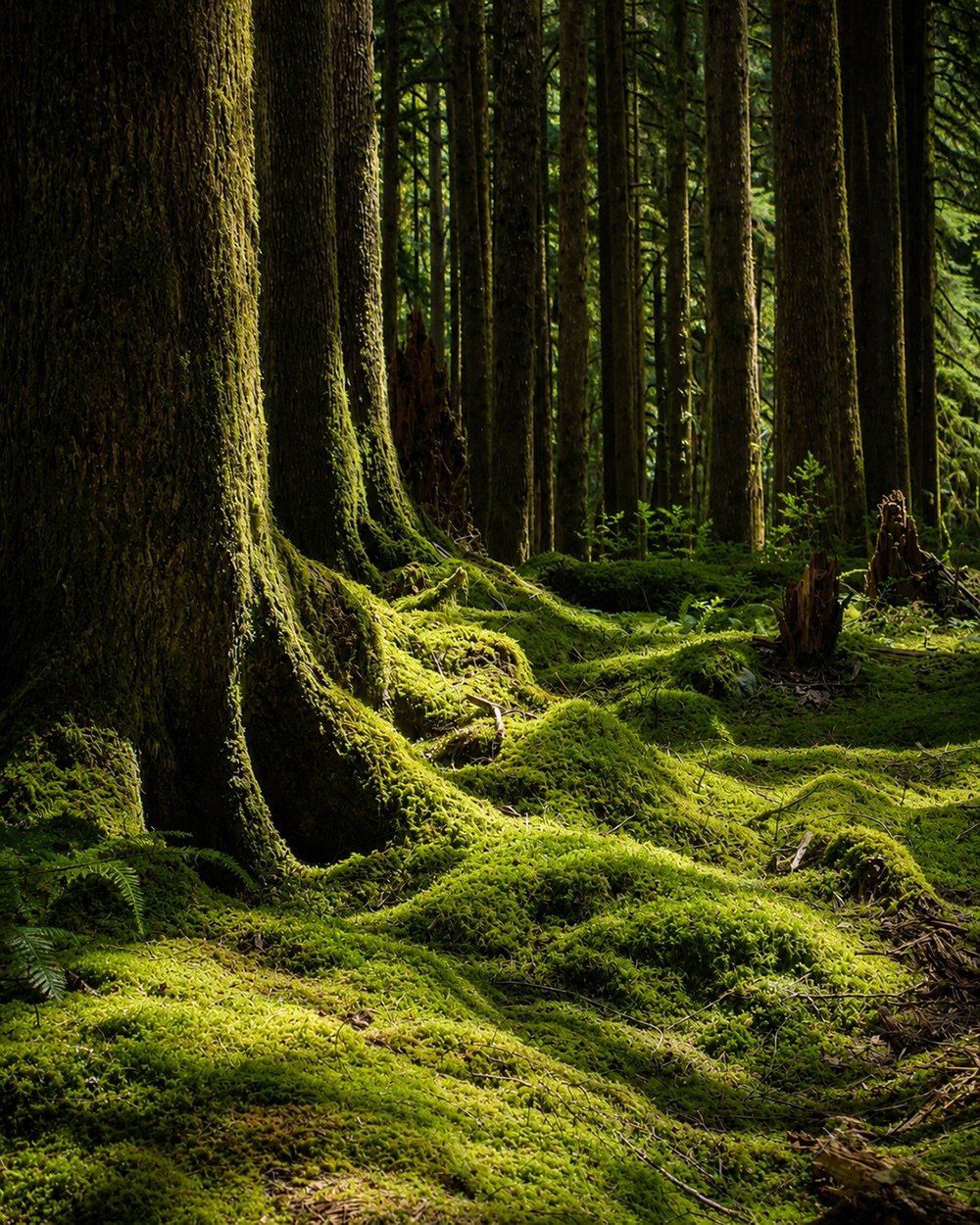
A few steps beneath the canopy are enough to alter one’s sense of scale. Moss blankets the ground, and moisture lingers among roots, within fallen logs, and in shaded hollows. Ancient trees rise overhead, some more than four centuries old, their intertwined roots weaving across the forest floor like swells beneath a green sea.
Water is ever present here. Snowmelt from the mountains, together with rain and moisture within the forest, continually nourishes this landscape. Water gathers in moss, pools in low places, and moves slowly beneath the roots. These seemingly modest cycles sustain the abundance found here. Forest and river are not separate worlds. Each shapes and sustains the other.
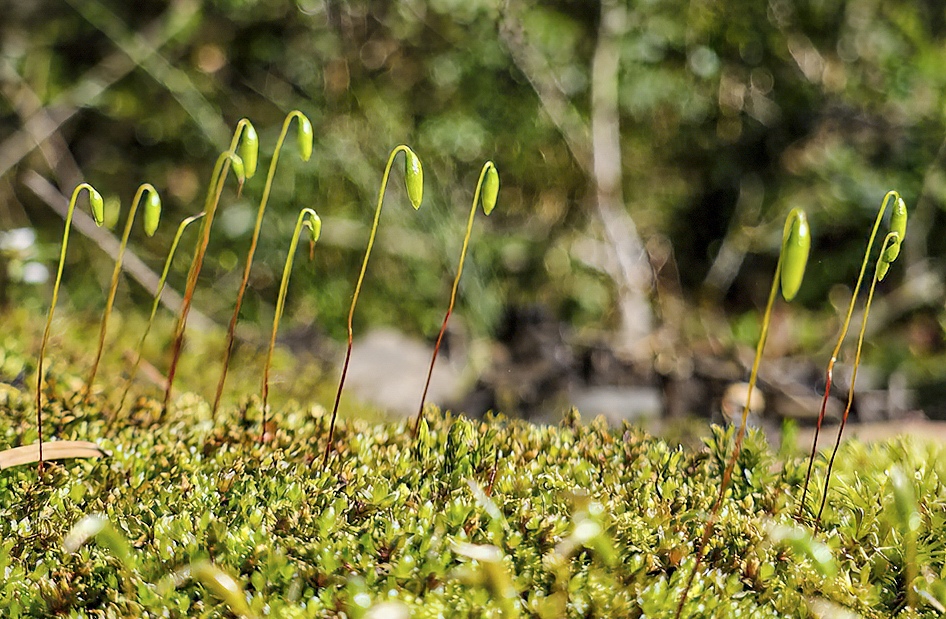
Kneel close to the forest floor and another scale of life comes into view. Moss sporophytes rise from the green carpet on stems finer than thread, each carrying spores that will become the next generation. The same processes that sustain towering trees also sustain structures less than a centimeter tall.
Standing quietly among them, it becomes easy to understand why places like these have long been regarded as sacred.
The river flows through this landscape, shaping the lives that depend on it.
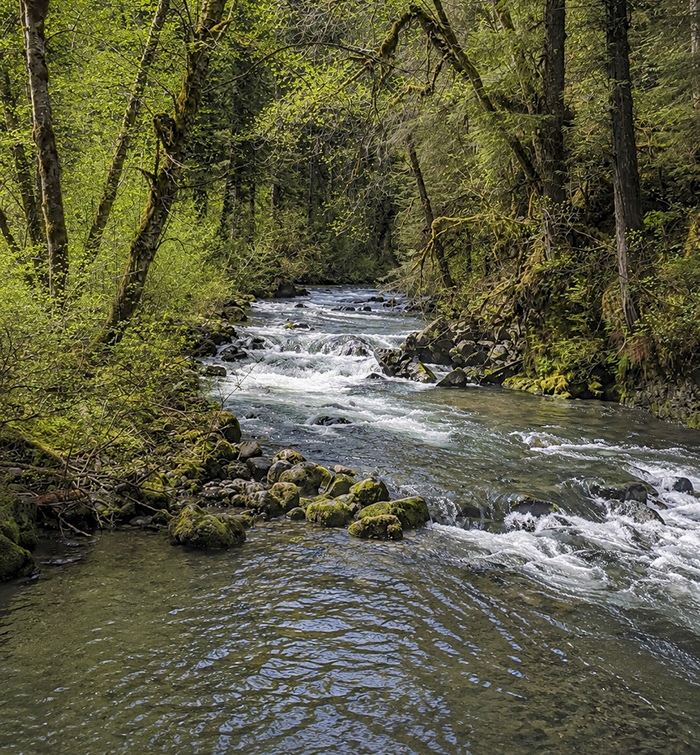
In spring, cold water flows beneath alder and vine maple. Moss covered boulders divide the current into rapids and still pools. Through the clear water, the pebbles and shifting patterns of the riverbed are visible with striking clarity.
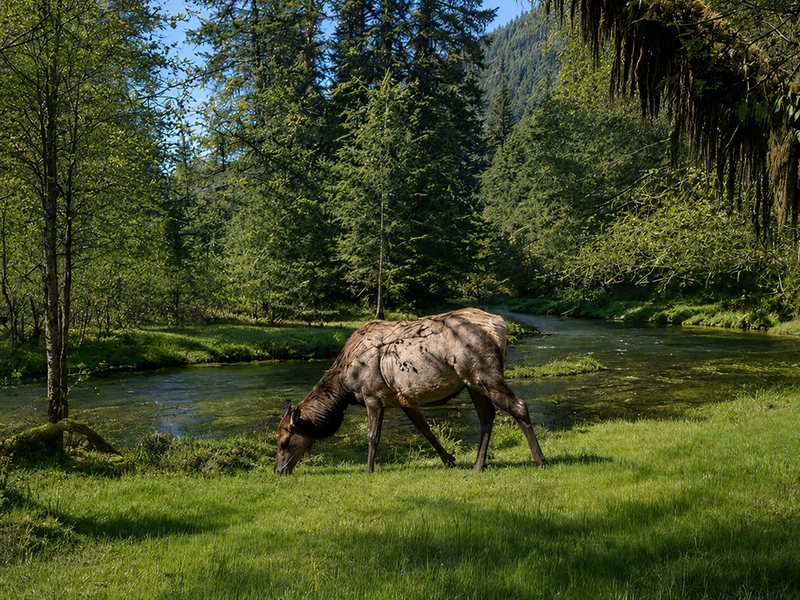
Dense canopy brings shade to the river valley. Roosevelt elk are often seen moving between the wetlands and riverbanks at the forest's edge, grazing quietly as they go. Water is never far away here, and forest and river together shape the world they inhabit. For many forms of life, the river is both a pathway and a place of belonging.
Eventually the current slows and opens into a lake.
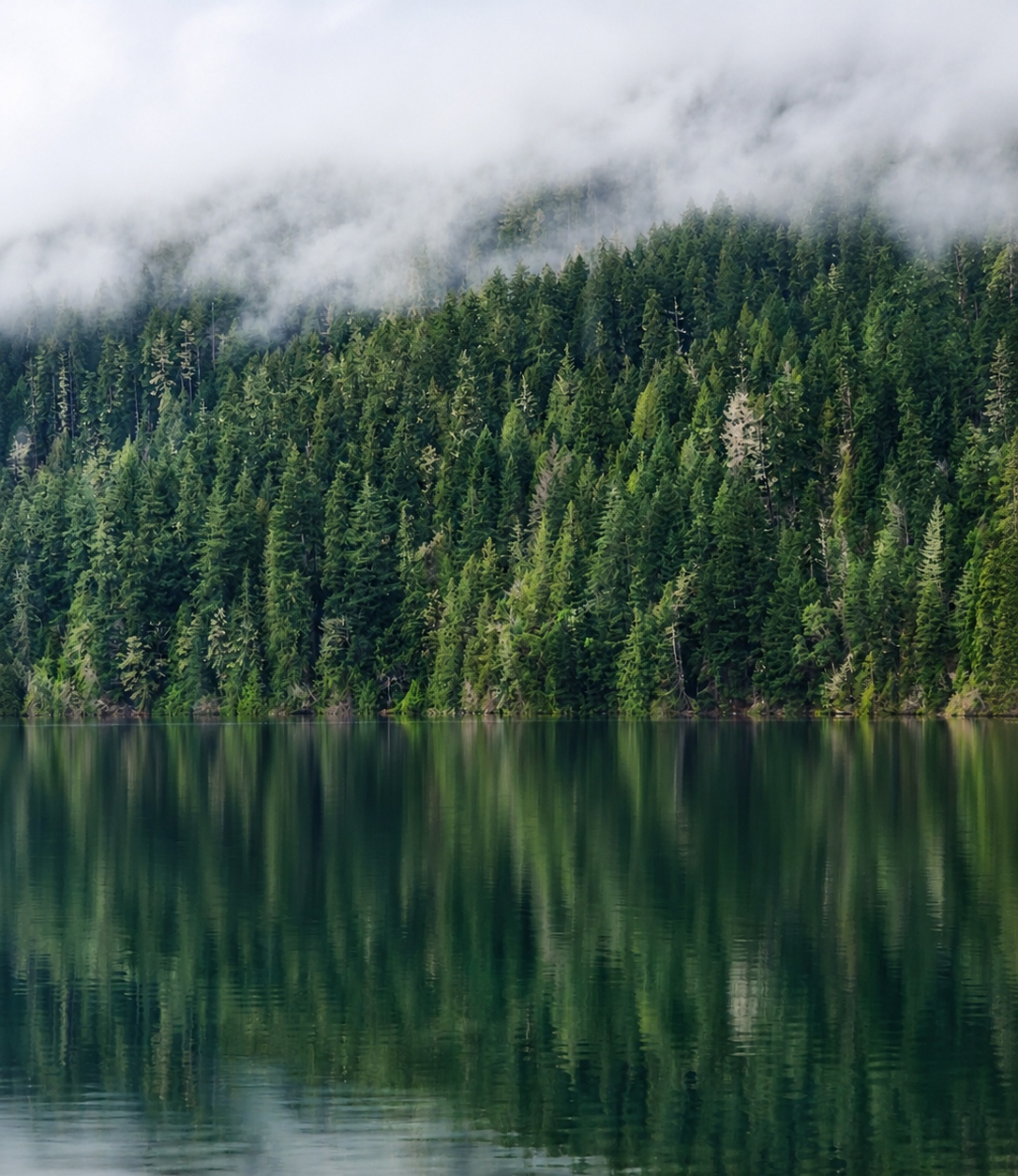
Cloud shadows drift across the surface. Forested ridges dissolve into reflection. Mist gathers, lifts, and disappears. The lake quietly receives whatever enters its view.
The seasons turn, water follows its course, and life continues to renew itself. Every story here continues, and another return is already beginning.
By October, the river begins to change.
The air grows colder. Mist lingers over the water. Coho salmon return from the sea, carrying the energy of an entire ocean into the interior.
An ancient cycle is set in motion once again.
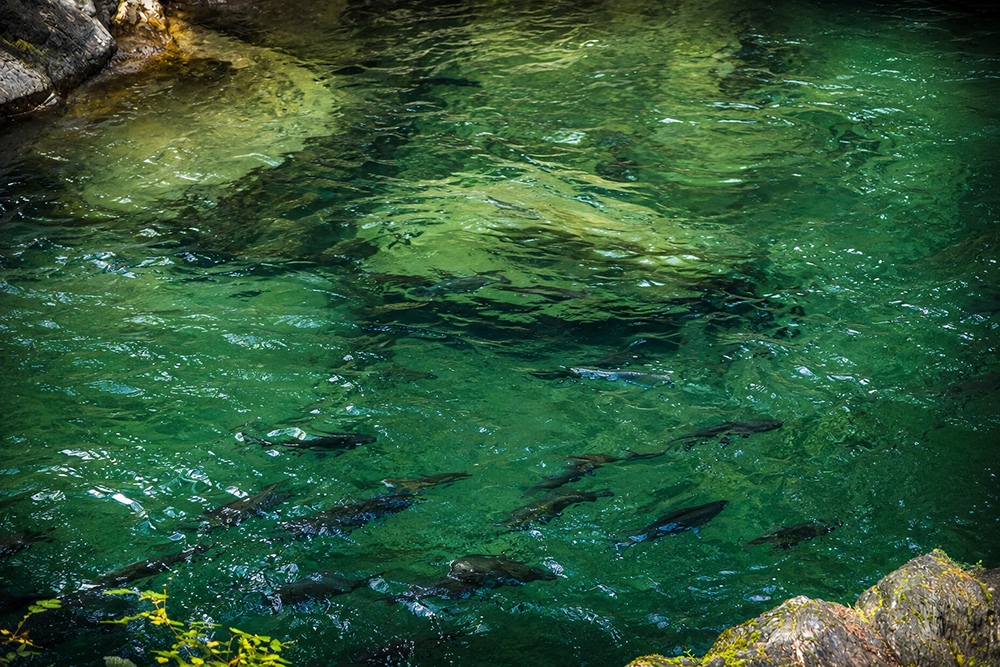
In the deep pool beneath the falls, dozens of salmon wait in silence. Facing upstream, they hold position against the current. There is no urgency. They wait for the right moment.
Then one moves.
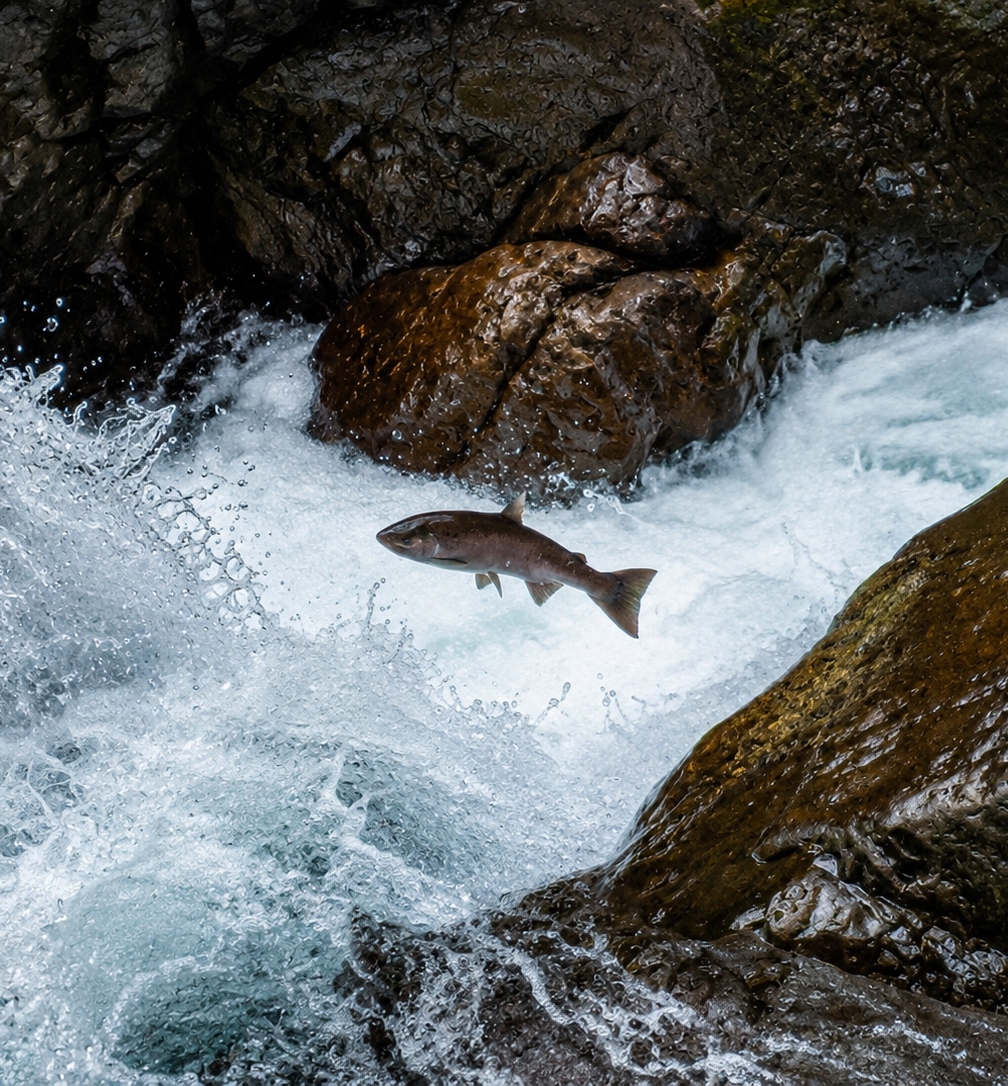
The leap is an act of complete commitment. Bodies drive upward through white water toward a destination they have never seen, guided by instructions carried across generations.
Some clear the falls on the first attempt. Others fall back and try again.
Nearly a century ago, portions of the upper river were blocked by dams. Generation after generation of salmon never reached those waters. They had never seen those stretches of river, nor travelled that route.
Yet when the river was opened once more, they returned.
Within only a few years, salmon reappeared in places their ancestors had once reached. It is as though some memory remained hidden deep within life itself, waiting for the river to become whole again.
Watching them, one cannot help but wonder what kind of memory can endure across generations. The salmon offer no explanation. They simply continue upstream.
They know where home is.
Since early autumn, a bald eagle has occupied a Douglas fir overlooking the river.
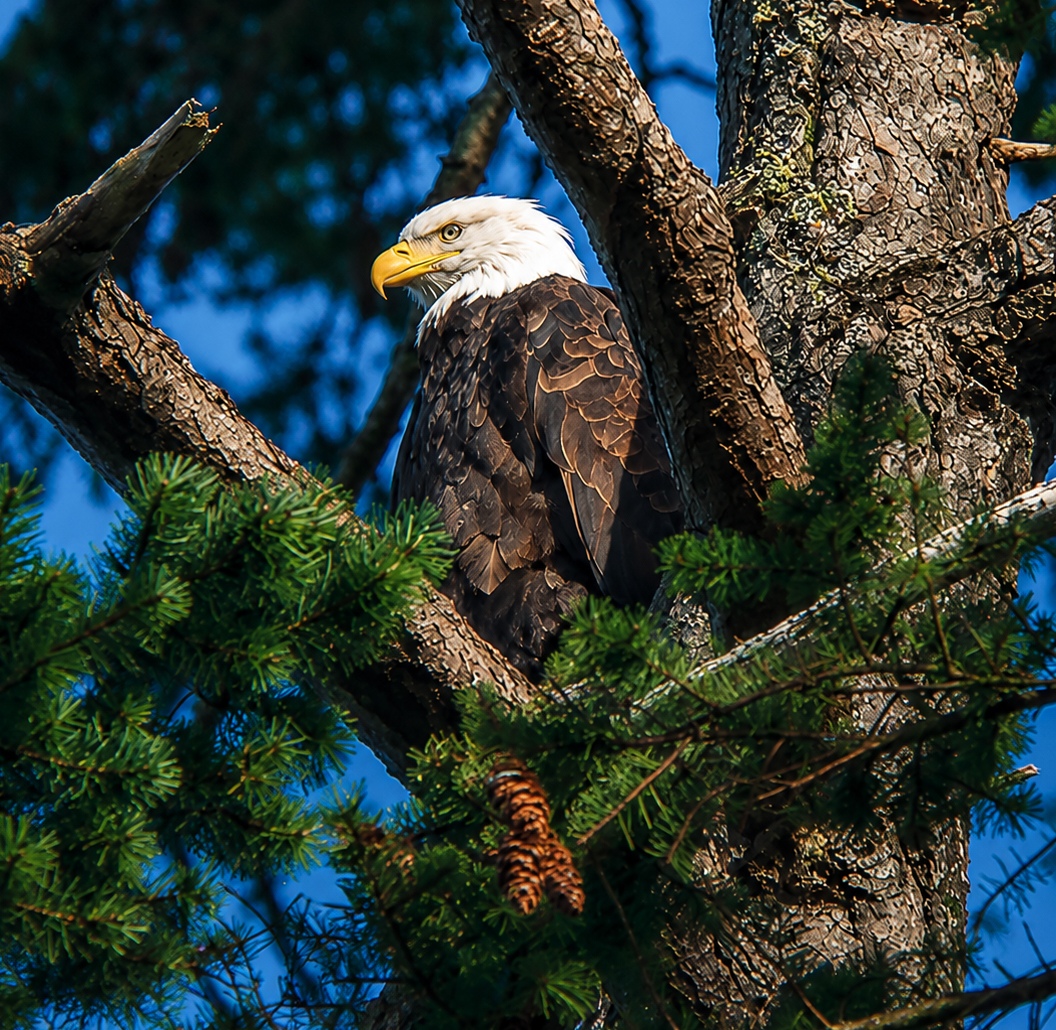
From its high perch, the pools, current, and falls lie in full view. The gaze is attentive and unhurried.
When the season of return draws to a close, nutrients carried inland from the Pacific begin their return to the forest through countless pathways. Having completed the final stage of their journey, the salmon die in the upper river. They leave their lives to the river, and their future to the next generation. Years later, a new generation will return from the ocean and make the same journey once more.
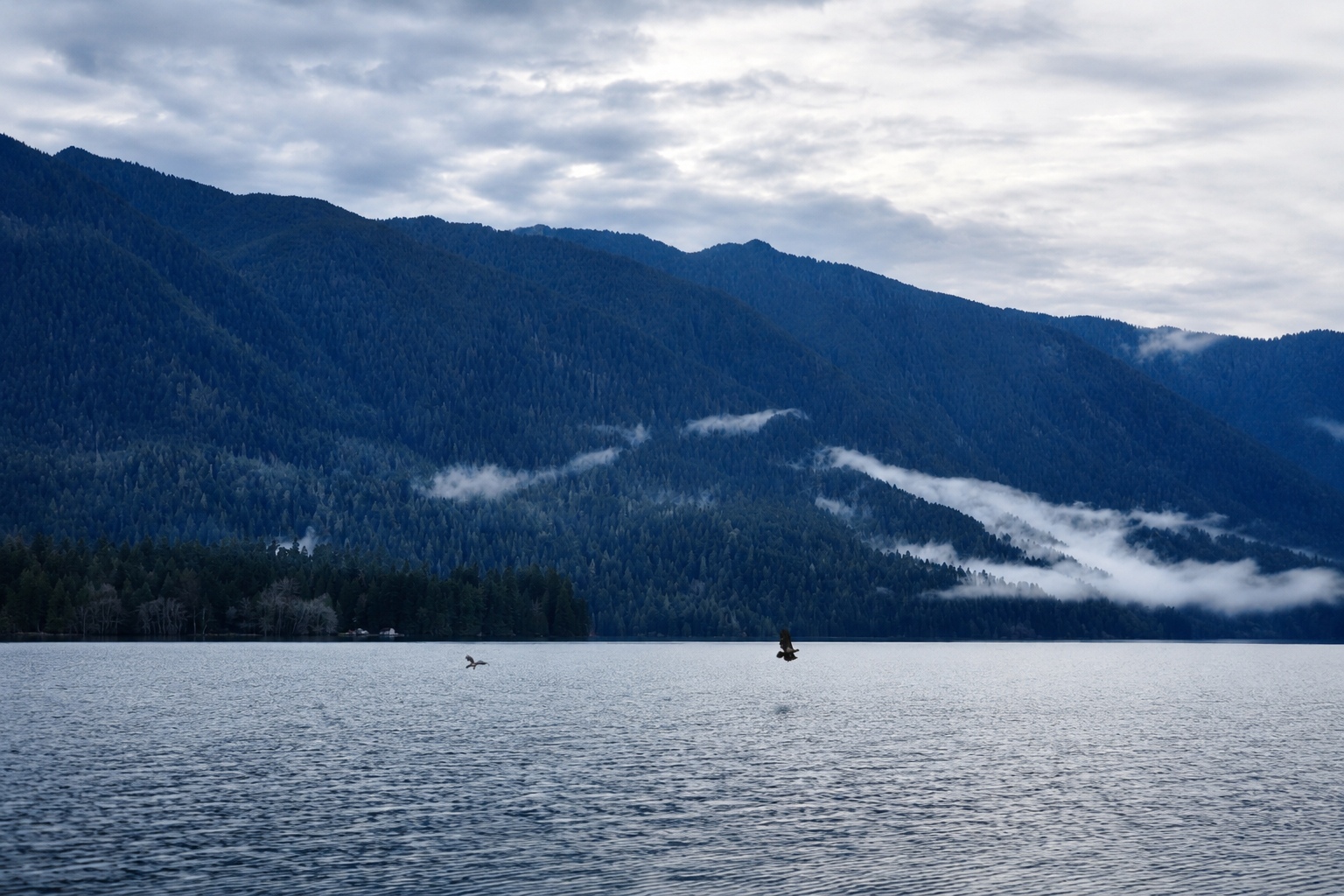
The grove stands at the river's edge.
The lake reflects the sky.
The eagle waits among the Douglas firs.
Abundance is never accidental.
It emerges from relationships maintained across spans of time almost beyond comprehension.
The lesson is simple.
Stay.
Pay attention.
Give back what you take.
Protect the conditions that make return possible.
The salmon know.
They always have.
Photographs taken near Olympic National Park, Washington State, between 2024 and 2026. Some images have been digitally enhanced. All photographs © Adelina Gowdy. This essay is the first installment of the What Returns series within the Encounters collection.