
Blending Culinary Research with Natural Landscape: GOe Reshapes Spain's Basque Coast into an Open Innovation Park
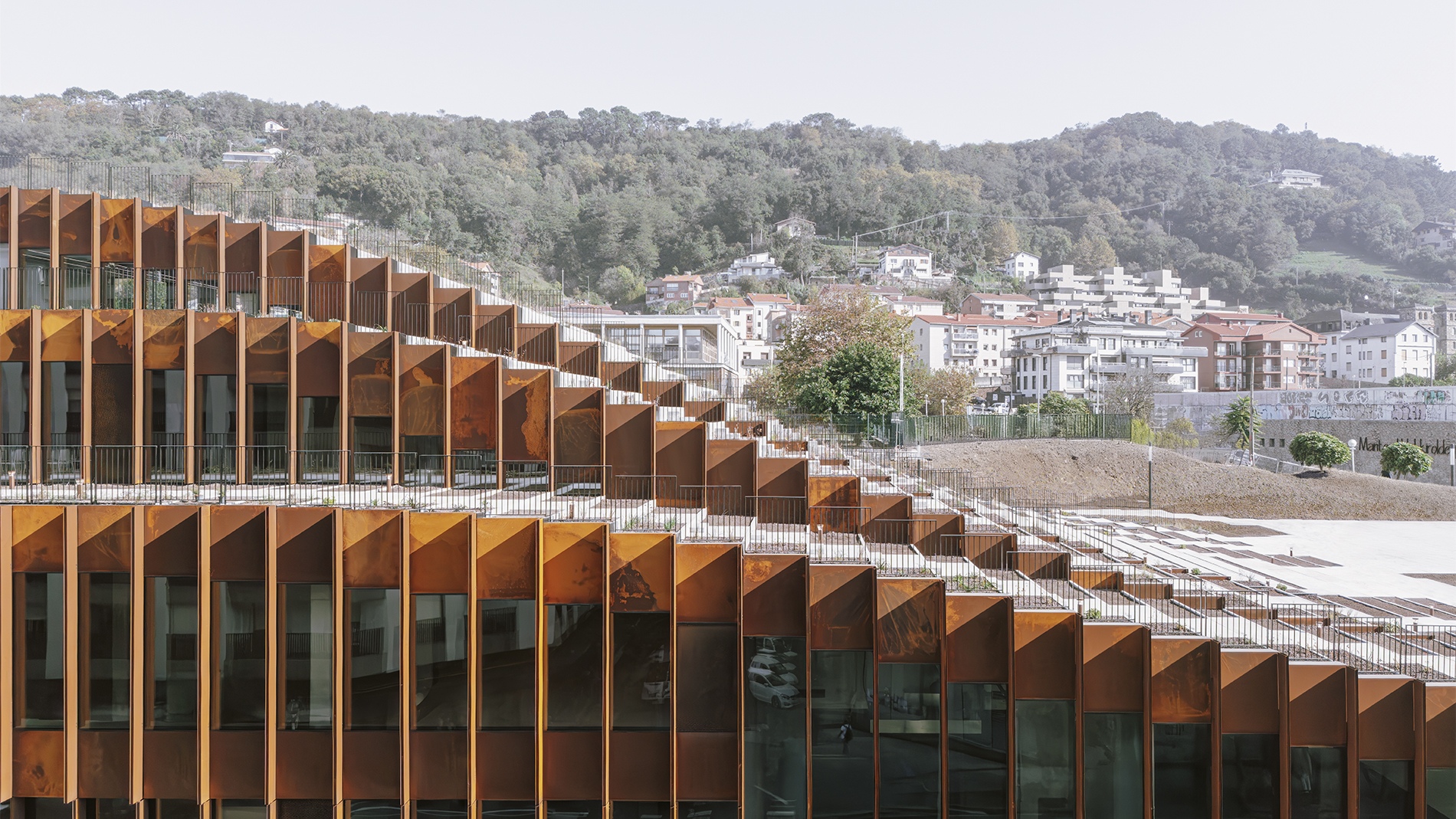
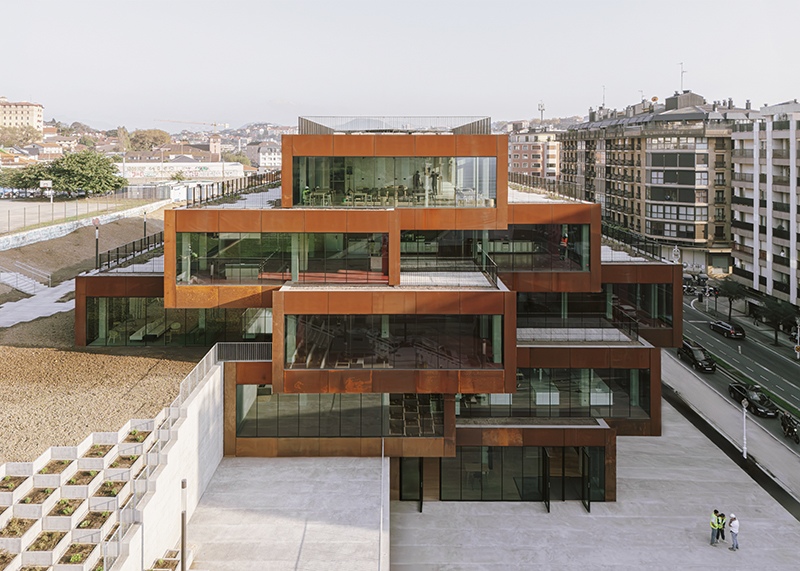
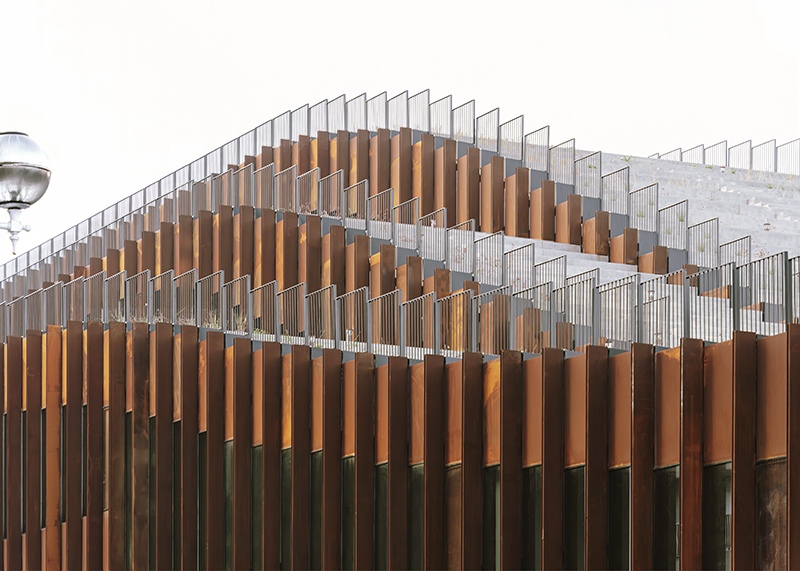
At the base of Mount Ulia in San Sebastián, a building rises from the sloping terrain like a geological formation. Vertical copper-toned fins ripple across its façade, echoing the coastal cliffs beyond. This is GOe, the Gastronomy Open Ecosystem, a 9,090-square-meter (approximately 98,000-square-foot) research center designed by Danish studio BIG and Spanish firm Bat Architecture for the Basque Culinary Center. More than a research facility, GOe is an architectural proposition: a structure that dissolves the boundaries between building and landscape, culinary innovation and public life, institutional program and urban park.
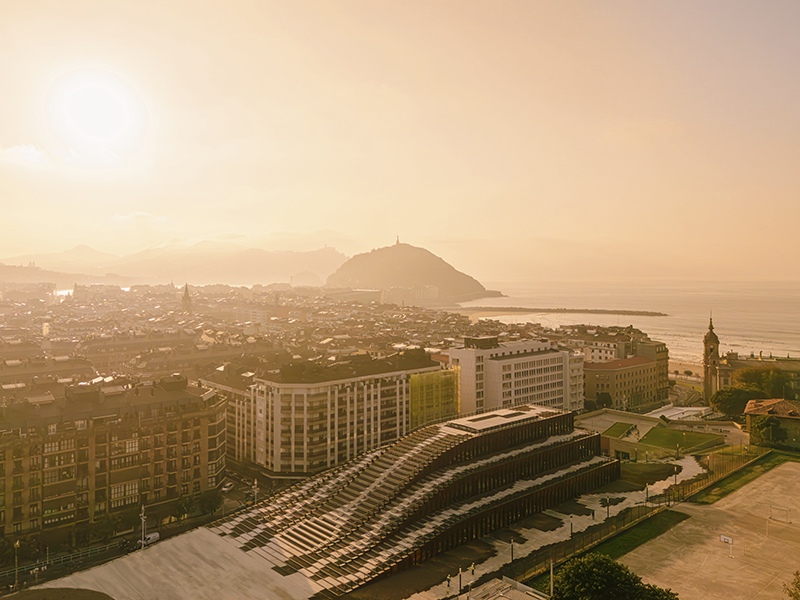
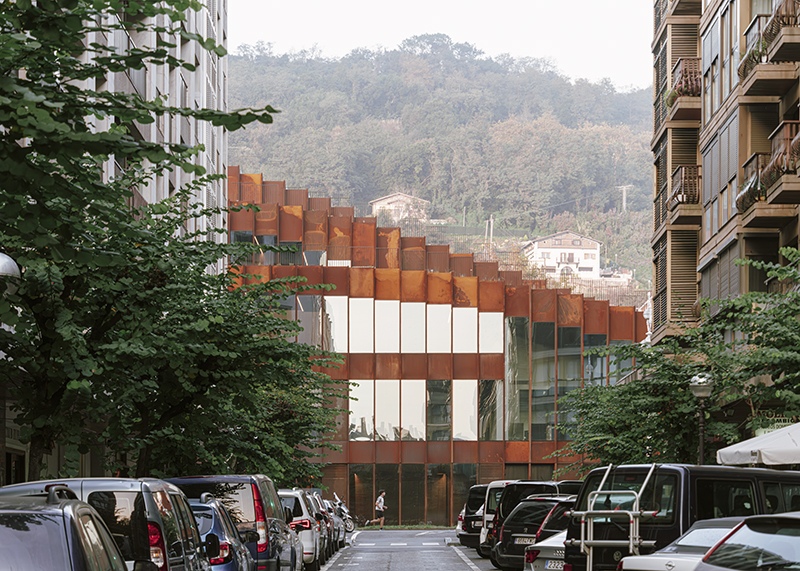
San Sebastián, a city celebrated globally for its gastronomic culture, presents a challenging site. Positioned between the edge of the city and Mount Ulia, the terrain drops ten meters from street level toward the coast. Rather than resisting this dramatic topography, BIG and Bat Architecture embraced it, partially embedding the building into the slope and transforming its roof into a continuation of the landscape itself.
The result is architecture that invites the public to walk over, through, and around spaces typically hidden behind institutional walls. Walkable terraces cascade across the roof, forming outdoor rooms that overlook the culinary activities inside through expansive windows. From the street, the building reads not as an imposing object but as a gentle rise in the terrain, a landscape feature that encourages exploration.
A Staircase as Social Infrastructure
“Conceived as an architectural extension of the dramatic landscape and cityscape of San Sebastián, our design liberates the ground and provides parks on the roof, inviting the public life of the city to engage with the art and science of gastronomy,” explains Bjarke Ingels, founder of BIG.
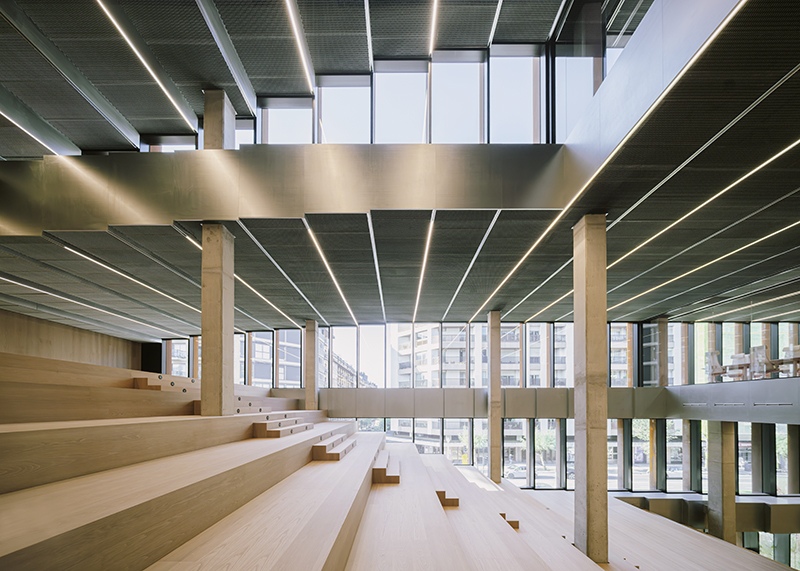
That invitation is most clearly expressed in the building’s central spatial feature: the gastronomy hall. Rather than a conventional lobby, visitors enter a grand staircase with stepped seating that rises through the building’s section. This monumental stair serves a dual role. It is both circulation, connecting kitchens, laboratories, and classrooms across multiple levels, and an amphitheater, where the building itself becomes a venue for lectures, demonstrations, and culinary performances.
The insight behind this design is simple yet powerful. Food innovation thrives on exchange: watching, learning, and the chance encounters that spark new ideas. By making circulation visible and theatrical, the staircase transforms movement into opportunity. Researchers heading to laboratories pass chefs demonstrating techniques. Students glimpse experimental kitchens below. The architecture creates what Ingels has described as carefully curated coincidences—an approach BIG has explored across projects from Copenhagen’s 8 House to Google’s Bay View campus, where buildings become landscapes for interaction rather than containers for isolated activity.
Flexibility as Philosophy
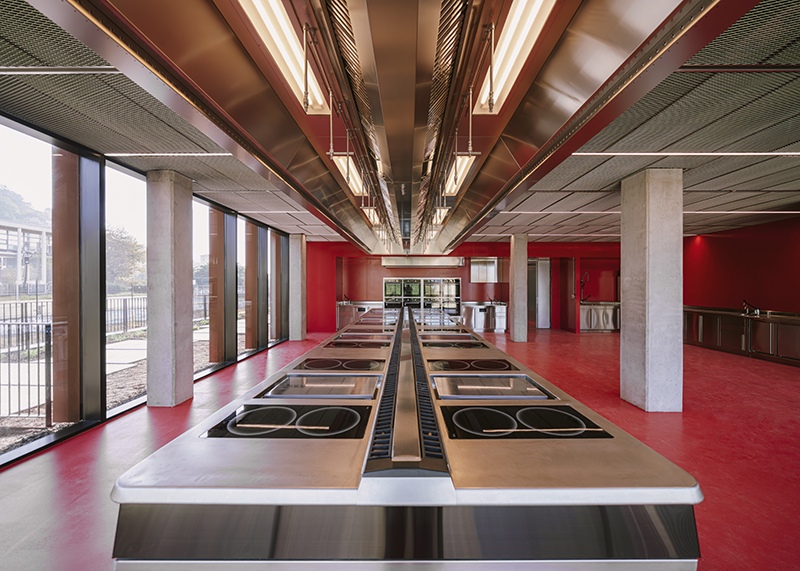
Inside, GOe houses facilities organized around adaptability. The culinary spaces feature coral-red industrial kitchens equipped with professional-grade tools, their vivid surfaces visible through the façade’s large glass expanses. Laboratories and teaching spaces are designed to be reconfigured as programs evolve, with generous ceiling heights and modular systems supporting a wide range of research activities.
Bat Architecture describes the project as translating “the strength of San Sebastián’s landscape into fluid architecture, a building that emerges from the terrain, featuring a public plinth, green terraces, and a monumental staircase connecting inside and out.” Their reference to the Basque coast’s flysch formations—the distinctive layered rock structures shaped by erosion—reveals the depth of contextual study behind the design.
That geological inspiration finds expression in the undulating façade of vertical copper and steel fins. These elements create a rhythmic play of light and shadow, offering a contemporary interpretation of natural striations while also serving practical functions such as solar shading and visual modulation.
Material choices reinforce the building’s dual identity. Public-facing spaces, including a top-floor restaurant open to the city, feature wood and stone finishes that create warmth and approachability. Working areas employ durable, hygienic industrial surfaces, unified through careful detailing and the repeated use of coral red as a visual anchor.
Building as Urban Connector
GOe occupies a site layered with cultural significance. The adjacent route forms part of the Camino de Santiago de Compostela, the medieval pilgrimage path that has drawn travelers across northern Spain for centuries. Rather than turning inward, the building acknowledges this lineage, creating new public space that connects street level to a path wrapping around the structure and leading to the rooftop terraces.
A stepped plaza mediates between the city and the building’s geometry, accommodating the site’s dramatic grade change while providing space for gathering. Landscaping, still being completed, is designed to integrate native vegetation from Mount Ulia and create microclimates around the building.
“Located on the heralded Camino de Santiago de Compostela, we believe that this architectural fusion of gastronomy and technology, city and landscape, building and park has the potential to become a destination in its own right for culinary pilgrims from around the world,” Ingels notes.
That ambition reflects a broader shift in how institutions relate to the public realm. The Basque Culinary Center’s mission is explicitly collaborative, bringing together start-ups, researchers, and chefs. GOe provides not only the physical infrastructure for this vision, but also the spatial conditions that encourage openness, visibility, and exchange.
Architecture in Context
San Sebastián’s relationship with food culture is deeply ingrained. The city boasts one of the highest concentrations of Michelin-starred restaurants per capita, while its pintxo bars have elevated casual dining into a cultural institution. GOe extends the Basque Culinary Center’s presence in the city, complementing its existing headquarters by Spanish studio Vaumm while focusing on research and innovation rather than formal education.
The project also aligns with BIG’s ongoing exploration of how large buildings can maintain human scale and urban connectivity.
Across recent projects, the firm has consistently sought to integrate architecture into its surroundings rather than impose upon them. At GOe, this ambition is pursued with particular clarity. The roof is not simply green but actively usable. The façade does more than respond to climate; it animates the building as light shifts across its surface throughout the day.
Making Process Visible
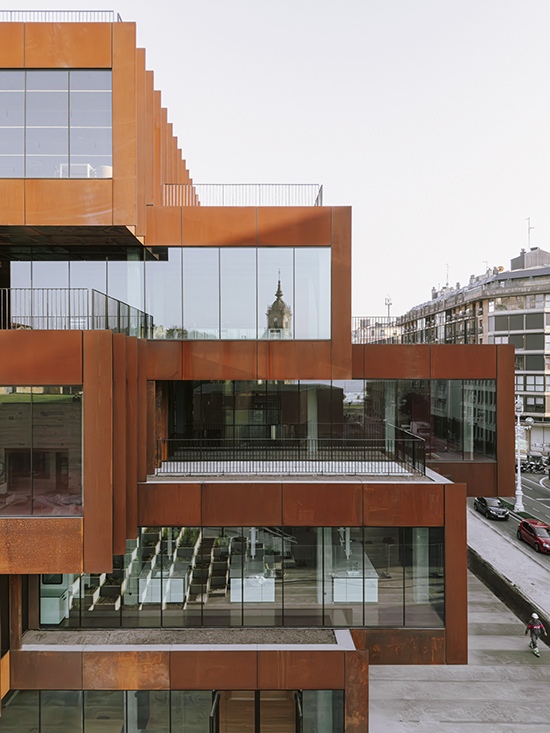
Perhaps GOe’s most significant contribution lies in its commitment to visibility. Research and innovation are often hidden from public view, unfolding behind closed doors. GOe challenges this norm by allowing passersby to observe culinary research through tall windows while moving across the terraces above.
The grand staircase, rising through the building with its stepped seating, reinforces this openness. Learning is framed as something collective and accessible, not secluded. Glass-walled kitchens and laboratories demonstrate that serious research and public engagement can coexist, each enriching the other.
This transparency serves practical purposes as well. Visibility fosters accountability and inspiration. Researchers know their work contributes to a broader public mission. Chefs draw energy from being observed. The architecture encourages excellence not through isolation, but through exposure.
Conclusion
GOe operates at multiple scales simultaneously. Urbanistically, it creates new public space and reconnects fragmented parts of the city. Institutionally, it offers flexible, technologically advanced facilities for culinary research. At the human scale, it provides moments of surprise and delight: a glimpse of the Cantabrian Sea through copper fins, an unexpected view into a vibrant kitchen, a plaza where pilgrims may pause on their journey.
Rather than standing as a monument, GOe functions as infrastructure for a more ambitious idea: making the art and science of gastronomy visible, accessible, and embedded in everyday urban life. Whether it becomes a destination for culinary pilgrims remains to be seen. What is already clear is that BIG and Bat Architecture have created a building that honors local landscape and culture while opening itself to global collaboration.
The terraces rising gently toward the sea invite a journey that mirrors the project’s intent. Upward and outward, grounded in place yet open to new possibilities. Connecting where we have been with where we might go next.