BIG returns to Copenhagen's Ørestad district with a transformative public realm project that reimagines urban spaces.
Image renderings: BIG, Playtime | @playtime.barcelona and Ping-Pong Space | @pingpong.space
A vision to reunite fragmented cityscapes into a living network of culture, community, and ecology
Sometimes the most profound transformations begin with breaking things apart. In Copenhagen’s modern district of Ørestad, acclaimed architecture firm BIG (Bjarke Ingels Group) is preparing to do exactly that. They will crack open pristine pavements and polished surfaces to let life flow back into the city’s veins.
The firm’s winning design for The Impact reimagines more than 50,000 square meters of disconnected urban space surrounding three major venues: DR Concert Hall, Bella Arena, and Royal Arena. Rather than adding another layer to the city’s built environment, BIG’s approach strips away, reveals, and reconnects, transforming three isolated plazas into a unified landscape of light, water, and unexpected encounters.
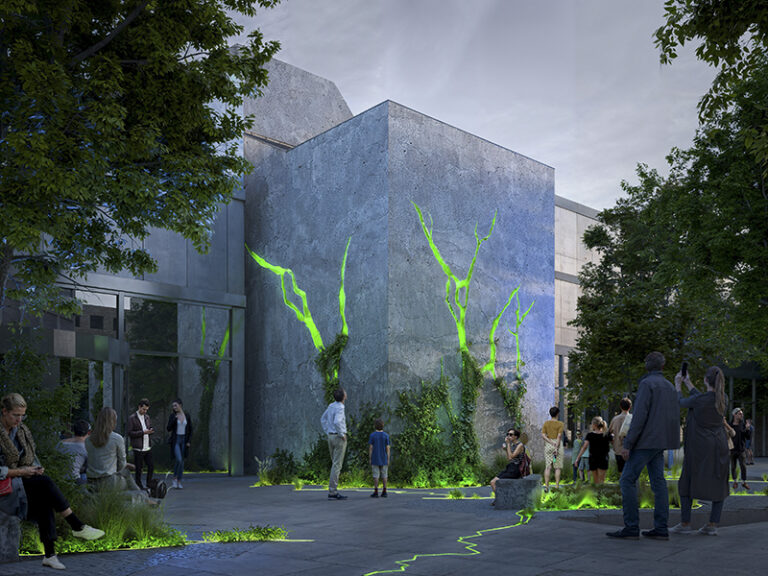
Vertical wayfinding element extending the crack design upward.
Image renderings: BIG, Playtime | @playtime.barcelona and Ping-Pong Space | @pingpong.space
The Art of Urban Kintsugi
“With The Impact, we have taken an approach that breaks open the perfect, finished surfaces of the city like a meteor strike, creating space for all forms of life,” explains Bjarke Ingels, BIG’s founder and creative director.
The metaphor is both poetic and precise. Like the Japanese art of Kintsugi, which repairs broken pottery with gold, this project celebrates rupture as renewal.
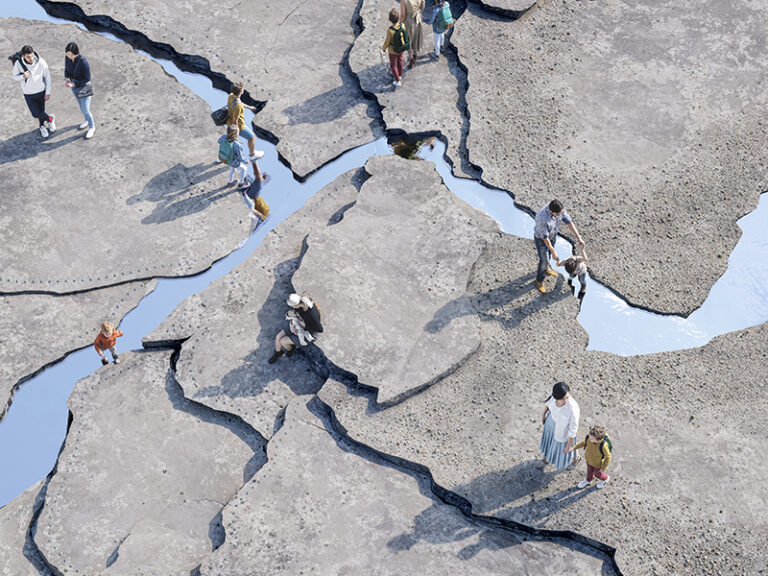
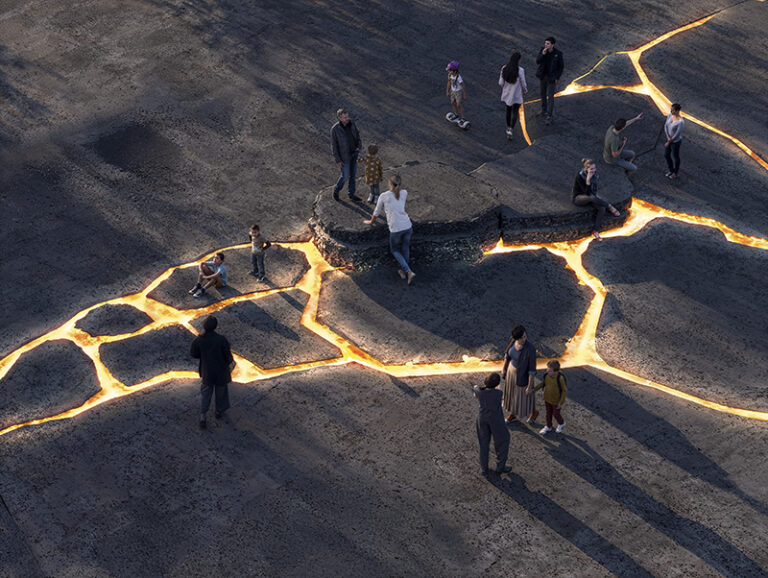
The centerpiece of this urban healing is a sculptural “crack” that traverses all three sites like a golden river of possibility. This is not merely an aesthetic flourish—it is a functioning infrastructure carrying water, light, and movement through the city. The crack serves as both a literal pathway and a metaphorical thread, stitching fragmented spaces into a coherent narrative.
Working with American artist Doug Aitken Workshop and collaborators including NIRAS, Volcano, and RWDI, BIG has created something that defies easy categorization. It is simultaneously landscape architecture, public art, environmental infrastructure, and social catalyst.
The proposal revitalizes three major plazas around Copenhagen's premier concert venues.
Image renderings: BIG, Playtime | @playtime.barcelona and Ping-Pong Space | @pingpong.space
Three Spaces, One Story
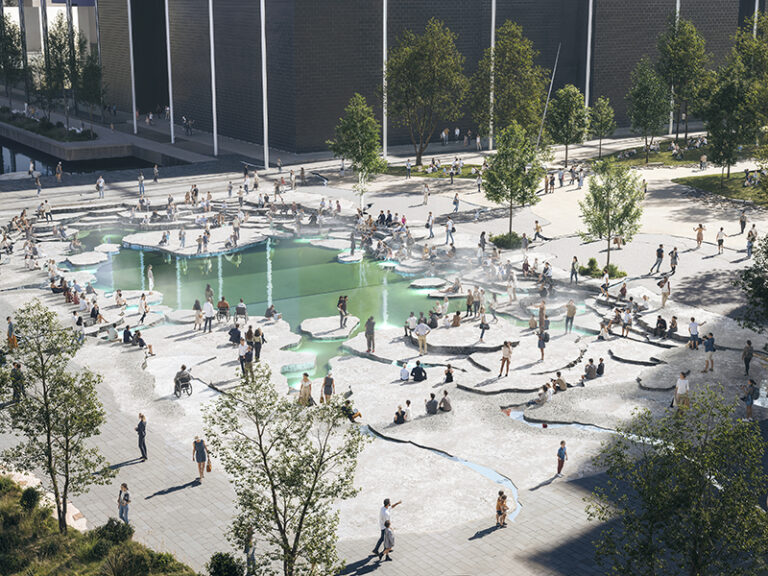
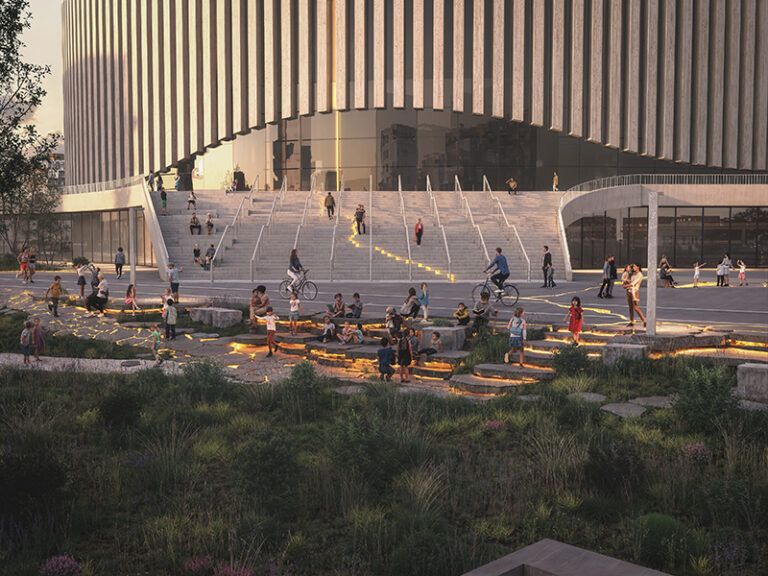
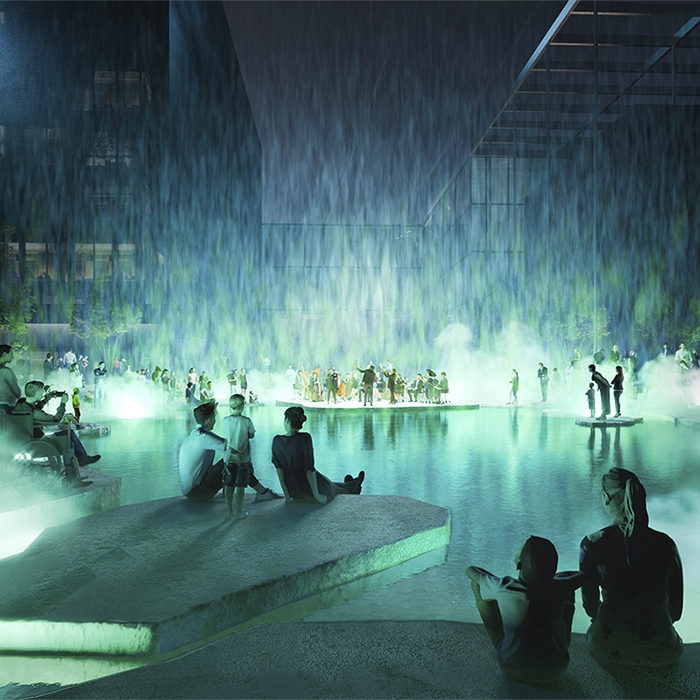
At DR Concert Hall, an existing water feature is transformed from urban void into urban stage. The reimagined space features tiered seating, floating islands, and shallow pools that invite interaction and impromptu performance. Trees and plantings offer shade and softness.
Creative reuse of paving stones forms new steps and seating edges. A luminous ribbon of water and light cuts across the square, its rhythm shifting with daylight and seasons to create a space that feels alive and responsive.
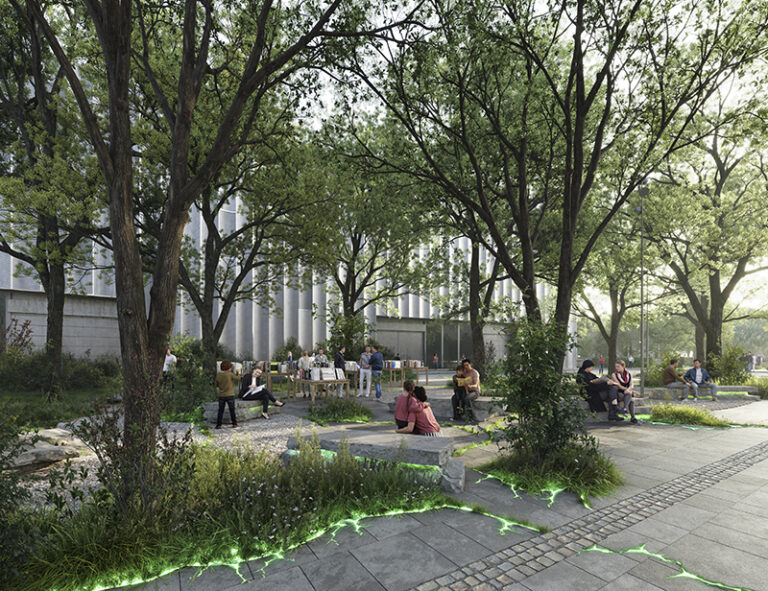
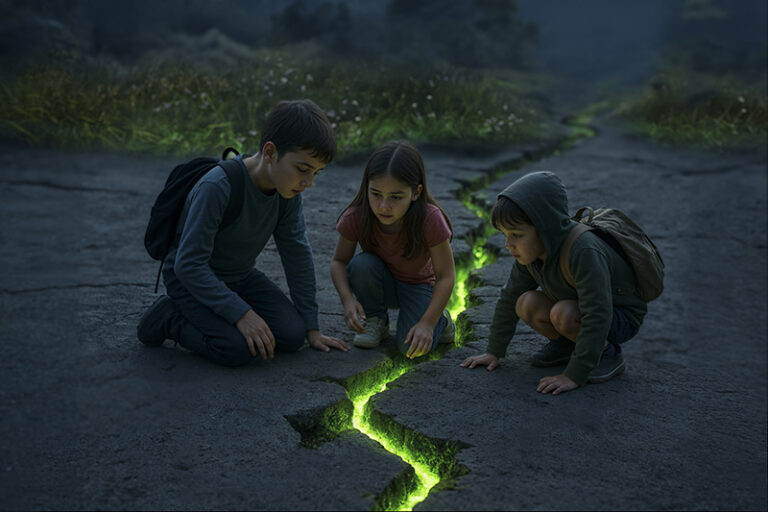
At Bella Arena, the forecourt becomes a series of intimate green rooms, shaped by sunken gardens and microclimate pockets. Seating emerges from the terrain itself. The green crack climbs the building façade, turning architecture into wayfinding. Dense vegetation and seasonal wetlands create urban resilience and cooling effects in response to Copenhagen’s changing climate.
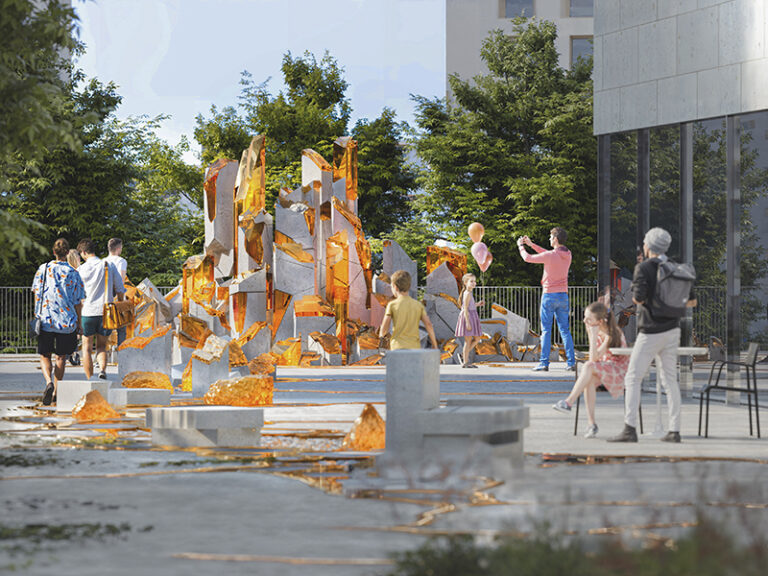
At Fields Mall, the design draws on cosmic imagery. Sculptural artworks appear like meteorites embedded in the ground, redefining the plaza’s role as a threshold. From these impact points, a golden crack flows toward Royal Arena, guiding visitors with light and reflection through a transformed urban corridor.
Sunken green 'rooms' with lush vegetation, stone surfaces, and warm microclimates.
Image renderings: BIG, Playtime | @playtime.barcelona and Ping-Pong Space | @pingpong.space
Where Disruption Meets Sustainability
Remarkably, this bold transformation maintains a low environmental footprint—just 0.1 kg CO₂ per square meter per year. This is achieved through strategic material reuse, including existing granite and concrete repurposed into new surfaces and furniture. Instead of importing materials, BIG builds from what already exists, turning creative recycling into a design principle.
Water management is embedded into the landscape with open channels, permeable surfaces, and sculpted topography. These features not only handle increased rainfall but express it through form and movement. Native vegetation enhances biodiversity while offering shade, comfort, and sensory engagement.
“We demonstrate how art and landscape design can reactivate public space and achieve low environmental impact while delivering a powerful, socially driven transformation,” says Giulia Frittoli, Partner at BIG.
The Impact at Fields Mall plaza starts with two sculptural installations.
Image renderings: BIG, Playtime | @playtime.barcelona and Ping-Pong Space | @pingpong.space
A Homecoming and a Shift in Focus
For BIG, The Impact marks a kind of homecoming. The firm has been part of Ørestad’s story for over two decades, designing residential icons such as VM Houses, The Mountain, and 8 House. But where those projects focused on individual buildings, The Impact turns its attention to the spaces in between.
“It is with immense pleasure that we return to Ørestad 15 years after completing the 8 House,” Ingels reflects. “This time with the intention of breathing life between the buildings.”
Ørestad itself has evolved from empty fields to a dense modern district over the past thirty years. The Impact represents the next phase—shifting from development to connection, from structure to experience.
A sculpted urban void transformed into a dynamic gathering space.
Image renderings: BIG, Playtime | @playtime.barcelona and Ping-Pong Space | @pingpong.space
Interactive Landscapes for a Changing City
What makes The Impact compelling is its recognition that public spaces must serve multiple roles. The same plaza that hosts a farmers market may also need to support daily commutes, concerts, and quiet retreat. BIG’s design allows for that flexibility.
Water features double as splash pads, contemplative pools, or acoustic backdrops. Seating adapts to solo reflection or group gathering. Lighting systems evolve from wayfinding tools to ambient stagecraft.
The green crack that ties the sites together functions as infrastructure and art, carrying stormwater while sparking moments of surprise. Its flowing combination of nature, light, and movement invites the city to breathe again.
The golden crack weaves its way across streets and squares throughout the district.
Image renderings: BIG, Playtime | @playtime.barcelona and Ping-Pong Space | @pingpong.space
A Model for Urban Renewal
As cities face aging infrastructure, climate pressure, and social fragmentation, The Impact offers a new way forward. It shows how existing spaces can be reimagined—not by erasing the past, but by opening it up.
Its emphasis on local materials and circular design provides a real-world model for sustainable urbanism. Its integration of art, ecology, and architecture proves that beauty, resilience, and function can coexist.
More than anything, it reminds us that great public space is not just about design. It is about creating room for the unplanned encounters that make cities meaningful.
This glowing incision connects the three plazas as unifying connective tissue.
Image renderings: BIG, Playtime | @playtime.barcelona and Ping-Pong Space | @pingpong.space
Cracks Where Light Gets In
The Impact brings to mind Leonard Cohen’s line: “There is a crack in everything. That’s how the light gets in.” In an era of polished, controlled cities, BIG’s willingness to embrace rupture feels radical and necessary.
When construction begins, Copenhagen’s residents will see a city opening itself up—not for destruction, but for renewal. What grows from these cracks will not just be beautiful. It will be alive.
For Ørestad, The Impact marks its transformation from a district of buildings into a connected ecosystem. For Copenhagen, it offers a vision of urban life where art, water, and people move together. And for the rest of us, it is a reminder that even the hardest surfaces can be broken open by beauty, connection, and light.