

New findings challenge assumptions about the size and diversity of Rome's frontier soldiers
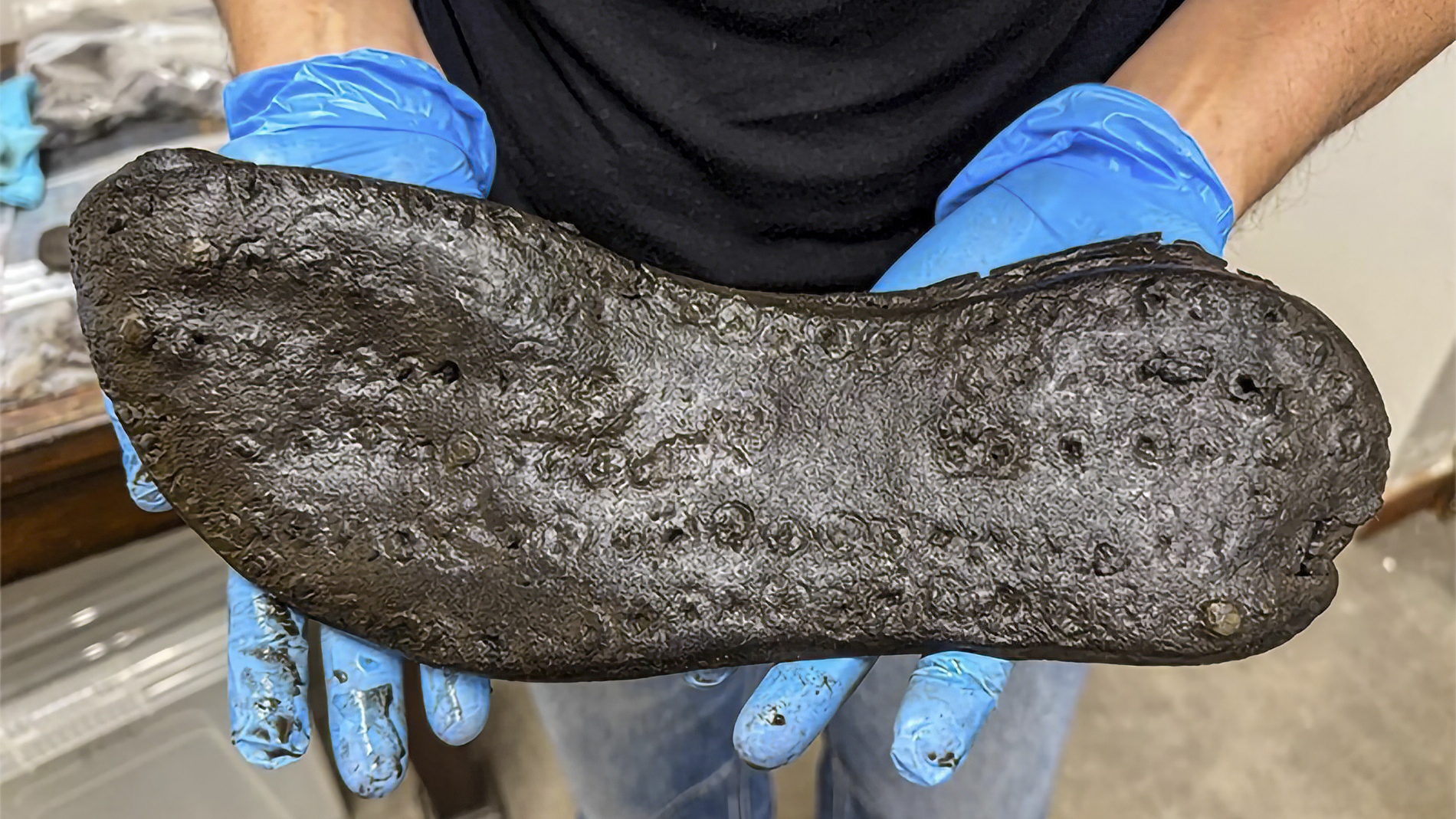
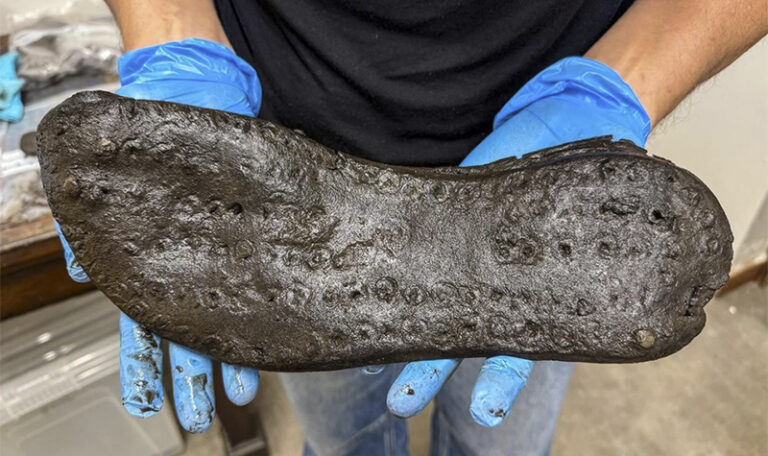
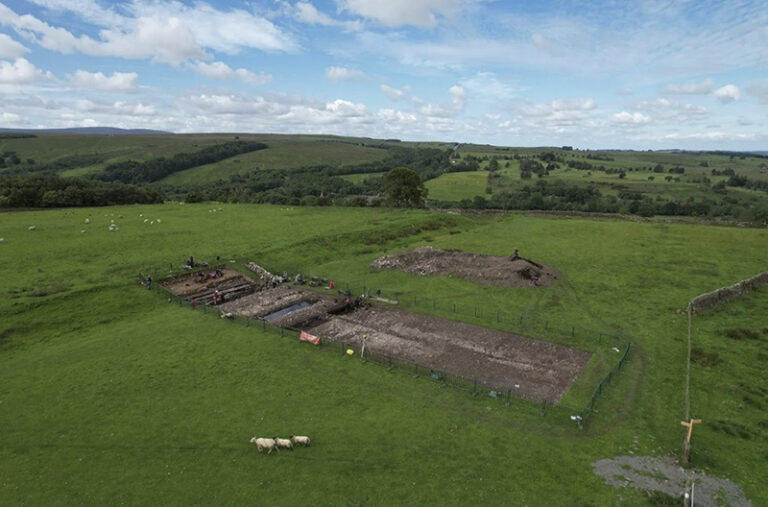
In the windswept landscape of Northumberland, England, just south of Hadrian’s Wall, archaeologists at Magna Fort (Carvoran) have made a discovery that stretches the limits of what we know about Roman military life. Among layers of silt and centuries old soil, they uncovered a collection of leather shoes, many of them unusually large. Some soles measure more than 30 centimeters in length, including one that reaches a record 32.6 centimeters, the largest yet found in the Vindolanda Trust’s archive of Roman footwear.
The reappearance of these remarkable Roman shoes is credited to a five-year research project led by the Vindolanda Charitable Trust and supported by the National Lottery Heritage Fund. In the ancient defensive ditches north of Magna Fort, archaeologists unearthed nearly forty shoes. Once dug to ensnare enemies some two millennia ago, ditches have since transformed into natural “time capsules.” Their waterlogged, oxygen-poor conditions preserved the leather artifacts in extraordinary detail for the present day.
Even after accounting for possible shrinkage during preservation, the shoes remain strikingly large. In contrast to the nearby Vindolanda collection, where only 0.4 percent of footwear measures longer than 30 centimeters, fully 25 percent of the Magna finds exceed that length. These discoveries are more than remnants of footwear; they are tangible traces of the people who once wore them, and their unusual size has opened an entirely new avenue of archaeological investigation.
Expert insights
To better understand the discovery, we spoke with Dr. Elizabeth Greene, Associate Professor at the University of Western Ontario, who has worked at Vindolanda since 2002. Specializing in Roman footwear as evidence of daily life, Greene noted that around 38 to 40 shoes have been found at Magna across several seasons, including 33 uncovered in May and June 2025. Of these, eight exceeded 30 centimeters. By contrast, out of 3,704 measurable shoes at Vindolanda, only 16 fall into that size category.
Why so large? The simplest explanation, Greene argued, is that the shoes were worn by people who were themselves larger than average. The shoes were deliberately discarded, not lost, leaving behind a trace of physical presence. Theories about thick socks or insulation, she said, cannot account for the consistent pattern.
This raises broader questions of identity. Magna predated Hadrian’s Wall and hosted a diverse, multiethnic garrison. Auxiliary soldiers stationed there included Syrian archers, Batavians from modern Netherlands, and Dalmatians from the western Balkans. These troops, recruited from conquered territories, reflected a range of physical characteristics. As Greene noted, much like today’s populations, ancient communities varied in stature due to genetics and nutrition. It is entirely plausible that some of Magna’s soldiers were simply bigger.
Preservation and its fragility
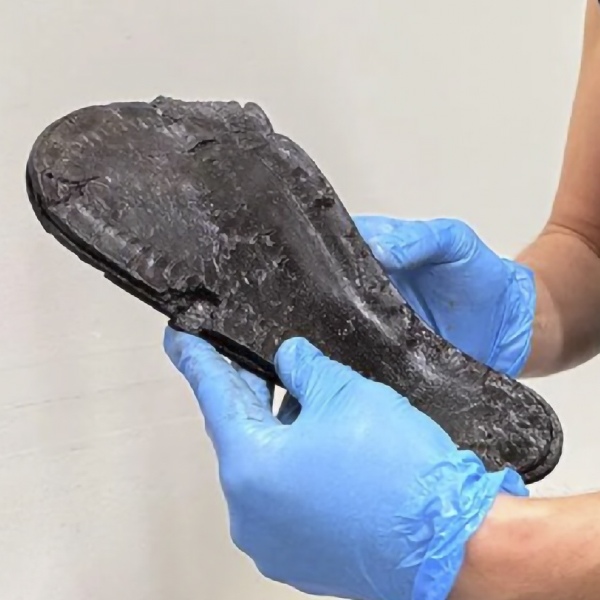
The preservation of organic material at Magna is remarkable, but fragile. Greene warned that climate change now threatens sites like Magna and Vindolanda. Prolonged dry spells followed by heavy rains disrupt the conditions that once safeguarded these finds. As water levels drop, wooden structures and leather shrink and crack, allowing oxygen and bacteria in. When rains return, decomposition accelerates. What nature protected for centuries could be lost within decades.
Interdisciplinary approaches
To counter these threats and maximize knowledge, Greene and colleagues work across disciplines. Chemists such as Gillian Taylor analyze proteins, while genomics experts attempt to extract DNA from the leather. PhD students study tanning techniques and employ 3D imaging to capture faint footprints left in worn soles. These methods allow researchers to glimpse not only the shape of a shoe but the individual who once walked in it.
Some have suggested cavalry soldiers may have required sturdier, larger footwear, but Greene emphasizes there is no definitive evidence yet. What is certain is the scale of the difference: about one-third of Magna’s shoes fall into the extra-large category, compared with a fraction of a percent at Vindolanda. Even with Magna’s smaller sample size, the contrast is meaningful.
Conclusion
The unusually large Roman shoes unearthed at Magna Fort are far more than curiosities. They offer a rare window into the physical presence and cultural diversity of soldiers living at the edge of the empire. Through anaerobic preservation and modern scientific tools, we now access stories once thought lost. Yet these insights carry urgency. As climate change destabilizes the conditions that preserved these artifacts, the window may soon begin to close.
In every cracked sole and worn heel lies a quiet but powerful testament to the human dimension of history.