"When I hear music, it translates into color."— Toots Zynsky
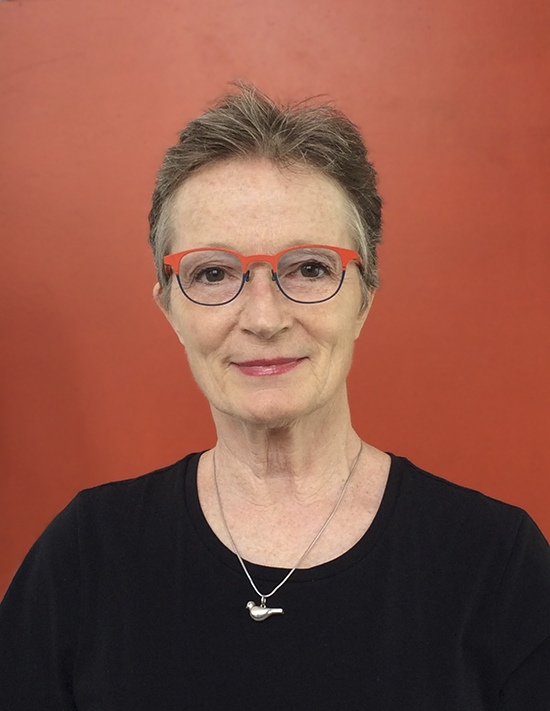
In the pantheon of contemporary glass artists, few figures command the reverence and recognition accorded to Toots Zynsky. Her revolutionary filet-de-verre technique has not only redefined the possibilities of glass as an artistic medium but has also established her as one of the most innovative voices in modern craft. Through decades of experimentation, loss, and renewal, Zynsky has created a body of work that transcends traditional boundaries, weaving together the traditions of painting, sculpture, and decorative arts into something entirely her own. Recently we sat down with her and had a wonderful conversation to learn about her art journey.
2025 American Kestrel, Image credit: Toots Zynsky
From Music to Glass Pioneer
Zynsky’s artistic journey began not with glass, but with music. Starting piano at age three and pursuing formal training by five, she demonstrated early virtuosity under the tutelage of a “wonderful German piano teacher.” Yet despite her profound love for music and discerning taste across genres, a crucial realization emerged during her teens: “It was very clear to me that I couldn’t compose.” This moment of clarity, rather than representing defeat, became the catalyst for her visual artistic awakening.
“I always really loved drawing and painting and making things,” Zynsky recalls, crediting her encouraging mother for nurturing these parallel interests. By age eleven, her path had crystallized with a singular goal: Rhode Island School of Design, which she had been told was “the best art school in the country.” This declaration came despite RISD’s lack of a glass program at the time and her own uncertainty about her specific artistic direction.
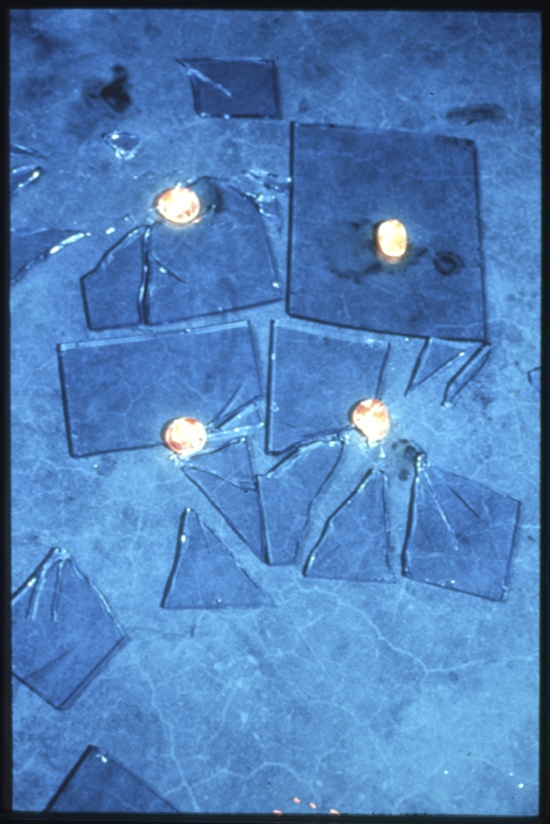
1973 Video Time Release InfraRed, Image credit: Buster Simpson
The Serendipitous Discovery
Freshman year at RISD proved challenging. After general studies in the Foundation Building, where freshmen were “kept quite isolated in those days,” Zynsky found herself uncertain about her direction. “I still didn’t know what major I wanted and I didn’t know if I was really in the right place,” she recalls. Rather than withdrawing permanently, she opted for a leave of absence and secured a pass from the buildings and grounds department to explore every corner of the school.
Department after department failed to ignite passion; everything seemed “very still” to her kinetic sensibilities. “I visited every department and I thought, I love what they’re making but I don’t want to do that.” As she prepared to leave the final building, ready to withdraw entirely, fate intervened in the most dramatic fashion.
“I was heading for what I thought was a set of doors to a stairwell,” she remembers. “And I opened the doors and there was this roar and this really loud music playing and people suddenly dashing in and out of this doorway.” Though marked “Ceramic Storage Room,” the space contained a “wild scene” of “furnaces belching flames and sound with loud music playing, and they were making these crazy movies and all dressed in wild drag, and that’s 1970, that was not exactly common then.”
The energy was intoxicating. “Everyone was moving… not crashing into each other while swirling hot glass around,” she remembers. The dynamic resonated deeply with someone who “also loved dance” and possessed naturally high energy. “I’ve always had too much energy so I needed to move. So sitting still doing something didn’t appeal to me in any other department and here they were constantly moving. I thought, ‘I can do this’.”
Despite this electrifying discovery, Zynsky initially remained on leave for 8 months, investigating pre-med programs. Her parents, however, had been listening. In a rare display of spontaneity, they surprised her with a spot that had just opened in a glassblowing course at Haystack Mountain School of Crafts. “My parents said we’ve got a surprise for you,” she laughs. “We drove North for over 6 hours, I’d never been up that far in Maine.”
The instructor at Haystack was none other than Dale Chihuly, the very person who had encouraged her during that transformative week at RISD. After the course, both Chihuly and other instructors urged her return to school. “I finally went back the following Spring and gave myself one semester,” she decided. “If by the end of the semester, I can do something with this, then I’ll stay. If not, I’m done forever.” The ultimatum proved motivating: “If you’ve only given yourself one semester, then you work really hard.” The gambit paid off spectacularly.
1982 The Guardian, Image credit: Toots Zynsky
Forging New Territories
Zynsky’s development coincided with the burgeoning studio glass movement. In the summer of 1971, Chihuly invited her to Washington State, where she participated in founding Pilchuck Glass School. This immersive experience in “the land of enlightenment” deepened her commitment to glass while introducing her to a collaborative culture that challenged traditional hierarchies.
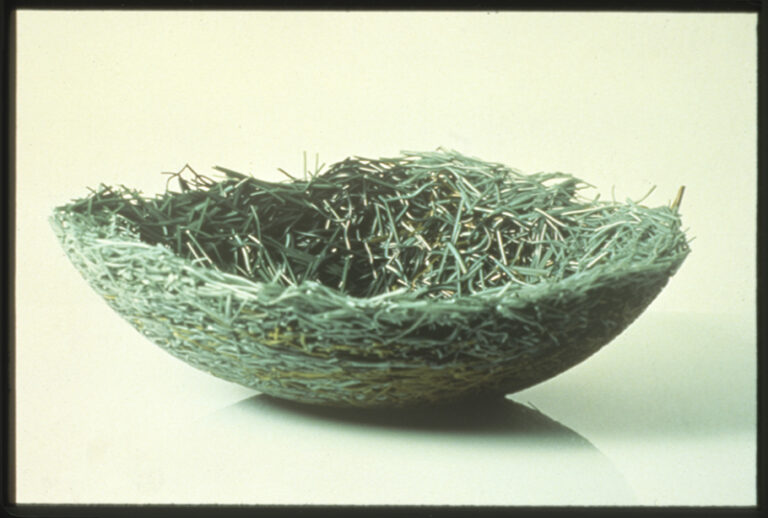
After receiving her BFA from RISD in 1973, by 1980, she had become assistant director and head of the hot shop at the New York Experimental Glass Workshop (now UrbanGlass). Here, her experimental spirit flourished as she began combining interests in materials like barbed wire with glass, creating pieces that explored powerful symbols of human separation and connection.
The breakthrough came in 1982 with her development of what she termed “filet de verre,” layers of glass threads that are fused and hot-formed inside a kiln. The name itself reflects her linguistic playfulness: filet in French means both a thin slice and a thread, while playfully referencing pâte de verre, another glass technique.
A chance encounter with Dutch artist-inventor Mathijs Teunissen Van Manen proved transformative. Observing Zynsky’s laborious hand-pulling of glass threads, he declared the process “medieval” and within 24 hours had constructed a rudimentary “machine” to automate thread production. This innovation, combined with Zynsky’s quest for specific Italian glass colors, led to what was meant to be a three-week European trip that extended to sixteen years.
Settling in Amsterdam, Zynsky and Van Manen collaborated on refining the thread-pulling technology, developing sophisticated machines that incorporate electronics and custom software. These unique devices, which create thread in a manner with reference to optical fiber production, remain integral to her practice today.
Europe also introduced Zynsky to a new world of color. “Gradually one thing led to another and I started being fascinated with color because it was new to me,” she explains. Immersion in European museums, seeing masterpieces firsthand, opened “this wonderful new avenue of inspiration.” She began studying color relationships, how hues travel through space, and applying these discoveries to her evolving technique.
1979-1994 Waterspout, Image credit: Toots Zynsky
The Distinctive Process
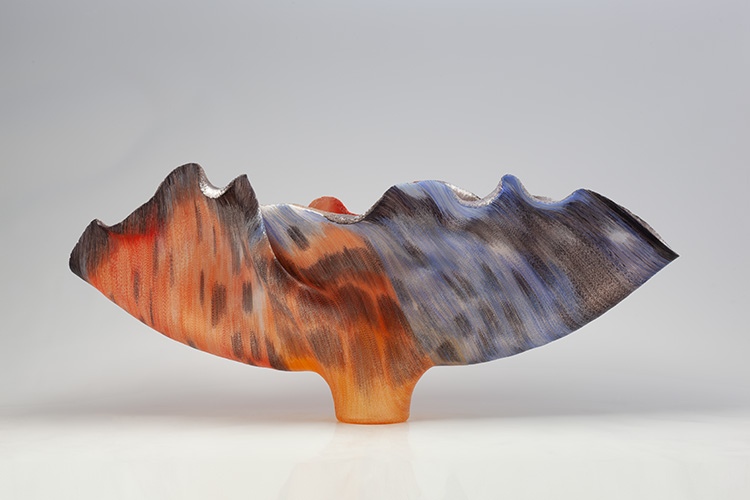
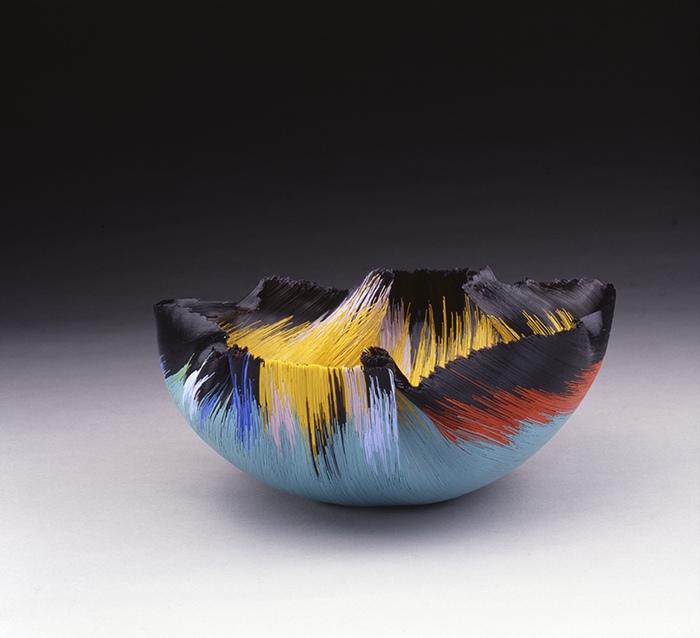
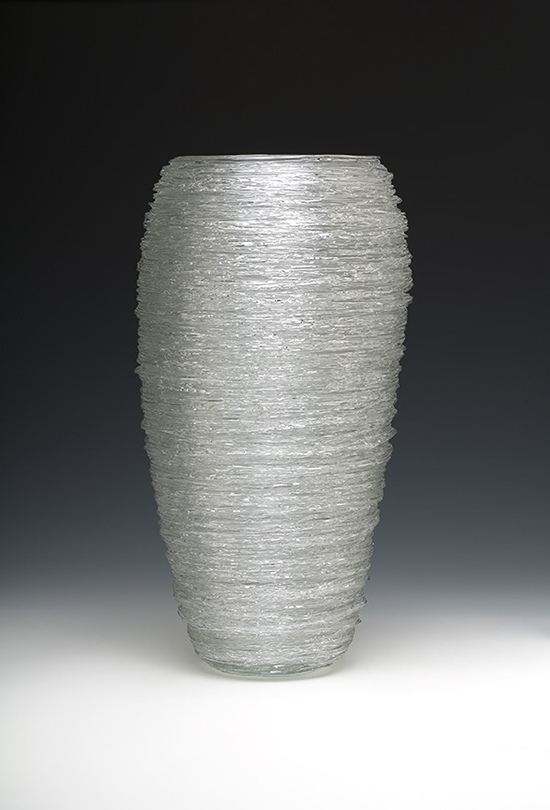
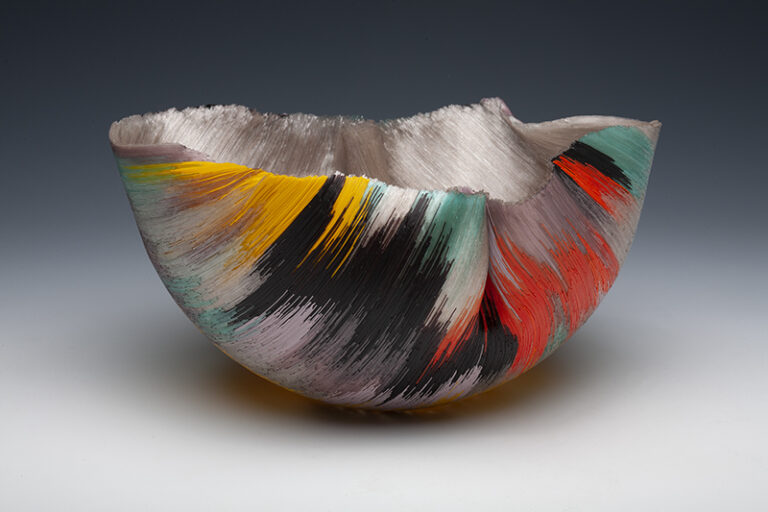
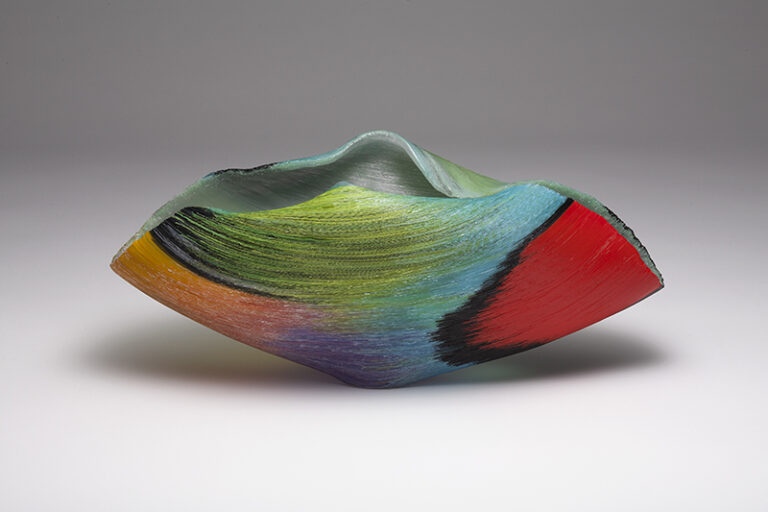
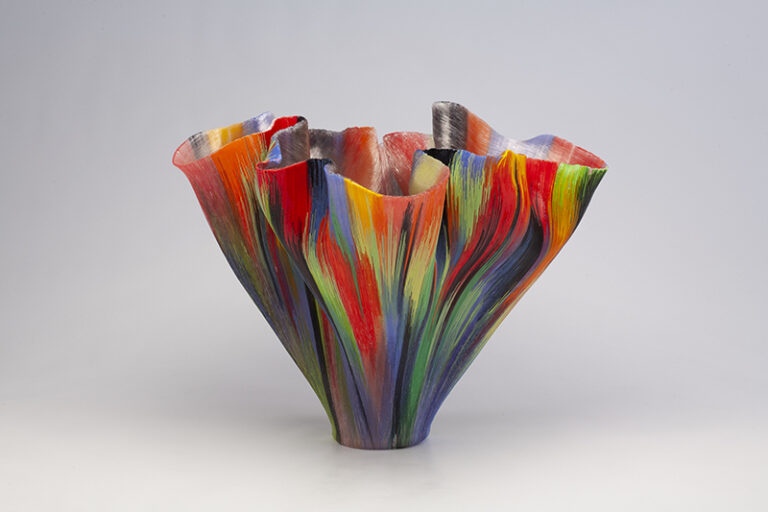
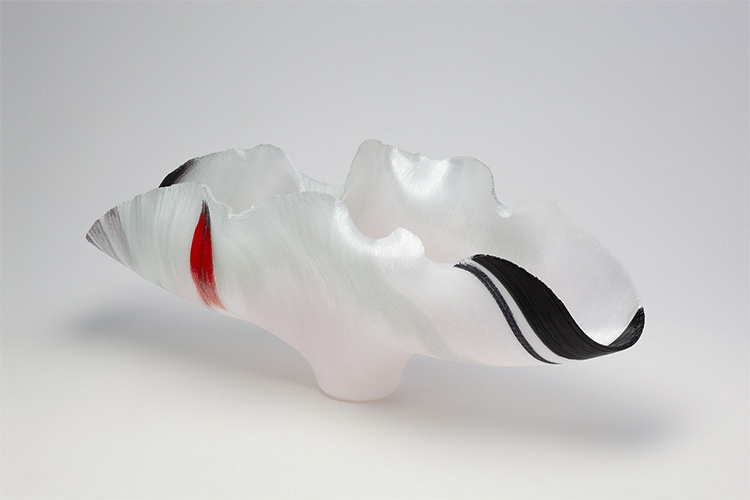
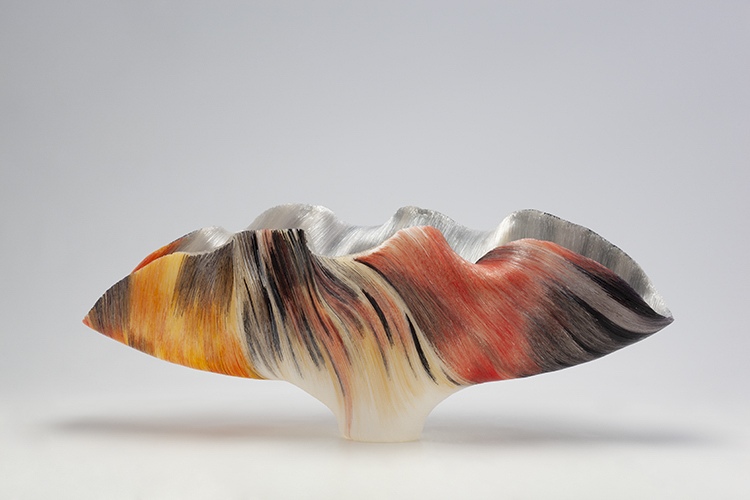
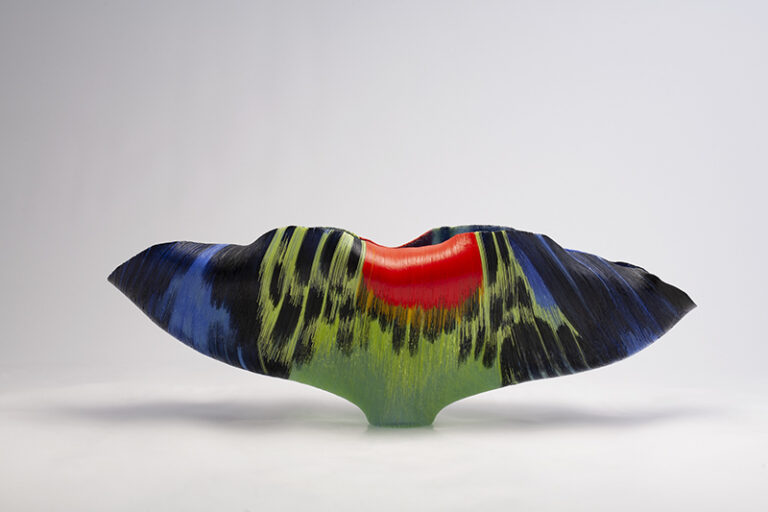
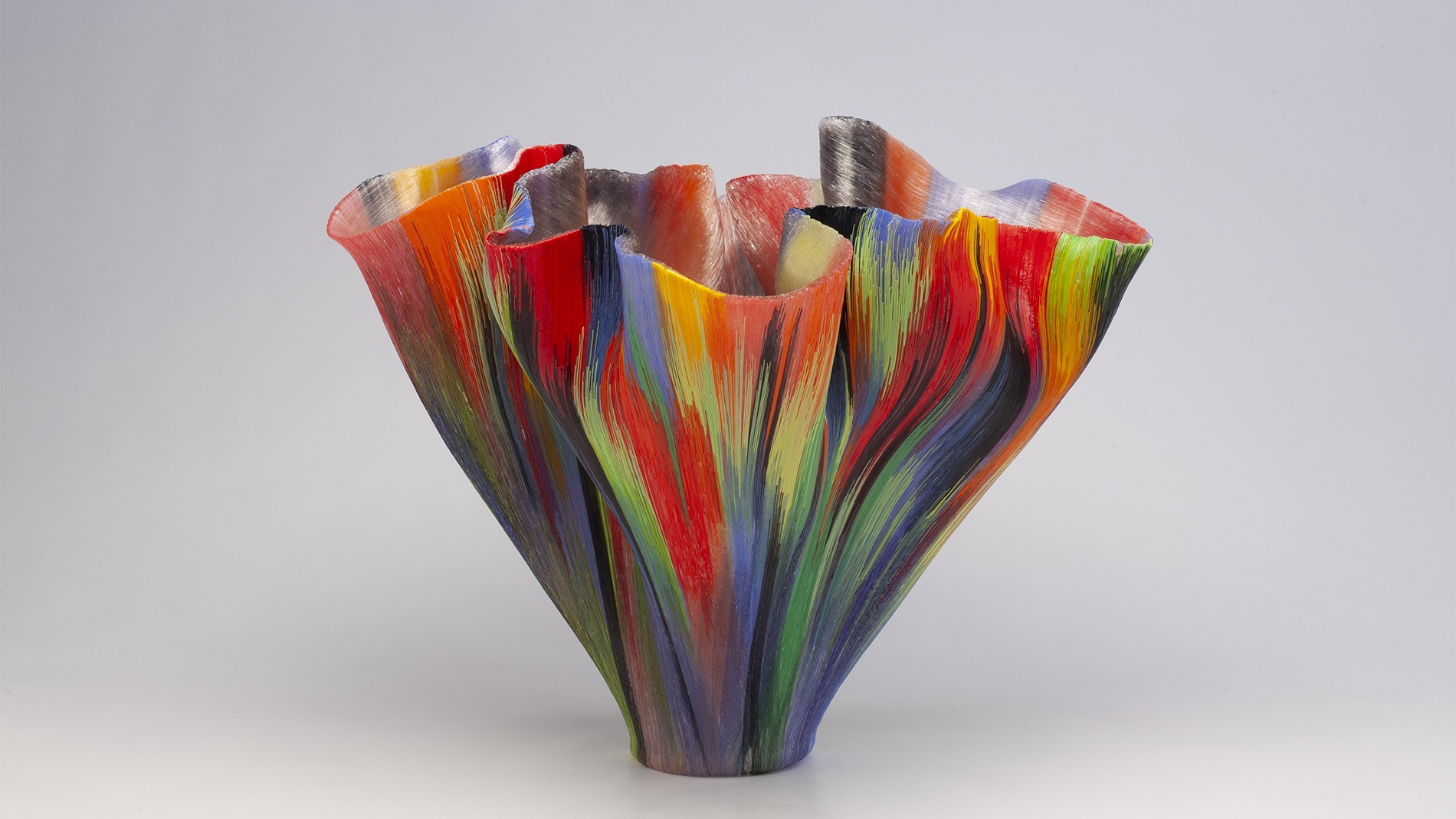
Zynsky’s vessels begin with thousands of multicolored glass threads layered onto round, heat-resistant fiberboard plates, a process she likens to drawing or painting. This mass of threads is then fused in a kiln, and while hot, the glass disk is transferred and slowly slumps into progressively deeper, rounder preheated metal forms. For taller vessels, the piece is inverted and slumped over cone-shaped molds.
The final, crucial step involves Zynsky reaching into the kiln wearing heat-resistant gloves to squeeze the glass into unique, undulating forms. This direct manipulation, applied accidentally in 1984 while at the Venini glassworks in Murano when frustration led her to impulsively squeeze a molten vessel, became integral to her aesthetic philosophy.
“Accidents and mistakes are really important, and they’re the best things to learn from,” she reflects. This embrace of spontaneity extends to her compositional approach. Working with glass threads means “always working backwards towards an upside down and inside out,” a mental challenge that demands constant adaptation and innovation.
1991 Dulce Fuego, Image credit: Toots Zynsky
Transformation Through Loss
In 1999, Zynsky returned to the United States due to her father’s illness, what began as temporary care became a long and heavy journey of farewells that quietly reshaped her artistic world. She recalls: “My father passed away in early 2006, and three months later, my great uncle was gone too. He was the last of that generation, deeply beloved by us all. Then my closest friend departed, followed by an aunt in the autumn. The next year, it was almost the same—every three months, we had to bid farewell to a loved one.”
For this already small family, those losses came crashing down like mountains. She says: “I could barely create anymore, constantly rushing between hospitals and my studio. In that moment I understood that my responsibility was to them, my work could wait.”
When she finally returned to her studio, she found herself staring blankly at colors. “I looked at those colors and had no idea why I had once used them.” What disturbed her even more was that music could no longer evoke familiar emotions. “I put in CD after CD, but my heart felt empty. That was even more terrifying than being unable to create.”
She began to contemplate whether this forty-year artistic journey had come to an end. “Perhaps this is the endpoint—I’ve already been luckier than many artists.” Just then, her son walked into the studio, seeing her melancholy expression, and said: “Make a red piece.”
2015 Adempimento II, 19 1/2 H x 15 Wx 12 D inches, Image credit: Toots Zynsky
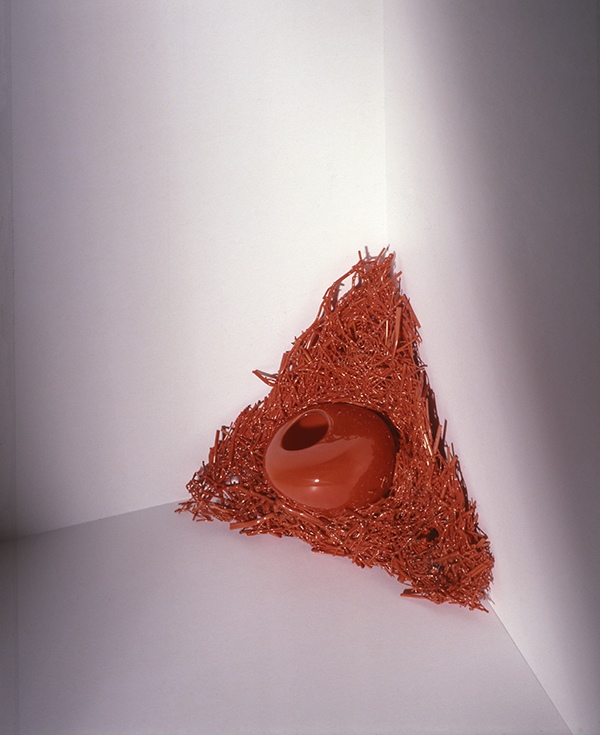
“He laid out the board, took red glass threads from the shelf, and began arranging them for me. He said, ‘Come on, this isn’t me doing it for you, this is what you should do.'” Together they created a large red work that required three firings. It was placed by the west-facing studio window, slowly igniting in the evening light like a silent flame.
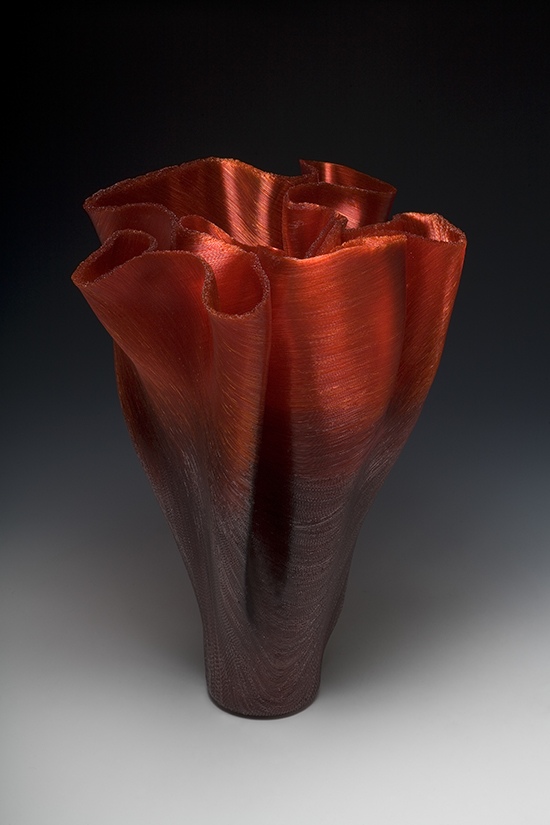
This work awakened her and ignited an entirely new direction. “I began using deep metallic gray and black as base colors, gradually ascending to scarlet red edges, like flames burning along the rim.” This choice of colors seemed destined. “I once lived in Ghana, where funeral colors aren’t black, but scarlet. That’s the color of death, and also the color of ceremony.”
For a time, her works used only red and black, later adding deep amber. “These colors have meaning for me,” she says, “they are the colors of life and death.” She refers to this series as “portraits of loss,” works completed with new emotion and intensity. “I feel that in creating these pieces, I finally matured artistically.”
Works representing this transformation, such as Incantatrice, are now housed in multiple museums, crystallizations of mourning and witnesses to rebirth. Through these works, Zynsky transformed grief into the language of color, reshaping the meaning of life in the heat of creation.
2018 Gouldian Finches, Image credt: Toots Zynsky
Environmental Awakening
As the “life and death” phase reached its natural conclusion, Zynsky sought new inspiration in familiar childhood landscapes. Walking through woodlands and marshlands of her youth, she was struck by an eerie silence: “The woods were empty. Not one bird.” Research revealed that of the many common birds from her childhood including Baltimore Orioles and Rose-breasted Grosbeaks, were now endangered or seriously diminished.
This discovery launched her ongoing endangered bird series, beginning with regional Baltimore Orioles and expanding to encompass worldwide endangered species. The timing proved prescient: her 2018 exhibition coincided with studies revealing the loss of at least three billion birds in North America over fifty years. “An inconceivable number,” she says, horrified by this human-caused catastrophe.
These pieces serve dual purposes: celebrating the beauty of creatures that may soon vanish while raising awareness of environmental crisis. A particularly meaningful work is her “Non-Binary Rose-Breasted Grosbeak,” inspired by a gynandromorph bird (half-male, half-female), created as a statement on the naturalness of diversity.
2022 Rainbow Lorikeet, Image credit: Toots Zynsky
The Philosophy of Form
Zynsky’s vessels resist static interpretation. “With any three-dimensional piece… you never ever see that piece the same way twice,” she explains, due to shifting light and changing perspectives. Translucency and transparency ensure “the pieces are always new.” This dynamic quality reflects her deeper understanding of perception and temporality.
The forms themselves embody philosophical complexity. “I have inside, outside, back of the inside, and the other side. You can never see the whole piece at once. There’s always something mysterious, no matter what angle or in what light you’re looking at the piece. It forces you to move around it.”
Completion comes intuitively: “The piece kind of knows when it’s done. It’s more subconscious than conscious.” Sometimes she photographs works and examines them upside down on her phone. She laughs, “a lot of pieces look better upside down.” Failed pieces simply “don’t go out of my studio,” a testament to her uncompromising standards.
2024 Roseate Tern, Image credit: Toots Zynsky
Legacy and Recognition
Zynsky’s vessels, collected by over seventy institutions worldwide, from the Metropolitan Museum of Art in New York to the Victoria and Albert Museum in London, command respect not merely as decorative objects but as serious investigations into color, form, and meaning. This impressive roster includes the Museum of Modern Art in New York, the Musée des Arts Décoratifs du Louvre in Paris, and dozens of other prestigious institutions that recognize her revolutionary contributions to contemporary craft.
The 1988 Rakow Commission from the Corning Museum of Glass stands among her most significant institutional recognitions, while her 2005 Maestrale, commissioned by Ben and Natalie Heineman, demonstrates her ability to work at monumental scale.
2025 Non Binary Rosebreasted Grosbeak, Image credit: Toots Zynsky
The Continuing Journey
What mysteries remain unsolved in Zynsky’s practice? The possibility of colors beyond current human perception intrigues her: “It’s hard to imagine that there could be colors that we’ve never seen… but what if that’s true?” Glass itself, with its “unlimited possibilities,” continues to fascinate. “Anything you can do with any other material, you can also do with glass, plus you can blow it and stretch it and it sticks to itself.”
As she approaches her eighth decade, Zynsky remains focused on the present while acknowledging that “somewhere in the back of my mind, I’m always wondering what’s next.” Her journey from music to revolutionary glass artist demonstrates that the most profound artistic discoveries often emerge from unexpected encounters and willing embrace of the unknown.
2021 Eastern Rosella, Image credit: Toots Zynsky
“It’s been a really nice life because of my work,” shereflects, a life enriched by global travel and connectionswith “fantastic people” encountered along the way. In anartistic landscape often dominated by conceptualcomplexity and theoretical frameworks, Zynsky’spractice offers something increasingly rare: pure joy inmaking, profound respect for materials, and anunwavering belief in beauty’s capacity to transform bothmaker and viewer.
Through her filet de verre vessels, Toots Zynsky hascreated not merely objects but experiences, capturinglight, color, and movement in forms that seem to breathewith life itself. In doing so, she has secured her positionas one of contemporary craft’s most essential voices,proving that innovation and tradition, technique andemotion, can coexist in perfect, dynamic harmony.