
How Cell2Sentence proposed a way to make tumors more visible to immune cells, and what early testing revealed
Google’s new large language model, Cell2Sentence, has put forward an innovative hypothesis regarding how to make certain tumors more easily recognizable by the immune system. Currently, a team of scientists has applied this concept to human cell experiments for validation. So, what is the true significance of this research? And how should we rationally examine it?
Why this story matters
Artificial intelligence in biomedicine is often hyped as delivering cures directly. That is misleading. The real progress is when an algorithm generates a specific idea that researchers can test in actual biology. Google’s Keyword post reports that Cell2Sentence, a language model for cell biology, suggested a way to boost antigen presentation, the process where cells display protein fragments to help immune T cells spot tumors. The team then conducted targeted lab experiments in human cells and saw results supporting Cell2Sentence’s prediction. This is early preclinical evidence, promising but not a breakthrough yet.
The idea in plain language
Cancer can hide from the immune system. Many tumors are “cold,” meaning immune cells struggle to recognize them. One way to make tumors “warmer” is to increase the number or visibility of molecular flags (protein fragments) on their surface. These flags signal the immune system to attack. Cell2Sentence, trained to analyze cellular patterns, suggested conditions that might enhance this flagging process. The output was not a single solution but a set of testable ideas for lab experiments.
What was tested
The team ran controlled lab experiments using human cell models to test whether Cell2Sentence’s suggested conditions increased antigen presentation compared to standard conditions. Google’s post states the experiments showed promising increases, supporting the hypothesis. This is not a new drug, clinical trial, or cure; it is an early lab result in cells that justifies further research. Cell models are useful for studying mechanisms and guiding next steps, but they do not replace animal studies, clinical trials, or safety checks.
Why cellular context matters
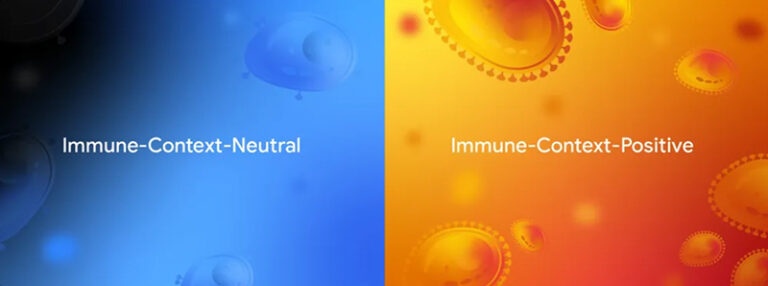
Cells behave differently depending on their surroundings, such as the tissue or immune environment around them. Cell2Sentence analyzes these patterns and generates clear hypotheses to help scientists focus their experiments. It can highlight interactions that are not obvious when studying one pathway at a time. The value is not in replacing biology but in helping researchers ask better questions.
What this is not
This is not a cure, a clinical breakthrough, or proof that the suggested approach will work in patients. It is not a shortcut past replication or safety testing. These points are critical for responsible reporting. Next steps include independent replication, testing in diverse cell models, and evaluating potential risks or side effects.
What progress looks like from here
Independent labs should replicate the results using fresh materials and blinded analysis. The effect must hold across multiple cell types and experimental setups. Safety and potential side effects should be checked early. A plan to identify which patients might benefit should also take shape if the idea advances.
Why this matters editorially
This story shows a complete cycle: Cell2Sentence proposes a hypothesis, lab experiments test it in human cells, and the results support further study. This is a step beyond purely computational predictions. By openly discussing methods and limits, it builds trust. Readers do not need exaggeration to see its value.
How to read this responsibly
If you are in oncology or immunology, view this as a research lead. If you are in AI, see it as a case study in practical hypothesis generation. If you are a patient or caregiver, treat this as early research, not medical advice. Expect years of careful work before any clinical impact.
Sources and transparency
This feature, from Our Narratives, a platform dedicated to clear science communication, draws on Google’s public Keyword post. No press kit or interviews were available at publication. All interpretations are our editorial analysis based on the post alone, as no peer reviewed data has been released. We will update this page if new studies, replications, or data emerge. Follow Our Narratives for more stories on AI and science progress.