
How Heatherwick Studio’s lantern inspired towers aim to soften Bangkok’s hard edged business district through cultural craft and climate responsive design
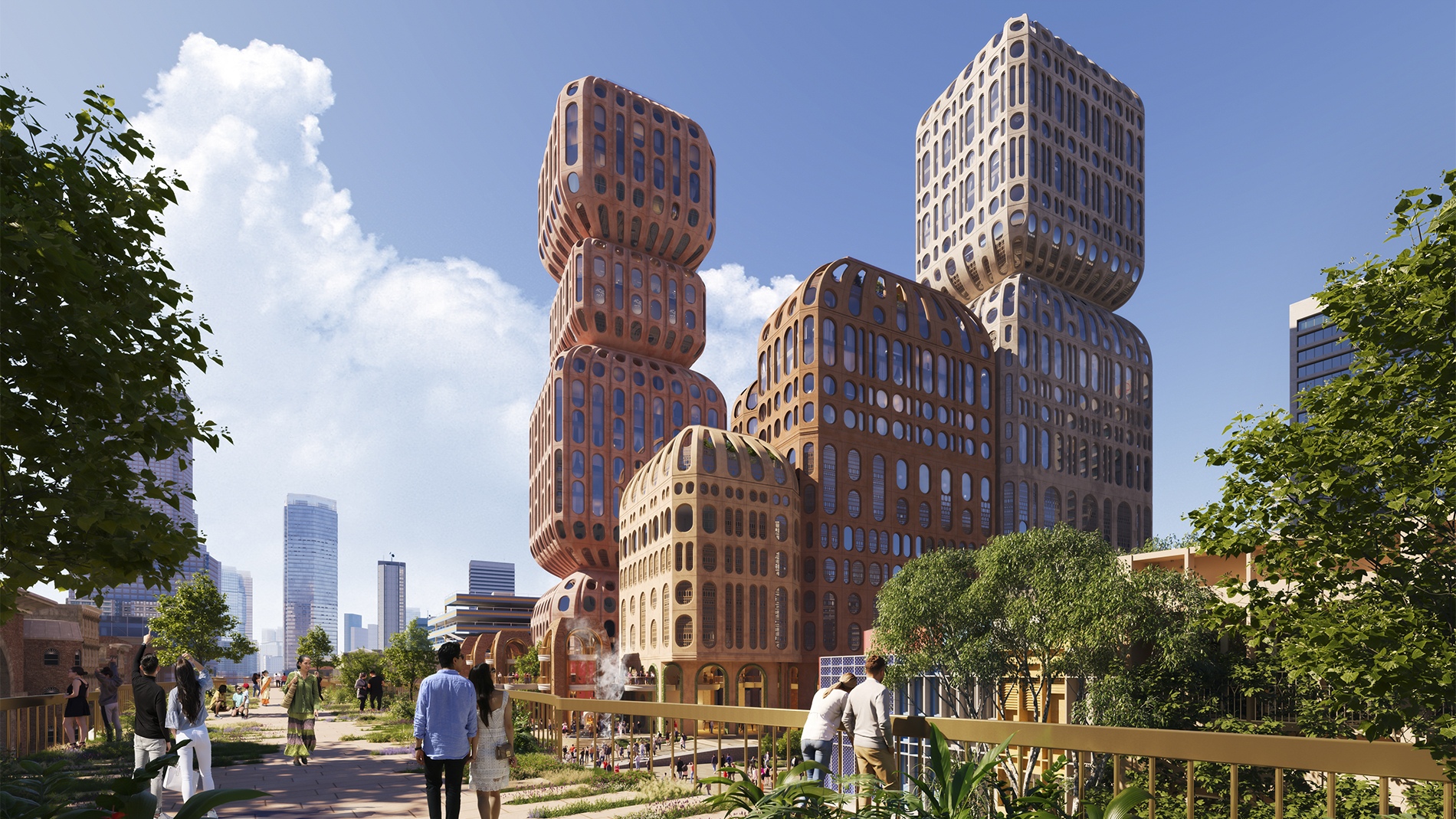
Bangkok’s Silom district bristles with glass towers and concrete blocks beneath an intense tropical sky. Into this field of commercial buildings, Heatherwick Studio proposes a counterpoint: Hatai, a pair of stacked lantern forms intended to bring what Thomas Heatherwick calls “softness and soul” to a part of the city that rarely offers either.
Softness here is more than an aesthetic choice. Hard surfaces amplify heat, accelerate wind at the base of towers, and offer little refuge in monsoon rain. A gentler architectural language can add porosity, shade, and shelter that the street life of Bangkok needs.
Stacked geometry and dual identity
Hatai reads as one composition while accommodating two hotels, Six Senses and a reimagined Narai Hotel. The massing follows a stacked lantern logic. Volumes step back and taper as they rise, with rounded corners that move the form beyond simple boxes. A shared podium grounds both towers while distinct crowns emerge as individual lanterns. The strategy frames views to the restored canal and sets up a hierarchy that lets the ground level public village breathe.

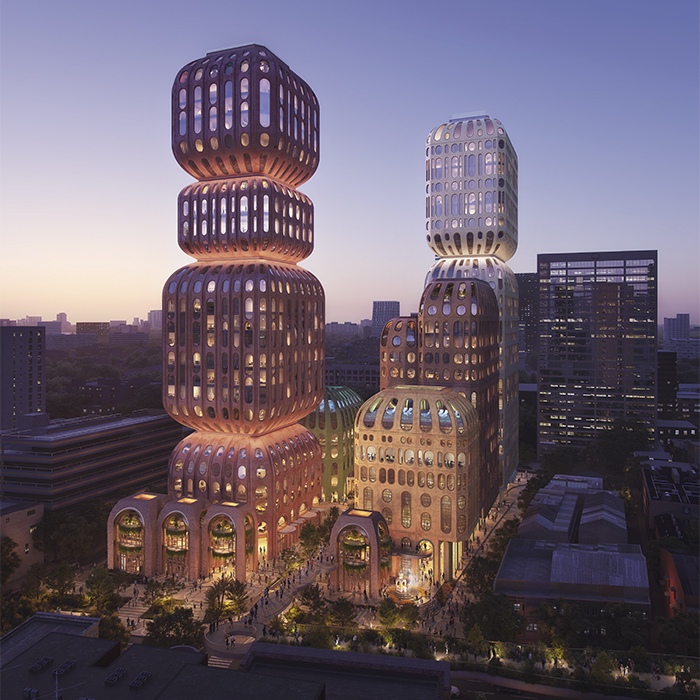
The lantern effect by day and by night
The metaphor asks the building to perform differently through the day. In bright hours the envelope must provide deep shade and cross ventilation while staying visually soft through layered depth, fine detailing, and varied screen density. That goal must align with the structural demands of a high rise.
After sunset the composition shifts toward a calibrated glow. Success will depend on material and lighting choices: perforated metal screens or glass systems with back lighting, color temperature control, and luminance that can be tuned over time. In a dense district, glare control matters. Time based dimming and careful cutoffs should protect neighbors while keeping the intended clarity and radiance.
Climate response in a monsoon city
Bangkok brings strong sun, seasonal downpours, and persistent humidity that quickly exposes weak detailing. The lantern skin must work as climate infrastructure, supplying shade and airflow and moving large volumes of water without splash back. The promised 5,200 square meters of public space will succeed only if it remains usable in heavy rain, which implies generous covered zones and clear drainage paths.
At street level, porosity is critical. The restored canal can act as a cooling spine if planting, water depth, and air movement are tuned as a single system rather than as decoration.
Cultural translation without pastiche
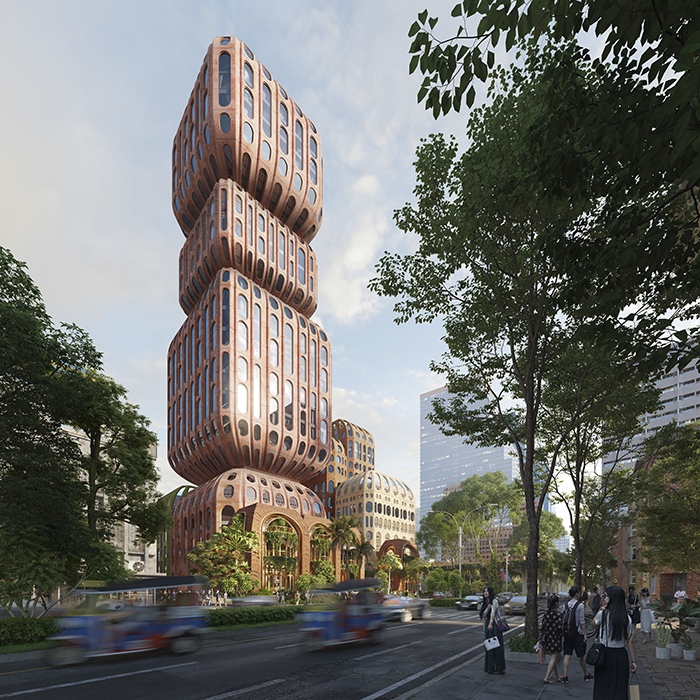
Referencing Thai lantern craft at building scale requires more than surface pattern. Proportion, frame and skin, and the logic of joints need a contemporary translation that respects making traditions while meeting modern codes. The design speaks of delicate craftsmanship; the test will be how local techniques inform prefabricated modules, curtain wall systems, and thresholds that people touch every day.
Urban ethics and public accessibility
The promise to give back to the street will be measured in practice. True public space needs clear access, programming that welcomes a mix of users, and long term care. A shrine, market stalls, a nursery, and shaded plazas can anchor daily life if hours, wayfinding, and maintenance match the ambition. The question for Silom is whether these places stay lively beyond office hours or slide into semi private amenity.

Technical realities behind the vision
Stacked and possibly cantilevered volumes call for a clear structural story: cores, transfers, and lateral systems that manage wind while leaving room for the layered skin. Maintenance is a parallel design problem in a humid urban climate. Screens require safe cleaning access. Lighting needs weather protection and easy replacement. Water features demand reliable filtration and circulation.
The test of time
With opening targeted for 2027, the team has time to turn the lantern idea into precise details and durable assemblies. Hatai’s value will be proven less by a skyline image and more by daily performance as climate shelter, public amenity, and an everyday part of Bangkok. If the design can keep people dry in a storm, cool in the afternoon, and curious at night, the lanterns will do more than glow. They will make the district softer in the ways that matter.