
Into the Wild
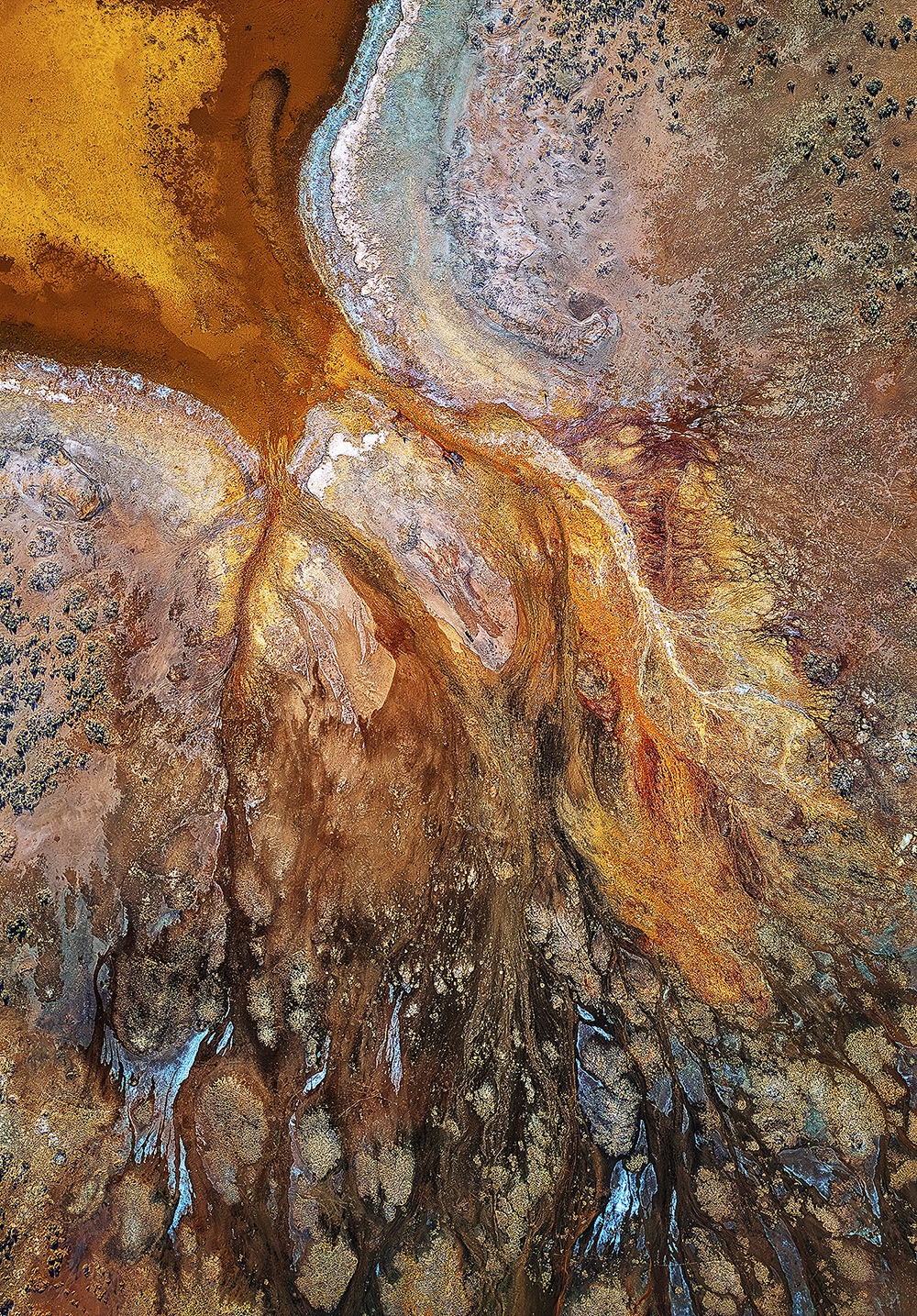
Colourful Gathering, Mallee Region, Victoria, Australia, 2024 · © Nilmini De Silva Photography
Water taught me how to read the landscape, but abstraction taught me how to feel it.
Nilmini De Silva is a Sydney-based aerial photographer whose work moves between engineering precision and painterly abstraction — landscapes read from above, written in the language of water, colour, and geological time. When she sent me her images from Kati Thanda-Lake Eyre and the Mallee, I understood immediately why they had stopped people at the exhibition. They ask something of the viewer that most photographs do not: not where, but what. Not documentation, but interpretation. I invited Nilmini to write about her practice and the exhibition in her own words, and what follows is exactly that.
— Adelina
I came to photography quite by accident. In 2010 I took a year's sabbatical to travel and volunteer solo around the world. A conservation and photography project in South Africa was the catalyst that woke up the artist in me. I returned home with a camera and a completely different way of seeing. But it was only when I picked up a drone for the first time that I found a genre that has taken my creativity to a whole new level — one that I'd say is fast becoming my signature style.
I have always been drawn to water. I'd even say I have a spiritual connection to it. I am mesmerised by waterfalls. I love camping by the ocean and falling asleep to the sound of crashing waves. I am also a water engineer by profession — I have spent much of my professional life working with river systems, modelling, mapping and managing how people live in high-risk floodplains. It feels like a natural transition that my aerial photography is mostly in landscapes that have been shaped by water.
The engineer in me is still responding to reading the physicality of the land. When composing, I am always making sure the image is balanced and symmetrical. But there is another part of me responding more emotionally — to colour, texture, rhythm, shape and form. I want my aerials to be more than just a documentation of place. I want them to invite interpretation and evoke feeling, memory and connection.
I love the moment when someone looks at one of my photographs and isn't quite sure what they're seeing. People begin to slow down and engage differently. Instead of asking "Where was this taken?", they start asking "What does this remind me of?" or "What do I feel when I look at this image?" While at an artist residency at the Skymirror Gallery, a visitor once asked if I also painted — they had mistaken one of my images for a painting. That was a surreal moment, and one I've never forgotten. As humans we are always looking for meaning and patterns in the world around us. We call this phenomenon pareidolia — the tendency to find familiar shapes in abstract forms. It explains so much about how people respond to my work.
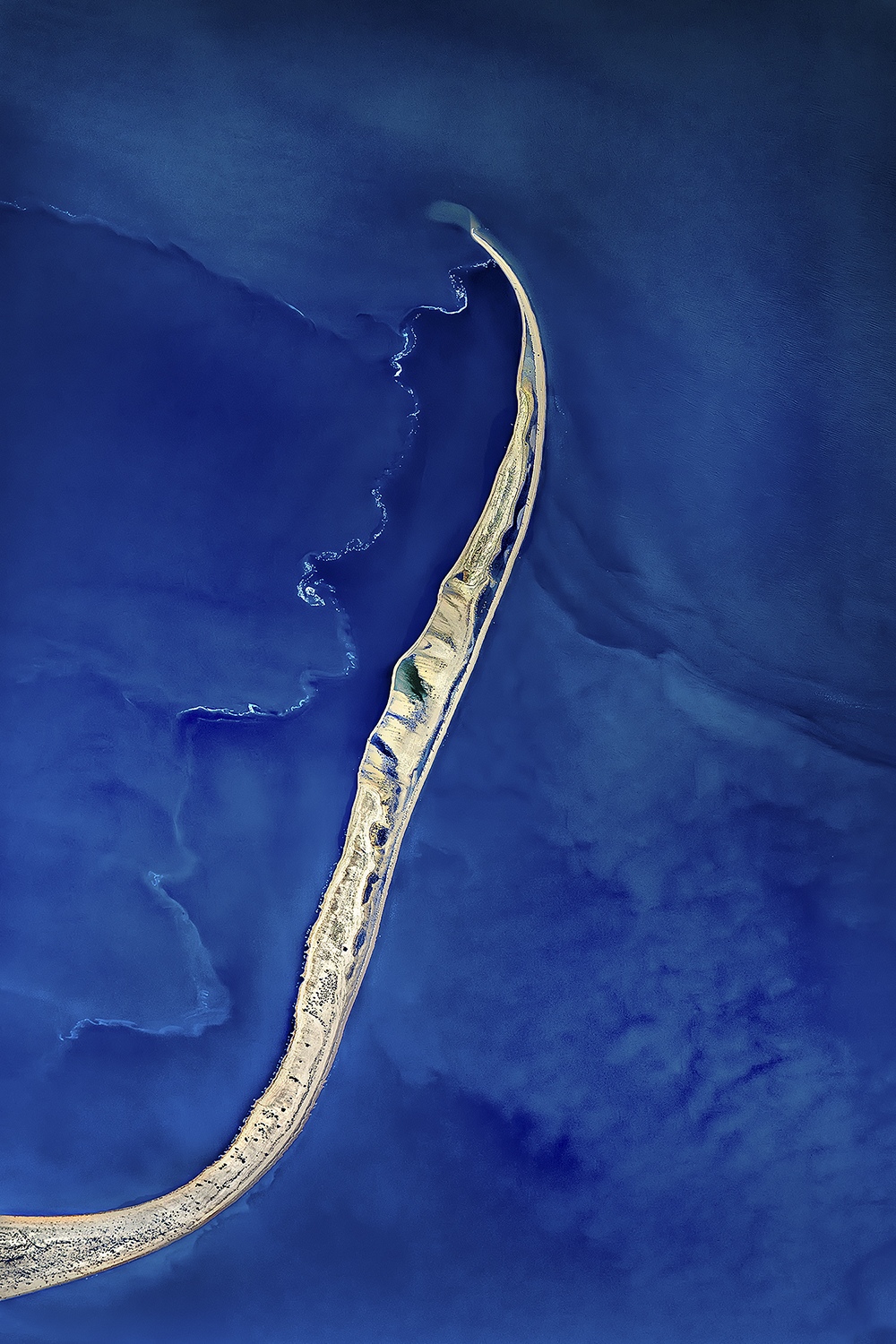
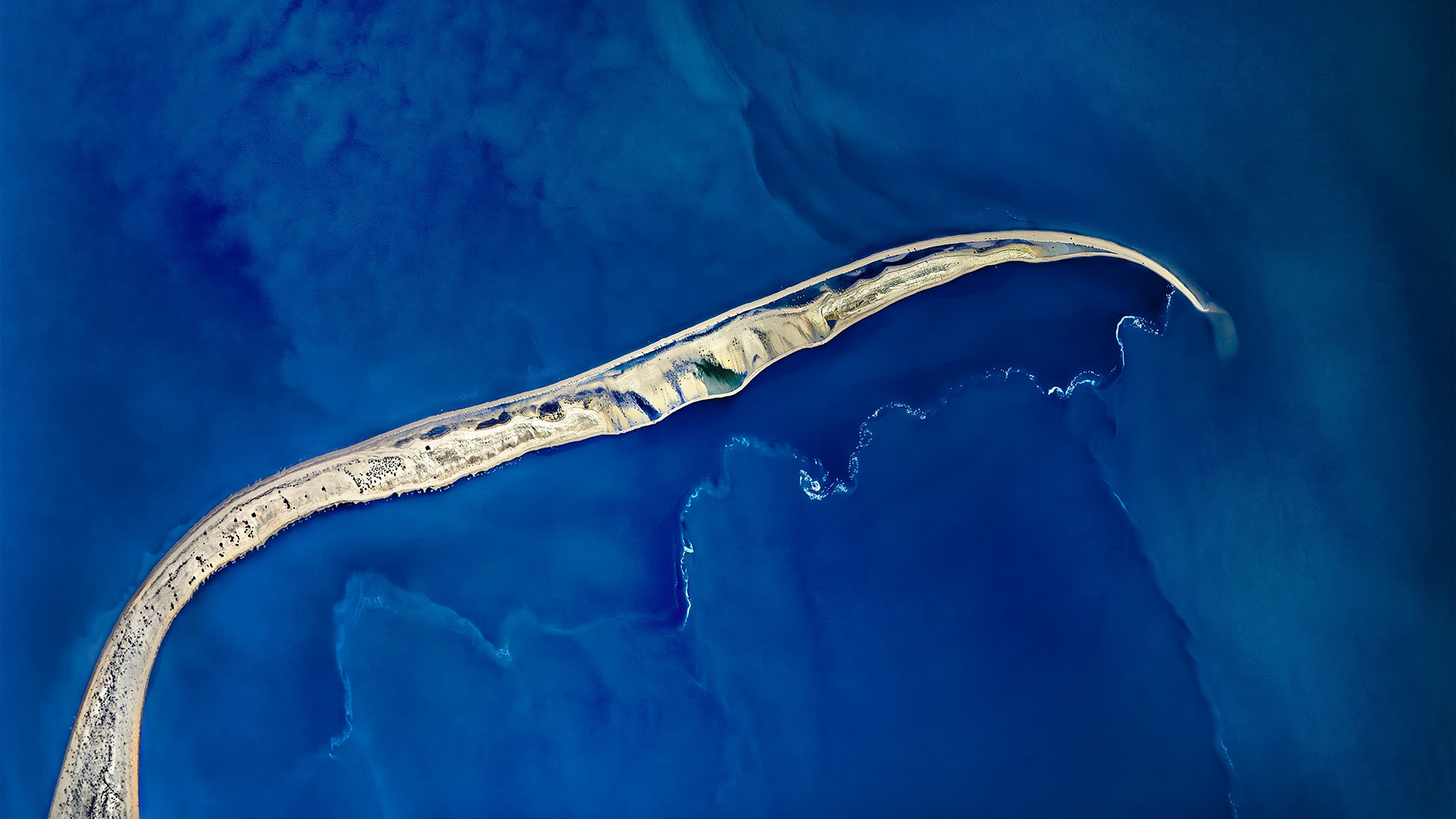
Kangaroo Tail was photographed at Kati Thanda-Lake Eyre during a half-day flight over an incredible 2025 flood event. It was hard to miss the kangaroo tail that emerged from the water below me. I wasn't looking for it, but once I saw it, I couldn't unsee it.
More often though, it is only when I sit down to look more closely at the images on my computer that I discover the narrative. People are often transfixed by its intense blue tones — the result of shooting over floodwaters that reflected a particular quality of light at that time of day.
As with all my aerial work, the image has been processed to reduce haze — an inevitable element of shooting from altitude — in a way that brings out my interpretation of what the light and water were doing at that moment. Choosing the right paper was part of the creative process. I decided to print it on Hahnemühle Photo Rag Metallic for the first time — a choice that brought out all the subtle tones of blue in a way I hadn't anticipated. I exhibited it in a vertical orientation, which gave the image a wonderful presence on the wall.
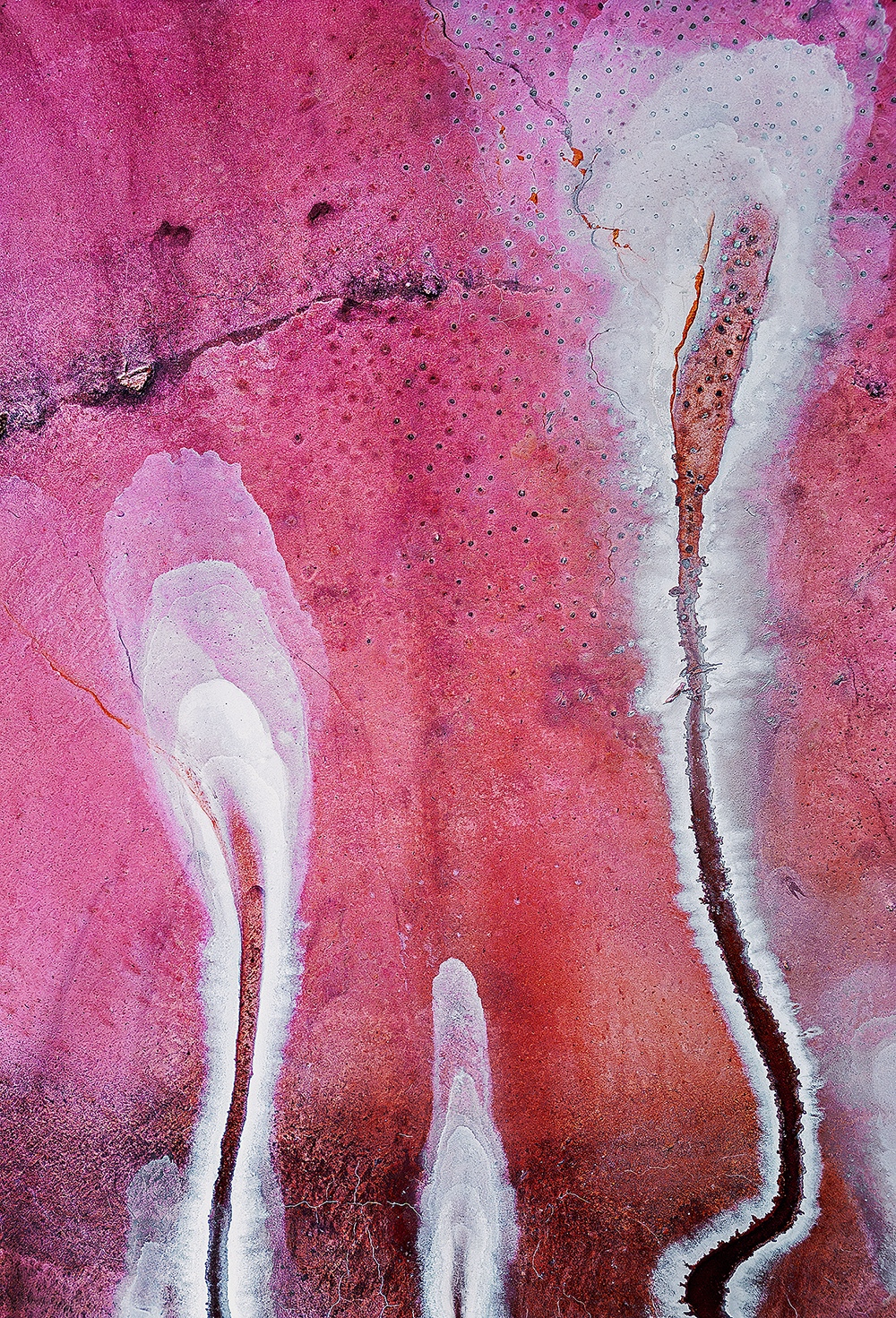
My second image, Colourful Gathering, was taken at a clay pan in the Mallee Region of Victoria with a drone. Living in Australia has deeply influenced my way of seeing. I have been profoundly moved by how Indigenous Australians connected with and recorded the landscape — as if viewing it from above, long before drones existed.
The patterns and colours in Colourful Gathering reminded me of Aboriginal people moving across this ancient land, coming together at waterholes for corroborees — gatherings that involved storytelling, dance and celebration. There is something about seeing the land from above that feels like a continuation of that tradition of reading country.
It was a privilege to be invited by Three Edge Framing and Gallery in North Rocks, NSW, to be part of their collaborative exhibition Into the Wild at M2 Gallery in Surry Hills — in the heart of Sydney. The exhibition brought together thirty professional and emerging photographers from across Australia and New Zealand, all of us connected by a love of wild places and the stories they tell.
At the exhibition, Kangaroo Tail generated more conversation than any other image I have previously shown. One of the loveliest moments of the evening was watching my friend Kathy Wallace on receiving the exhibition catalogue, discovering that her image had been chosen for the front cover. That kind of surprise is what makes these collaborative experiences so special.
One of the unexpected joys was discovering that a fellow photographer, Jodi Grey, had chosen two images from Namibia. Jodi and I had both started our creative journeys in Africa, doing the same volunteer experience just a month apart. Yet our paths had never crossed — until a printing workshop at Three Edge brought us together. These are the kinds of connections that collaborative exhibitions make possible, and they are every bit as meaningful as what ends up on the walls.
They say you bring to photography all the books you have read, the music you have listened to and the people you have loved. I'd add to that the places that have shaped you, the profession that trained your eye, and the mentors and collaborators who have helped you realise your vision.
My photography lies at the intersection of everything I am passionate about — travel to remote places, reading and writing, learning about the history and geography of places I visit, and my deep connection to water. Ultimately, my photography is an invitation to pause and look differently. To see the landscape as far more than just pretty scenery — as something alive, layered and interconnected.
My aerial photography is a collection of stories that the many journeys of water have written on the landscape. Water taught me how to read the landscape, but abstraction taught me how to feel it.
Exhibition details:
Three Edge Framing and Gallery
Online gallery:
Into the Wild Online Gallery
Nilmini De Silva is a Sri Lankan-born Australian photographer based in Sydney. A Grand Master of the Australian Photographic Society and internationally awarded photographer, she discovered photography while volunteering on a conservation project in South Africa in 2010. Her work is grounded in storytelling and a deep curiosity about the world around her.
All photographs © Nilmini De Silva Photography. All rights reserved.