From polar expeditions to intimate portraits, Daniel Kordan fuses scientific rigor with artistic reverence to capture Earth's ever-changing grandeur.
Daniel Kordan is one of the most celebrated figures in contemporary landscape photography. He is a visual storyteller whose lens guides us through the Earth’s most remote and magnificent realms. From the drifting icebergs of Greenland to Tibet’s sacred lakes, from Mongolia’s wind-sculpted grasslands to Indonesia’s smoldering volcanoes, his photographs do more than document. They immerse. Each image is a passage into stillness and wonder, a finely tuned moment suspended between science and poetry.
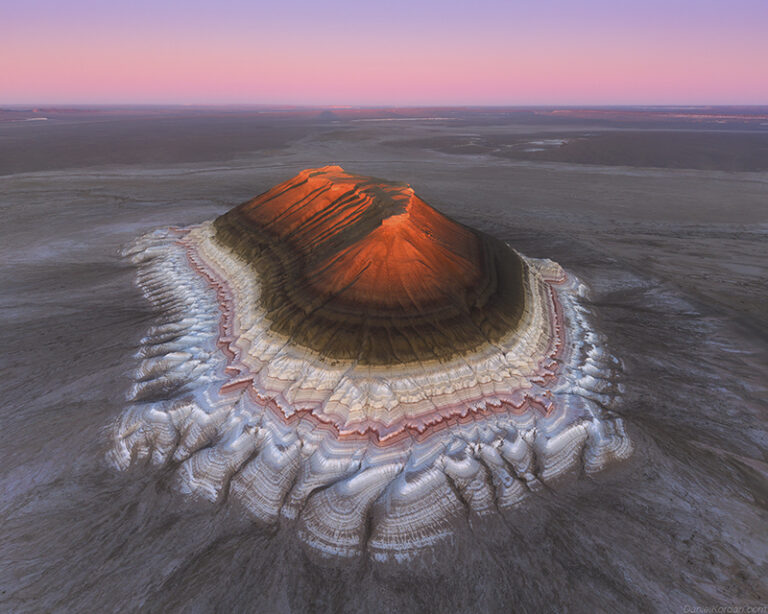
Bokty Mountain rises 165 meters above the vast plains of West Kazakhstan, its vibrant layered rock formations resembling a giant natural cake. The mountain's striking colors reach their most magical intensity during sunrise and sunset, when they glow with fiery light and cast an ethereal glow across the landscape. Image credit: Daniel Kordan
Kordan’s portfolio unfolds like a journey through untouched wilderness. Beneath its serenity lies a profound tension: a world quietly shifting under the weight of time and climate. His work captures both fleeting beauty and enduring geological rhythm, inviting us to pause and witness our planet not as a backdrop but as a living, breathing presence.
This is not landscape as decoration. It is dialogue.
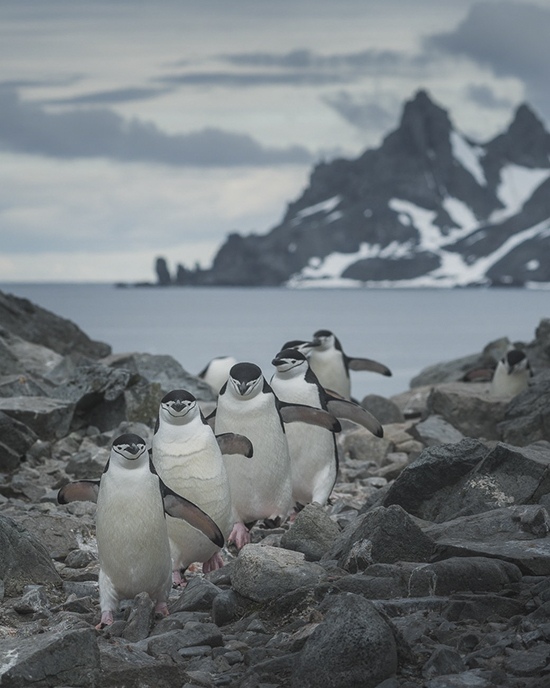
Chinstrap penguins gather on rocky shores against the dramatic backdrop of Antarctic peaks and glaciers. Image credit: Daniel Kordan
The Scientific Soul of Wonder
Kordan’s photographic voice emerges from an unexpected foundation rooted in physics. Before ever setting foot in the polar North or the high plains of Central Asia, he was immersed in the invisible mechanics of light. In lecture halls and labs, he dissected photons, mapped electromagnetic waves, and translated the abstract into measurable patterns.
Far from dimming his wonder, this scientific training became a kind of inner compass. He reflects that physics taught him how to observe and plan. In the field, that means solving problems before they arise.
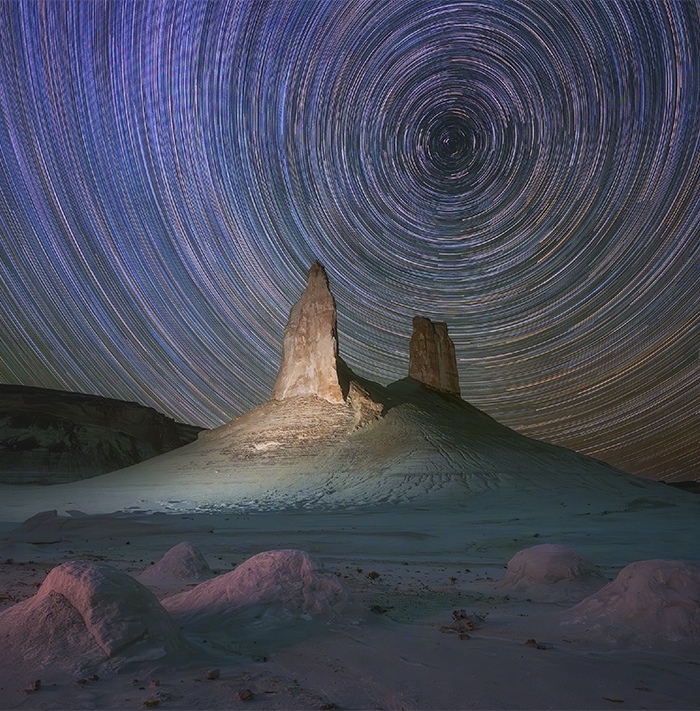
Star trails arc above the dramatic Bozhira rock formations, known as "Teeth of Bozhira," in Kazakhstan. This composite image combines approximately 250 thirty-second exposures captured throughout the night to create the celestial trails. Image credit: Daniel Kordan
For Kordan, observation is both art and equation. Weather systems are modeled, light angles calculated, and topographies studied through digital elevation data. But once the logistics fall into place, something shifts. The rational gives way to the intuitive. With the tools of a scientist and the soul of a poet, Kordan crafts images that feel born of the earth itself. They are composed with precision, yet awakened by presence.
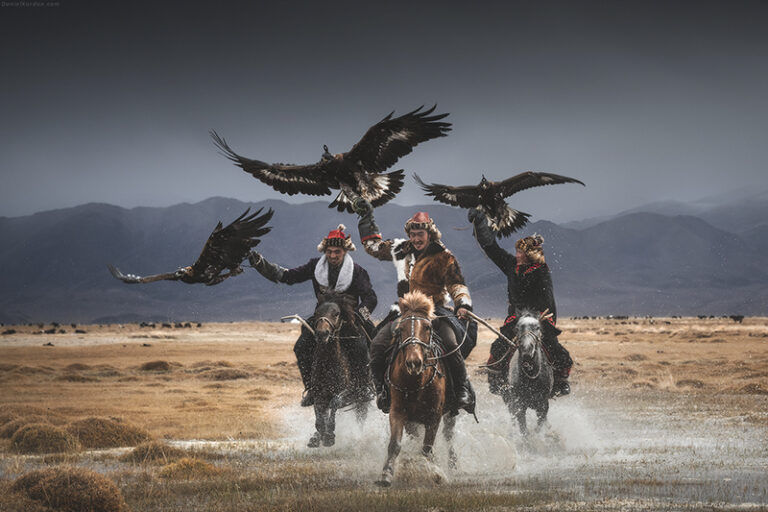
Kazakh eagle hunters on horseback with their golden eagles soaring overhead across the vast steppes of Mongolia. Image credit: Daniel Kordan
Walk-In Landscapes
What sets Kordan’s work apart is his instinctive construction of what he calls three-dimensional landscapes. These images do not simply display terrain. They invite entry. These are walk-in landscapes, built with the viewer in mind and structured like portals rather than pictures.
A three-dimensional landscape gives the viewer room to step inside the frame. Kordan guides us through riverbeds and fog-swathed valleys, where every element—log, stream, ridge—functions as a visual thread pulling the eye deeper into the scene.
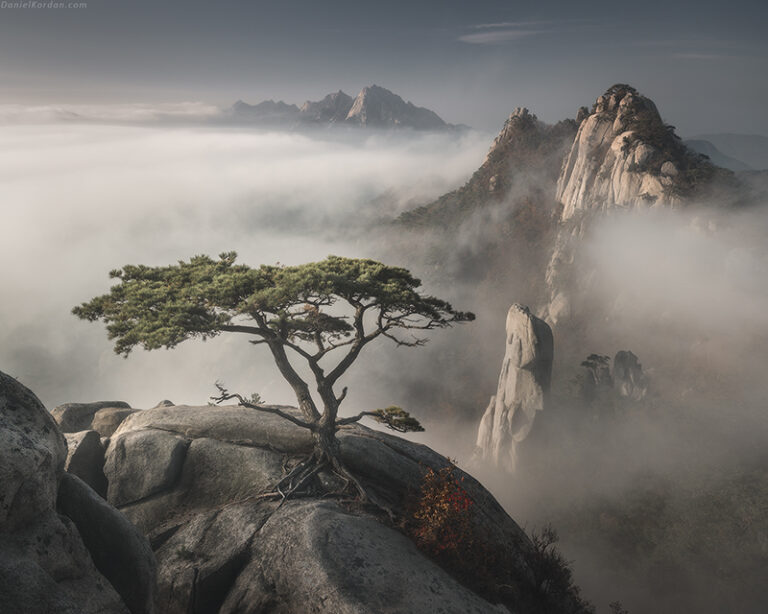
A solitary pine tree clings to granite cliffs as mist swirls through the dramatic peaks of Huangshan (Yellow Mountains), China. The ethereal fog creates a dreamlike landscape, partially veiling the ancient rock formations in soft, flowing clouds. Image credit: Daniel Kordan
He uses rock arches, tree limbs, and weathered slopes to create natural frames. These become windows that lead to distant summits. Scale becomes key. A lone hiker on a cliff or a ribbon of mist in a valley provides clues that let the viewer instinctively read distance and depth.
Light sculpts the story. Side lighting at dawn reveals texture in every stone and leaf. Backlight streaming through fog creates translucence, turning dew into stained glass. Shadows are embraced, not erased. They give weight and dimension. Without shadow, light has nowhere to live.
These are not idealized vistas. They are immersive geographies. They are spaces that beckon the eye and the imagination alike.
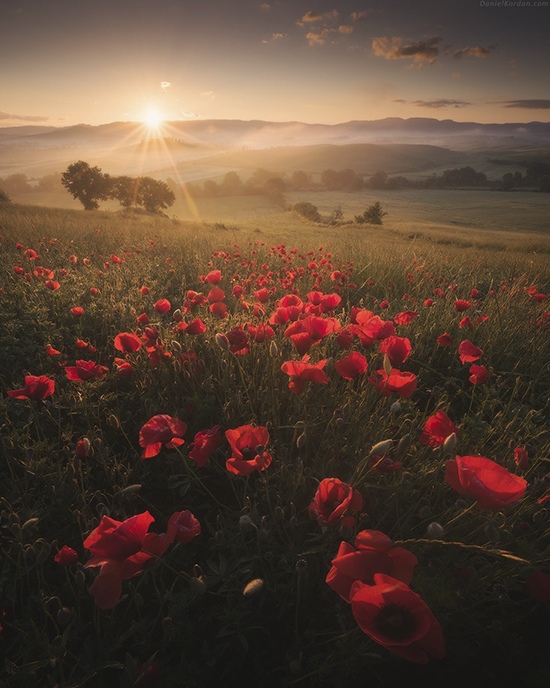
The vast tulip fields of Taraz, Kazakhstan, showcase endangered Greig's tulips in their natural habitat. These precious wildflowers, native to Central Asia where tulips actually originated, require careful protection and visitors should avoid picking or trampling the blooms to preserve this rare natural treasure. Image credit: Daniel Kordan
Fieldwork as a Form of Listening
Each image begins long before the shutter clicks. For Kordan, location scouting is less a logistical exercise than a quiet ritual of observation. It starts on screen. He studies satellite imagery, scrolls through mapping tools, and combs mountaineering forums and travel blogs for terrain features others may overlook.
But data only opens the door. Real discovery happens on the ground. With nomads in Mongolia, reindeer herders in the Arctic, or fishermen in Vietnam, he walks, waits, and listens. He often returns to sites multiple times, learning how fog rolls in or how a volcanic plume arcs with the wind.
He sketches compositions, overlays digital previews, and creates virtual mockups to anticipate conditions. Yet these preparations exist not to control the scene but to create space for encounter. Every place has its rhythm. One must learn it before it reveals anything in return.
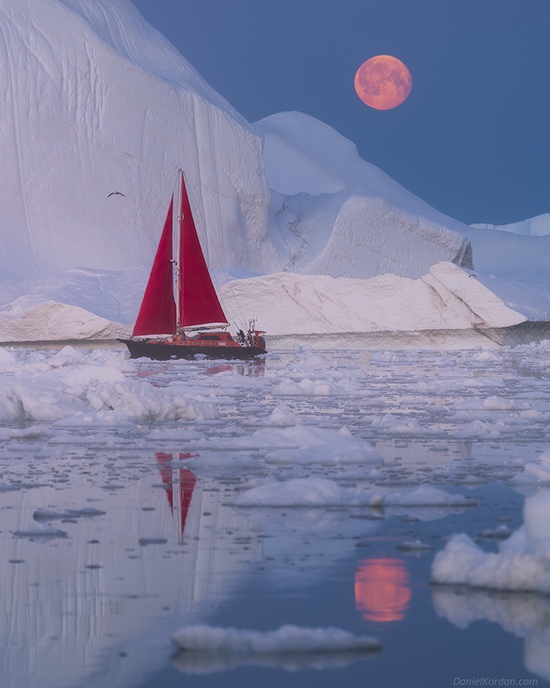
Red-sailed schooner navigates Antarctic waters beneath the luminous glow of a full moon. Image credit: Daniel Kordan
Polar Dreams and Epic Journeys
Kordan’s philosophy of deep immersion finds its most ambitious expression in his multi-year Two Poles project. The vision is bold. He sails from Saint Petersburg through the White Sea to Svalbard, continues down Greenland’s west coast, and ultimately reaches Antarctica. This journey connects the most storied chapters of polar exploration into a single photographic odyssey.
The idea began as a childhood dream. As a boy, Kordan was captivated by the journals of early polar explorers. What started as fascination has become something far more urgent. Along this route, he documents not only monumental landscapes but also subtle transformations. He records melting glaciers, shifting wildlife patterns, and traditions under pressure.
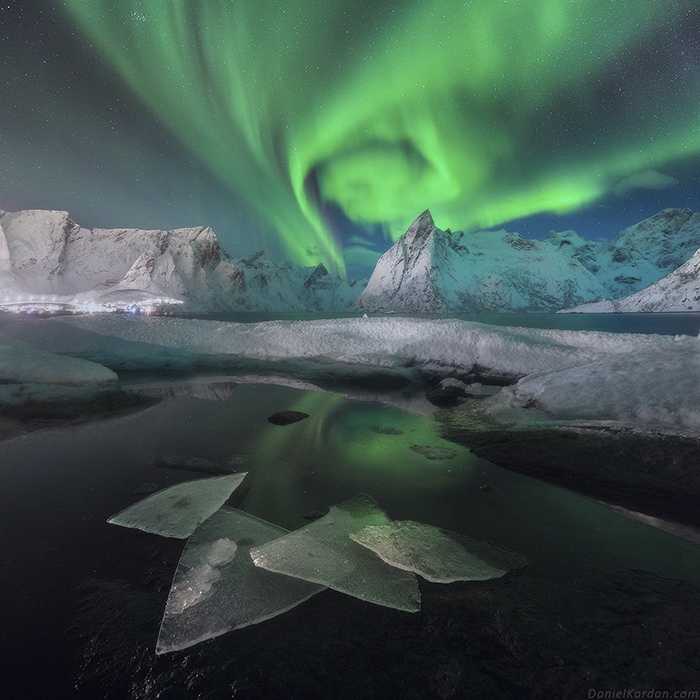
Brilliant green aurora borealis swirls above dramatic Arctic peaks, its vivid light reflecting in the dark waters where geometric ice formations create a natural sculpture garden. Image credit: Daniel Kordan
In Greenland, he developed a visual method that speaks louder than statistics. By returning to the same compositions over multiple years and framing each shot identically, he creates powerful visual time series. These paired images make change visible in a way that numbers cannot. What once felt timeless becomes undeniably temporal.
He often exhibits these works alongside scientific commentary. The images offer more than beauty. They become testimony. Each one asks a pressing question: what is being lost?
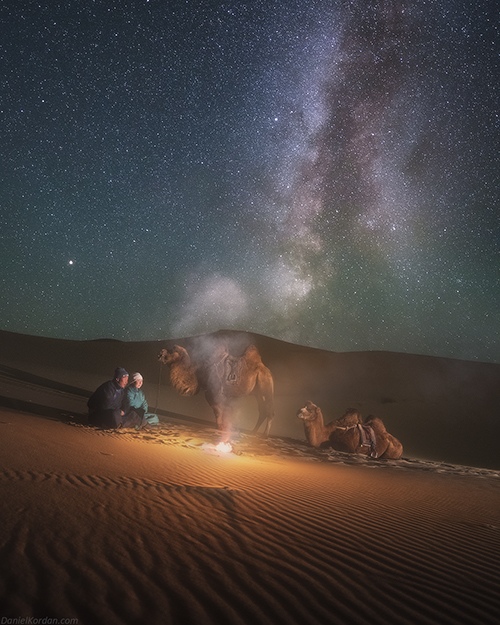
Two travelers rest beside their camels around a campfire in the desert as the Milky Way stretches across the star-filled sky above the golden sand dunes. Image credit: Daniel Kordan
An Ethic of Engagement
For Kordan, photographing indigenous communities is not about extraction. It is a matter of presence, patience, and reciprocity. When arriving in a remote village, he rarely begins with the camera. He shares meals, listens to stories, and builds trust. Only when mutual understanding is reached does photography begin.
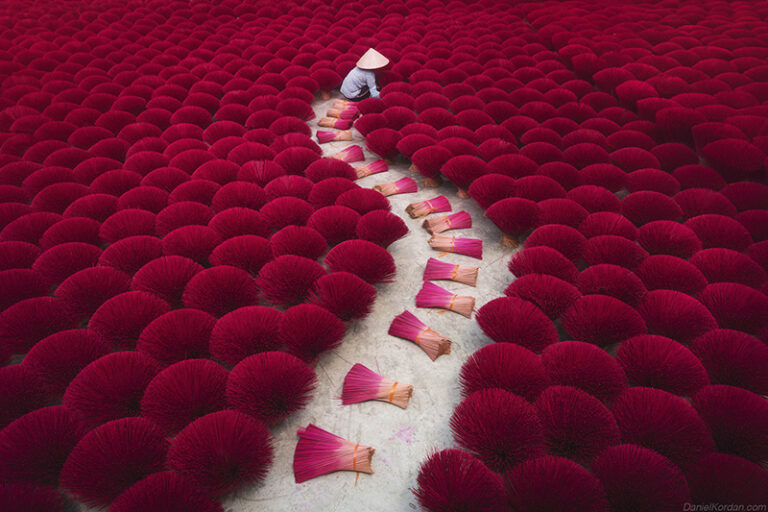
A worker in traditional Vietnamese conical hat tends to vibrant crimson incense sticks drying in the sun, Hanoi, Vietnam. Image credit: Daniel Kordan
He always asks for permission and explains how images will be used. He often returns with printed photographs or digital copies as gifts. In places like East Greenland, these long-term relationships have allowed him to revisit families over time and to witness the quiet evolution of tradition.
This approach has shaped his work in Ethiopia, Tanzania, Indonesia, and beyond. Each connection adds depth and meaning. The camera becomes a bridge rather than a barrier. The result is work that reflects not only what people look like, but how they live.
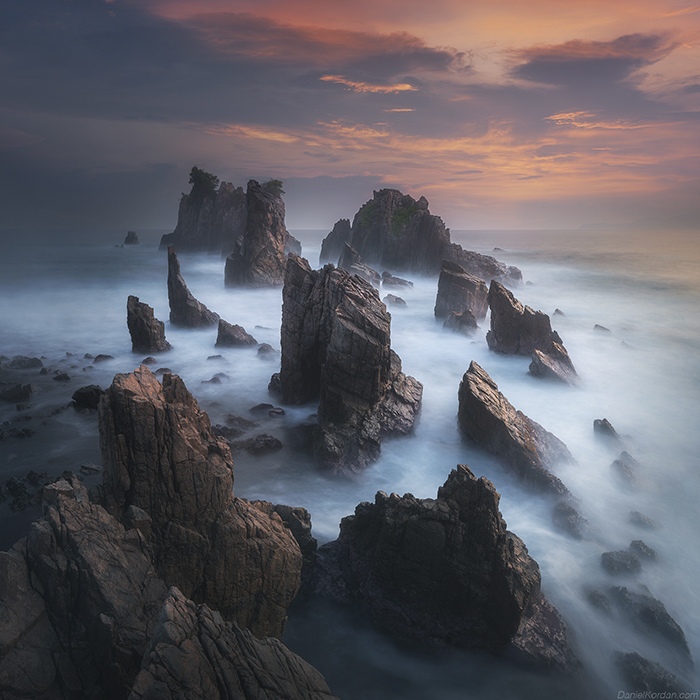
Epic seascapes across Indonesia's stunning islands of Sumatra, Java, and Lombok. Image credit: Daniel Kordan
Learning Through Teaching
Kordan continues to lead photography workshops and expeditions across Asia and the Arctic. Teaching is an essential part of his creative practice. He believes that by explaining his decisions to others, he sees more clearly himself.
He offers several types of experiences. There are structured workshops with hands-on guidance, flexible tours that allow personal discovery, and full-scale expeditions where participants observe him working in real time.
Many students arrive in search of instant results. Kordan encourages a shift in mindset. He tells them that we do not take from nature. We enter it. This principle transforms technique into a form of relationship. The goal becomes not to capture, but to connect.
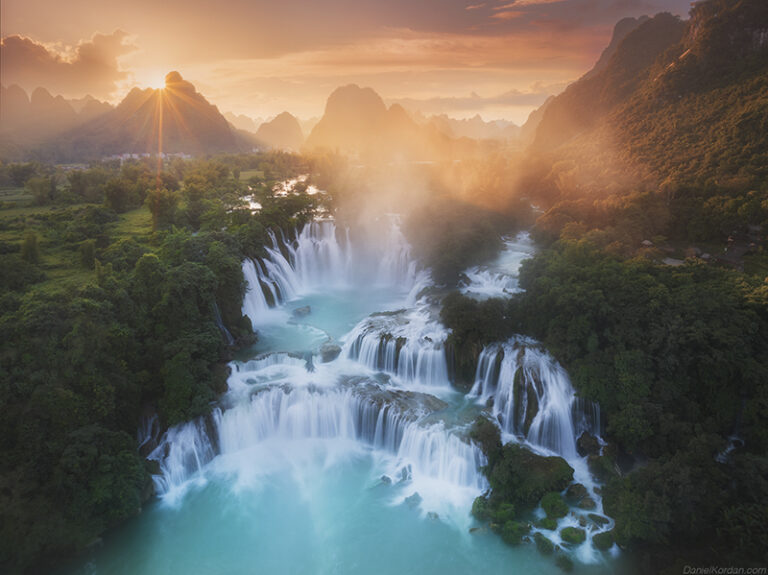
Ban Gioc waterfall, one of Southeast Asia's most spectacular cascades, located on the Vietnam-China border. Image credit: Daniel Kordan
Balancing Art and Algorithm
Kordan’s work reaches millions of followers online. He understands the tension between creative integrity and platform visibility. Certain types of images, like auroras or dramatic wildlife scenes, predictably perform well. Still, he refuses to let engagement metrics determine artistic direction.
He maintains a rhythm. Some posts are crafted to engage a broad audience. Others reflect a quieter, more personal vision. He shares images of fog, subtle textures, and restrained color palettes. These photographs may not go viral, but they speak to his truest self.
He brings the same honesty to his relationship with gear. As a Nikon and Gitzo ambassador, Kordan field-tests equipment in conditions that few others endure. When a lens hood cracked in Arctic cold or a tripod froze on a mountain slope, he turned these failures into feedback. These tests in the field become more meaningful than any lab specification.
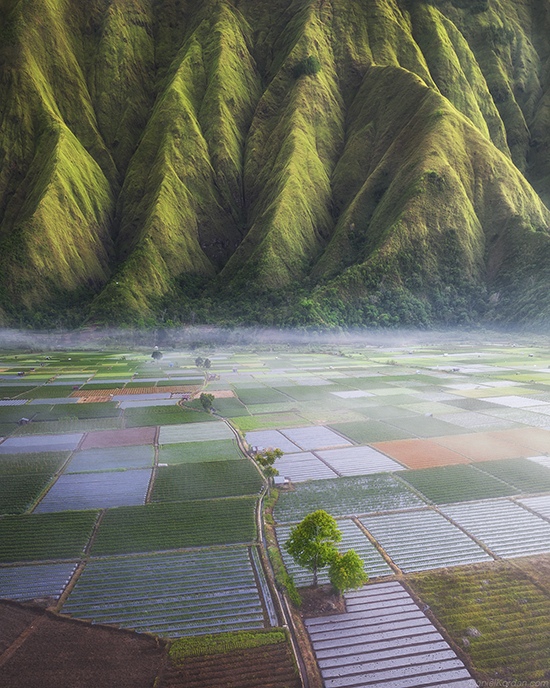
The dramatic volcanic peaks of Sembalun valley rise across Lombok island, Indonesia. Image credit: Daniel Kordan
The Sanctuary of Stillness
After weeks of travel, Kordan returns to Bali. This island home, surrounded by rice paddies and sea breeze, offers a space for recovery and reflection. It is not a retreat from creativity, but its quiet complement.
Life in Bali provides balance. Here, he reviews archives, edits images, and plans new expeditions. It is also a place for community. He hosts intimate retreats and collaborates with other artists. The stillness of this environment allows vision to deepen.
Movement and rest become partners. Each journey outward is followed by a return inward. This rhythm sustains the clarity and grace that define his work.
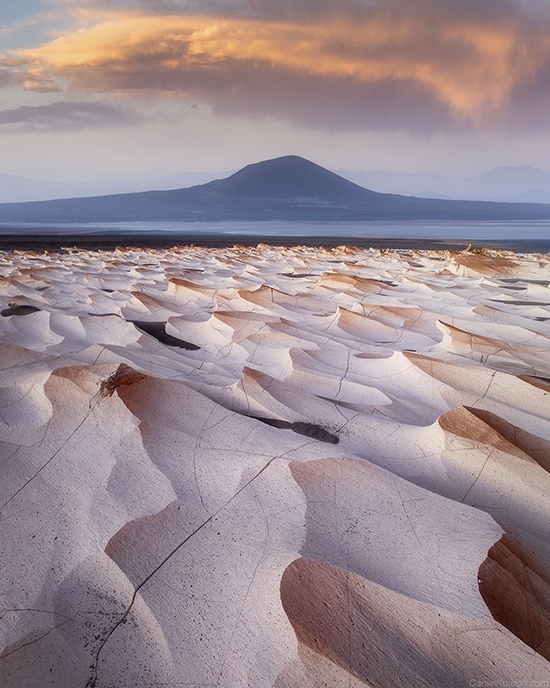
Campo de Piedra Pomez reveals otherworldly landscapes of white pumice stone formations created by ancient volcanic activity in Argentina's Puna de Atacama region. Image credit: Daniel Kordan
Conclusion
Daniel Kordan’s photography is more than art. It is a philosophy of presence, of reverence, of attentive observation. His images do not merely capture the Earth. They listen to it. They reveal what is beautiful, fragile, and still unfolding.
In a world consumed by speed and spectacle, his work offers another path. One that values stillness, patience, and genuine encounter. Through his singular blend of science and sensitivity, Daniel Kordan opens a window into places most of us will never reach. Yet through his lens, we are invited not only to see them, but to feel them.
He reminds us that the Earth is not something to conquer or consume. It is something to enter. Something to honor. Something to remember.