
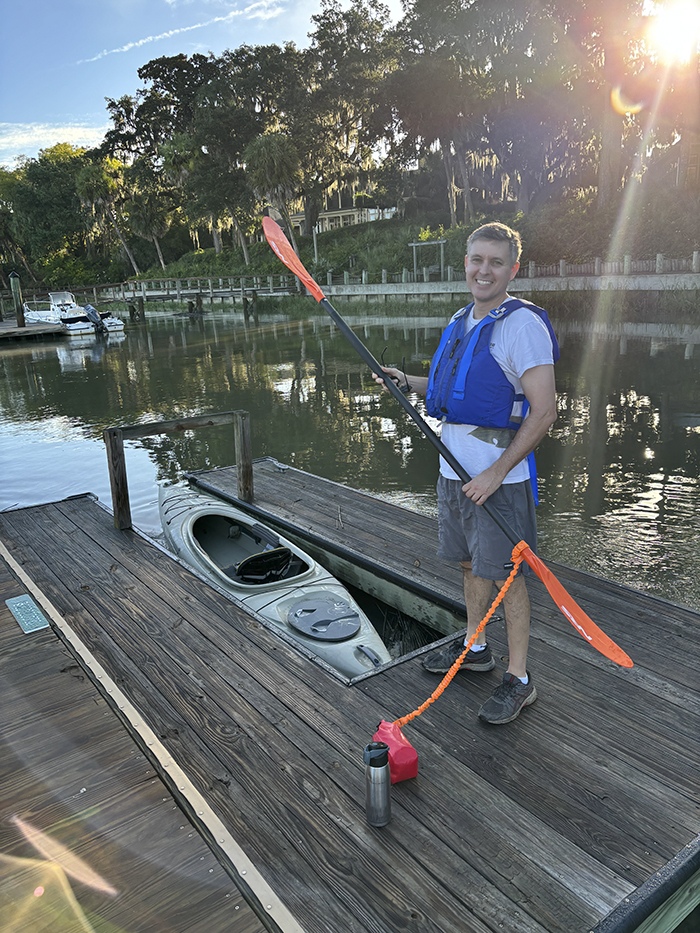
Chris Wilson on a dock in the South Carolina Lowcountry, kayak and paddle in hand, setting out to observe ospreys in their native habitat. © Chris Wilson
Osprey: Research, Inspiration, Sculpting, and Carving
A Wildlife Sculptor on Fieldwork, Wood, and Watching Ospreys Return to the Nest
Every wildlife sculpture begins long before I touch a block of wood. It begins with watching.
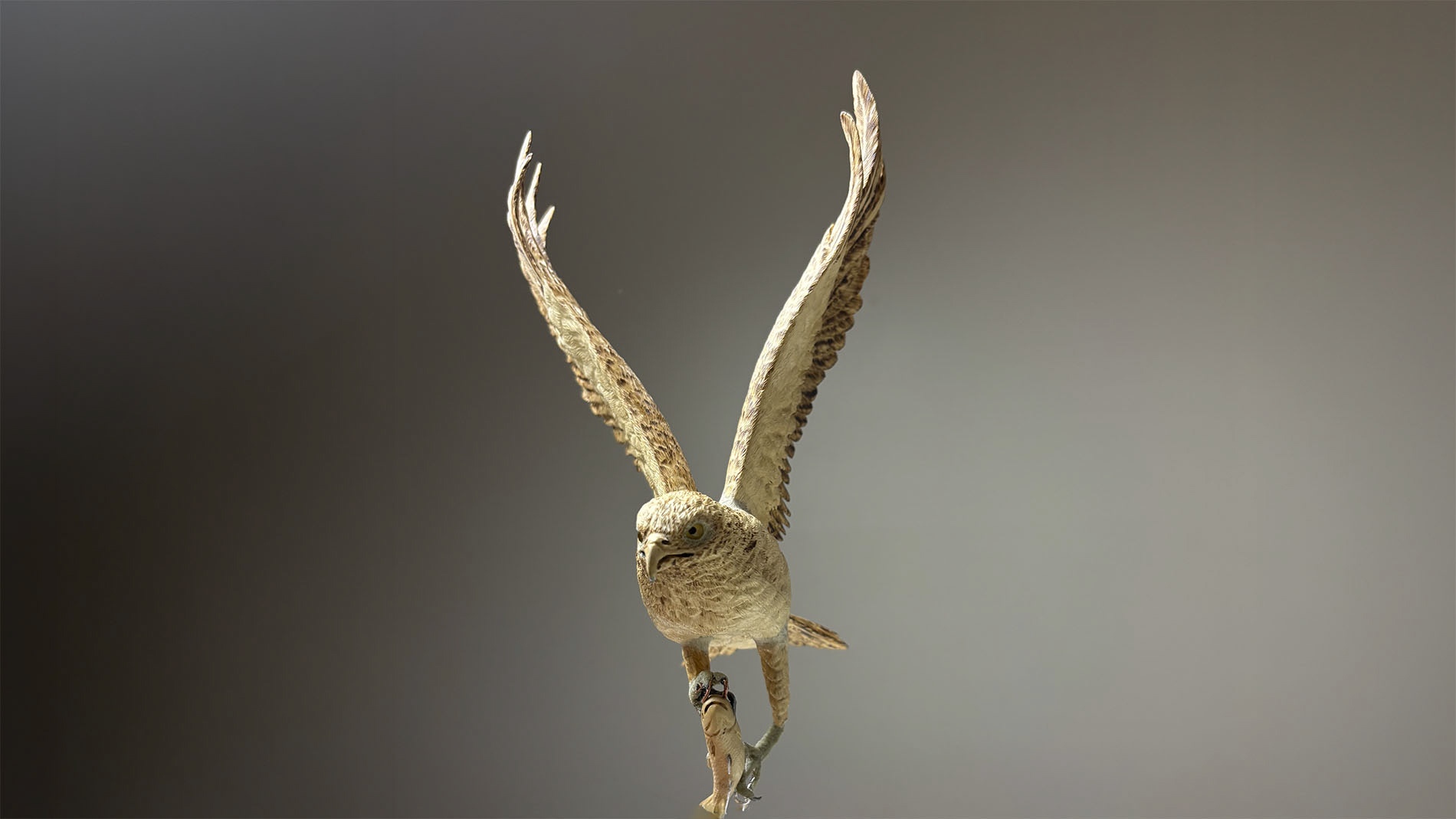
About a year ago, one of my collectors asked whether I could carve his favorite bird, an osprey. From his home overlooking the Atlantic Ocean, he watched these remarkable birds catch fish almost every day. I immediately loved the idea, but I also knew I could not rely on photographs alone. If I was going to carve an osprey truthfully, I first had to understand how it lived, moved, and hunted.
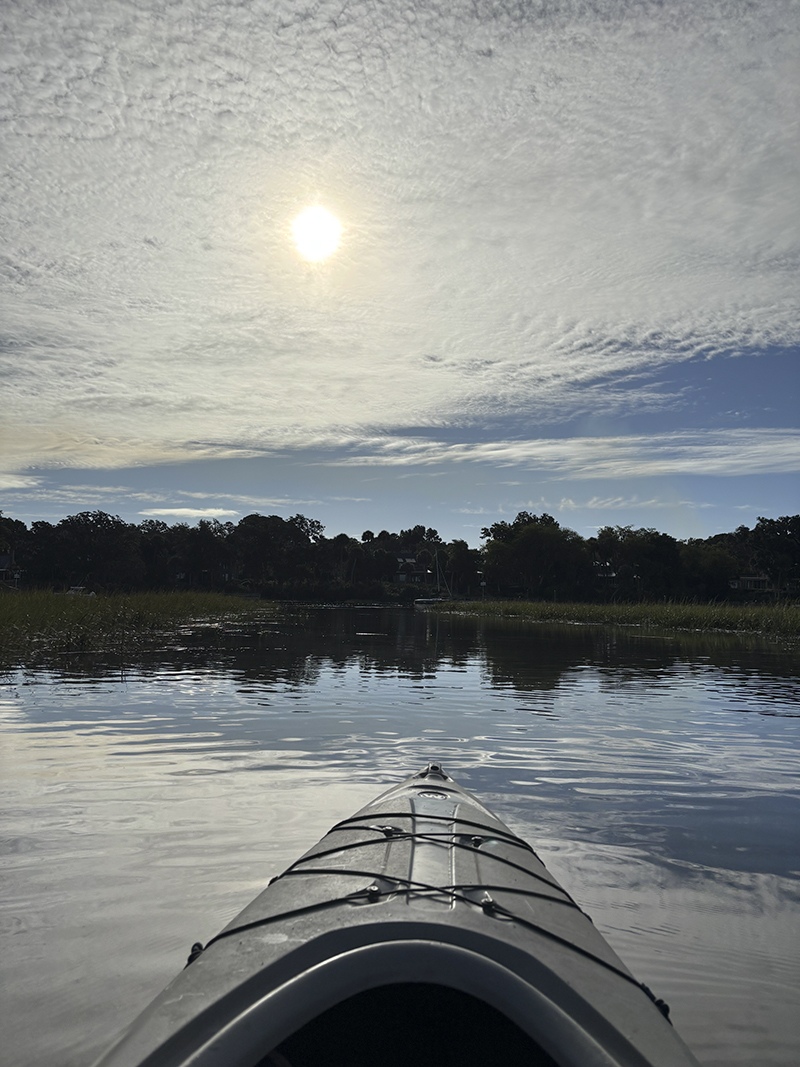
I made several research trips into the South Carolina Lowcountry, including time at Spring Island, where I was fortunate to be selected as an artist-in-residence, and at Palmetto Bluff. Both are extraordinary nature preserves, offering the kind of quiet landscapes where wildlife still sets the rhythm of the day.
Fieldwork is never as peaceful as it appears from a distance. Searching for ospreys meant sharing the marshes with mosquitoes, biting flies, alligators, and even a shark. More than once, the perfect moment arrived just as my binoculars or camera were out of reach. Even so, those trips rewarded me with unforgettable encounters, and one generous ornithologist gave me the opportunity to study a juvenile osprey mount up close, an invaluable reference for understanding the bird's anatomy.
The greatest reward came during nesting season. If I waited patiently enough, the male would eventually return with a freshly caught fish, circling back to the nest where his mate was waiting.
That was the moment I wanted to preserve in wood.
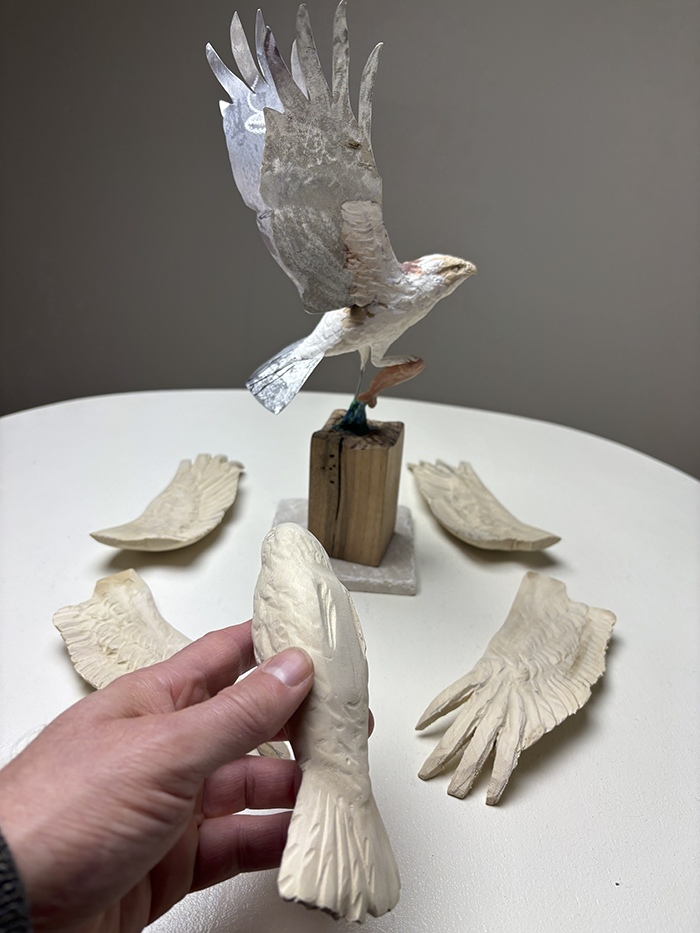
Back in the studio, I began by sculpting the osprey in clay. Before carving could begin, I needed to solve the bird's anatomy, its balance, and the sense of movement frozen within a single instant. The clay model became my blueprint, allowing me to study every angle before committing the design to wood.
The engineering proved almost as challenging as the sculpture itself. A bird suspended in flight requires strength that wood alone cannot provide. After hollowing out the osprey, I built an internal metal armature that passes through its legs and into the fish clutched in its talons, allowing the sculpture to appear airborne while remaining securely supported. The wings were carved separately and attached afterward, giving the piece both structural strength and a more convincing sense of flight.
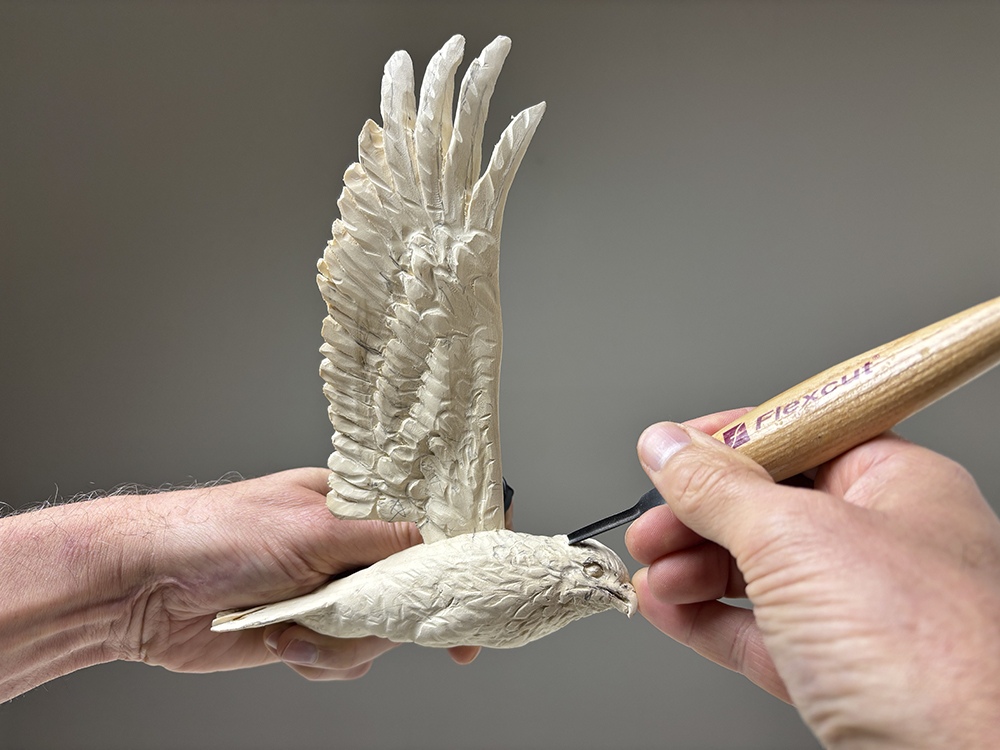
From there came the slow, patient work that every woodcarver knows well. Carving. Sanding. Refining. Then carving again. Every feather had to be shaped individually before its texture could be cut into the wood. Progress came one feather at a time, each one contributing to the illusion that a solid block of wood might suddenly take flight.
During the project, I decided one more research trip was in order. Cumberland Island has long been one of my favorite places, and I hoped it might offer another chance to observe ospreys in the wild.
It did not disappoint.
Among the island's wild horses, I watched a pair of ospreys nesting atop Dungeness, the haunting ruins of the Carnegie family's winter estate. There was something unforgettable about seeing the birds returning again and again to the same nest, carrying fish across a landscape where history and wilderness have quietly reclaimed one another.
That final encounter gave me exactly what I needed. It was not another anatomical detail or a better photograph. It was a deeper understanding of the bird itself, and the confidence that the sculpture could finally be finished.
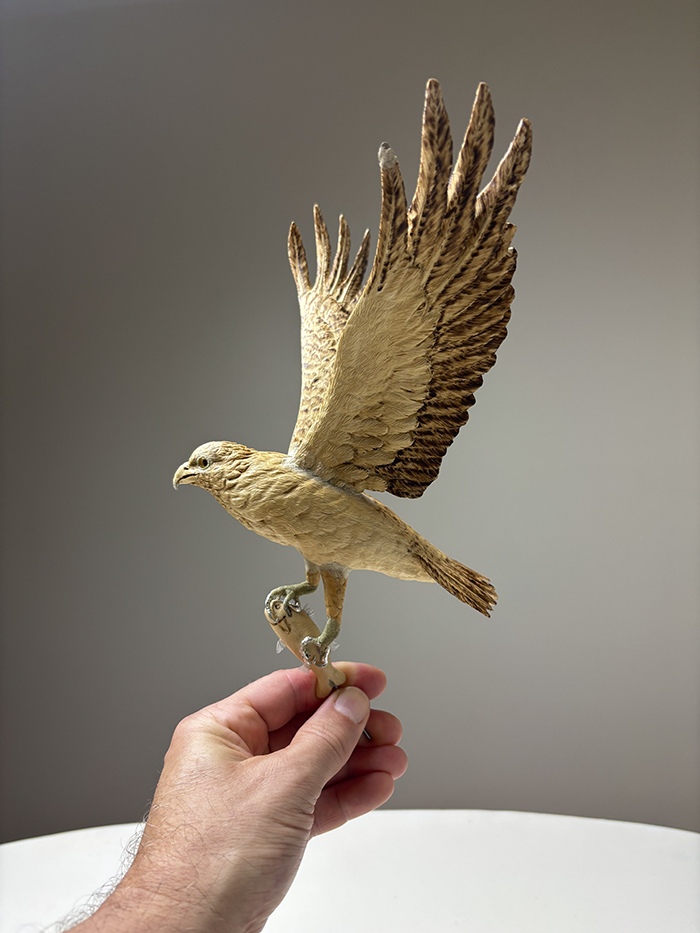
When the carving was complete, I realized the sculpture represented more than a single osprey carrying a fish. It also held the miles paddled through tidal creeks, the long hours spent waiting beneath nesting platforms, the conversations with scientists and bird experts, and the countless observations that gradually found their way into the wood.
Every sculpture teaches me something new, and every time I watch an osprey dive, I notice another detail worth bringing back to the studio.
The sculpture is now in its final stages. I am painting the osprey and creating the splash that will conceal its hidden support. After more than a year of work, I hope to have it ready for competition in six weeks.
Chris Wilson is a wildlife sculptor based in Marietta, Georgia, working in wood, marble, and bronze. Trained by mentors including Gary Denzler, former head of the Birds of Prey Center at the Cincinnati Zoo, Wilson holds a BA in Art from Kennesaw State University and an MFA in Sculpture from Georgia State University. His work has received more than one hundred Best of Show awards and has been exhibited at Brookgreen Gardens, the Southeastern Wildlife Exposition, the Mint Museum, the Waterfowl Festival, and numerous other venues. In 2026, he was selected for Homo Faber 2026, the Michelangelo Foundation's international exhibition of craftsmanship, held at the Fondazione Giorgio Cini in Venice. More of his work can be found at WilsonWildlifeSculpture.com .
All photographs © Chris Wilson.