


Nagaland University researcher demonstrates electron control in fractal geometries, placing the institution on the global quantum research map
Editor’s note: This feature is based on Our Narratives’ interview with Dr. Biplab Pal.
A new study from Nagaland University, a central university in India, has given the institution a notable presence on the global quantum research map. For the first time, work led by Dr. Biplab Pal, Assistant Professor in the Department of Physics, appears on the cover of Physica Status Solidi (RRL) Rapid Research Letters, an international peer-reviewed journal published by Wiley VCH in Germany. The recognition marks an important milestone for the university’s scientific profile.
In conversation with us, Dr. Pal explained how his model brings fractal geometry into quantum physics. Fractals, known for their self-similar structures found in snowflakes, branching trees, river basins, and neural networks, take on new roles when placed in a uniform magnetic field. Under such conditions, the geometry produces distinctive electronic behavior, including Aharonov–Bohm caging, a phenomenon in which electrons become confined once the magnetic flux reaches half of its fundamental quantum.
His analysis of the energy spectrum and conductance reveals a sharply defined switching mechanism that governs electron motion. Insights from this work may inform future quantum algorithms and communication networks, while also aligning with the broader goals of India’s National Quantum Mission.

Why fractals
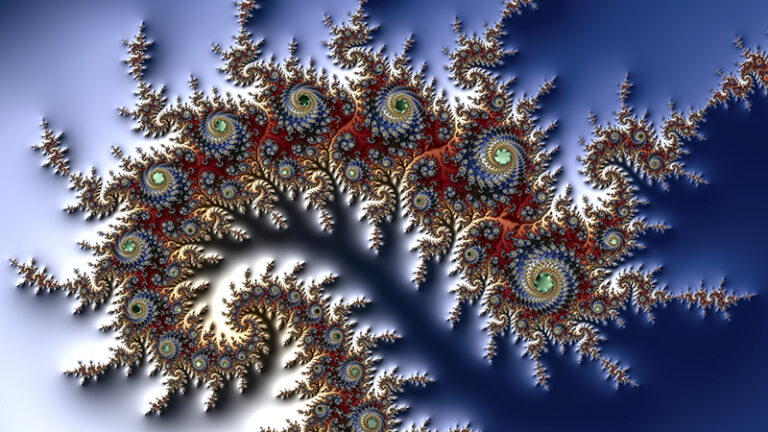
Fractals are structures in which each part mirrors the whole. Break off a piece of cauliflower and the smaller section echoes the larger pattern. Such self-similarity appears throughout nature, from mountain chains to neural networks. Unlike familiar geometric forms with integer dimensions, fractals occupy fractional dimensions. They only partially fill space and always leave voids. In the quantum realm, those voids become sites where tunneling can occur, allowing electrons to slip through regions that classical physics would consider impenetrable.
Recognizing the potential of such geometry, Dr. Pal set out to explore how electrons behave when moving through a fractal lattice under the influence of a magnetic field.
The experiment within equations
His study centered on a Vicsek fractal, a square-based pattern formed by repeatedly removing the central segment. When a uniform magnetic field was applied to the lattice, the Aharonov–Bohm effect came into play. This fundamental principle of quantum mechanics reveals that electrons can react to magnetic potentials even in regions where no magnetic field is directly present.
Under one highly specific condition, when the magnetic flux reached half of its fundamental quantum, Dr. Pal found that electrons became caged and could no longer move through the lattice. A slight shift away from that value restored their mobility. The effect arises because quantum phases associated with all possible paths cancel out perfectly at that particular flux, leaving the particles confined.
“At exactly half a flux quantum, the electrons are blocked,” Dr. Pal noted. “Shift away from that point and they move freely again.”
Such precise control allows a magnetic field to function as a quantum switch.
From equations to computation
Dr. Pal’s process combined analytical mathematics and computational simulation. His handwritten derivations predicted the caging effect, and his computer simulations confirmed it. They produced two key datasets: the density of states, showing how many electron energy levels exist at each energy, and the transport properties, showing conductance nearly zero at half flux and fully restored beyond it.
“Whatever I obtained in my tabletop notebook was supported by the computational simulation,” he said. “Both matches perfectly.”
This harmony between theory and computation strengthens the conclusion that the observed phenomenon is real rather than a numerical artifact.
Robust against imperfection
Real materials inevitably contain flaws. Even so, Dr. Pal’s simulations revealed that the caging effect survives when various types of disorder are added, whether displaced atoms, impurities, or small deviations in spacing. The quantum behavior remained intact under conditions that resemble practical materials rather than idealized ones.
“You will never get everything perfect,” he observed. “The system should still work.”
Such resilience is essential for any future application. It suggests that potential devices would not need absolute atomic precision. The fractal’s repeating pattern provides a natural buffer, allowing local defects to exist without compromising the integrity of the larger structure.
Fractals built in laboratories
Although the work is theoretical, fractal architectures have already been realized in laboratory settings. Chemists have built molecular fractals step by step, revealing striking self-similar motifs under high-resolution microscopes. In photonic platforms, engineers substitute each lattice site with a network of optical waveguides, enabling light to emulate the movement of electrons. Such setups have already exhibited flat-band behavior, a phenomenon closely related to caging.
“Each lattice point becomes a photonic waveguide network,” Dr. Pal noted. “Light is sent through it, and the resulting patterns are recorded.”
With these experimental systems in place, the tools needed to verify his prediction are largely available.

Toward quantum technology
Why does confining electrons in fractal lattices matter? Because the ability to steer electron motion and spin lies at the heart of quantum computing and spintronics. Electrons possess both charge and spin, and precise control over those properties enables faster, more efficient, and non-volatile technologies.
Classical computing stores information as zeros and ones. Quantum computing, by contrast, relies on qubits that encode information through combinations of quantum states such as spin-up and spin-down. If electrons can be trapped, released, and guided with fine magnetic control, engineers could isolate or direct qubits in a highly targeted way.
“If you can control the electron states, you are controlling the quantum bits,” Dr. Pal said. “A magnetic field becomes a tuning knob. You can lock the information in place or allow it to move.”
Lessons from the past: crystals and quasi-crystals
To appreciate the novelty of fractal structures, Dr. Pal points to history. For decades scientists believed matter existed only as ordered crystals or as disordered amorphous solids. That changed when Daniel Shechtman discovered quasi-crystals in 1982, ordered yet non-periodic structures that earned him the 2011 Nobel Prize in Chemistry. Fractals share that in-between nature: structured but not periodic, ordered yet complex.
“We have explored crystals for a long time,” Dr. Pal said. “Fractals and quasi-crystals are the new frontier.”
The time scale of discovery
Theoretical predictions often wait many years before laboratory confirmation arrives. The Aharonov–Bohm caging effect is a clear example. First proposed around 1998, it did not receive experimental validation until 2018, when researchers used photonic lattices to reproduce the required quantum interference with light rather than electrons.
“It took eighteen years for the first experimental paper to appear,” Dr. Pal noted. “With the tools available now, progress on fractal systems could move more quickly.”
Fractal fabrication and Aharonov–Bohm caging have both been demonstrated separately. Bringing the two elements together is the natural progression for future experiments.
Aligning with India’s National Quantum Mission
Although Dr. Pal’s research grew from scientific curiosity rather than policy objectives, the work nonetheless aligns with the aspirations of India’s National Quantum Mission, which encourages advances in quantum computing, communication, sensing, and materials. His model illustrates how geometric structures can guide quantum behavior, a direction that naturally contributes to the mission’s broader vision.
“Any contribution that deepens our understanding of quantum mechanics strengthens the mission,” he noted. “The study simply adds another piece.”
Equally significant is the resilience he observed in the presence of structural imperfections. Such stability reflects conditions found in real materials and offers practical advantages for developing quantum technologies across varied environments.
Nature as blueprint
Dr. Pal’s curiosity began not with technology but with nature itself.
“Whatever laws we study, they come from nature,” he reflected. “Newton’s laws came from watching an apple fall. Everything starts there.”
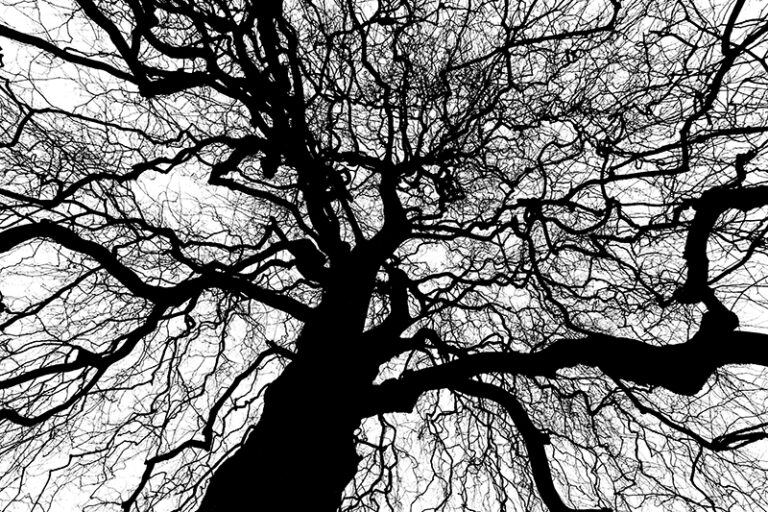
By observing how fractal forms—from trees to coastlines—balance efficiency and connectivity, he wondered how those same geometries might behave at the atomic scale. This biomimetic approach echoes many technological breakthroughs, from Velcro to solar cells inspired by leaves. His work extends that lineage into the quantum realm, showing that the same patterns shaping our world might shape the computers of the future.
The surprise of discovery
When asked what surprised him most, Dr. Pal smiled.
“I was hoping it might happen, but I was not sure,” he said. “In research you always face uncertainty. Sometimes the result appears when you least expect it.”
His equations hinted at caging, but he waited for the simulations to confirm it. When the data matched, he realized he had uncovered something entirely new. That moment of convergence between intuition, mathematics, and computation—the instant when theory becomes discovery—is what keeps scientists going.
Looking ahead
Dr. Pal plans to extend his work to other fractal geometries, such as the Sierpinski gasket and Koch curve, to see how different symmetries and dimensionalities affect quantum transport. Each may reveal distinct mechanisms of control or resilience.
Experimentalists worldwide can now test these predictions by combining molecular or photonic fractal platforms with the Aharonov-Bohm framework. Whether the verification takes years or decades, the theoretical map is drawn.
A voice from Nagaland
That such research is taking shape in Nagaland, an Indian state with fewer than two million residents, carries its own quiet significance. Nagaland University, established in 1994, works from its Lumami campus, an environment where theoretical physics can flourish even with modest facilities.
“The laboratory is inside a computer, and the experimental apparatus is the human mind,” Dr. Pal remarked.
A cover feature in a leading international journal demonstrates that high-level scholarship can emerge from any corner of the world when curiosity and discipline converge. It also reflects India’s expanding presence in quantum science, extending beyond major metropolitan hubs into the hills of the northeast.