
Scientists at Virginia Tech discover that age-related memory loss has specific causes in the brain that can be targeted and reversed, offering new hope for Alzheimer's treatment
Memory decline might not be an inevitable part of aging. Researchers at Virginia Tech have discovered that memory decline actually stems from a series of specific molecular changes in the brain, and by precisely regulating these changes, memory function can be significantly restored.
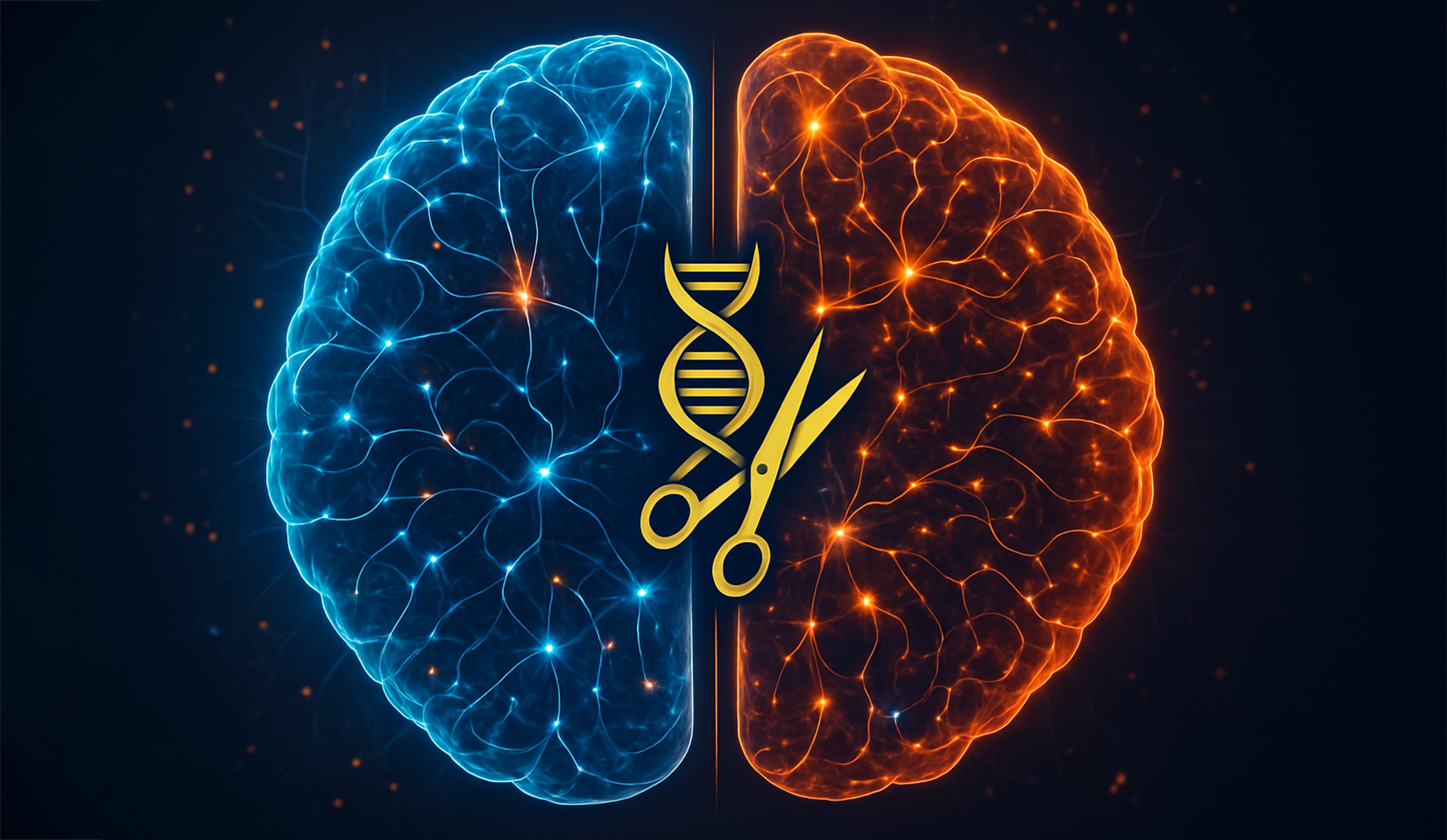
In two groundbreaking studies, Associate Professor Timothy Jarome and his graduate students used advanced gene editing techniques to successfully correct age-related molecular abnormalities and significantly improve memory performance in older rats. Rats have long served as ideal animal models for studying age-related memory decline due to their highly similar aging process to humans.
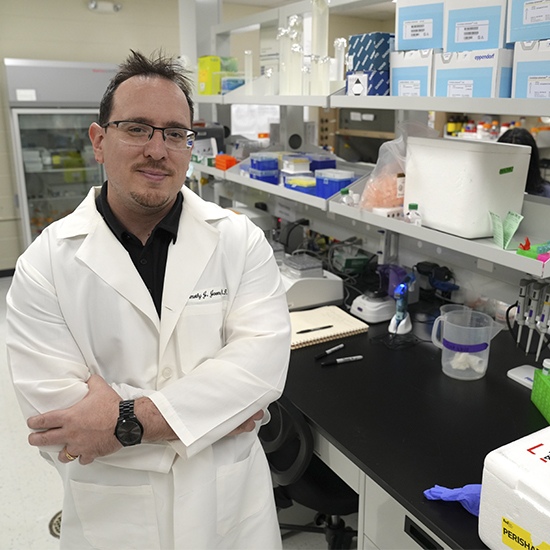
“Memory loss affects more than a third of people over 70, and it’s a major risk factor for Alzheimer’s disease,” said Jarome, who holds appointments in both the School of Animal Sciences and the School of Neuroscience. “Our work shows that memory decline is linked to specific molecular changes that can be targeted and studied. If we can understand what’s driving it at the molecular level, we can start to understand what goes wrong in dementia and eventually use that knowledge to guide new approaches to treatment.”
Recently, we had the opportunity to speak with Dr. Jarome about his research journey, the complexities of translating laboratory discoveries into human therapies, and what the findings mean for the millions facing memory loss and Alzheimer’s disease. The detailed conversation follows.
A Journey Through Disciplines
Dr. Jarome’s path to neuroscience research began in an unexpected place: psychology. “My background originally was in psychology. I went to Kent State University and was really interested in memory, and that’s when I first got exposed to neuroscience,” he explained. The early fascination with how the mind works led him to graduate work at the University of Wisconsin, Milwaukee, where he focused on understanding how the brain stores memories.
His academic trajectory continued with a postdoctoral position at the University of Alabama, Birmingham Medical School, where he delved into genomics and mastered gene editing techniques. “I came to Virginia Tech eight years ago, and that’s when I combined my background in psychology, genetics, biochemistry, and molecular biology to take a multifaceted approach to understanding memory itself, how it changes across a lifespan, and how it’s affected in different disease states.”
Such interdisciplinary training proves crucial for unraveling the complex mechanisms of memory. It allows knowledge from different fields to converge, helping to illuminate not only how the brain functions normally, but also how abnormalities emerge in pathological conditions.
Why Rats Make Ideal Models
Selecting rats as the experimental model was a deliberate decision. Although both rats and mice can form memories, rats have a distinct advantage for studying age-related cognitive decline.
Jarome explained, “The memories they form are less complex than those in humans, but rats are actually very intelligent animals, and many types of memory can be studied in rodents. What’s particularly valuable is that rats naturally develop memory decline with age just like humans do, making them an excellent model for studying age-related memory impairment.”
The similarity of their aging process to humans gives the research strong potential for clinical translation and helps reveal the molecular mechanisms underlying human cognitive decline.
Two Brain Regions, Two Different Solutions
The first study, published in the journal Neuroscience, was led by Jarome together with his doctoral student Yeeun Bae. It focused on the K63 polyubiquitination mechanism, which acts like a molecular tag that guides brain proteins to function properly, supporting signal transmission between neurons and facilitating memory formation.
The research found that with age, K63 polyubiquitination undergoes completely opposite changes in two core brain regions: the hippocampus and the amygdala. In the hippocampus, which handles everyday memories, levels abnormally increase. When the team used the CRISPR-dCas13 RNA editing system to lower them, memory in aged rats improved significantly. In the amygdala, which primarily processes emotional memories, levels decline with age. Surprisingly, when the team reduced them even further, emotional memory performance in aged rats also improved markedly. Such counterintuitive results clearly demonstrate the distinct regional differences in brain aging.
Jarome summarized: “Our findings show that by restoring the imbalanced K63 polyubiquitination to normal levels in different brain regions—lowering it in the hippocampus while reducing it further in the amygdala—memory function can be recovered. The brain is extremely complex, and aging doesn’t affect every region the same way. Even the same molecular mechanism may require completely opposite regulatory directions in different brain regions. Therefore, future treatments for age-related memory impairment must achieve precise regional targeting and choose the correct direction of intervention.”
Turning Genes Back On
The second study, published in Brain Research Bulletin, was led by Jarome with doctoral student Shannon Kincaid. It focused on IGF2, a growth factor gene that supports memory formation. As the brain ages, IGF2 activity drops as the gene becomes chemically silenced in the hippocampus through DNA methylation, a natural process in which chemical tags accumulate on the gene and switch it off.
“IGF2 is one of a small number of genes in our DNA that’s imprinted, which means it’s expressed from only one parental copy,” Jarome explained. “When that single copy starts to shut down with age, you lose its benefit.”
The imprinted nature of IGF2 creates unique challenges. “There are just over 100 imprinted genes, but they’re only expressed from one copy, which is unique because most genes are expressed from two copies,” Jarome elaborated. “Genomic imprinting is a process where one copy of a gene, either from the mother or father, is shut off. It happens immediately during early development and continues throughout life. That copy is never expressed.”
This creates a complication for gene editing. “The gene editing approach we use to control methylation could technically target either copy. In our study, it did not seem to target the imprinted copy, and there are various reasons for that related to how DNA is compacted. But it doesn’t mean it’s impossible, and much more testing needs to be done to ensure that the imprinted copy won’t be targeted.”
Why does this matter? “We know that if you increase IGF2 levels beyond normal, you can improve memory, but it can also have negative consequences for the cell. There’s a reason these genes are expressed from only one copy. We want to make sure you’re not expressing too much of it.”
Using the precise gene editing tool CRISPR-dCas9, the researchers removed the chemical tags silencing IGF2 and reactivated the gene. The result was significantly better memory in older rats. Crucially, middle-aged animals that didn’t yet have memory problems weren’t affected by the intervention.
“We essentially turned the gene back on,” Jarome said. “When we did that, the older animals performed much better. Middle-aged animals that didn’t yet have memory problems weren’t affected, which tells us timing matters. You have to intervene when things start to go wrong.”
The Complexity of Memory and Aging
Together, the two studies illuminate a fundamental truth: memory loss is not caused by a single molecule or pathway. Multiple molecular systems contribute to how the brain ages, and understanding their interactions is essential for developing effective treatments.
“We tend to look at one molecule at a time, but the reality is that many things are happening at once,” Jarome noted. “If we want to understand why memory declines with age or why we develop Alzheimer’s disease, we have to look at the broader picture.”
Finding the Intervention Window
One of the most challenging aspects of translating this research into human therapies is identifying the optimal intervention window. The molecular changes that lead to memory decline occur before cognitive symptoms become apparent, but intervening too early in otherwise healthy individuals raises ethical concerns.
“It’s a moving target because not everyone is going to show cognitive decline with age, and when they do, the timing won’t be universal,” Jarome said. “The molecular change occurs prior to the cognitive change, so you don’t want to wait until you already have cognitive problems to intervene.”
His lab has been focusing on middle age, a period when molecular changes are already occurring but memory deficits haven’t yet manifested. “In middle age, we know that most people don’t have cognitive deficits yet, but we’re starting to see that there are already molecular changes happening within the brain. That might be a time point for intervention because those changes are already occurring, but memory isn’t bad yet. It takes time for things to accumulate.”
The IGF2 study provides crucial evidence for this approach. The fact that the intervention improved memory in older rats with existing decline but had no effect on middle-aged rats without problems suggests that timing truly matters. The challenge will be developing biomarkers that can identify when molecular changes begin in individual patients.
Currently, such precision remains beyond reach. “For molecules at this level, MRI doesn’t have that type of resolution,” Jarome explained. “We can test molecules in the bloodstream, but that won’t tell you what’s happening in an individual brain region. Right now, you can only look at specific brain regions after death. Developing methods to examine specific brain regions in humans non-invasively is a future target, but it’s beyond our technical abilities at this point.”
From Laboratory to Clinic: The Long Road Ahead
While the results are promising, significant challenges remain before these approaches can be applied to humans. Gene editing treatments must be delivered to specific brain regions in a non-invasive way, a technical hurdle that researchers are actively working to overcome.
“When you’re talking about the barriers to gene editing approaches and how they could be used in a non-invasive therapeutic strategy in humans, there are a couple of challenges,” Jarome explained. “One is that gene editing materials are actually very hard to get into certain cells, especially within the brain. Labs are working on packaging these gene editing plasmids in nanoparticles that can be introduced through the bloodstream.”
The second challenge is targeting. “You don’t want this to be global. You want it in a specific region. Labs are working on methods where you package the plasmids in nanoparticles, put them through the bloodstream, and when they reach the brain region you want, you break the particle to release the material. The challenges are getting it into the cell and getting it to where you need it to be without surgery or brain injections.”
The Ethics of Enhancement
The research also raises profound ethical questions. If these techniques can restore memory in people with age-related decline, could they also enhance memory in healthy individuals? Jarome believes this is a critical consideration that requires careful study.
“These tools could theoretically be used to enhance memory in otherwise healthy individuals,” he acknowledged. “The ethical consideration is that we’re applying this in a disease state where cellular activity is already altered in the brain. In a healthy individual, you’re taking a normal cellular state and changing it to one that’s not normal. What would the long-term consequences be? We don’t have an answer to that.”
He pointed to a cautionary tale from earlier research: “There was a study about 20 or 30 years ago where researchers increased the expression of one receptor in mice and it made them incredibly smart, the smartest mice you could find, but they died very young. There was a long-term consequence.”
This suggests that normal levels of gene expression exist for good reasons. “There might be a reason why, in a normal healthy person, the expression of these genes is at specific levels. Too high might be detrimental to the cell long term.”
Aging Cannot Be Stopped, Only Compensated
An important distinction in this research is that it doesn’t reverse aging itself but rather compensates for its effects on memory. Jarome illustrated this with a fascinating example from the animal kingdom.
“There is no fountain of youth right now,” he said. “Even the naked mole rat, which is a really unique rodent, can live over 20 years while most rats only live a couple years. It seems to be largely immune to the effects of aging until it eventually just dies. People have been studying it to understand why it can live so much longer than any other rodent species. But even they eventually die. There’s just no immunity to aging. The cells are going to continue to age, so this is really compensating for those aging effects.”
When molecular changes are reversed, “we can’t say we’re returning it to a young state because the brain still isn’t the same at that point. The cellular mechanisms, the proteome, the transcriptome, they’re all very different. I would argue that it’s more compensating for the effects of aging as opposed to returning to a young state. You can’t stave off aging. There’s no way to prevent us from aging as of now.”
Lifestyle, Genes, and the Limits of Prevention
The research exists within a broader context of lifestyle factors that influence brain health. Exercise, diet, mental stimulation, and social engagement all affect epigenetic mechanisms that control gene expression.
“We know that exercise can alter epigenetic mechanisms in cells, improve memory and health, and can even be associated with better resilience to memory loss with age,” Jarome noted. “On the other end, poor diet, especially obesity, is associated with epigenetic changes that tend to be more negative because memory tends to be poorer.”
However, lifestyle interventions have their limits. “It’s possible that even with the perfect lifestyle, you might not be able to prevent developing Alzheimer’s disease or memory loss with age,” Jarome said. “Lifestyle changes are important, but the therapeutic strategies we’re developing would be for interventions that could come in when that’s not enough.”
Research suggests that intellectual engagement may offer protection. “There was a study that found Alzheimer’s and dementia rates were among the lowest in college professors,” Jarome noted. “We’re forced to think about things all the time and constantly learning. That might stave off some of the negative molecular changes in the brain that ultimately lead to memory loss.”
The Alzheimer's Connection
While the studies focused on normal aging, the implications for Alzheimer’s disease are significant. Age-related memory decline is one of the greatest risk factors for developing the disease, and the hippocampus is one of the first brain regions impacted.
“We’re now looking at these molecules in an Alzheimer’s disease model,” Jarome said. “We need to know: are these changes leading to further changes in Alzheimer’s disease, or are they themselves causing it? The hippocampus is one of the first brain regions impacted, so these memory loss mechanisms we’re looking at might be leading to some of the pathology we see.”
For decades, Alzheimer’s research focused primarily on amyloid beta plaques and tau tangles. But these appear relatively late in the disease process, when significant neuronal death has already occurred. Identifying earlier molecular changes could enable preventive interventions before irreversible damage accumulates.
“Everyone is trying to find a biomarker because when you start to see those plaques and tangles, cells are already dying,” Jarome explained. “We’re particularly interested in whether ubiquitin might be leading to everything else and might be causing Alzheimer’s disease.”
Obesity, diabetes, and other metabolic disorders are also risk factors. “We don’t know exactly why, but understanding those aspects will help inform us about what causes Alzheimer’s disease, because we still don’t know what triggers it.”
The Economic and Human Costs
The urgency of this research is underscored by Alzheimer’s staggering impact. As the baby boomer generation ages, cases are expected to rise dramatically.
“Alzheimer’s disease is arguably one of the most costly diseases because you live for a decent amount of time with the disorder,” Jarome noted. “It’s a massive economic burden. We really need to find out what causes it so we can develop a treatment.”
Beyond the economic costs lie the immeasurable human costs: the loss of identity, the burden on caregivers, and the profound suffering of watching a mind slowly disappear.
Graduate Students Leading Discovery
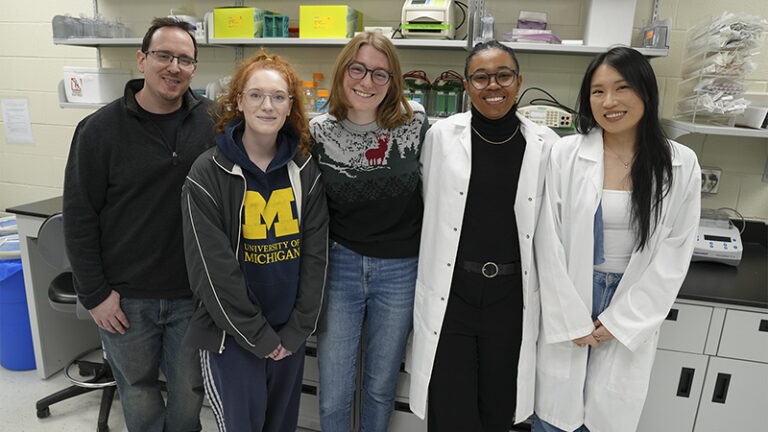
Both studies exemplify the collaborative, graduate-led research model that characterizes Jarome’s laboratory. Yeeun Bae led the study on K63 polyubiquitination, while Shannon Kincaid led the study on IGF2. The research was conducted in collaboration with scientists at Rosalind Franklin University, Indiana University, and Penn State, and was supported by the National Institutes of Health and the American Federation for Aging Research.
“Our students are deeply involved in designing experiments, analyzing data, and helping shape the scientific questions we pursue,” Jarome said. This approach brings fresh perspectives to longstanding questions.
Multiple Paths Forward
Given the complexity of memory and aging, Jarome advocates for funding multiple research approaches simultaneously.
“I would argue that the NIH should equally fund both gene editing molecular approaches as well as pharmacological and behavioral approaches,” he said. “Ultimately, some of the best therapies might be a combination of interventions.”
He emphasized that personalized medicine may be necessary. “It might not be one size fits all. Sometimes you might need a more personalized treatment, so you need options.”
The Role of Artificial Intelligence
As research becomes increasingly complex, artificial intelligence may play a growing role in accelerating discovery.
“AI can help us go through information at levels that would take us days in just minutes,” Jarome said. “It might be able to help us identify potential molecules to target, or identify potential avenues for how to deliver treatments in a non-invasive way.”
Looking Ahead
Despite being in the early stages, the research represents a conceptual shift in how we think about memory loss and aging.
“Everyone has some memory decline as they get older,” Jarome said. “But when it becomes abnormal, the risk for Alzheimer’s disease rises. What we’re learning is that some of those changes happening at a molecular level can be corrected, and that gives us a path forward.”
The pace of innovation in neuroscience and molecular biology has accelerated dramatically. CRISPR gene editing, once theoretical, is now a standard laboratory technique. “Science has really expanded, and the innovation in the last 10 to 15 years has been incredible,” Jarome reflected. “Alzheimer’s disease is a very complex disorder. We will get there. We just have to keep studying this disease.”
The journey from laboratory to clinic is long and uncertain. “We’re at the very early stages,” Jarome acknowledges. “We really need to understand our molecules in Alzheimer’s disease first, and then we would start heading toward the translational route.”
But the fundamental insight remains powerful: memory loss is not simply the inevitable erosion of an aging brain but rather the result of specific molecular changes that we are beginning to understand and may eventually be able to correct. For the millions of people who will face memory loss and Alzheimer’s disease, this research offers hope grounded in scientific evidence that a different future might be possible—one where the molecular mechanisms of memory decline can be identified early, targeted precisely, and corrected before they steal away the essence of who we are.