
California startup compresses 18 month design cycles into just 3 months while lowering costs and championing sustainability
The design industry has long struggled with a fundamental contradiction: while creativity flows freely, the path from concept to market remains slow, expensive, and complex. Traditional manufacturing demands six figure investments, 18 month development cycles, and large minimum order quantities that often price out emerging designers and small brands.
California based lighting company Gantri is challenging this paradigm with the launch of Gantri Made, a platform that dramatically shortens development timelines and lowers costs, offering a new model of digital manufacturing that opens the door for a wider community of creators.
Breaking Down Barriers to Creative Expression
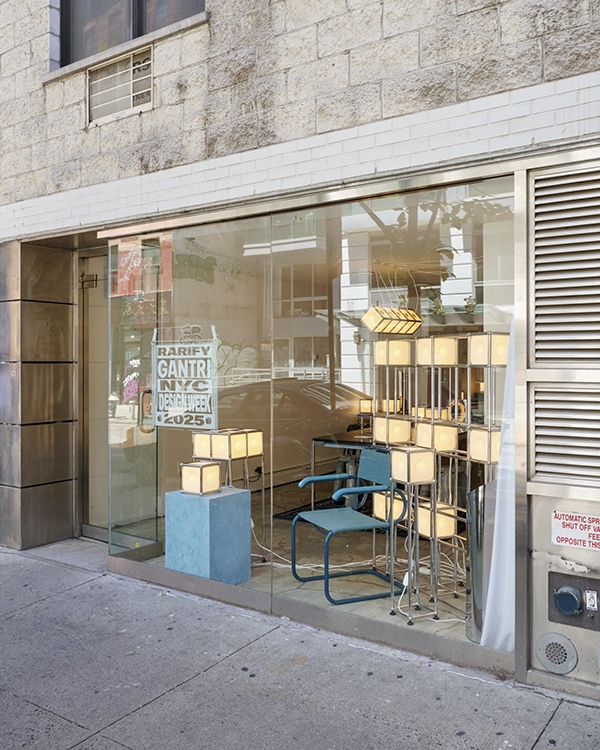
Launched in conjunction with NYCxDesign, Gantri Made represents a fundamental shift in how designers and brands bring products to life. The platform compresses traditional 18 month cycles to just three months while reducing upfront investments from six figures to around $10,000.
“Gantri Made is the first step in bringing our vision for the future of product manufacturing to life,” explains Gantri Founder Ian Yang. “Sustainable solutions and great design have been at the forefront of our mission since the beginning. We are excited to invite designers at every stage, from large scale brands to independent talents, into our world.”
Phillip Raub, VP Sales and Marketing at Gantri, adds: “Design, quality, and efficiency are non negotiables for us. Gantri Made brings together Ian’s experiences in manufacturing, technology, and design, challenging the status quo of the furnishing industry.”
By removing barriers such as tooling requirements, minimum order quantities, and inventory commitments, the platform empowers small to mid sized home brands, contract furniture makers, and independent designers to launch new categories and collections with minimal risk.
Streamlined Development from Concept to Consumer
Gantri Made’s end-to-end service transforms the entire development process. Designers gain access to the Gantri Design System, which includes materials, components, and CAD tools for creating fully functional products without traditional sourcing.
“We are not in the business of creating constraints,” Raub emphasizes. “We envision Gantri Made as an infinite resource, limited only by a designer’s creativity.”
The system supports everything from prototypes to full scale manufacturing, making it easier to test concepts before committing to large runs. Once products are ready, Gantri Made handles compliance, e-commerce integration, fulfillment, and branded packaging, allowing designers to focus on creativity rather than logistics.
Sustainable Manufacturing Through Digital Innovation
Sustainability is central to Gantri Made’s mission. Every product is manufactured on demand at the Gantri Digital Factory in San Leandro, California, using a drop shipping model that eliminates waste and minimizes carbon footprint.
“The traditional furniture industry has been extremely polluting and wasteful,” Raub notes. “Twelve million tons of products end up in US landfills every year, most of it non recyclable and toxic. Sustainability has been core to Gantri’s mission from day one.”
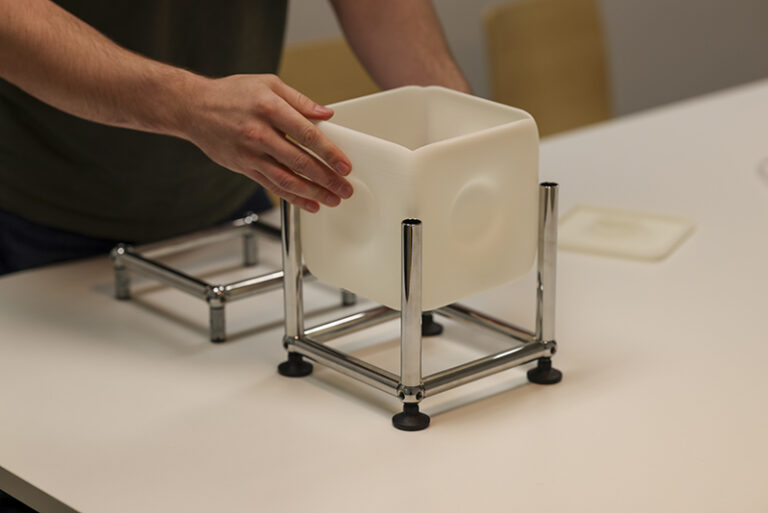
Gantri uses proprietary Plant Polymers, biodegradable materials derived from non GMO sugarcane. These include a high temperature opaque blend finished with premium water based paint, and a translucent formulation designed for diffusive lighting effects.
Onshore production ensures quality control, avoids tariffs, and reduces shipping delays. Each order is made within two weeks and shipped directly to customers. This approach eliminates overproduction and reduces the carbon footprint of long distance transport.
Inaugural Partnerships Showcase Versatility
Gantri Made’s launch includes collaborations that highlight the platform’s flexibility:
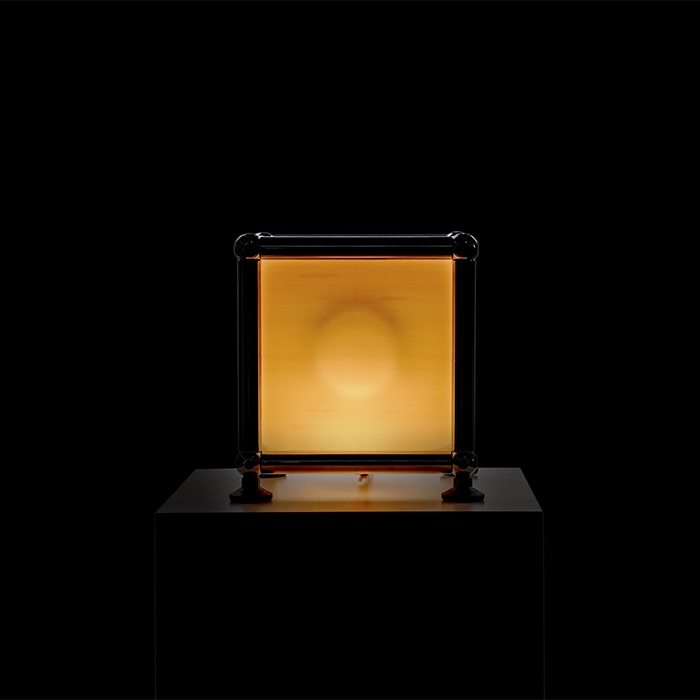
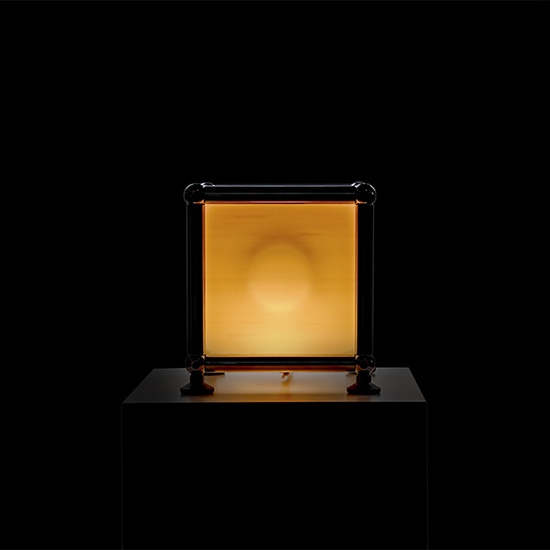
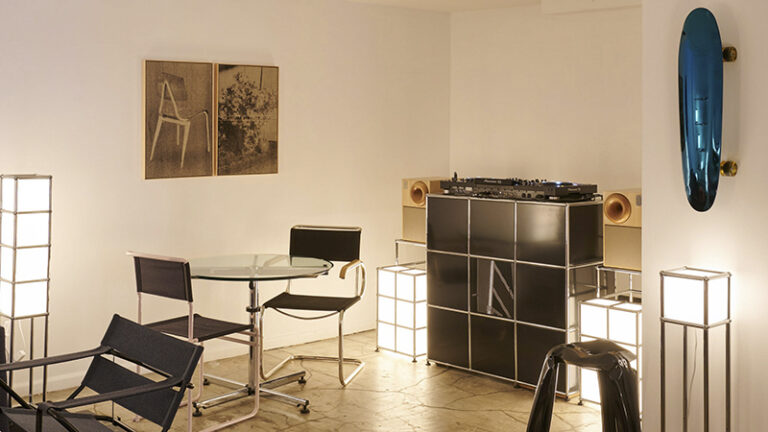
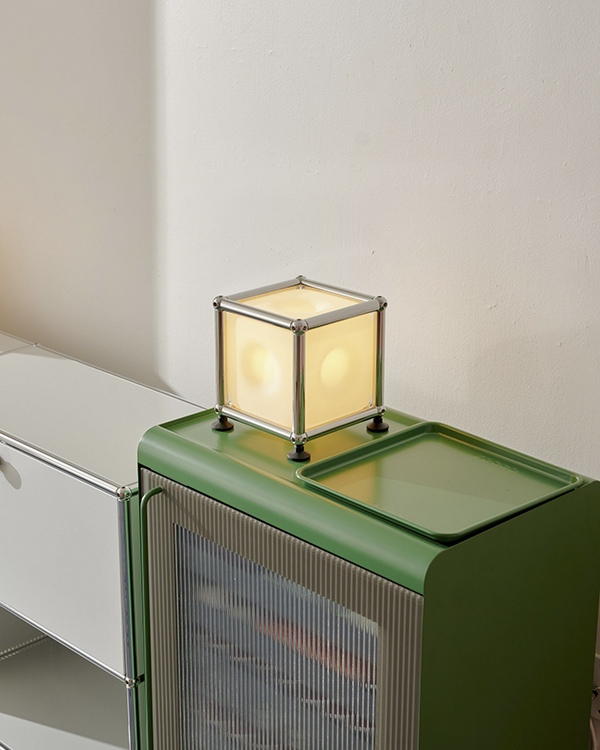
- Rarify created its first original design, Cube One™, a modular lamp combining Gantri lighting technology with iconic USM Haller components.
- RAD introduced the Little Dot Table Lamp, inspired by Jean Prouvé’s architectural facades, reinterpreted with perforated materials.
- Haworth partnered with women owned studio PROWL on a three piece lamp collection—Rae, Luna, and Beam—featuring sculptural silhouettes and subtle architectural details.
Economic Implications for Design Democracy
Gantri Made’s financial model departs radically from traditional manufacturing. Instead of large upfront investments and inventory risks, the platform charges a one time design fee plus per unit production costs. This eliminates unsold inventory risks and hidden manufacturing fees.
With production costs starting around $1,500 per month, the platform is accessible to emerging designers, while established brands can experiment with new categories at low risk. The elimination of minimum order quantities allows creators to scale production based on demand rather than projections, encouraging rapid iteration and market testing.
This model empowers designers to approach development like software, where they can experiment, test, and scale successful ideas. It unlocks creativity previously stifled by manufacturing barriers.
Technology as Creative Enabler
By leveraging digital manufacturing, Gantri Made enables complex geometries, product customization, and design iteration without costly tooling changes. Designers can prototype, test, and refine quickly, leading to higher quality products and faster market launches.
The integration of design tools and manufacturing ensures a smooth workflow from concept to production, minimizing errors and improving outcomes.
Implications for the Future of Manufacturing
Gantri Made signals a larger transformation in product development. By combining digital manufacturing, sustainable materials, and simplified logistics, it points toward a more accessible, environmentally conscious, and efficient future.
Raub envisions expansion beyond lighting: “Our goal is to create a fully circular, net zero digital manufacturing ecosystem. Lighting is just the beginning.”
If successful, Gantri Made could inspire similar platforms across industries, democratizing manufacturing in the same way that digital tools democratized publishing and media.
Conclusion
Gantri Made challenges the assumption that great design requires high barriers to entry. By prioritizing sustainability, accessibility, and creative freedom, it offers a compelling vision for the future of manufacturing, one where creativity drives innovation and designers of all scales can bring their ideas to life.
.