Foster + Partners completes 235,500-square-meter terminal that combines Cambodian cultural heritage with passive cooling and natural daylight strategies
Phnom Penh’s newest landmark has officially opened its doors, heralding a new era for Cambodia. Techo International Airport, a masterpiece by the acclaimed British architectural studio Foster + Partners, signifies a pivotal moment for the nation’s infrastructure and redefines sustainable airport design in Southeast Asia. Situated just 20 kilometers south of the capital, this terminal transcends its function as a mere transport hub; it stands as a meticulously crafted response to Cambodia’s tropical climate, rich cultural legacy, and ambitious vision for the future.

Inspired by Place and Climate: A Design Philosophy
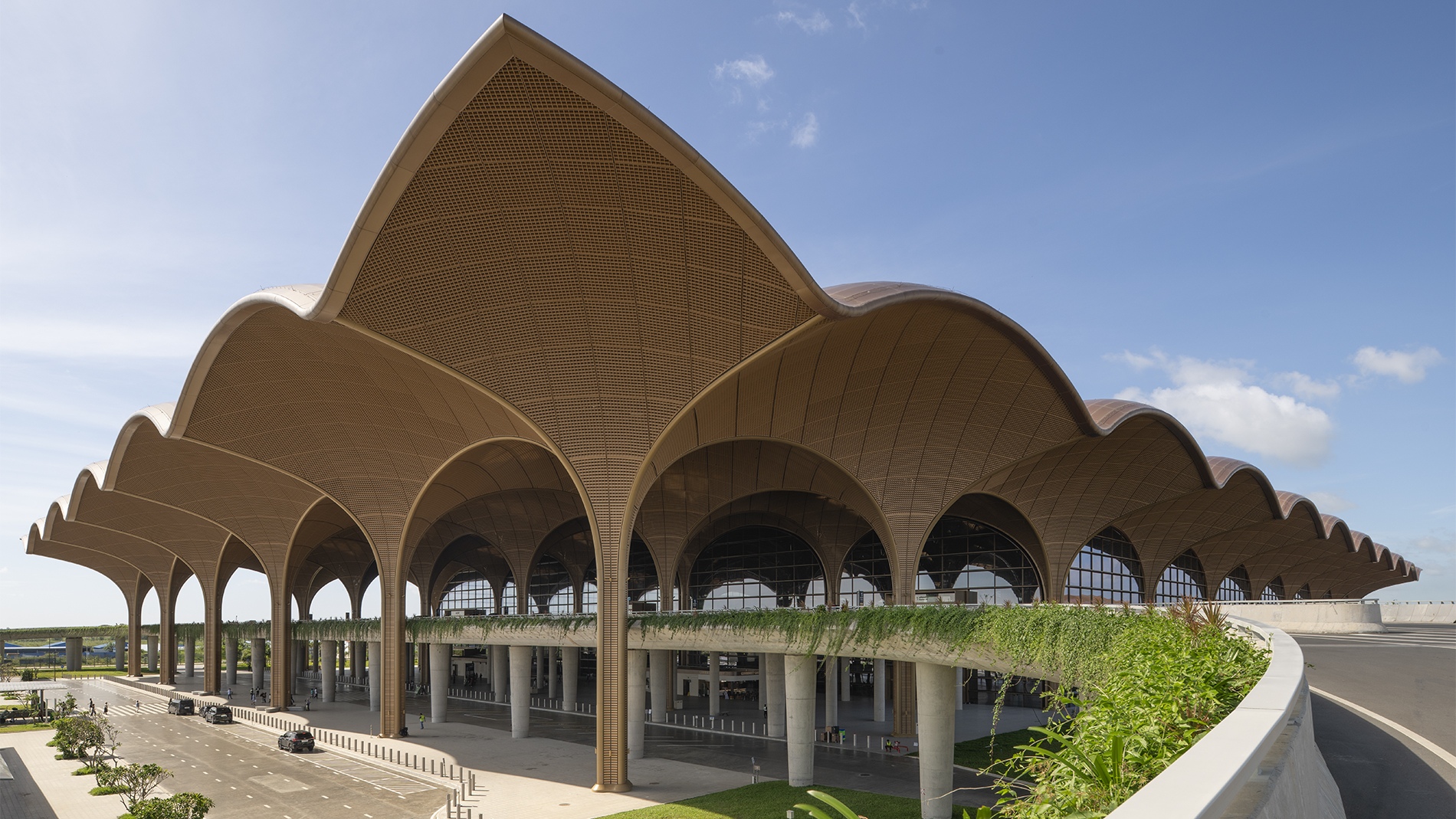
The terminal building is gracefully composed of a central head house and two aerofoil-shaped piers. The initial phase, encompassing the head house and the northern pier, welcomed its first passengers in September 2024, with the southern pier anticipated for completion by 2030. Spanning an impressive 235,500 square meters across a vast 24-square-kilometer site, the airport is engineered to gracefully accommodate burgeoning passenger volumes while preserving an intimate connection to its natural environment.
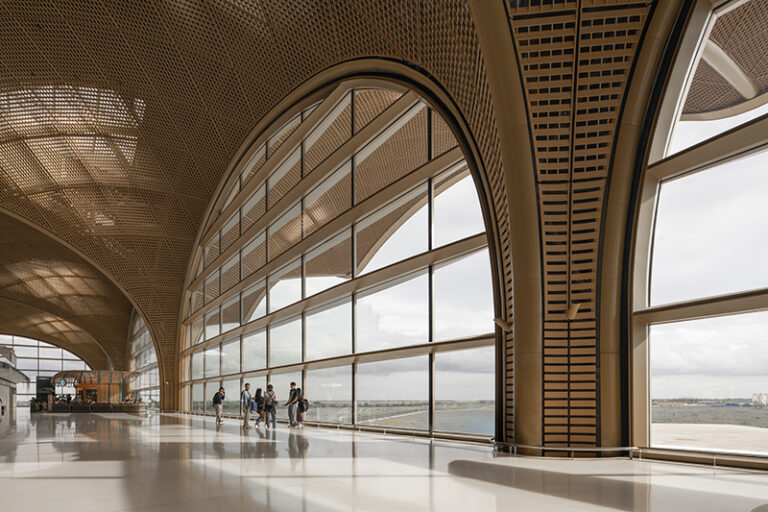
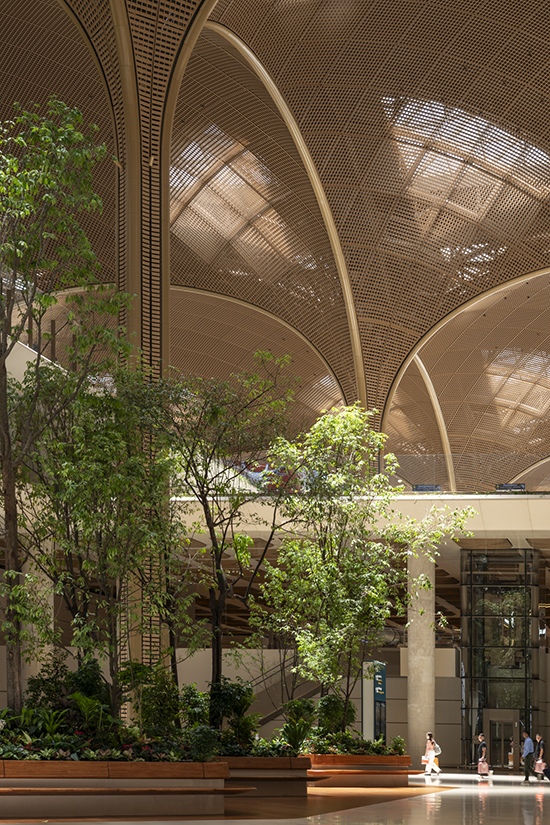
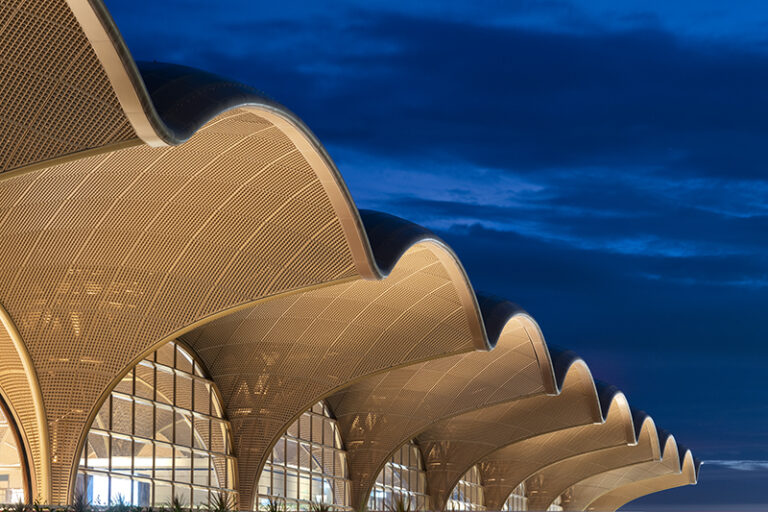
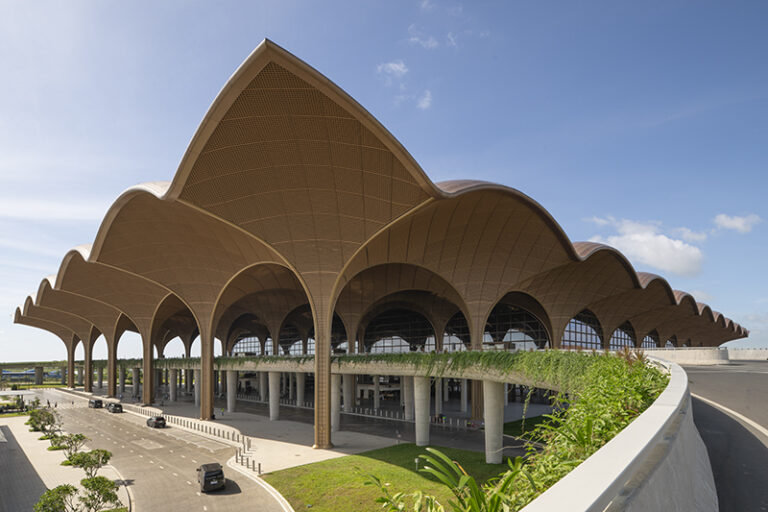
At the architectural core lies a striking three-dimensional steel grid shell structure, elegantly supported by distinctive columns that Foster + Partners aptly terms “structural trees.” Each of these columns reaches a remarkable 36 meters, branching upwards to cradle a modular, undulating roof canopy. This dramatic vaulted form culminates in a breathtaking crescendo at the building’s heart, a design choice that deliberately echoes the iconic silhouettes of Cambodia’s spectacular palaces and temples, most notably the majestic Angkor Wat.
“The modular lightweight shell structure and layered soffit filter daylight into the building, allowing people to experience the evolving qualities of the external environment throughout the day,” explained Nikolai Malsch, Senior Partner at Foster + Partners. “Our design masterfully blends technological innovation with profound references to Cambodia’s rich built heritage.”

Sustainability Woven into Smart Design
While many global airports lean heavily on mechanical systems to regulate their expansive interiors, Techo International Airport champions a distinctly different path. Its design aspires to be among the world’s greenest airports, meticulously integrating architectural features that dramatically curtail energy consumption and carbon footprint.
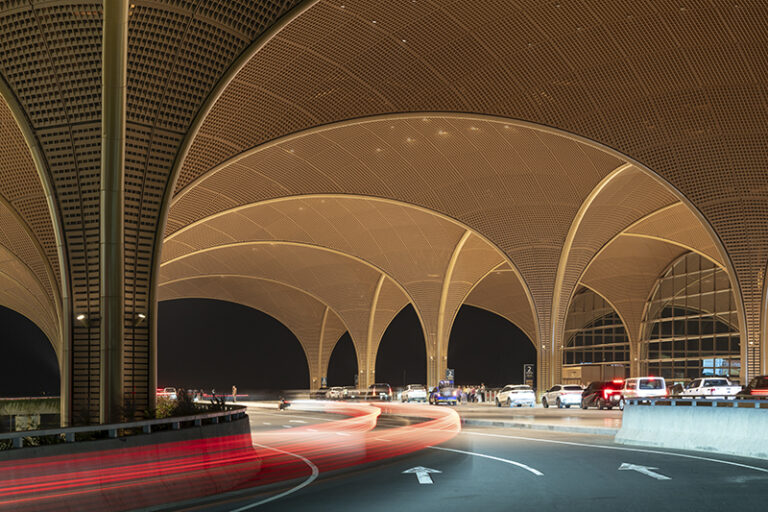
The expansive, overhanging roof canopy emerges as a paramount sustainability feature. It extends far beyond the glazed facades, providing generous shading for both drop-off zones and interior spaces. This thoughtful design drastically diminishes the reliance on mechanical ventilation and air conditioning, a crucial advantage in Cambodia’s intense tropical heat. This passive cooling strategy not only slashes energy use but also cultivates more comfortable transition zones for passengers navigating between indoor and outdoor environments.
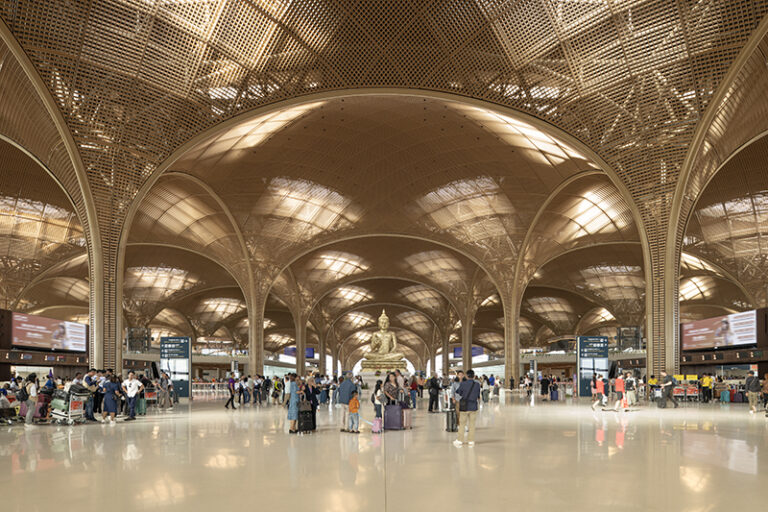
Natural daylight forms another cornerstone of the sustainable design ethos. Foster + Partners strategically positioned 180 skylights around the “structural trees” to draw ample natural light deep into the terminal, ensuring its even distribution throughout the day. This reduces dependence on artificial lighting and creates a more invigorating and pleasant ambiance for travelers.
The innovative soffit system, drawing its inspiration from traditional Cambodian basket weaving, fulfills a dual role. Suspended beneath the steel grid shell structure, these latticed panels artfully filter harsh tropical sunlight, creating a soft, diffused illumination that subtly shifts in quality throughout the day. By night, warm-toned artificial lighting, seamlessly integrated within the soffit layers and “structural trees,” casts a calm and comfortable glow, a welcome departure from the stark brightness often found in conventional airport terminals.
“Techo International Airport is a profound celebration of Cambodian culture and light, establishing a magnificent new gateway to the country,” stated Stefan Behling, Head of Studio at Foster + Partners. “It is also one of the most sustainable airports in the region, brimming with natural daylight and incredible local greenery, and offering powerful visual connections to the outside world.”
Cultural Identity: An Intricate Tapestry of Detail
Beyond its exemplary environmental credentials, the airport stands as a vibrant showcase for Cambodian culture and exquisite craftsmanship. The latticed soffit panels directly reference time-honored traditional basket weaving techniques, elevating vernacular craft into a sophisticated contemporary architectural expression. Even the floor slab soffits feature unique woven infills, beautifully complementing the overarching latticed ceiling and fostering a sense of visual continuity throughout the terminal.
Lush greenery accompanies passengers at every stage of their journey. Native Romduol trees, Cambodia’s cherished national flower tree, majestically rise within the soaring central void, alongside indigenous palms and vibrant flowers. This extensive planting scheme does more than simply beautify the space; it powerfully reinforces a profound sense of place and envelops passengers in a calming, natural environment.
A thoughtfully curated collection of 200 hand-crafted sculptures celebrates Cambodia’s rich history and its dynamic, evolving identity. The undisputed centerpiece is a magnificent bronze-cast Buddha, strategically positioned to warmly greet travelers and anchor the terminal’s overarching cultural narrative. Throughout the airport, materials are chosen for their warmth and welcoming appeal, subtly evoking local vernacular architecture in a contemporary idiom that feels both deeply rooted and boldly forward-looking.

Designing for an Elevated Human Experience
The terminal’s layout meticulously prioritizes passenger comfort and intuitive navigation. Short walking distances, clear sightlines, and straightforward orientation allow travelers to move through the building with effortless ease. The design seamlessly incorporates minimal level changes and gently sloping ramps, ensuring universal accessibility for all users.
All essential passenger processes—from check-in and security to immigration and retail—are thoughtfully sheltered under the single, overarching roof canopy, creating a unified and stress-free experience from drop-off to airside. This clear spatial organization significantly reduces stress and potential confusion, proving especially invaluable for first-time visitors unfamiliar with the airport.
Beyond its core function, the terminal offers a diverse array of retail outlets, restaurants, and inviting “urban living rooms” designed to cater not only to travelers but also to the local community. This inclusive approach recognizes that modern airports have evolved into social and commercial destinations in their own right, far beyond mere transit points.

Water Management and Ecological Sensitivity: A Holistic Approach
Prior to commencing construction, Foster + Partners implemented a comprehensive water management strategy meticulously designed to protect the delicate ecosystem surrounding the terminal site. The expansive masterplan thoughtfully incorporates a large lake and a public park, proudly showcasing the region’s native flora and fauna. This provides essential natural habitat for local wildlife while simultaneously offering a tranquil recreational space for visitors and airport workers alike.
This profound attention to ecological impact powerfully demonstrates a holistic approach to sustainable design—one that extends far beyond the confines of the building envelope to embrace broader environmental responsibilities.

A Vision for Connected Mobility
The airport is strategically positioned at the heart of a wider masterplan, also expertly designed by Foster + Partners. Future phases envision a high-speed rail link that will forge an intermodal hub, providing seamless, direct connectivity between the vibrant city center and the airport. A newly constructed bus station already actively encourages the use of public transport, aiming to significantly reduce private car traffic and its associated environmental impact.
The verdant public park at the core of the masterplan serves a multitude of vital functions: it creates a healthy and serene environment for airport users, provides invaluable amenities for those living and working within the planned airport city, and establishes critical ecological infrastructure that effectively manages stormwater and moderates the urban microclimate.

Setting New Standards
Techo International Airport represents a maturing and sophisticated approach to infrastructure design within the region. Rather than simply importing generic international airport typologies, Foster + Partners has meticulously crafted a building profoundly responsive to its specific context, challenging climate, rich cultural identity, and crucial environmental responsibilities.
“The terminal holistically transforms the experience of travel for the people of Cambodia and the millions of visitors who will travel through here every year,” Behling remarked.
With its compelling combination of intelligent passive environmental strategies, deep cultural authenticity, and passenger-centric design, Techo International Airport offers an inspiring model for how major infrastructure projects can successfully serve ambitious economic development goals while simultaneously honoring local heritage and respecting environmental limits. As Cambodia strategically positions itself for sustained growth, this remarkable new gateway illuminates a progressive path forward that reveres the past while enthusiastically embracing sustainable innovation for the future.
The project, which initiated its design phase in 2017 and broke ground in 2019, stands as compelling evidence that thoughtful, place-based architecture can meet the demanding functional requirements of modern aviation infrastructure without sacrificing identity, comfort, or environmental responsibility. As the southern pier opens in 2030 and the wider masterplan thoughtfully takes shape, Techo International Airport will continue its evolution as a leading model for sustainable, culturally grounded design in the 21st century.