
Light, movement, and a courtyard reinterpret Confucian modernism
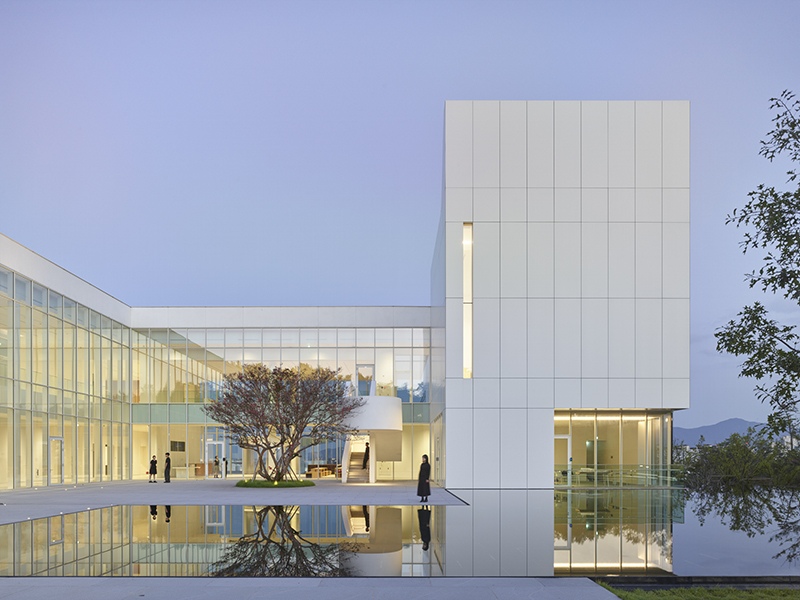
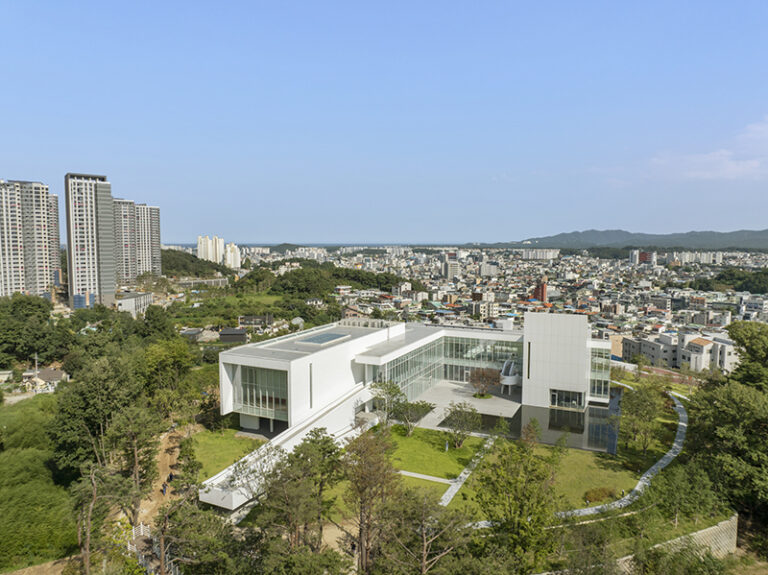
The Sorol Art Museum in Gangneung, South Korea, presents a compelling testament to the philosophy of contextual modernism. It is an institution where universal architectural principles engage in a profound colloquy with regional culture and the natural landscape. Designed by Meier Partners and inaugurated on February 14, 2024, the museum has already garnered international acclaim for its refined architectural language, recently securing the Popular Choice Award in the museum category at the 2024 Architizer A+ Awards.
Discernible throughout its design is a sophisticated synthesis of modernist aesthetics and Korean traditions. While maintaining an unadorned modernist vocabulary, the structure derives its inspiration from the heritage of Korean Confucianism. This influence is manifest in the emphasis on simplicity, a harmonious relationship with nature, and the integration of a central courtyard, a feature reminiscent of traditional Korean dwellings. Such an approach allows the building to exist as a statement of modernism that is simultaneously profoundly embedded in its specific cultural and geographical milieu.
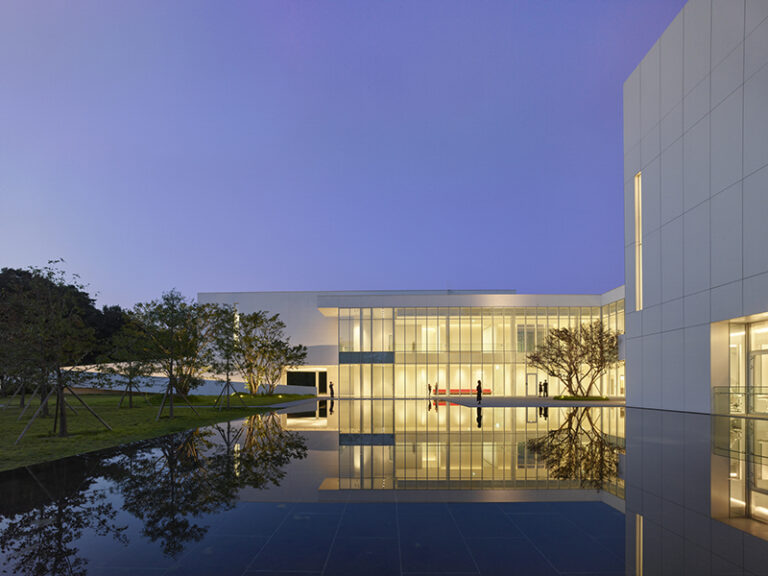
This thematic dialogue is further illuminated by the museum’s inaugural exhibitions. The deliberate juxtaposition of Italian artist Lucio Fontana with Korean artist Quac Insik, and later Agnes Martin with Chung Sang Hwa, initiates a conversation across cultures that is mediated through the architectural space itself. This curatorial strategy employs the serene and contemplative galleries to explore the artistic and philosophical resonances between major figures of Western and Eastern art.
Therefore, the proposition that the Sorol Art Museum functions as architecture as dialogue is not merely tenable but is vividly actualized through its design and curatorial vision. The building transcends its function as a mere repository for art; it engages dynamically in a conversation between modernism and tradition, the global and the local. Its international recognition cements its status as a persuasive new paradigm for museum architecture in the twenty first century.
Contextual Modernism: A Deeper Philosophy
The Sorol Museum’s design emerges from a profound understanding that modernism need not be culturally neutral or contextually divorced. It embodies contextual modernism, an approach where a universal architectural language finds its particular expression through deep engagement with local aesthetic principles. These include the Korean ideals of simplicity, harmony, and balance rooted in Confucian, Buddhist, and Taoist traditions. This is not pastiche or superficial appropriation.
Rather, contextual modernism represents a mature evolution of modernist thought that recognizes place and culture as generative forces instead of constraints.
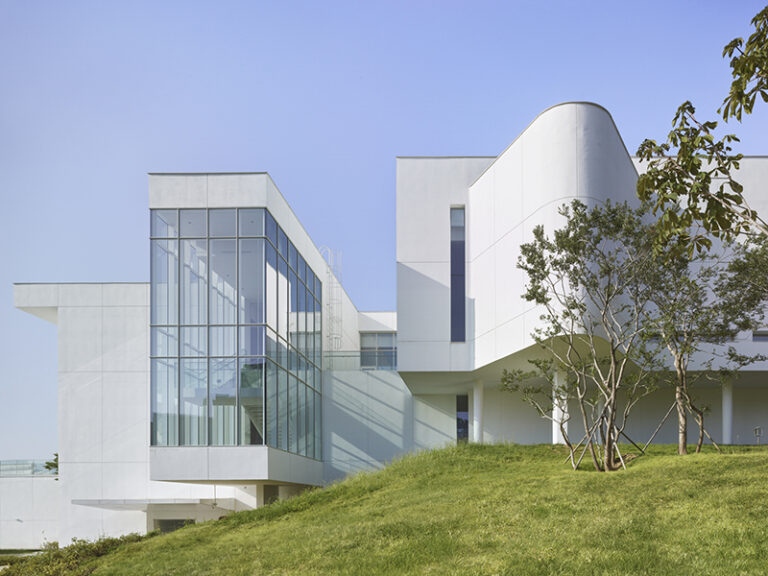
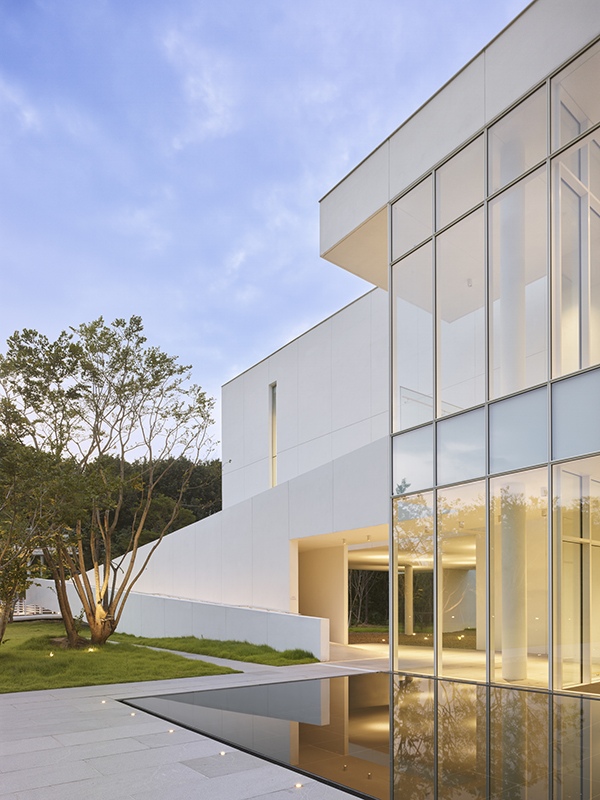
The museum’s tripartite composition reveals how this philosophy translates into spatial organization. The north wing’s cantilevered pavilion establishes a bold modernist gesture while maintaining proportions that respect the Korean landscape tradition. The pristine geometry of the gallery cube is inflected by the clarity and restraint of Korean artistic expression. Finally, a transparent entrance pavilion mediates between these languages, creating what contextual modernism demands: a permeable threshold between the universal and the particular, the global and the local.
The Grammar of Context: Movement, Light, and Material
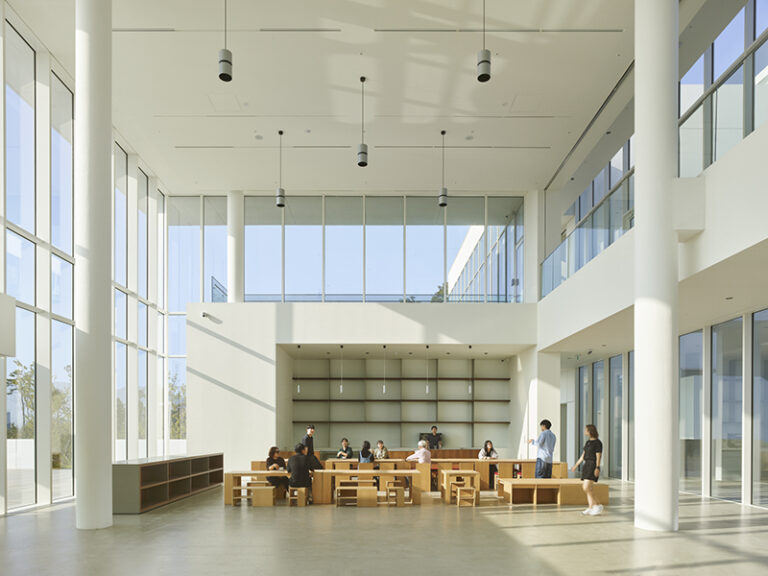
Perhaps nowhere is the philosophy more evident than in the museum’s circulation strategy, which transforms movement into a form of cultural translation. The distinctive T shaped layout draws from both modernist spatial logic and the Korean architectural tradition of creating paths of contemplation. The project’s Principal, Guillermo Murcia, conceived of a path of framed views filled with abundant natural light. This concept synthesizes Le Corbusier’s promenade architecturale with the Korean principle of borrowed scenery, choreographing a spatial narrative that honors both universal sequencing and local contemplative practices. The signature ramp becomes a sculptural element in the modernist tradition and a spatial connector in the Korean understanding of transitional space.
The treatment of natural light marks another sophisticated achievement, transforming a universal element into a culturally specific medium. The circulation areas maximize illumination in keeping with modernist principles. Yet as the project’s architect and manager, Sharon Oh, intended, this abundant natural light carries distinctly Korean characteristics in its quality and modulation. The gallery spaces demonstrate a precise control over luminous conditions, serving universal museum standards while creating atmospheric qualities reminiscent of traditional Korean interiors.
This philosophy finds its most tangible expression in the material strategy. The palette of white exposed concrete, aluminum, glass, and stone reflects modernist tradition, yet each material is selected to carry cultural resonance. The exposed concrete, for instance, honors both Le Corbusier’s béton brut and the monolithic quality central to Korean traditional architecture. These materials age gracefully, developing a patina that connects the building to seasonal cycles, a nod to Korean temporal aesthetics that respects modernist material honesty.
A New Paradigm for Museum Architecture
The Sorol Museum’s significance extends beyond its immediate context to establish contextual modernism as a viable path for contemporary cultural architecture. In an era where institutions often choose between architectural spectacle and contextual invisibility, the museum proposes a third way: architecture that maintains a strong design identity while engaging meaningfully with its place and culture. It proves that a museum can maintain architectural distinction while prioritizing curatorial function and cultural sensitivity.
The success of the inaugural exhibitions, with their cross cultural dialogues, validates the core proposition. Architecturally specific and culturally grounded spaces can enhance, rather than limit, artistic content. The building provides what contextual modernism seeks: activated cultural specificity, or spaces that possess clear architectural character while maintaining the adaptability contemporary institutions require. This represents a maturing of museum typology, offering an alternative to both architectural ego and cultural anonymity.
Meier Partners: A Practice of Place and Principle
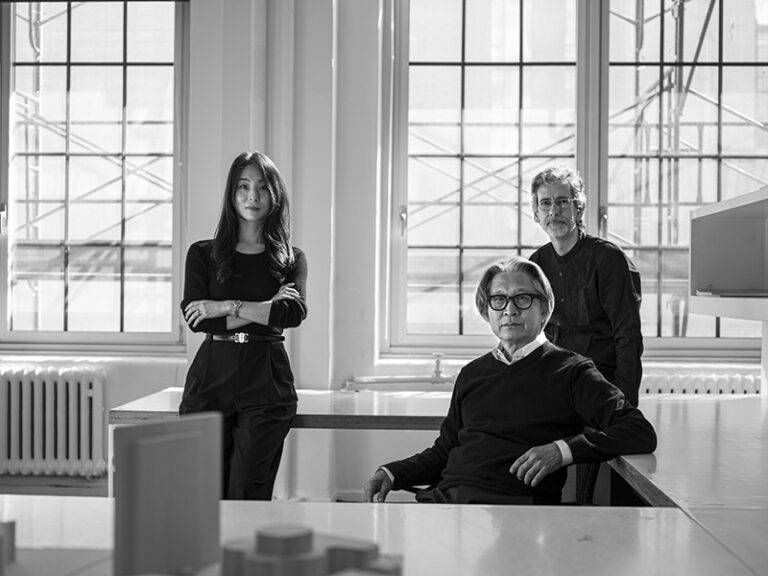
The approach to the Sorol Museum exemplifies the broader commitment of Meier Partners to contextual modernism in practice. Their method crafts uplifting architecture that generates exceptional experiences through deep engagement with place and culture. As practitioners of this philosophy, they create generous, optimistic buildings that honor both universal design principles and particular cultural values. Their work establishes an iconic presence through stunning compositions and elegant proportions, proving that architectural distinction and cultural specificity can coexist powerfully. This approach creates transformative architecture that thoughtfully engages its surroundings, revitalizing the urban fabric and establishing public spaces that serve contemporary civic functions and traditional community patterns alike.