Two MIT students build a screen free companion that reads your ingredients, senses your mood, and designs dinner with you.
In the laboratories of MIT, two students have created a device that challenges common assumptions about artificial intelligence in the kitchen. Jacob Payne and Ayah Mahmoud call it Kitchen Cosmo, a retrofuturistic companion that turns cooking from routine into collaboration. I recently interviewed Jacob Payne for this piece, so the details that follow draw on that conversation.
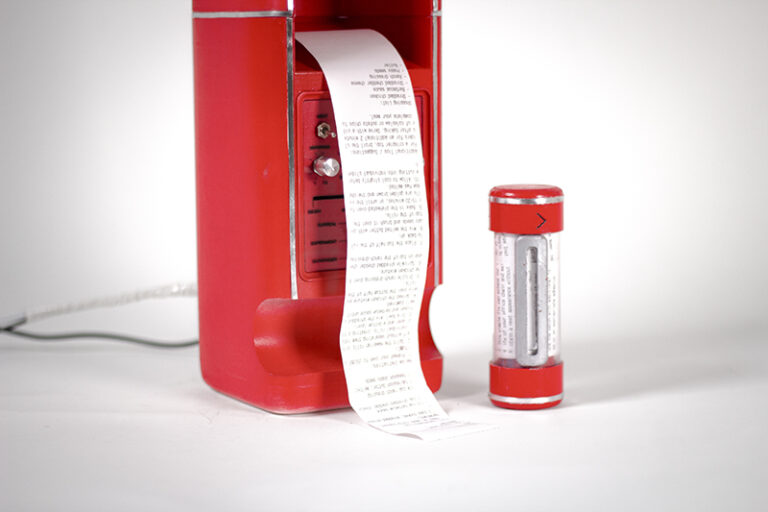
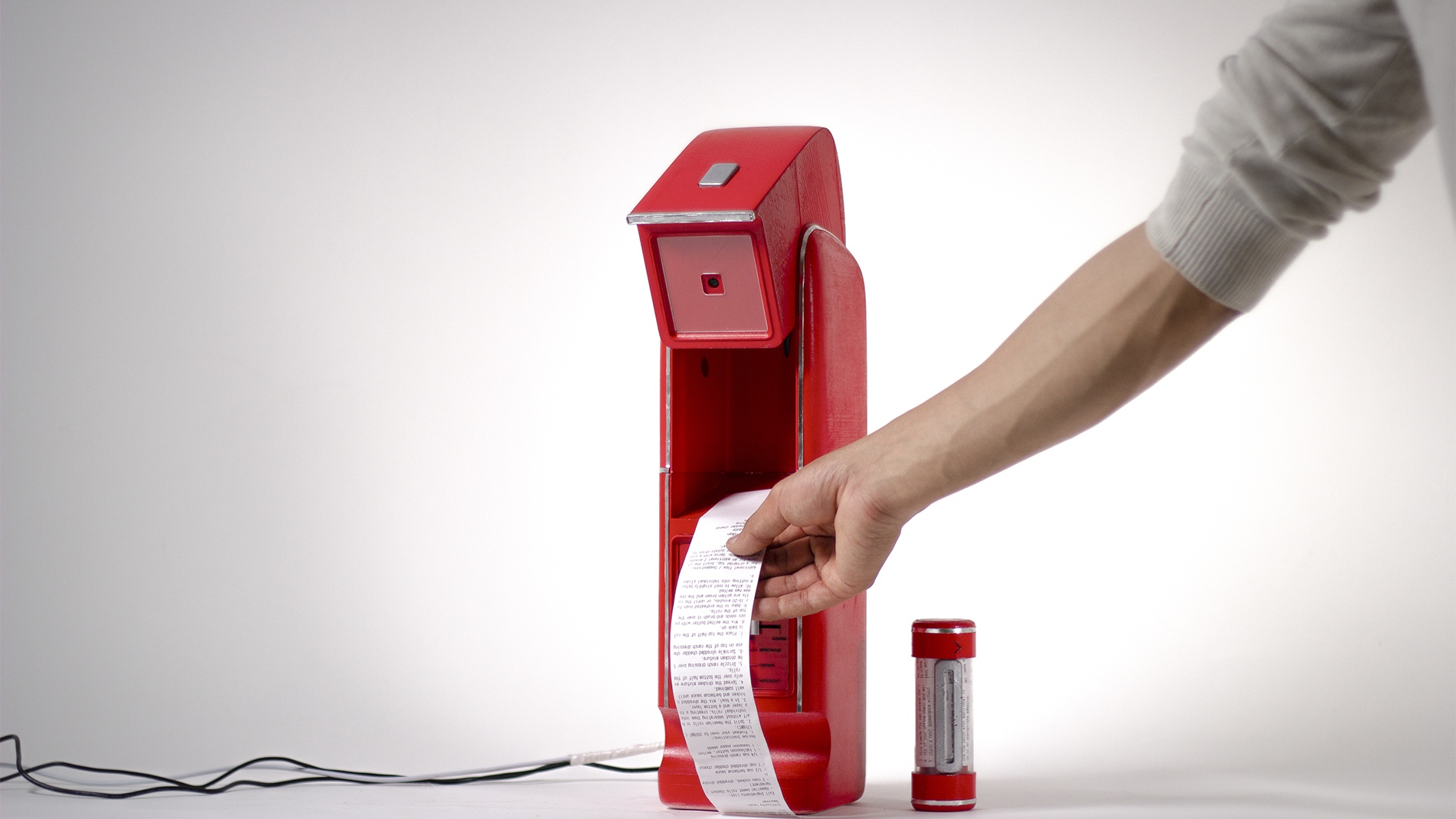
Custom recipes print on thermal paper, transforming digital suggestions into physical keepsakes. Image courtesy of Jacob Payne and Ayah Mahmoud.
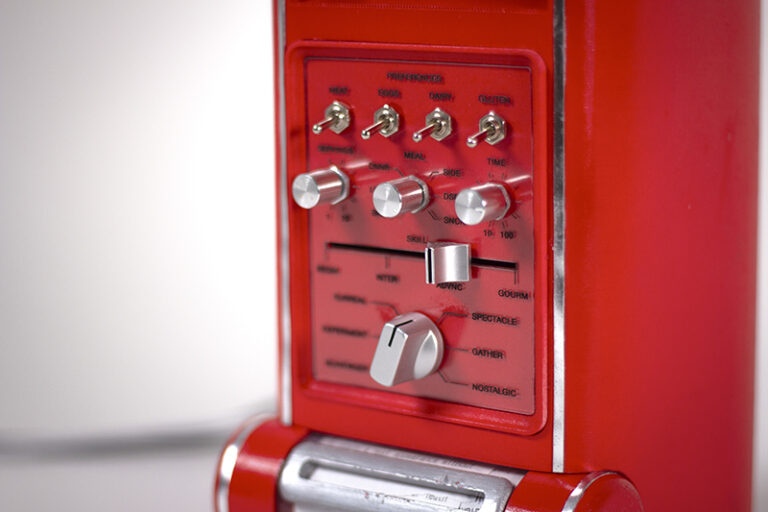
The bright red prototype recalls the warmth of mid century kitchenware and stands as a counterpoint to today’s screen heavy smart devices. Instead of touchscreens and voice commands, Cosmo invites touch. Home cooks set preferences through buttons, switches, sliders, and a mood dial that can signal nostalgia, experimentation, or the simple goal of using up leftovers.
“Smart devices in the kitchen rely more and more on screens,” says Payne. “Cosmo was intentionally designed to be screenless, to keep the kitchen, an inherently sensorial space, more physical than digital.” Payne adds that the promise of these tools is not only creative scale but cultural resonance. He hopes storytelling with AI helps designers and users engage more inclusive narratives so the experiences we make feel grounded in the communities they serve.
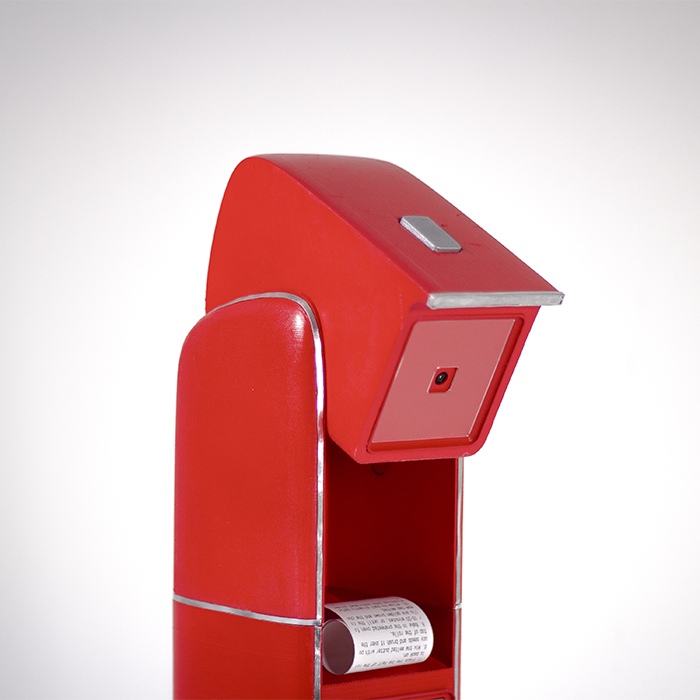
The device's integrated camera recognizes available ingredients to inspire personalized meal suggestions | Image courtesy of Jacob Payne and Ayah Mahmoud.
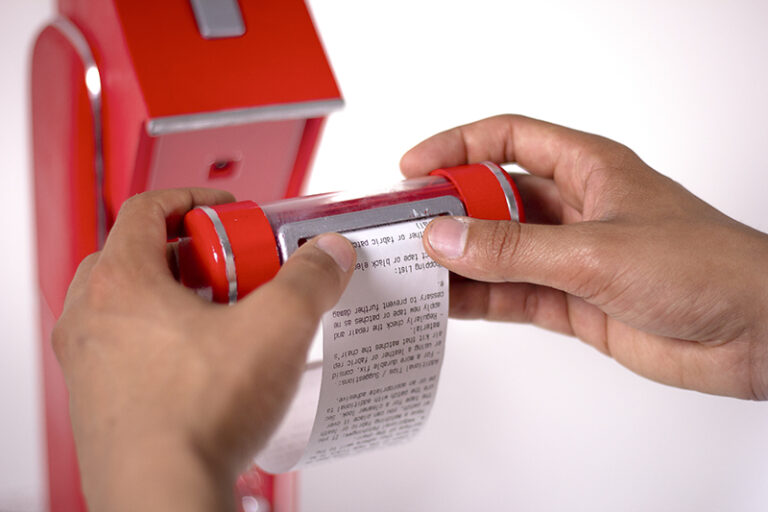
Users begin by adjusting preferences such as dietary restrictions, cooking time, difficulty, portions, and meal type. A webcam in Cosmo’s small head then scans ingredients on the counter. The system uses the OpenAI API to run GPT-4o, combining the visual scan with the panel settings to generate a tailored recipe. Rather than display results on a screen, Cosmo prints them on thermal paper, producing a recipe card that can be torn off, annotated, and saved. The choice of paper is part of the philosophy of making interaction with artificial intelligence intentional and visible.
“As AI becomes more present in daily life, interfaces lean toward efficiency and invisibility,” Payne explains. “With Cosmo, we wanted to challenge that default and make interaction tactile, playful, and deliberate.”
The vibrant red design pays homage to early kitchen computing while embracing a more collaborative future. Image courtesy of Jacob Payne and Ayah Mahmoud.
The design looks back in order to move forward. It nods to the 1969 Honeywell Kitchen Computer, an early and unsuccessful attempt to bring computing into the home. Where that machine dispensed fixed recipes and carried dated ideas about domestic roles, Cosmo aims for dynamic collaboration and a more thoughtful relationship with technology. The team also draws from the disciplined clarity of Braun and Dieter Rams, while choosing a direction that keeps the kitchen physical rather than purely digital.
The current prototype is a proof of concept. It is 3D printed in PLA and finished with aluminum accents. Like many systems that rely on large models, it still shows bias. In early trials the suggestions leaned toward Western cuisines. Because recipe generation can function like informal culinary education, the team is considering safeguards that respect traditional food knowledge. Ideas include partnering with culture bearers for review, citing source lineages on printed cards, avoiding tokenistic mashups, and building custom datasets that better represent global cuisines so users encounter foods and traditions they might not otherwise access.
Personalized recipes emerge on thermal paper, creating tangible keepsakes from digital collaboration. Image courtesy of Jacob Payne and Ayah Mahmoud.
Cosmo arrives as designers everywhere explore how to weave generative artificial intelligence into physical products. The wave of experiments since the surge of interest in 2023 has produced many clever ideas, yet few foreground touch in everyday life as directly as this one. By centering dials, paper, and presence, Cosmo proposes a different contract with technology in a room defined by heat, aroma, and rhythm.
More than a technical demo, Cosmo is a statement about human and machine collaboration. It makes the act of working with artificial intelligence visible and reflective. In a home that is increasingly saturated with screens and voice prompts, the most radical interface may be a simple dial that begins with a human question. How are you feeling today?