
Time Is Itself an Architect

Renata Codello on Restoring the Borges Labyrinth as a Living Work of Literature
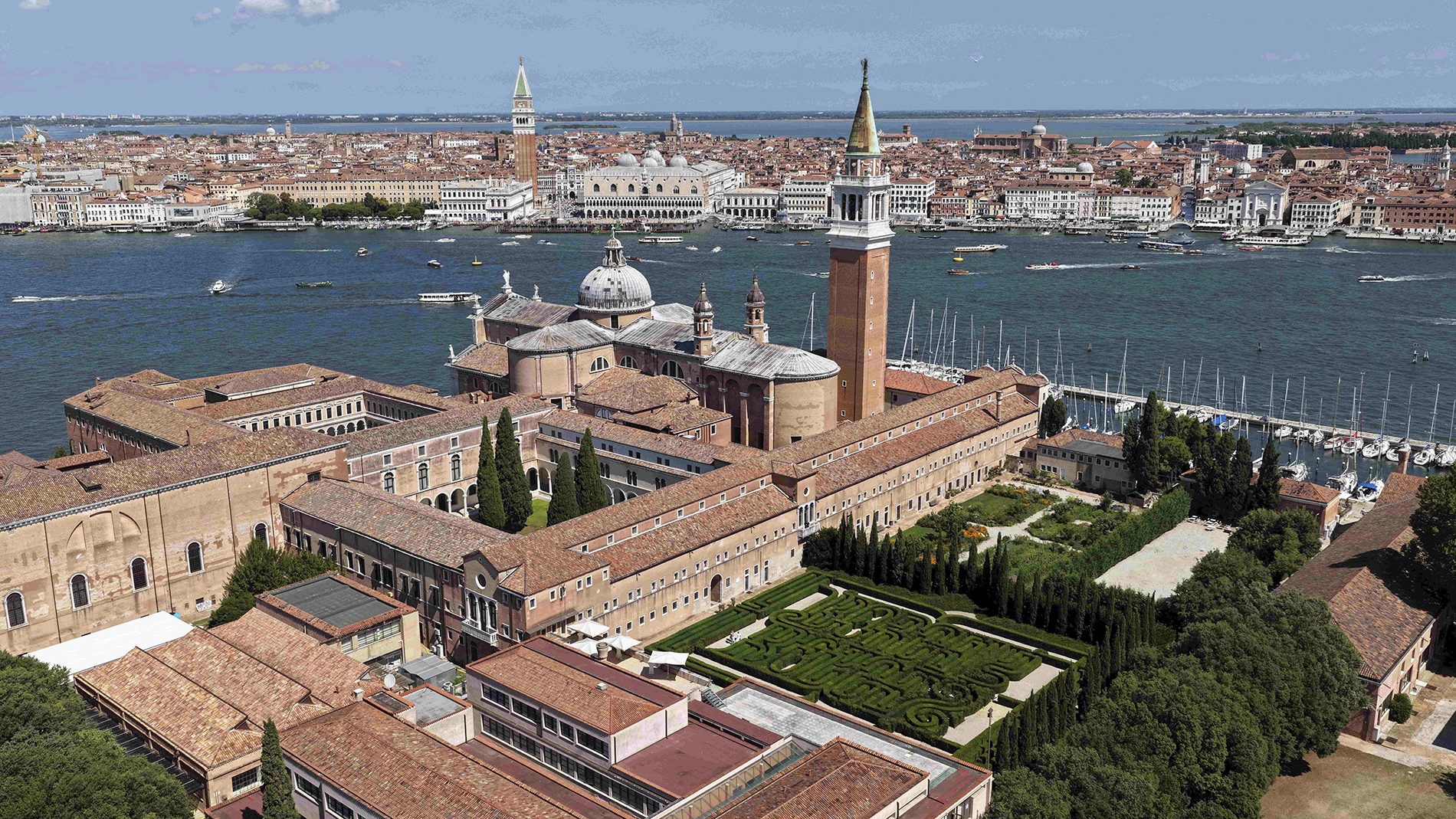
A labyrinth, by definition, resists being fully known from within it. You can walk its paths, but you cannot see its whole shape while you are inside it. That is precisely what a labyrinth is for. Borges spent much of his writing life returning to this figure: infinite recursion, forking choices, and the impossibility of a single, final map. So when the Fondazione Giorgio Cini set out to restore the physical labyrinth built in his honor on the island of San Giorgio Maggiore, they were not simply maintaining a garden. They were caring for something that carries, quite literally rooted in soil and boxwood, the shape of a writer’s mind.
Renata Codello has spent decades thinking about what restoration means, first as Superintendent of Cultural Heritage for Venice, and now as the person responsible for the Cini Foundation’s entire architectural and artistic inheritance, spanning a former monastery, the Vittorio Cini art collection, an invented open-air theater built from salvaged materials, and now a living hedge that must be read as much as walked. Her answers below move fluidly between architecture, literature, and something closer to philosophy. What does it mean to restore a thing that is always, itself, still growing?
The Conversation
On Borges and the Labyrinth
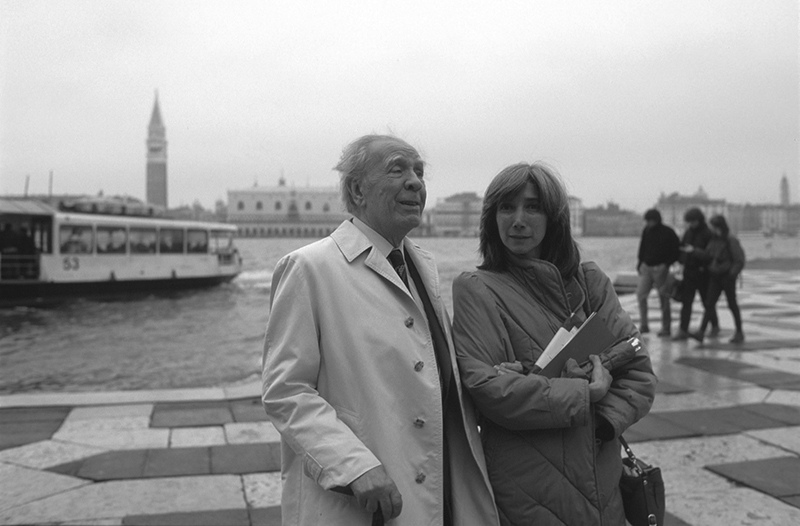
Renata Codello It is a great responsibility, because that labyrinth physically embodies Borges’s universe: his imagination, his complex vision of human life and the world, and his literature, at once rigorously crafted and profoundly visionary.
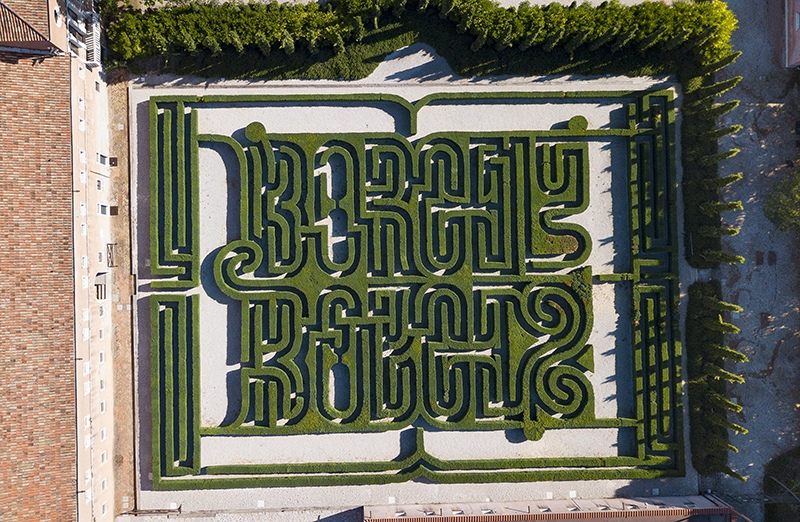
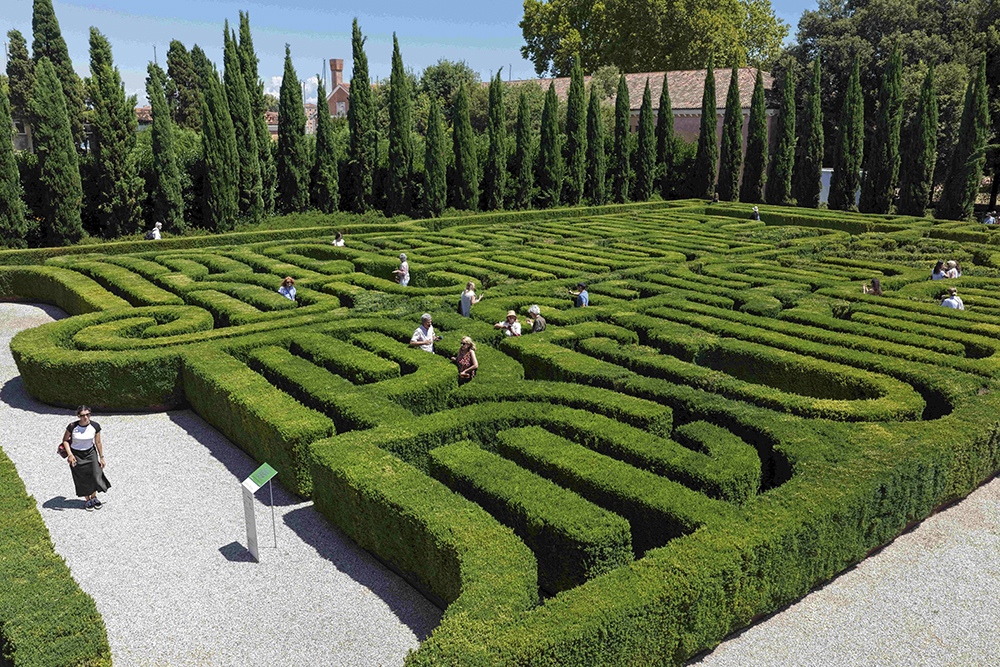
The labyrinth, that living, sculptural architecture of greenery, is, in a sense, Borges himself, offering himself to be seen and experienced. It carries within it the pathways of life, the necessity of slowness and contemplation, the risk, and the impossibility, of truly getting lost, beauty and vulnerability, questions and doubts, the name of María Kodama almost tattooed into its fabric, the hourglasses of time, and the infinity of spirals.
As we care for this sculptural, living work, we must always bear in mind that it is at once a garden, a work of art, a piece of architecture, a work of literature, and something sacred.
We know that the labyrinth recurs throughout Borges’s writings and imagination. He regarded Venice itself as a city-labyrinth. There is another aspect that has intrigued us and that we have explored: his relationship with architecture.
We know, for example, that in 1967 he and Adolfo Bioy Casares wrote Chronicles of Bustos Domecq, in which they invented architectural styles and fictional architects, including the character of “Alessandro Piranesi,” an ironic tribute to the celebrated engraver Giovanni Battista Piranesi, whose Imaginary Prisons (Carceri d’Invenzione) are, moreover, preserved in the art archives of the Fondazione Giorgio Cini.
On Restoring a Living Architecture
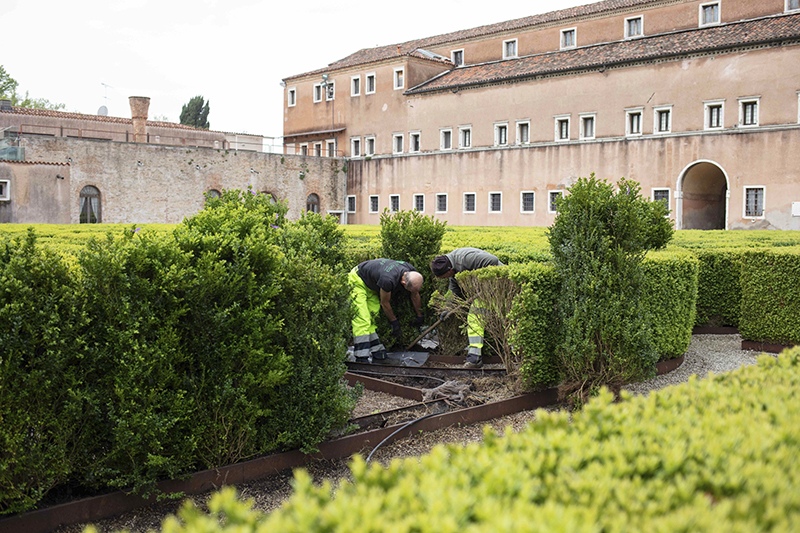
Renata Codello We describe this special intervention on the labyrinth, fifteen years after its creation, as a “restoration” because it involved far more than maintenance, even if extraordinary, of its vegetation, entrances, and irrigation system.
We were faced with a unique challenge, one involving problems and uncertainties unlike those encountered in the restoration of a building or a sculpture. This is a living architecture, extraordinarily vulnerable and responsive to the passage of time, weather conditions, pest infestations, and unforeseen events, such as the exceptional high tide of 2019, which flooded the island with brackish water.
Our work resembled the restoration of a mosaic: repairing, recovering, or replacing its arboreal tesserae; strengthening the infrastructure of its planting beds and water system; and improving accessibility so that the labyrinth could also be experienced by visitors who are blind or visually impaired.
Although all materials, whether in a building or a sculpture, respond to time and external agents, unlike a planted architectural ecosystem, those buildings and sculptures are not living organisms. This is what makes restoration, in this case, so particularly challenging.
This architecture is a living vegetal organism: it grows, falls ill, responds to its environment, and changes shape. Yet it must continue to adhere to a precise formal language. Its volumes, overall design, essential details, symbols and pathways, and exact geometries must all remain coherent and legible, otherwise the work loses its meaning.
For this reason, it is appropriate to speak of “restoration,” because the intervention extends well beyond maintenance. It is a process of understanding, research, material and structural analysis, cleaning, revealing, reintegration, and stabilization. Applying this set of restoration practices to a work of living architecture also invites us to rethink the very notion of restoration itself, suggesting a different way of approaching other artefacts and deepening our understanding of stone, plaster, and the built fabric as a whole.
On Restoration as Translation
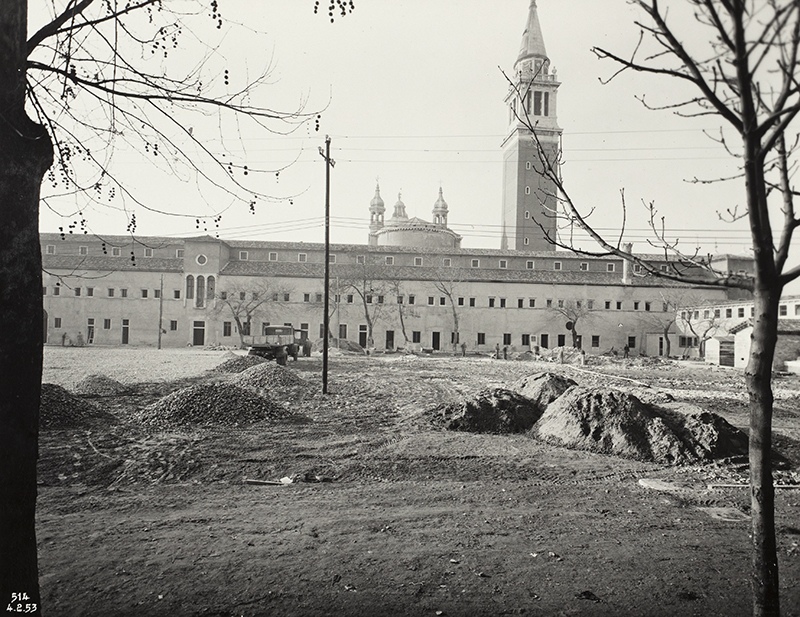
Renata Codello We should remember that in 1951, when the Fondazione Giorgio Cini was established and granted stewardship of the Island of San Giorgio Maggiore, one of the objectives set out in its Statute was the conservation and restoration of the island’s remarkable architectural, artistic, and landscape heritage.
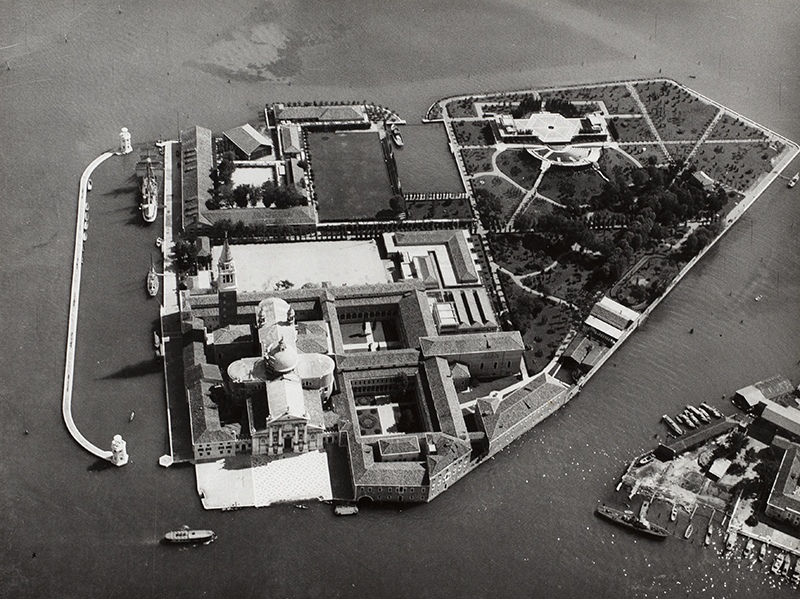
This commitment to ongoing restoration is therefore, above all, a responsibility we have inherited. From the very beginning, in the early 1950s, the Foundation undertook the restoration of the former monastery, preserved the art collection of its founder, Vittorio Cini, and even created an entirely new part of the island: the Teatro Verde, built using materials salvaged from the restoration works, together with the large surrounding park, created entirely from scratch.
Over the years, maintenance of this architectural complex has been constant. Yet restoration has gradually evolved beyond a series of interventions responding to the effects of time, becoming instead a coherent project: articulated, rigorous, comprehensive, and conceived over the long term.
It is a project that acknowledges the specific nature of each intervention according to the work being restored, with the aim of making restoration not merely an act of conservation but also one of interpretation, understanding, and connection with its context. In this sense, restoration is an act of translation.
In the past, restoration was often understood as the reconstruction of an original state, stripping away the layers accumulated over time. Yet, in attempting to recover the original, the result frequently became an alteration of the original itself.
Today, our sensitivity and awareness have changed. We intervene with the understanding that time is itself an architect, and that the permanent “building site” through which architecture is continually transformed can no longer be concealed but should instead be acknowledged as part of its contemporary life.
Moreover, every restoration presents a different challenge: whether recovering a colonnade, restoring a Madonna con Bambino, preserving an architecture conceived as temporary, such as the Vatican Chapels, or caring for a living architectural work such as the labyrinth.
I believe that only by bringing all these interventions together within a shared design vision, one that understands restoration as a contemporary practice, can we maintain the delicate balance between conservation and translation.
On the Garden as a Text
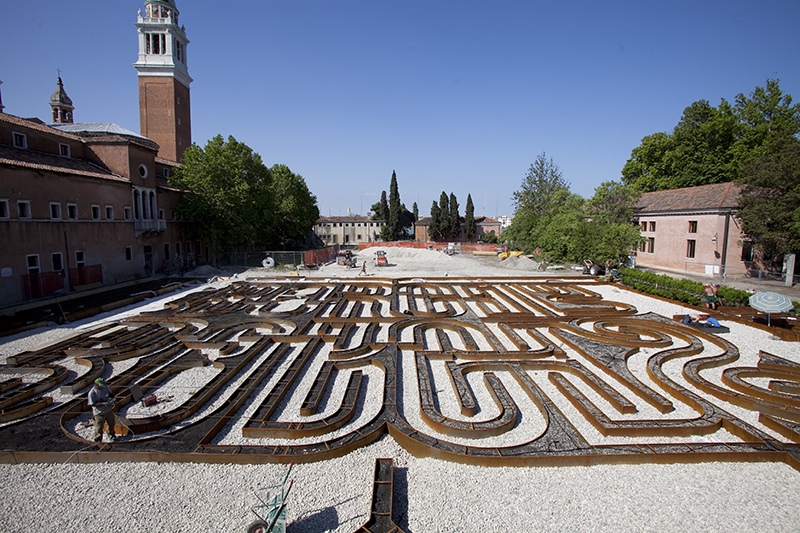
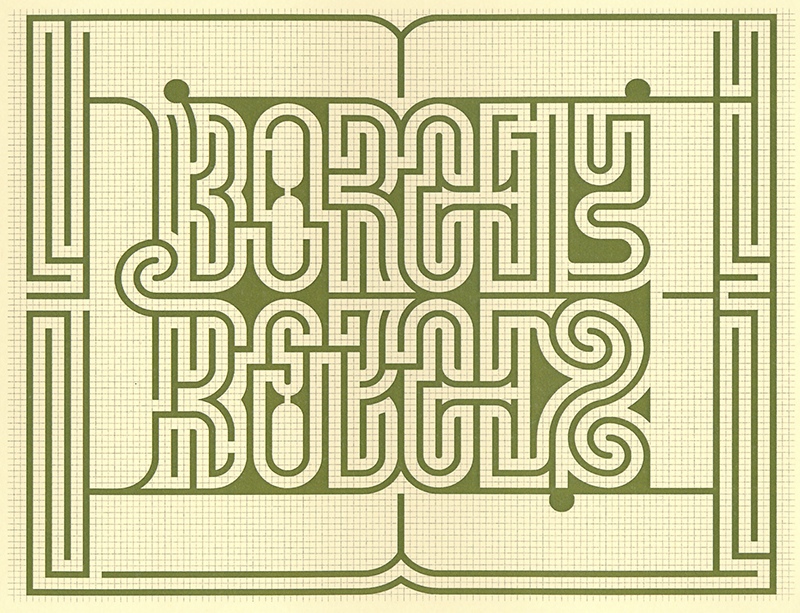
Renata Codello The very form of the labyrinth is an open book that generates literature. It reflects the words of Borges and unfolds as a narrative journey through hourglasses, question marks, walking sticks, and letters, like a text waiting to be deciphered.
The labyrinth is already a work of narrative at the moment of its conception, for it is born from a dream: Randall Coate has a dream in which his friend, the writer, dies. He is inspired by one of Borges’s own stories, The Garden of Forking Paths, to design it.
More than that, the labyrinth opens as a third cloister, extending the sequence established by Palladio’s cloister at the entrance and the Buora brothers’ cloister of cypresses, creating a continuous architectural progression that unfolds as an architectural narrative.
There is more. The labyrinth stretches beneath the Manica Lunga, the library that houses one of the world’s most important collections of art history. It seems almost to be an extension of the library itself: an immense open book that has spilled beyond the shelves and beyond the building.
The very ground on which it stands carries centuries of layered histories. Before becoming the labyrinth, it served as a Portuguese cemetery, a medicinal herb garden, a parade ground, and a playing field for the young people who studied and worked on the island after the Fondazione Giorgio Cini was established.
All of these histories coexist; none has been erased. They remain present, just as every answer and every possible reality coexist in Borges’s The Garden of Forking Paths.
So yes, it is a labyrinth; it is a garden; it is a device for meditation; it is literature. There is one final aspect that is especially compelling. Borges spent the last twenty years of his life gradually losing his sight until he entered complete blindness.
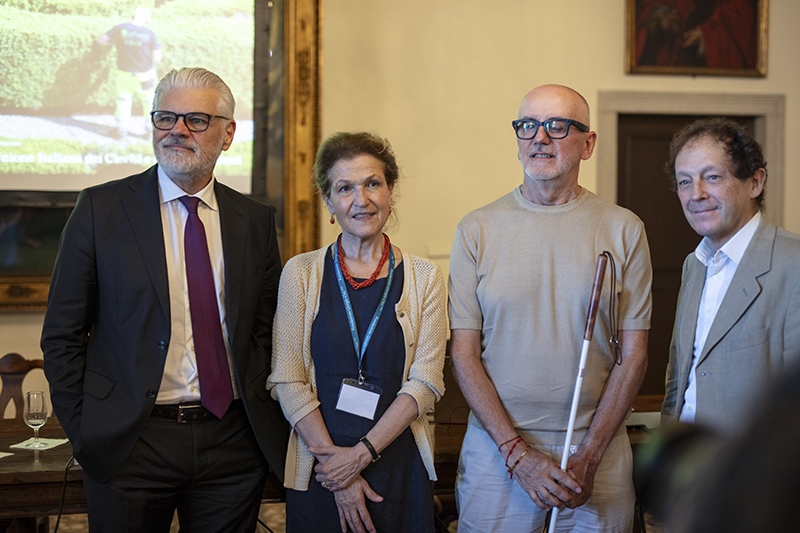
What is most striking is that today it is blind and visually impaired visitors who read the Labyrinth as though it were a text, helping those of us who can see to read it anew by engaging all the senses.
On the Work of Restoration
Renata Codello We experienced moments of genuine concern as well as moments of surprise. What worried us most was discovering that the number of damaged or ailing plants was far greater than had initially been apparent.
Equally fascinating was the search for replacement plants: mature, healthy specimens sourced from Belgium, which our gardeners then carefully shaped and trained so that their form and proportions would blend seamlessly with the existing labyrinth.
Seven gardeners worked on the restoration over a period of approximately six weeks. Perhaps the most remarkable aspect of the project was watching those very gardeners, professionals with decades of experience, become genuinely excited by a task unlike any they had undertaken before, one that required them to balance technical knowledge with continual observation, assessment, and decision-making.
For all of us, the restoration proved to be both a challenge and a discovery.
Conclusion
What Codello describes is not, in the end, a story about hedges. It is a story about what it means to care for something that refuses to hold still: a labyrinth that is simultaneously a garden, a text, a piece of architecture, and, in her own words, Borges himself.
Her account of restoration as translation, rather than reconstruction, reframes the entire practice. It is not an attempt to freeze a thing in its original state, but an ongoing act of interpretation that acknowledges time itself as an architect, shaping the work as surely as any human hand.
There is something quietly moving in the detail she saves for last: that it is now blind and visually impaired visitors who read the Labyrinth most fully, engaging it through touch and sound rather than sight alone, echoing the blindness that closed over Borges himself in his final decades.
A garden built from a dream about a dying writer, planted with hourglasses and spirals, tended by gardeners who found themselves surprised by their own long expertise, is still growing, still legible, and still, in some sense, being written.