
E ach year, from late January to early February, Great Egrets gather at Kraft Azalea Garden in Central Florida, marking the beginning of their breeding season. Their timely return always fills me with excitement—it means I once again have the opportunity to capture fleeting, poetic moments in nature.
Typically, the males arrive first to select nesting sites. To avoid predators, they build their nests high in the trees. They then fly to nearby woods to collect dry branches shaped by the winter cold, carefully assembling their nests piece by piece. At the same time, they perform elegant displays to attract females. Once paired, they work in harmony to complete the nest and begin breeding. By late March, the chicks begin to hatch.
This photograph was taken in early April, shortly after the young had emerged. During this time, adult egrets frequently travel between the nest and the nearby lake to gather food. Occasionally, when overwhelmed by the constant calls of their chicks, they retreat briefly to nearby branches before returning.
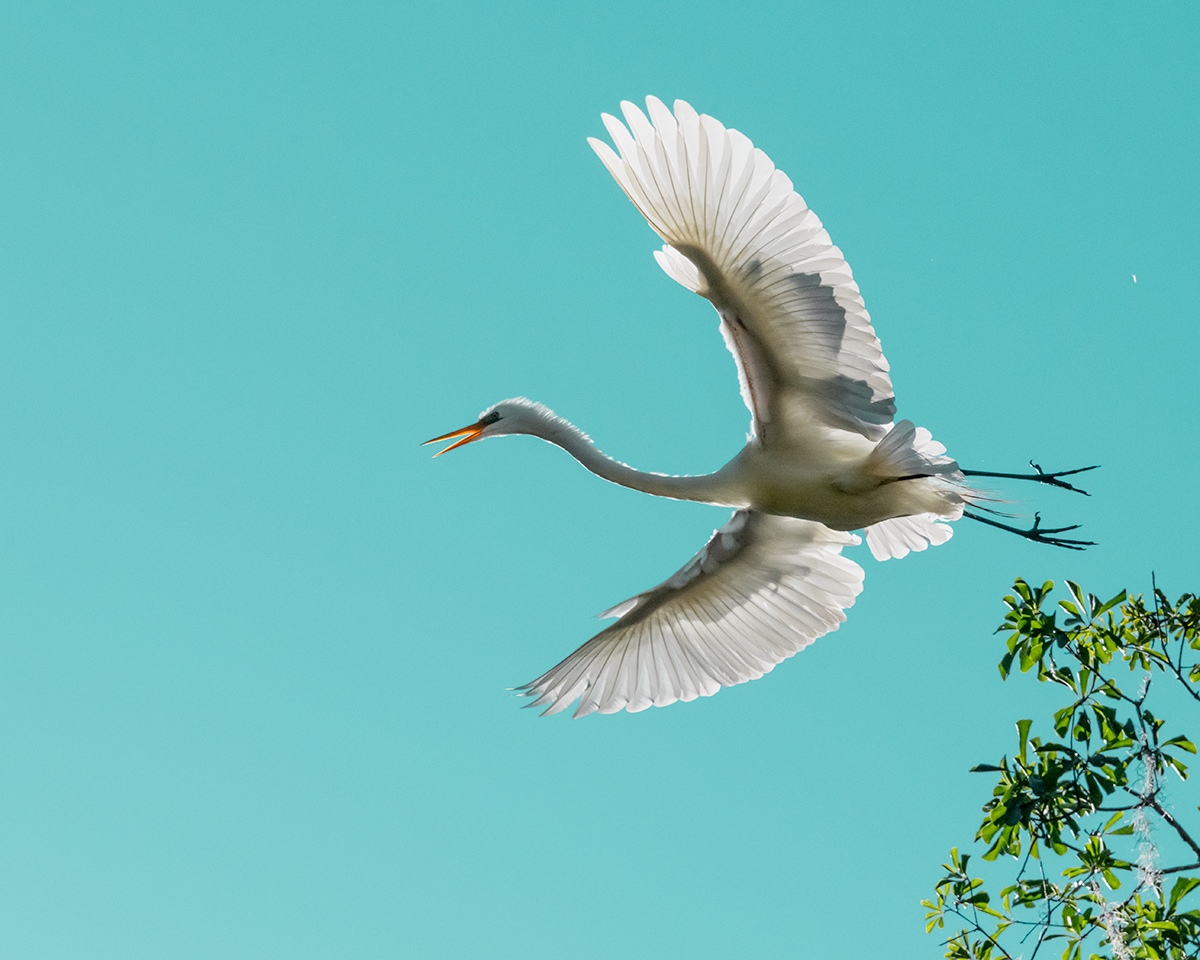
As I became familiar with their patterns, I began searching for the right position. I prefer working with backlight—when sunlight passes through the egret’s wings, it reveals a delicate, translucent elegance. Florida, known as the Sunshine State, offers ideal conditions for this approach. The birds often flying at higher elevations create perfect opportunities for backlit flight images. With all of this in mind, I carefully chose my position, set a fast shutter speed in advance, and waited.
One morning, under warm and luminous light, I arrived early, hoping not to leave empty-handed. Before long, an egret lifted off from its nest. From experience, I knew it would soon return. I quickly adjusted my position so that when it came back, the sun would fall behind it—illuminating its wings just the way I envisioned.
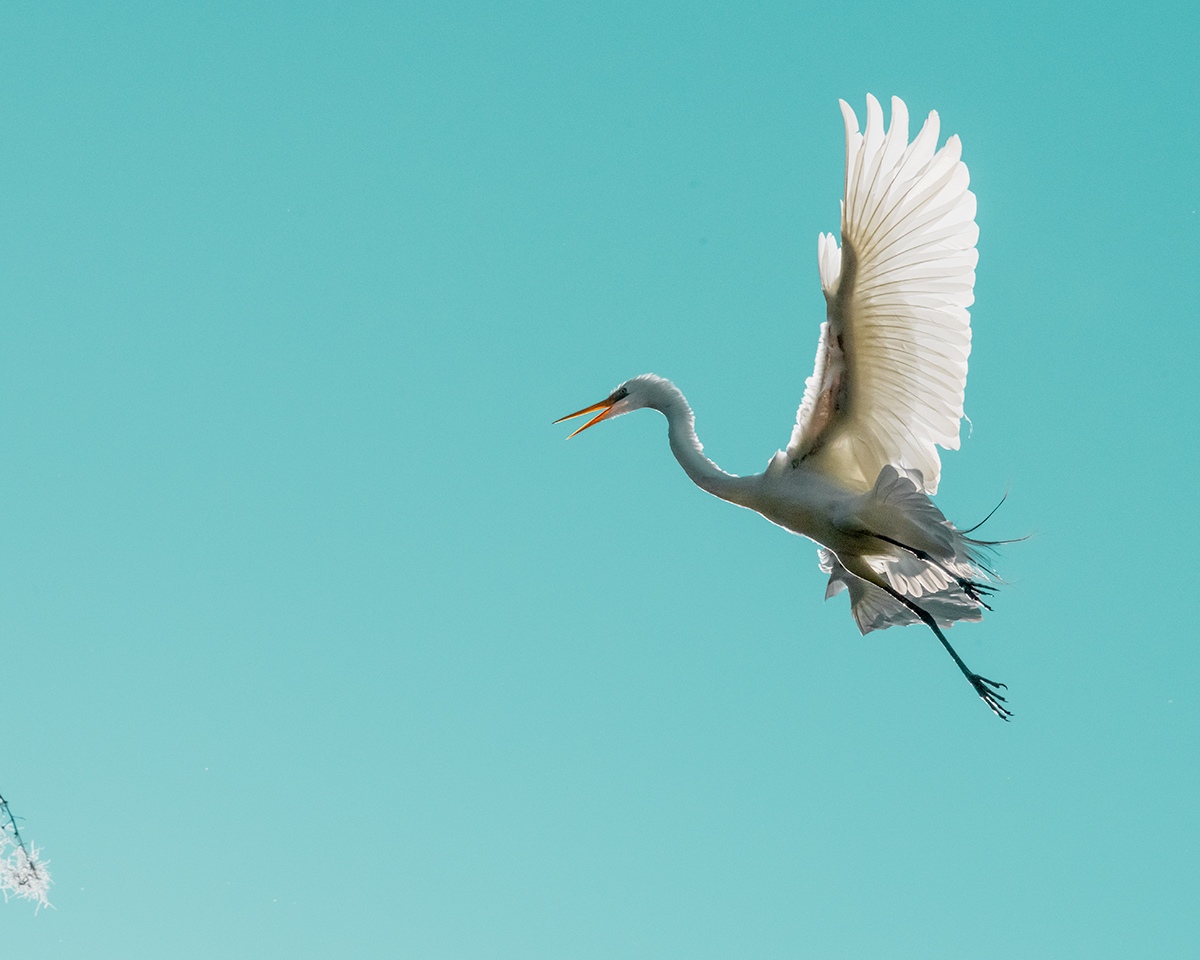
It returned—but my position wasn’t quite right, and the result fell short of what I had hoped for. This is part of the process; sometimes, even long periods of waiting lead to nothing. Soon after, the egret flew out again. I repositioned, recomposed, and waited quietly for its next return.
This time, I was ready.
I was using a Nikon D850 with a Nikon 28–300mm zoom lens rather than a long telephoto. The egret was relatively close, and with a longer lens, it could easily move out of frame. A zoom gave me the flexibility to respond to the moment—tight when I needed detail, and wider when I wanted to include the surrounding environment and place the bird within its habitat. The lighter setup also allowed me to move more freely while tracking it in flight.
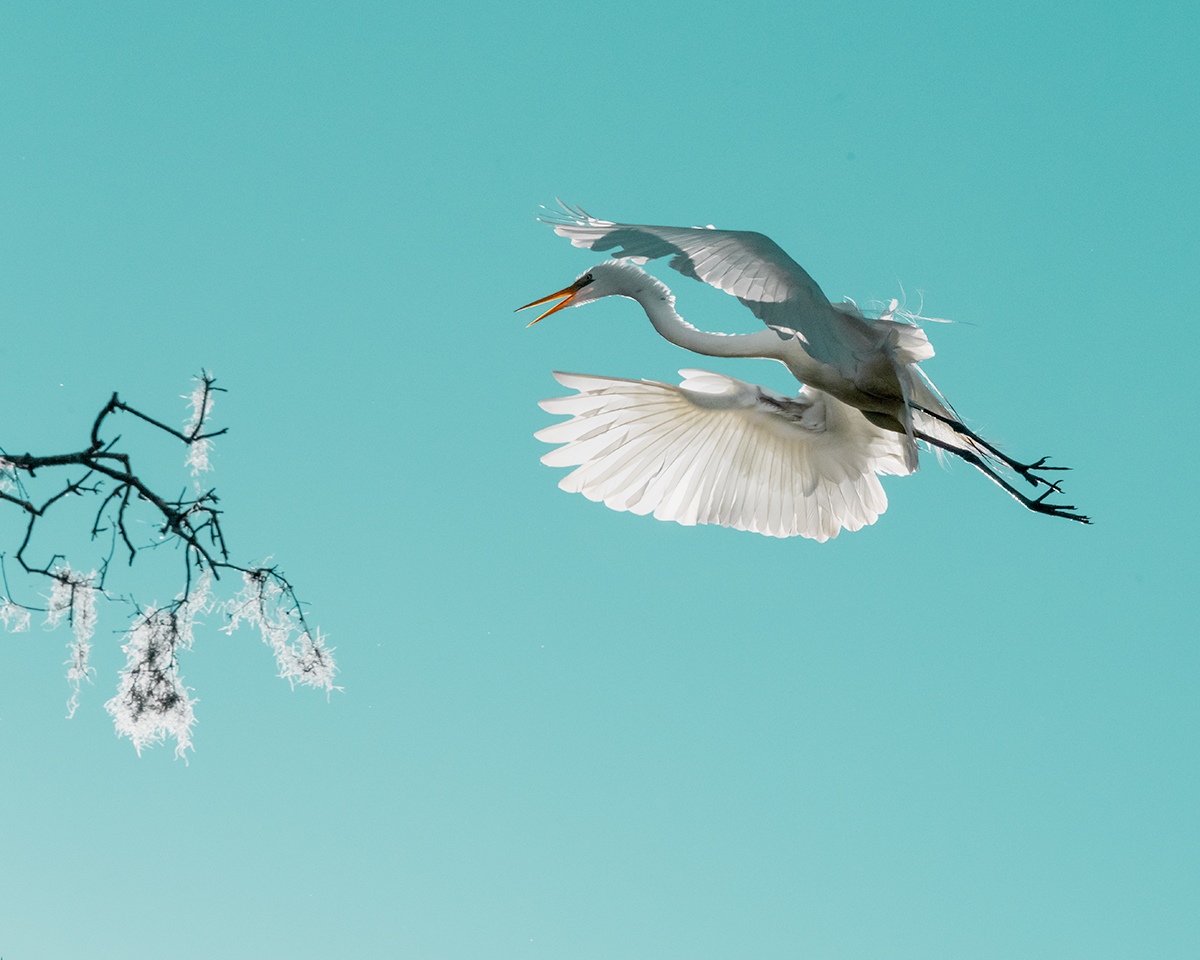
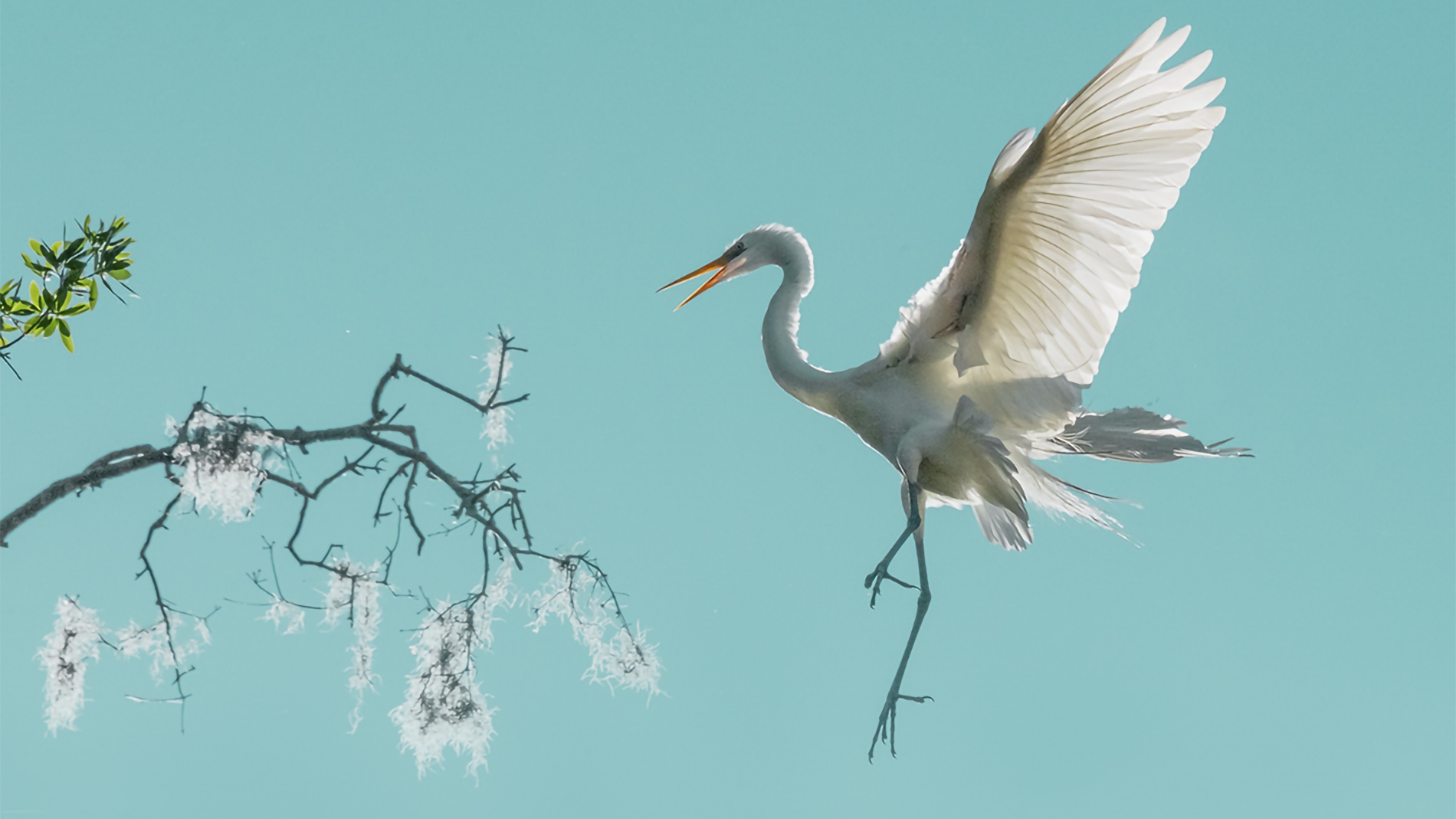
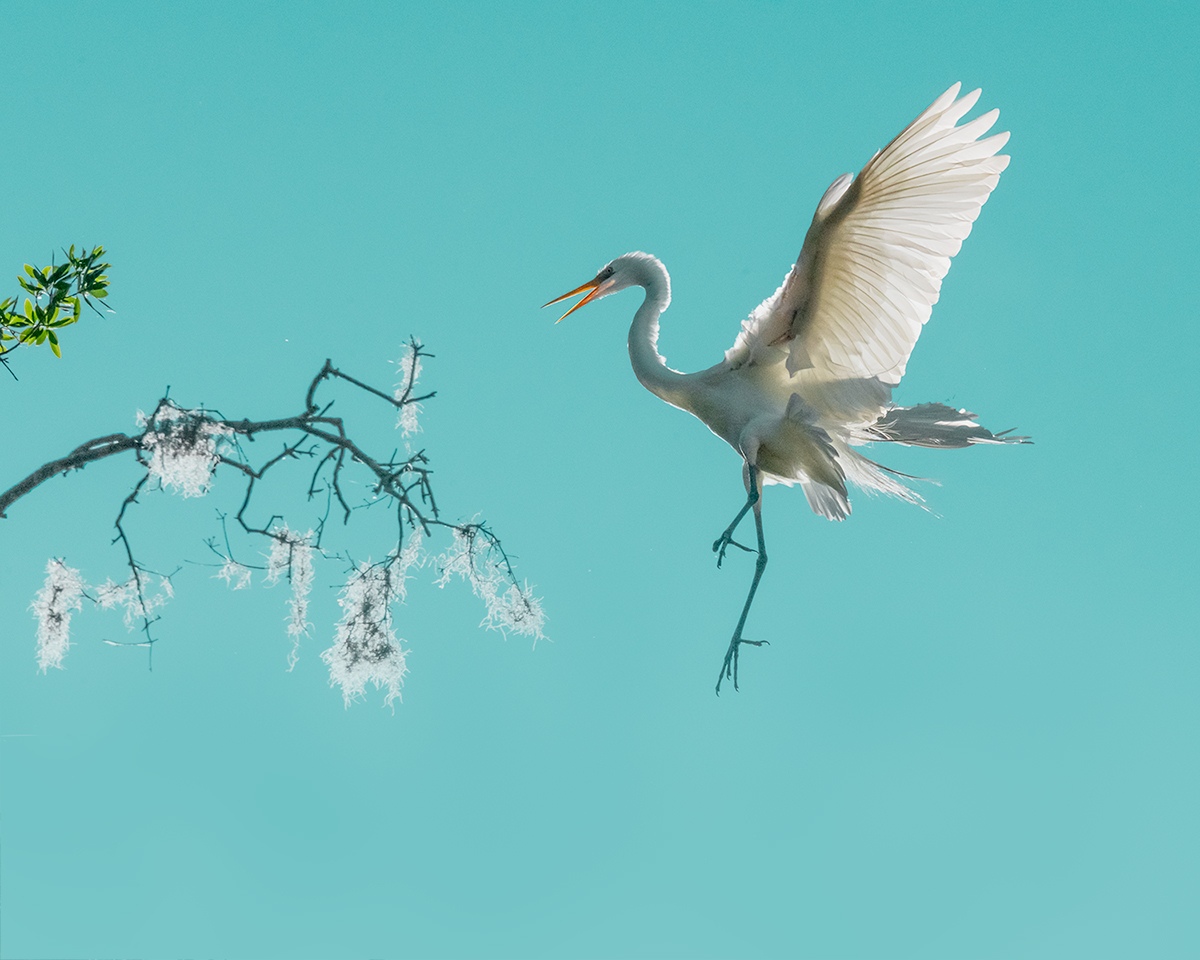
When I saw the egret lift off from a nearby tree, I reacted instinctively and pressed the shutter. With the camera already set to continuous shooting mode, I captured seventeen frames in just two seconds. Among them, the award-winning moment—taken just before landing—stood out as the most compelling.
Photographing birds in flight is far more demanding than capturing still subjects. Sometimes, it takes a long wait to witness a single takeoff. Patience is essential, but preparation is just as important. And when the moment finally comes, quick reflexes and decisive timing make all the difference.
With its minimalist composition, inspired by Eastern aesthetics, and its luminous, uncluttered background, the image draws the viewer’s eye naturally to the subject—the egret in the act of landing. Sunlight filters through its wings, revealing their intricate structure and texture. On the left, strands of Spanish moss are gently outlined by the same backlight, adding depth and a quiet sense of poetry to the scene.
At the very instant I pressed the shutter, I felt a quiet certainty—Once again, I would be able to share the beauty of nature.
E ach year, from late January to early February, Great Egrets gather at Kraft Azalea Garden in Central Florida, marking the beginning of their breeding season. Their timely return always fills me with excitement—it means I once again have the opportunity to capture fleeting, poetic moments in nature.
Typically, the males arrive first to select nesting sites. To avoid predators, they build their nests high in the trees. They then fly to nearby woods to collect dry branches shaped by the winter cold, carefully assembling their nests piece by piece. At the same time, they perform elegant displays to attract females. Once paired, they work in harmony to complete the nest and begin breeding. By late March, the chicks begin to hatch.
This photograph was taken in early April, shortly after the young had emerged. During this time, adult egrets frequently travel between the nest and the nearby lake to gather food. Occasionally, when overwhelmed by the constant calls of their chicks, they retreat briefly to nearby branches before returning.
As I became familiar with their patterns, I began searching for the right position. I prefer working with backlight—when sunlight passes through the egret’s wings, it reveals a delicate, translucent elegance. Florida, known as the Sunshine State, offers ideal conditions for this approach. The birds often flying at higher elevations create perfect opportunities for backlit flight images. With all of this in mind, I carefully chose my position, set a fast shutter speed in advance, and waited.
One morning, under warm and luminous light, I arrived early, hoping not to leave empty-handed. Before long, an egret lifted off from its nest. From experience, I knew it would soon return. I quickly adjusted my position so that when it came back, the sun would fall behind it—illuminating its wings just the way I envisioned.
It returned—but my position wasn’t quite right, and the result fell short of what I had hoped for. This is part of the process; sometimes, even long periods of waiting lead to nothing. Soon after, the egret flew out again. I repositioned, recomposed, and waited quietly for its next return.
This time, I was ready.
I was using a Nikon D850 with a Nikon 28–300mm zoom lens rather than a long telephoto. The egret was relatively close, and with a longer lens, it could easily move out of frame. A zoom gave me the flexibility to respond to the moment—tight when I needed detail, and wider when I wanted to include the surrounding environment.
When I saw the egret lift off from a nearby tree, I reacted instinctively and pressed the shutter. With the camera already set to continuous shooting mode, I captured seventeen frames in just two seconds. Among them, the award-winning moment—taken just before landing—stood out as the most compelling.
Photographing birds in flight is far more demanding than capturing still subjects. Sometimes, it takes a long wait to witness a single takeoff. Patience is essential, but preparation is just as important.
With its minimalist composition, inspired by Eastern aesthetics, and its luminous background, the image draws the eye naturally to the subject. Sunlight filters through its wings, revealing their intricate structure. On the left, strands of Spanish moss are gently outlined by the same backlight, adding depth and a quiet sense of poetry to the scene.
At the very instant I pressed the shutter, I felt a quiet certainty—Once again, I would be able to share the beauty of nature.