
A new UAE masterplan reimagines desert urbanism through pedestrian-first design and community-centered living
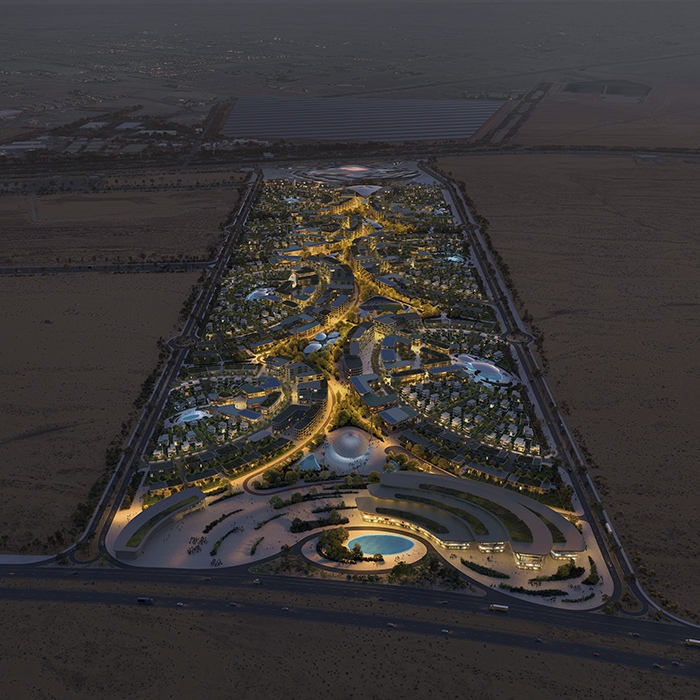
In the heart of Sharjah, UAE, a revolutionary urban vision is taking shape, one that redefines how we think about city living in the 21st century. The newly announced masterplan for Khalid Bin Sultan City, designed by the renowned Zaha Hadid Architects (ZHA), is more than just a development project. It is a blueprint for human centered, environmentally conscious urban design.
A Vision Shaped by Nature and Innovation
Drawing inspiration from the fluid forms of dunes swept by wind, ZHA’s masterplan proposes an urban network with multiple centers that feels both organic and purposeful. The design is anchored by four guiding principles: sustainability, smart technology, culture, and people. These are not just aspirational themes but practical frameworks influencing everything from infrastructure to public space design.
Strategically located beside BEEAH’s acclaimed headquarters, the project extends a commitment to sustainability and innovation. This proximity is intentional, representing an urban continuation of BEEAH’s vision for environmentally responsible development.
Seven Neighborhoods, One Cohesive Community
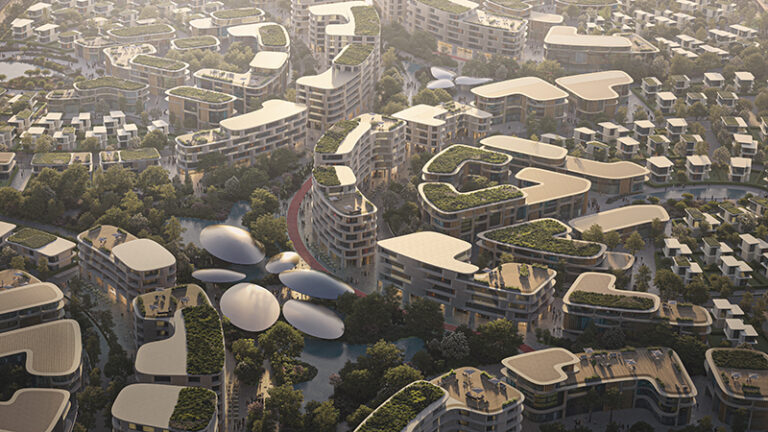
Khalid Bin Sultan City distinguishes itself through an approach that puts the community first. Rather than building a sprawling urban mass, the plan organizes the development into seven distinct residential neighborhoods. Each has a unique identity yet is woven into a coherent whole.
Each neighborhood revolves around a central civic plaza, positioned within a walking radius of five minutes, serving as a hub for public services and social activity. These plazas are more than gathering points. They are designed to foster the daily human connections that define vibrant urban life.
A Two Kilometer Oasis Spine
At the heart of the city lies its most innovative feature: a shaded linear oasis that is two kilometers long. This isn’t just a green corridor. It is a multifunctional ecosystem that blends recreation, ecology, and culture.
The oasis varies in width, forming intimate courtyards and open landscapes that unfold gradually, inviting curiosity and movement. Within this green spine are sheltered walking and cycling paths, sculpture gardens, wildlife ponds, cafés, and wellness spaces. It becomes both a recreational retreat and a social commons, acting as Sharjah’s urban lungs and living room rolled into one.
Walkability as Urban Innovation
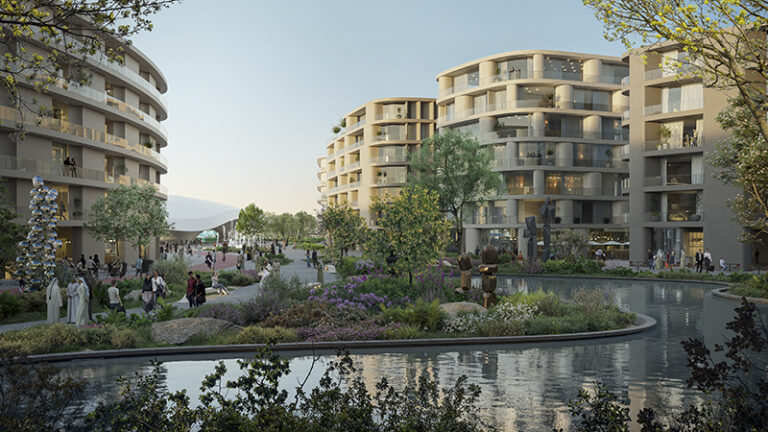
In a region long dominated by planning centered on cars, Khalid Bin Sultan City prioritizes walkability and outdoor comfort. Pedestrian routes, shaded by native trees and framed by recessed façades, offer pleasant and accessible movement across the city, even in high temperatures.
Amenities such as children’s hubs, wellness clinics, and sports areas are within walking distance of every residence. Lush boulevards and shaded terraces animate the streetscape, promoting both physical activity and social life throughout the day and evening.
Innovation and Culture at the Core
Next to the BEEAH HQ, a new district will serve as a hub for design, innovation, and culture. Incubator spaces, creative industry venues, and cultural institutions will support Sharjah’s growing knowledge economy while embedding circular design values.
This business district is not isolated. It is seamlessly integrated into the larger plan through the central oasis spine, reinforcing the idea that work, leisure, and community can coexist organically.
A Model for the Future
Khalid Bin Sultan City is more than an architectural feat. It is a forward thinking model for sustainable urbanism. It challenges conventional notions of density, mobility, and community by offering a lifestyle where environmental stewardship and urban vitality go hand in hand.
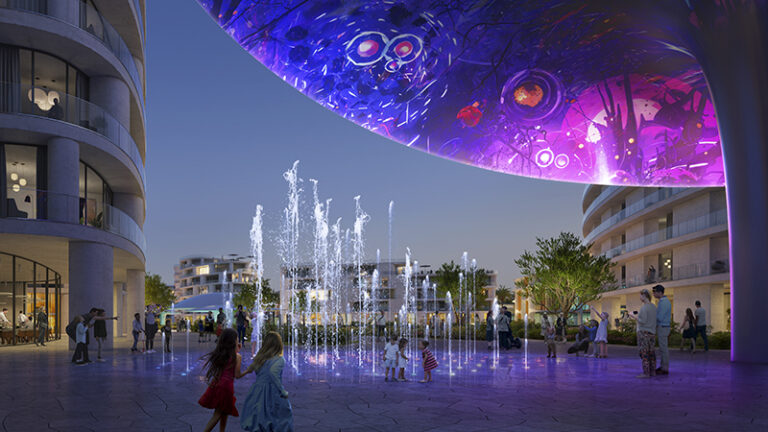
From contemporary mosques and wellness spaces to civic plazas and walkable boulevards, every element is designed to enhance wellbeing and foster connection. It is a city shaped not by car lanes, but by people and place.
As cities around the world contend with climate, growth, and fragmentation, this project offers a powerful vision: that the cities of tomorrow can be green, connected, and deeply humane.