
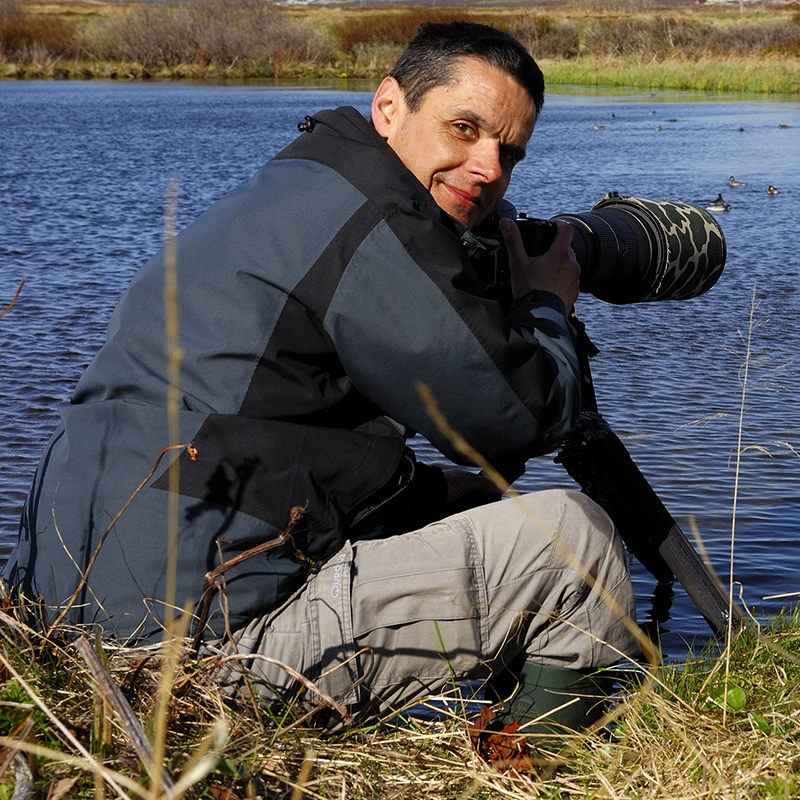
Jose Manuel Grandío photographing waterbirds. Self-portrait. © Jose Manuel Grandío
Twist and Jump
Jose Manuel Grandío on photographing a stoat dancing in fresh snow
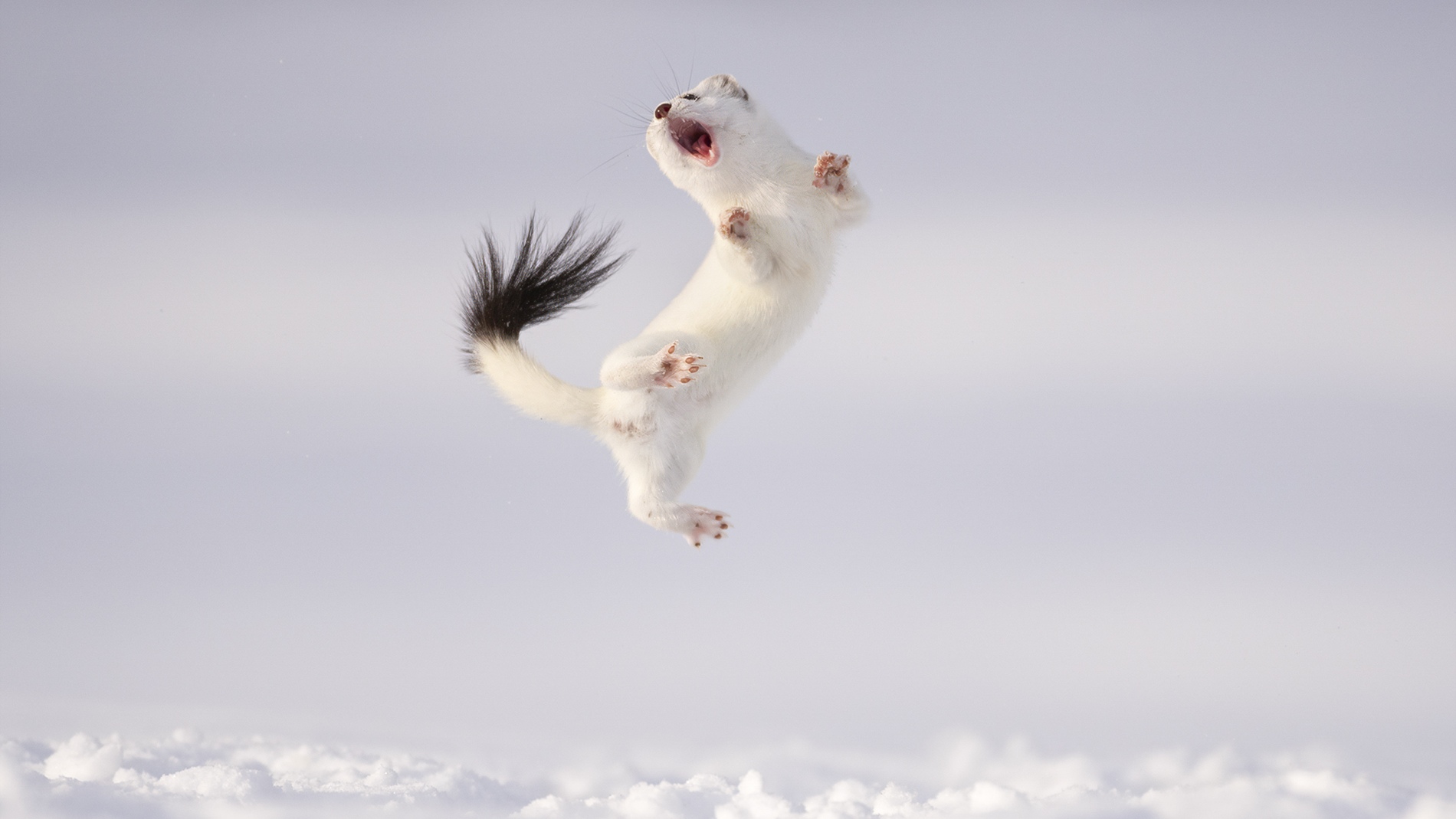
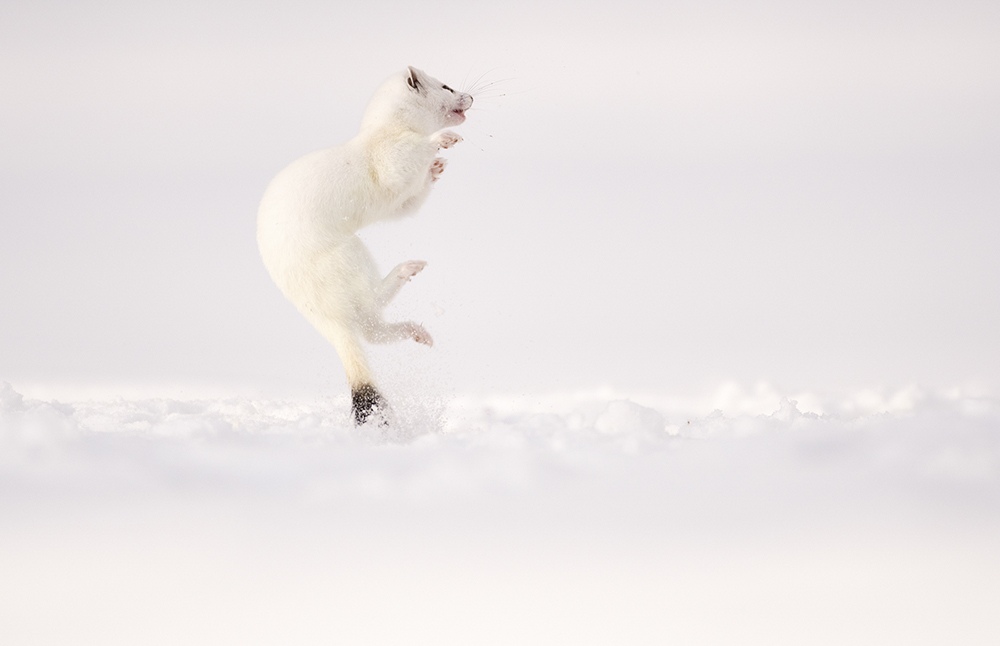
The stoat in the photograph above is doing what scientists call dancing. They have witnessed stoats (Mustela erminea) engaging in similar displays on many occasions, although opinions are divided about what motivates the leaps and twists. Sometimes the dances are performed in front of a rabbit or a large bird in a seeming attempt to confuse or distract potential prey, a strategy that has proved effective in a number of documented interactions. At other times, as was the case in the display I photographed, there is no prey animal in sight, and the dance seems simply to be an expression of exuberance. A third hypothesis is that the dances are an involuntary response to a parasitic infection, since stoats are known to be hosts for cranial parasitic worms.
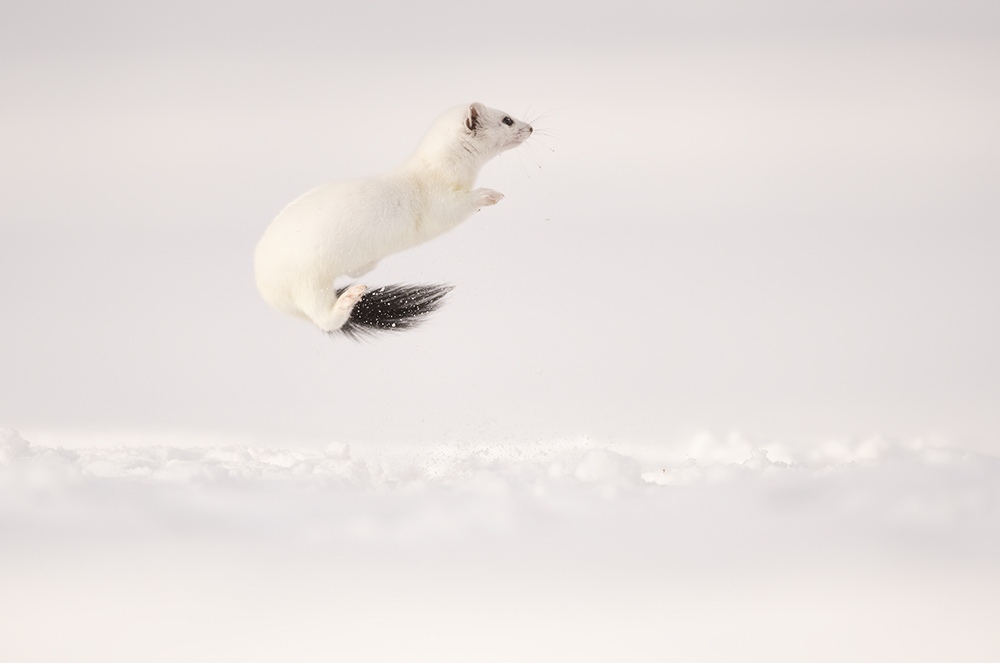
For a week I did several sessions in the early hours of dawn, lying motionless in the snow in front of this stoat's burrow. I remember that it was a very nervous animal. When it appeared in the snow it was extremely difficult to frame, since it was barely still and would hide again within seconds. As the days went by the snow disappeared, and I had taken only a few photographs.
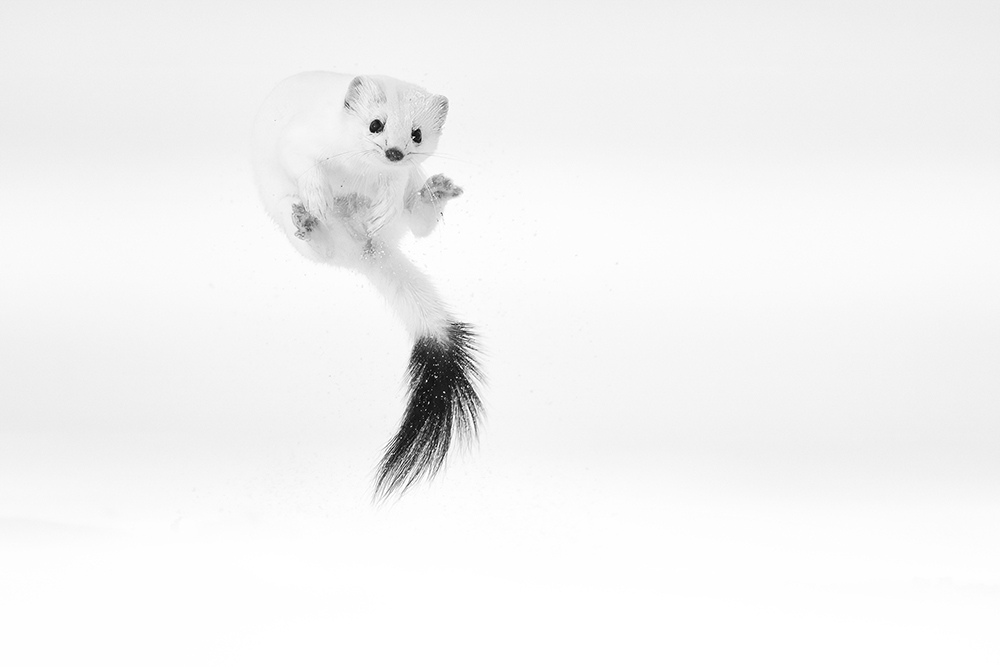
But on the last day everything changed. It had snowed the night before and the landscape was completely transformed. That morning the stoat performed a series of leaps in the snow for a few minutes, something it had not done on any of the previous days. It seemed to be playing with the freshly fallen snow, making sudden jumps and crawling through it. At the end of the session I knew that I had witnessed unusual behavior, and that I had been fortunate enough to photograph it.
Since I began nature photography, almost all my efforts have focused on photographing wild birds. On this occasion, however, I spent a few days photographing this stoat during what was initially intended to be a bird photography trip to the mountains of eastern France. The method was the same: lying in the snow to achieve a low vantage point, which creates a pleasing background blur and allows the subject to stand out more clearly.
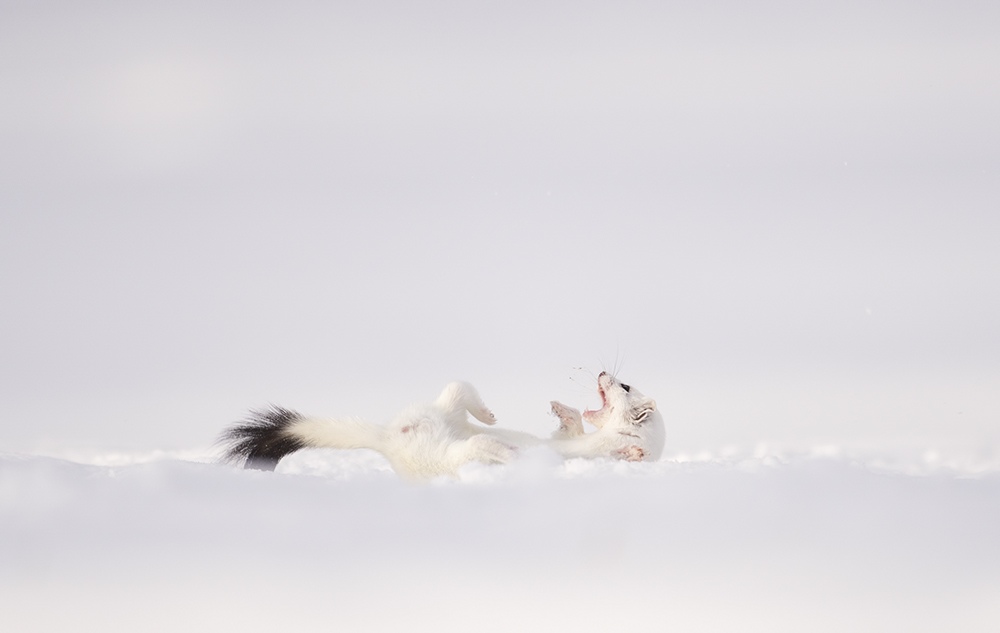
Winter is my favorite season for photography, and I try to dedicate a few weeks each year to working in the snow. When photographers work in the middle of a snowfall, or on freshly fallen snow, we feel a great joy, because we know our photographs will be special. These are moments that completely transform the landscape, and the mood of many people along with it. In a way, it seemed as though this stoat felt the same thing as it leapt and twisted in the air above the fresh snow.
I will always remember a moving message from an American social worker who specializes in caring for people with severe psychological trauma. She wrote to thank me for taking this photograph. When she showed it to the people in her care, both young and old, they reacted with shouts of joy, with tears, with laughter, with a happy sparkle in their eyes. She told me that in more than twenty years as a mental health counselor she had learned to recognize the moment when someone suddenly realizes there can be hope in their reality, beyond the pain and the despair. Many wonderful things have happened to me since this photograph was published, but without doubt this has been the most rewarding.
We often take photographs to highlight the importance of a particular space or species, seeking to evoke an emotional response in the viewer and connect people with nature. There is no secret formula for achieving this, and not even total dedication guarantees it, but when it happens, you know your effort has been worthwhile.
Jose Manuel Grandío is a nature photographer based in Spain. He has worked in wildlife photography for twenty-five years and specializes in birds. His photograph Twist and Jump, featured at the top of this piece, was highly commended in the Behaviour: Mammals category of Wildlife Photographer of the Year 2024, the competition's sixtieth year, and was shown in the accompanying exhibition at the Natural History Museum in London. The competition drew 59,228 entries from 117 countries and territories that year.
All photographs © Jose Manuel Grandío.