
Civilization Written Into the Land
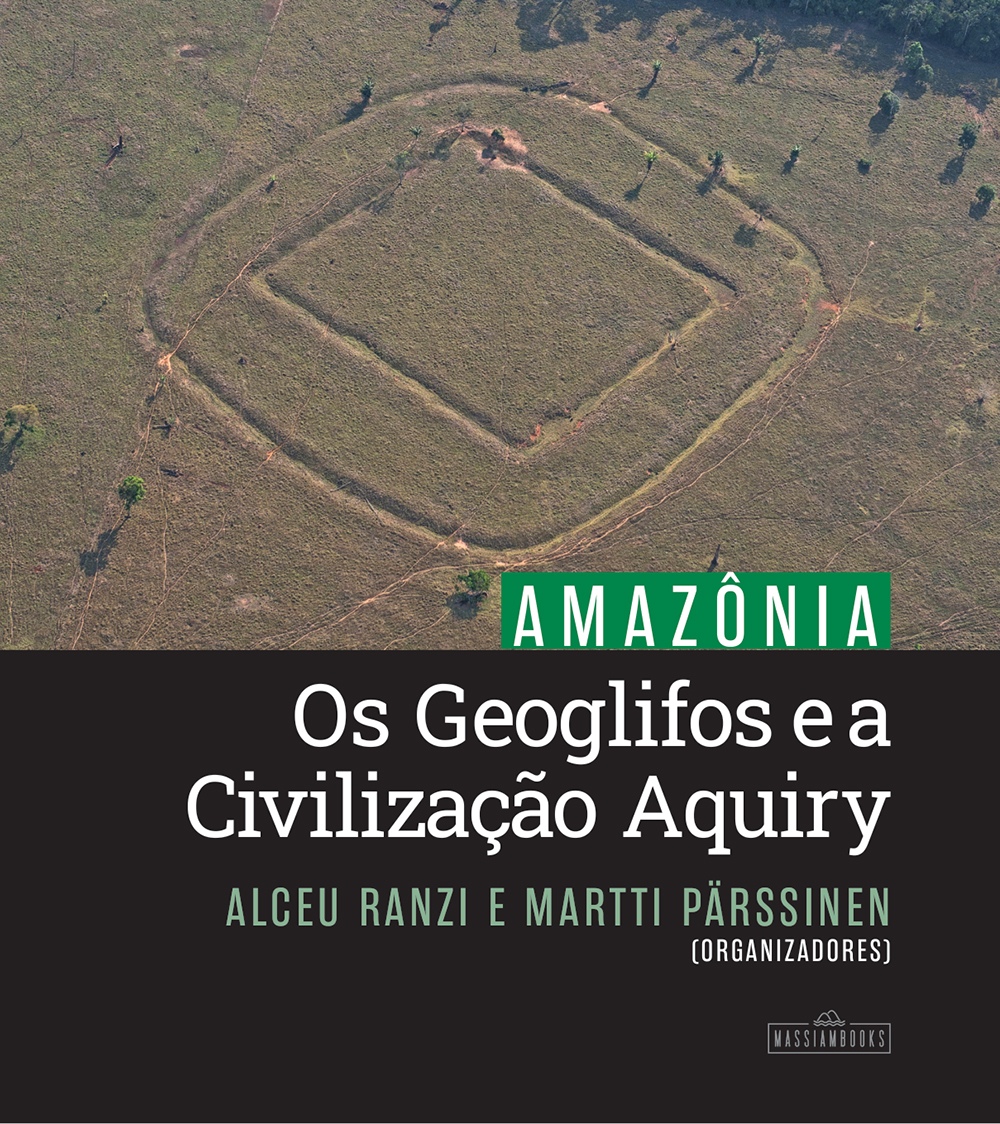
On Our Bookshelf: Amazônia: Os Geoglifos e a Civilização Aquiry, by Alceu Ranzi and Martti Pärssinen
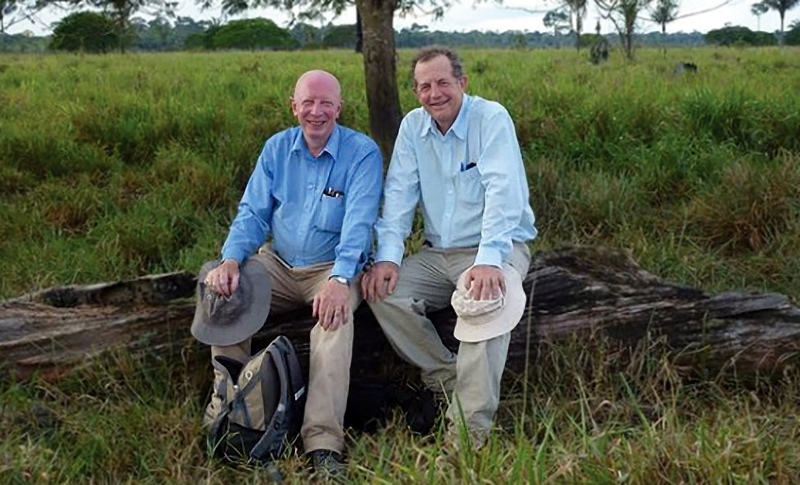
A Civilization Counted in Hundreds
Ranzi and Pärssinen do something unusual for a book about earthworks: they count. Not just structures, but political units, the small, autonomous chiefdoms that each built and maintained their own ceremonial center. As the authors note, researchers at the University of Copenhagen have cataloged 1,035 Greek city-states, or poleis, across ancient Spain, France, Libya, Greece proper, and Asia Minor, with historians estimating that during the archaic and classical periods (700 to 323 BCE), somewhere between 850 and 1,000 poleis made up Greek civilization at any given time.
More than 500 geoglyph sites had been documented in the Amazon when the book was written, and the authors expected that number could double or even triple as the full extent of the region was surveyed. The parallel, in scale if not in form, is one the book draws out explicitly, noting that the number of Greek city-states comes remarkably close to the number of Aquiry chiefdoms and their corresponding ceremonial centers.
The comparison runs deeper than raw numbers. Most Greek poleis were walled, centered on a public square for markets and assembly, with even the smallest occupying under 8 hectares and only a tenth, Athens among them, reaching roughly 182 hectares or more. The Aquiry built at comparable scale: ceremonial plazas that, once roads and avenues connecting them are factored in, could extend across hundreds of hectares of artificially cleared land.
Geometry as a Shared Instinct
Perhaps the most striking claim in the book is not about population or territory, but about thought. The authors point out that Greek civilization adapted geometric styles into its painted pottery during what archaeologists call the Geometric Period, roughly 900 to 700 BCE, the same era when fortified Greek cities began spreading along the Mediterranean coast.
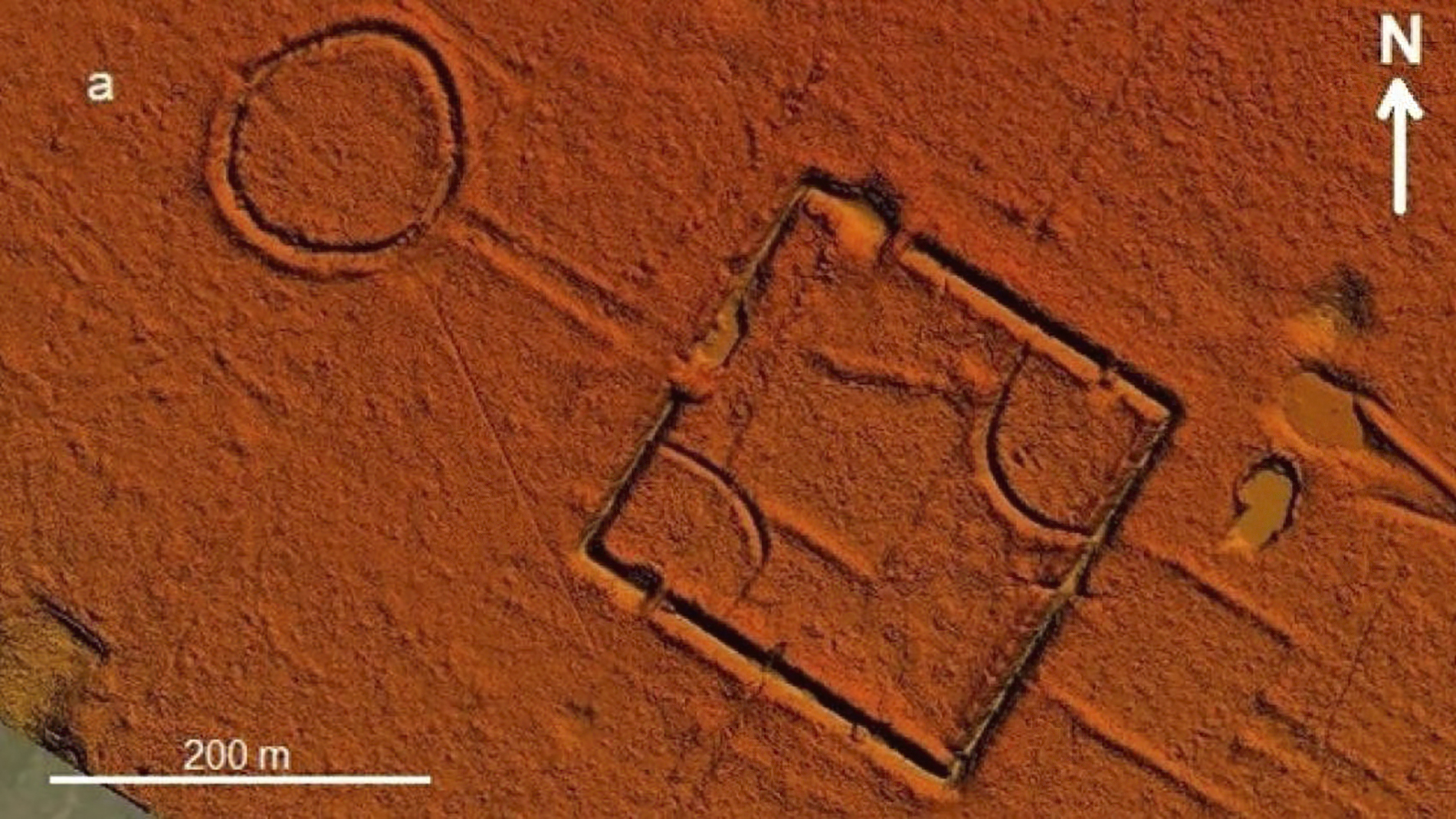
The Aquiry, working in an entirely separate hemisphere with no contact with the classical world, arrived at their own geometric language: perfect circles, precise squares, and enclosures built with what the authors describe as an unmistakable command of geometric principle, laid not on pottery or parchment, but directly into the earth itself, on a scale visible only from the air.
The book even nods to Plato directly, noting that even in his most influential work, The Republic (circa 376 BCE), the polis, the city-state itself, sits at the center of how the ancient Greek world thought about politics and society. For the Aquiry, that same organizing unit, small, autonomous, distinct yet networked with its neighbors, appears to have shaped how an entire civilization understood itself, thousands of miles and centuries removed from Athens.
Why This Comparison Matters
It would be easy to read this parallel as a simple flourish, a way of dignifying an underappreciated civilization by association with a more famous one. But Ranzi and Pärssinen's point runs the other direction.
The comparison is not meant to borrow Greece's prestige for the Amazon. It is meant to show that what we associate with Greek civilization, urbanized political structures, shared ritual and language, geometric sophistication, sports and public performance, was never uniquely Greek to begin with.
It was a pattern, one that seems to emerge wherever a society reaches a certain threshold of scale, cooperation, and settled life, whether that society builds in marble or in packed earth beneath a rainforest canopy.
That is the quiet argument beneath the numbers and the maps: civilization does not have a single point of origin, or a single acceptable shape. It has appeared, independently, more than once, in places we did not think to look.
The Prediction, Tested
Books about the deep past rarely get tested. This one has been, and quickly.
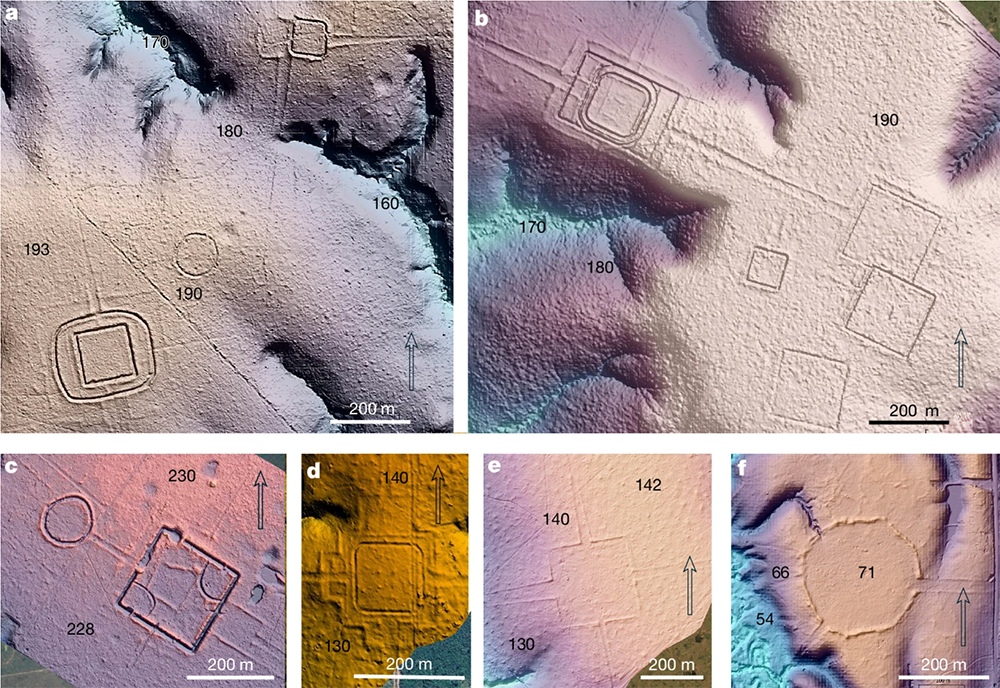
In July 2026, five years after the book appeared, Pärssinen and Ranzi published results in Nature from an airborne lidar survey of southwestern Amazonia, carried out with colleagues from Helsinki, Turku, and the Finnish Geospatial Research Institute. The flights followed straight transects some 450 kilometers long, mapping a strip about a kilometer wide every ten kilometers, and scanned roughly 4,500 square kilometers in total. Within that sample the team documented more than 400 well-preserved examples of monumental ceremonial architecture.
Projected across the full Aquiry territory, the survey yields a cautious estimate of more than 20,000 ceremonial centers built from earth, the largest complex extending across 50 hectares. That territory covers about 183,000 square kilometers, an area comparable to modern Syria, occupied between 600 BCE and 850 CE.
The book expected the count of known sites to double or triple. It has been exceeded by a factor of forty.
Which does something curious to the comparison the book rests on. Set against 1,000 poleis, 20,000 ceremonial centers is no longer a parallel in scale. But that only sharpens the argument underneath it. If the point was never that the Aquiry matched Greece, but that the pattern we call civilization is not Greek property, then the new numbers do not weaken the case. They make the pattern harder to treat as an exception.
The population estimates move with it. Detailed survey and radiocarbon dating suggest that between 1.25 and 3 million people lived within Aquiry territory by the beginning of the first millennium, in a region amounting to less than 3 percent of Greater Amazonia.
Earlier estimates put the population of the entire Amazon somewhere between 1 and 10 million. The new figures suggest the wider region may have supported tens of millions. Pärssinen says plainly that the findings overturn our understanding of the Amazon's past.
The forest itself turns out to be part of the evidence. The Aquiry burned bamboo-dominated areas to open fields for maize, squash, and manioc, and to clear ground for ceremonial centers and the broad roads between them. They cultivated gardens and managed useful trees.
Brazil nut and peach palm, both now common across the region, reflect that prolonged tending. By favoring some species and suppressing others, these communities shaped the composition of a forest that later observers took for wilderness, on a scale large enough to bear on how ancient Amazonia's carbon balance is modeled today.
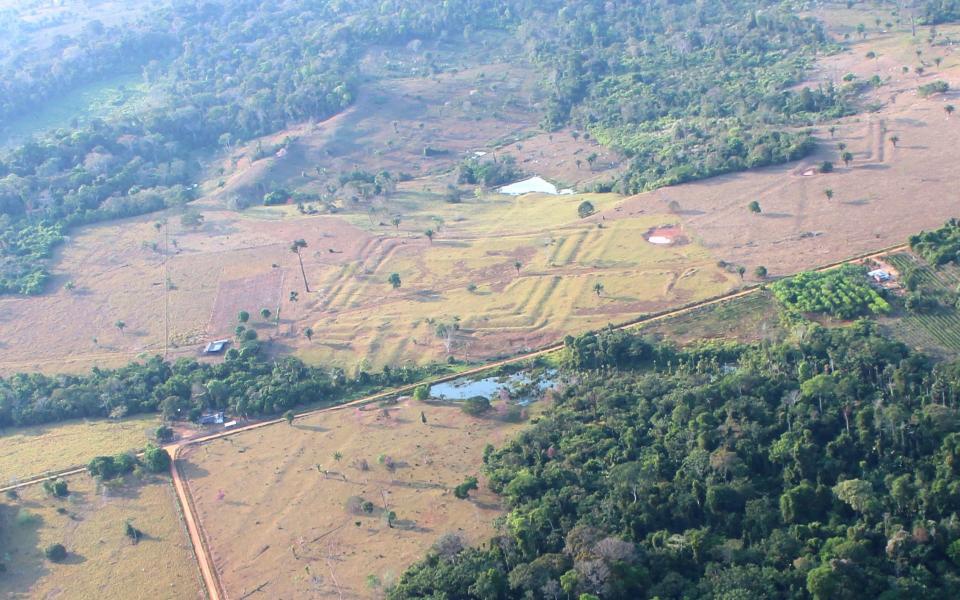
And much remains unknown, in ways the book is honest about and the headlines are not. Because suitable stone is scarce in this part of Amazonia, the Aquiry left no stone ruins.
The name Aquiry itself comes from an Indigenous name for the Acre River, chosen because we do not know what these communities called themselves or what languages they spoke. Their decline, around 850 CE, is unexplained, and arrived at roughly the moment the Classic Maya were undergoing their own collapse on another continent.
A book that anticipates its own vindication is rare. A book whose prediction is exceeded fortyfold is rarer, and the effect is not to date it but to make its central claim harder to set aside.
Ranzi and Pärssinen argued that a geometrically literate civilization had been hiding in plain sight. It appears they were understating it.