
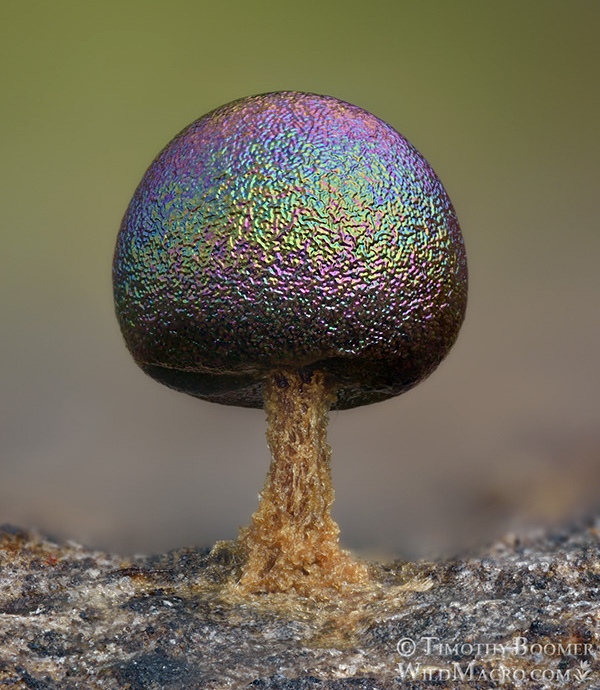
An exceptional Prototrichia metallica fruiting body, a nivicolous slime mold, distinguished by its unusually iridescent cap and a longer stalk than typically seen in the species. Photographed in the Eldorado National Forest, Sierra Nevada, Alpine County, California, this focus-stacked composite combines 337 exposures at 10× life-size. © Timothy Boomer, WildMacro.com
So Much Beauty in So Little Space
Looking closer at the unseen world of slime molds
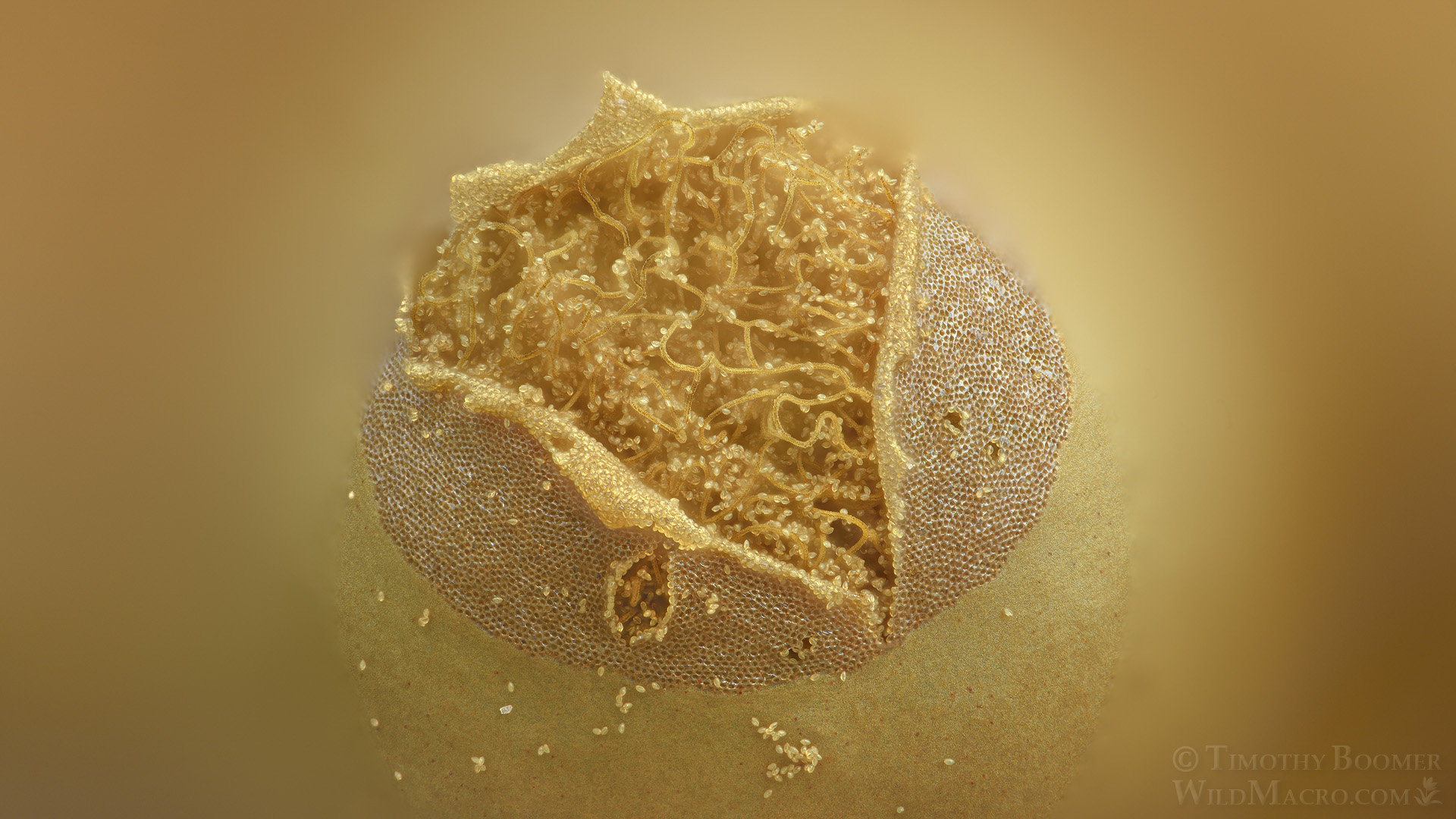
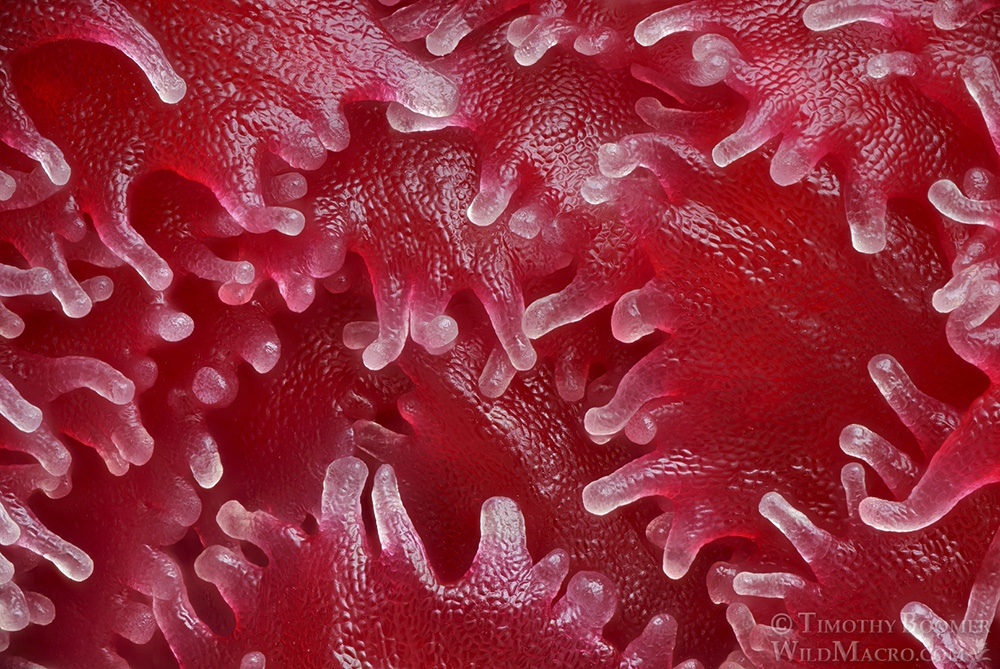
Featured photograph: Heterotrichia versicolor, a snowbank slime mold, opens to reveal an intricate lattice of spore-bearing threads, offering a striking contrast to the smooth, iridescent fruiting bodies of Prototrichia metallica.
When a friend introduced me to the fascinating world of slime molds, I was instantly captivated. I wanted to photograph as many species as I could. During the rainy season, they are not difficult to find in local woodlands or even my own backyard. But where I live in California's East Bay, the rains never last long. Once the final spring storms pass and the forest begins to dry, fresh slime molds all but disappear until winter returns.
To extend the season, I head into the Sierra Nevada, where several species emerge only in areas shaped by melting snow. These are known as nivicolous slime molds.
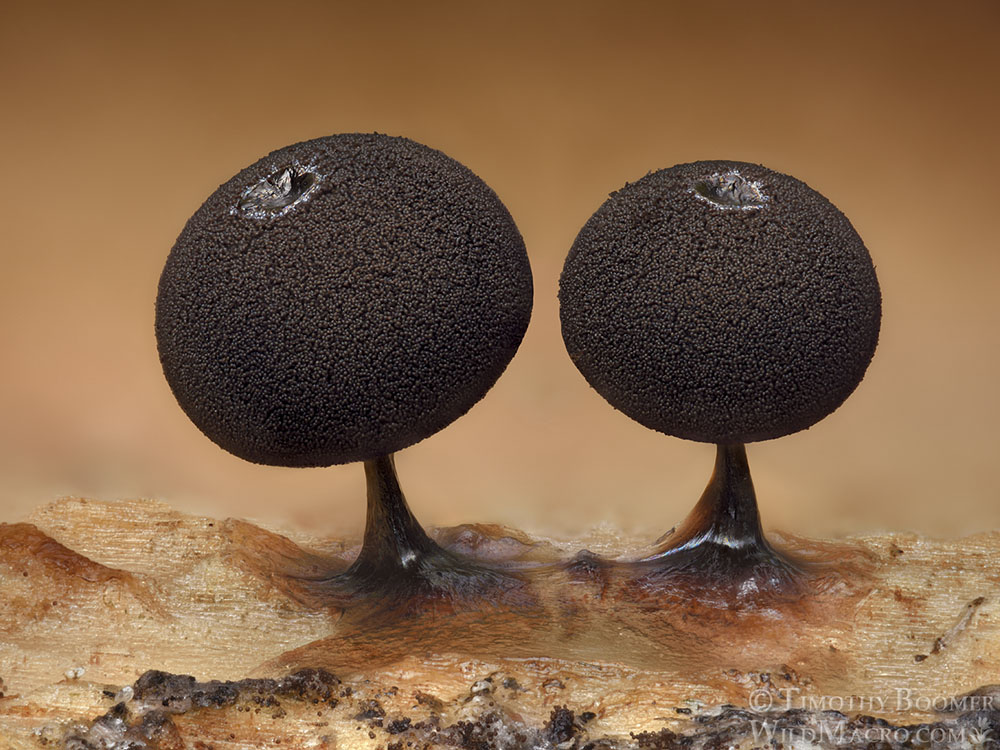
Prototrichia metallica is one of them. Its fruiting bodies are typically glossy brown with subtle iridescence. Most are relatively stout, with little or no visible stalk. But among hundreds of individuals, exceptions occasionally appear.
This specimen was one of those exceptions. Its cap shimmered with unusually vivid iridescence, and its stalk was remarkably long for the species. “Long,” of course, is a relative term. The entire fruiting body measured only about one millimeter in height.
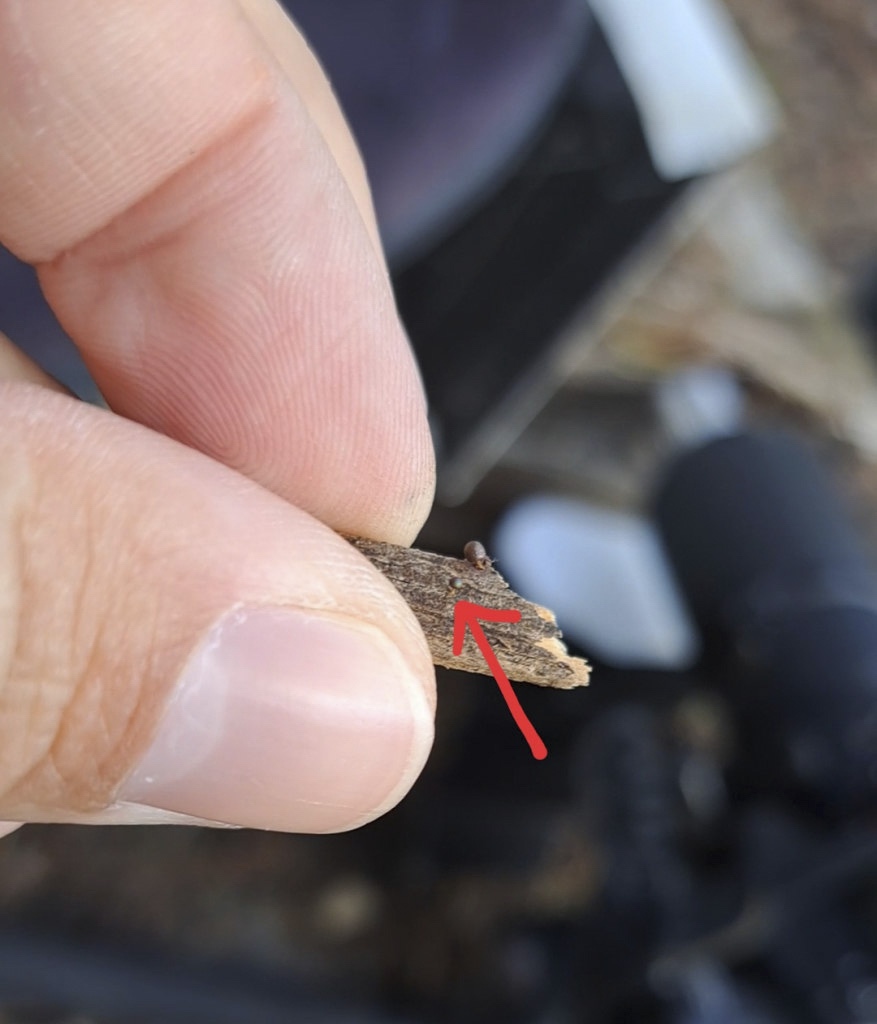
People often ask how I find something so small. The answer is simple: I spend a great deal of time searching in places where I believe they are likely to appear. I move slowly, often on hands and knees with an illuminated magnifier, scanning for tiny flecks of color or patterns that break the texture of the forest floor.
On this occasion, I discovered hundreds of Prototrichia metallica growing across a fallen conifer log kept damp by melting snow. Then came the slower process of examining them one by one.
Before long, one specimen caught my eye. It was more slender than the others, and its iridescence was especially striking in the light. Even through a hand lens, I could only glimpse its intricate details. It was impossible to fully appreciate what I was seeing, let alone share it with anyone else.
To take a closer look, I set up my camera. I mounted a DSLR with a 200 mm lens on a tripod, then attached a 10× microscope objective using a series of adapter rings. For the first time, the specimen's delicate structures came into sharp focus. At that moment, I knew I had found something extraordinary. The real challenge, however, was capturing it faithfully in the final photograph.
Working at this scale changes your relationship with time. A breeze that barely registers in everyday life becomes enough to blur an entire world.
The greatest challenge is keeping everything still. Even the slightest vibration from either the subject or the camera can destroy sharpness. A sturdy tripod, cable release, mirror lock-up, and electronic shutter eliminate most camera vibration, but nothing prevents a living world from moving with the wind.
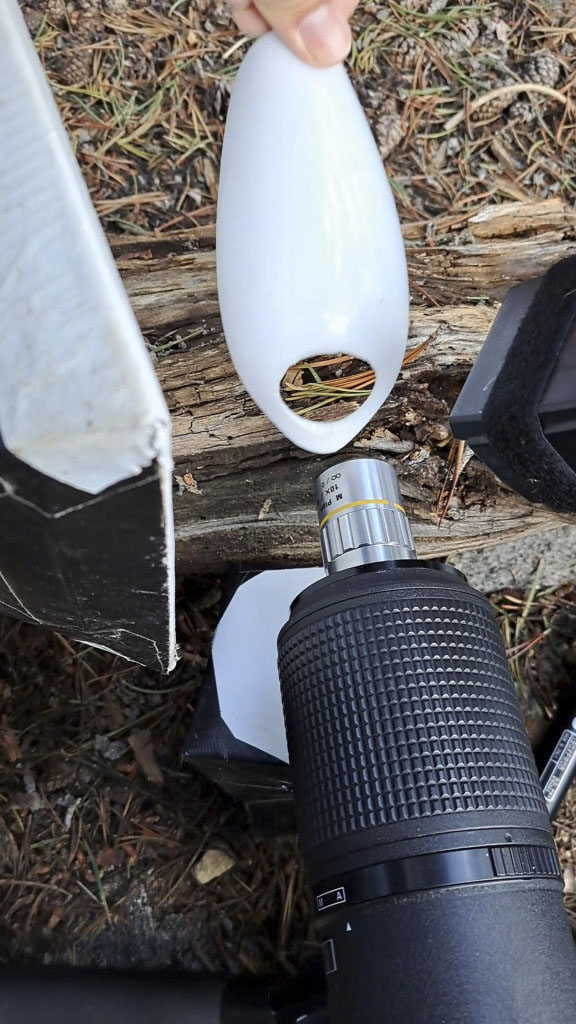
Electronic flash solves much of that problem. Lasting only about 1/6600 of a second, each burst freezes motion that would otherwise remain invisible. To soften the light, I fired it through a diffuser made from a white plastic scoop purchased at a dollar store.
Capturing the exposures was only part of the process.
Another challenge was depth of field. At 10× magnification, only a layer about 3.5 micrometers thick remains in focus at any moment, roughly one thirtieth the thickness of a sheet of printer paper.
To produce a fully sharp image, I captured hundreds of photographs while shifting the focus by microscopic increments. Computer software then combined them into a single composite. This photograph consists of 337 separate exposures.
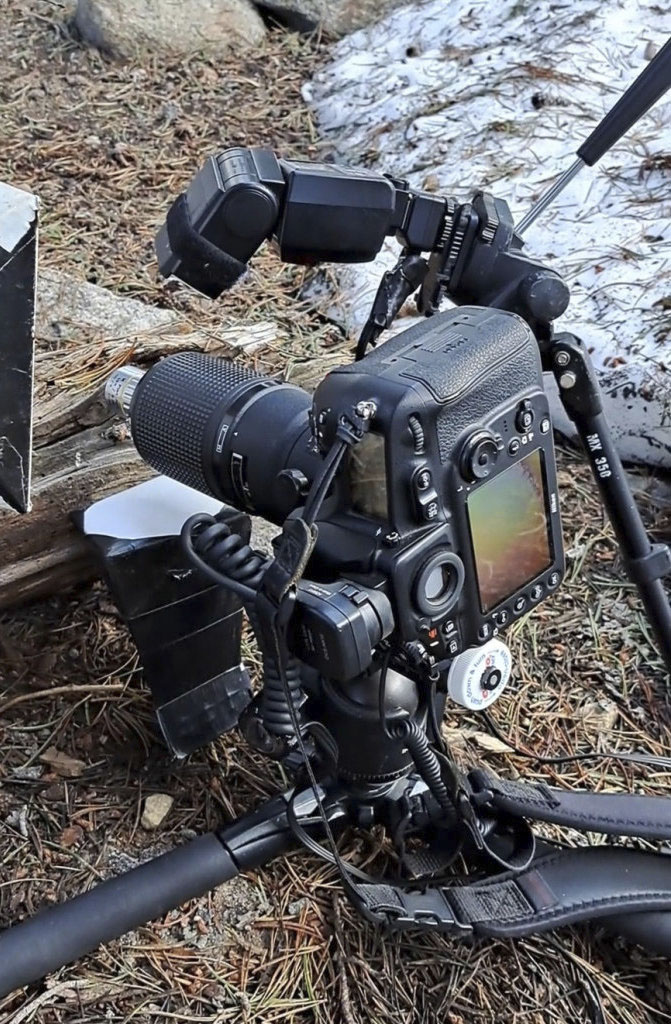
I still prefer advancing the focus manually with a focusing rail rather than relying on automation. It takes more time and demands careful hand-eye coordination, but that slower rhythm is part of the experience.
When the wind rises, I wait. When the flash batteries need replacing, I replace them. Sometimes I pause simply to spend another moment looking through the lens. In macro photography, time spent observing is never wasted.
Every rainy season draws me back to fallen logs in search of another unexpected flash of iridescence.
Most people pass these worlds without ever realizing they exist.
For me, knowing they might be there is reason enough to keep looking.
Timothy Boomer is a macro photographer and photomicrographer based in California's East Bay. His work explores the hidden world of slime molds, fungi, and other microscopic life. His images have received multiple honors in the Nikon Small World Photomicrography Competition, including a Sixth Place award and several Images of Distinction. More of his work can be found at WildMacro.com .
All photographs © Timothy Boomer.