
The Synchronized Clock: Is Aging a Body-Wide Orchestration?
A large-scale single-cell atlas suggests that aging is coordinated across tissues and begins earlier than previously assumed
Traditional models describe aging as a tissue-specific process driven by local damage accumulation. In such models, organs decline largely independently, with limited coordination across systems.
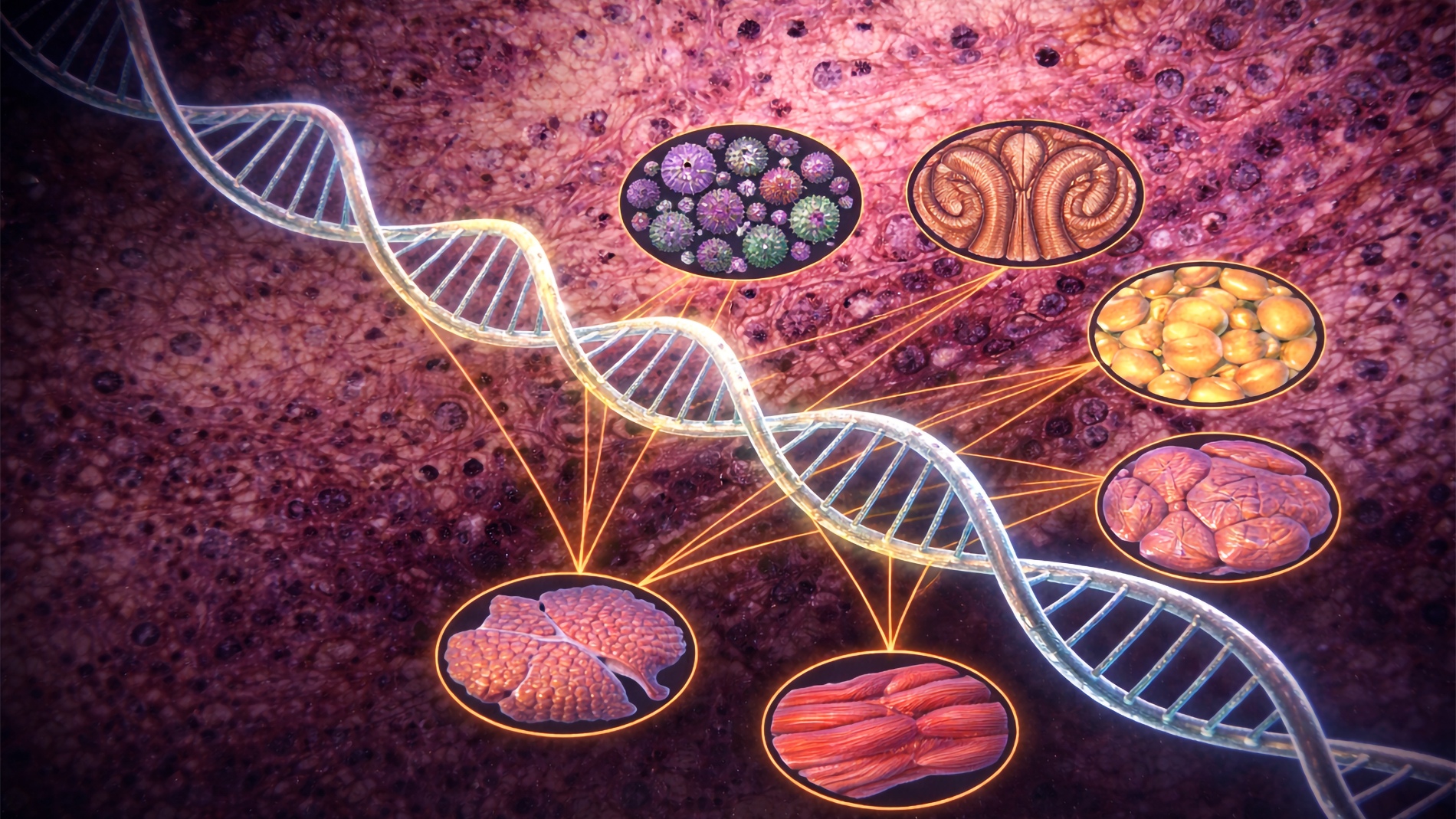
Data from Cao and colleagues support a different framework. Aging appears to involve shared regulatory programs operating across tissues. Chromatin accessibility profiling identified approximately 1,000 genomic regions that change consistently across multiple cell types, in some cases across more than 60 distinct populations. Such patterns are difficult to reconcile with purely local mechanisms and instead suggest systemic coordination.
The dataset also highlights early onset of functional decline. Regenerative cell populations in muscle, kidney, and adipose tissue decrease during early adulthood in mice, preceding overt signs of aging. In parallel, immune cell populations expand, consistent with increased inflammatory activity.
Sex-specific effects are prominent. Approximately 40 percent of aging-associated cellular changes differ between males and females, with females showing broader immune activation. Such patterns may contribute to known sex biases in immune-related conditions.
Comparative analysis further shows that chromatin states in aged immune cells resemble those induced in young cells by cytokine stimulation. This supports a model in which chronic inflammatory signaling contributes to aging-associated regulatory changes, rather than representing a secondary consequence.
The atlas is publicly available at epiage.net. Dr. Cao regards it as a starting point. What follows is a conversation about what it reveals, what it opens, and what it has changed in how one scientist thinks about time.
The Conversation
Honestly, it was a mix of both. At a conceptual level, we half-expected to see some coordination, there are circulating hormones, cytokines, metabolites that the whole body is bathed in, so it would actually be strange if each organ aged in complete isolation. But the degree and the precision of the synchrony was more than we anticipated. When we looked at immune cell subtypes in particular, we'd find the same subtype, say, a specific kind of macrophage or B cell, expanding at the same rate across tissues that have no anatomical connection to each other. That's not trivially explained by local tissue environment. It really does suggest something systemic is coordinating it.
The moment that felt most striking was when we looked at the chromatin hotspots, the genomic regions changing in many different cell types at once. We found around a thousand of these, and some of them were opening in 30, 40, even 60-plus different cell types simultaneously. That kind of breadth across diverse tissues and lineages is hard to explain without invoking a shared signal.
We're quite confident the coordination is real as a pattern, the statistical evidence across nearly 7 million cells is hard to dismiss. What we're more cautious about is the causal interpretation. Seeing two things move together doesn't tell you which is the driver and which is the passenger.
That said, the cytokine analysis gives us a foothold. We took the sets of chromatin regions that change with aging in B cells and macrophages, identified what genes those regions likely regulate, and then asked: which cytokines, when you treat young cells with them experimentally, induce similar chromatin programs? The answer was a specific set of immune signaling molecules, including IL7, IL15, IL21, IL4, and certain interferons, that recapitulated a substantial fraction of the aging signature. That's not proof of causation, but it's much more than correlation.
What it would take to prove causation? Ideally, you'd want to block a specific cytokine, or the receptor it signals through, systemically in aging animals, and show that you can suppress the coordinated chromatin changes in distant tissues. Parabiosis experiments, where you connect the circulatory systems of a young and old animal, are another classic approach. Those experiments are harder and slower than what we've done here, but I think they're the natural next step.
The 40 percent figure was one of the more arresting results in the paper. It means that when you talk about "aging," you're really talking about at least two somewhat different processes depending on biological sex. A lot of prior research has treated sex as a covariate to control for rather than a primary axis of biology worth understanding on its own terms. This data pushes back against that.
As for what's driving it, we don't have a single answer, but the candidates are the usual suspects in sex biology: estrogen and other gonadal hormones, sex chromosome dosage effects, and the baseline differences in immune system set points between males and females. What's interesting is that these aren't just quantitative differences, females and males can show entirely opposite trajectories for the same cell type in the same tissue.
The autoimmune connection is one of the things I find most compelling about this work from a translational standpoint. Autoimmune diseases are 2 to 3 times more common in women, and the reasons have always been somewhat murky. What we see in aged female mice is a chromatin landscape in immune cells that increasingly resembles a pro-inflammatory, activated state, with transcription factors like POU2F2 going up in B cells, and female-biased expansions of exhausted T cells and age-associated B cells. We're not claiming this explains autoimmunity, but it does give you mechanistic threads to pull on.
Scale changes what questions you can ask. A study of two or three tissues can tell you that something changes with aging in those tissues. A study of 21 tissues at single-cell resolution can tell you which changes are tissue-specific and which are part of a systemic program, and that distinction matters enormously for understanding mechanisms and for thinking about interventions.
Concretely, the ~1,000 shared genomic hotspots would have been essentially invisible at smaller scale. You'd see a chromatin change in one tissue and have no way of knowing it was happening in 60 others simultaneously. Similarly, some of the rarest cell types that show dramatic aging changes, certain kidney tubule subtypes, tenocytes, satellite cells, were just too sparse to characterize robustly in prior datasets. We identified 1,828 distinct cell subtypes in total; most prior atlases wouldn't have the statistical power to look at population dynamics at that resolution.
The moment that felt most undeniable was probably when we looked at the Nr3c2 locus, the gene encoding the mineralocorticoid receptor, and saw its promoter opening with aging across 63 different cell types. Cell types from liver, kidney, lung, immune tissues, adipose, almost everything. A single genomic locus, coordinating across the entire organism. It's the kind of thing that makes you sit up a little.
Think of it this way: gene expression tells you which books are being read right now. Chromatin accessibility tells you which shelves are unlocked, what the cell has decided is available to be read. The two don't always match, and the shelf organization often changes before the reading patterns do.
The regulatory elements embedded in chromatin, the promoters, enhancers, and other control switches, are where transcription factors bind to drive gene expression programs. If you only measure which genes are active, you see the output but miss the control circuitry. We can identify, from the chromatin data, which transcription factors are becoming more or less active with aging, and those regulatory proteins are often better drug targets than the downstream genes they control.
There's another angle that's harder to get from expression alone: chromatin accessibility is deeply tied to cell identity. Which regions of the genome are open is part of what makes a liver cell a liver cell and not a muscle cell. When we see those patterns shifting with aging, we're watching cell identity itself drift. We also found changes in retrotransposon accessibility, ancient genomic elements that mostly stay silent, which is a kind of aging signal that pure expression profiling would miss almost entirely.
The fundamental bottleneck was throughput relative to cost. Single-cell methods had become powerful but remained expensive enough that large-scale studies required either enormous budgets or large consortia with many institutions contributing samples. For many biological questions, especially in aging, where you want to look across dozens of tissues and multiple timepoints with enough statistical power, that was a real constraint on what any one lab could tackle.
EasySci uses combinatorial indexing, where instead of encapsulating each cell in a separate droplet, we barcode cells through a series of molecular tagging steps in a plate-based format. This lets us process many samples in parallel at much lower per-cell cost. The key thing it unlocked for this paper was the ability for essentially one person, Ziyu Lu, our graduate student who is the first author, to generate an organism-wide atlas that would otherwise have required a consortium. That's not a small thing. It changes the pace of discovery and the kinds of questions that are tractable for a single lab.
For the field more broadly, when methods are expensive and complex, only a few groups can do the experiments. When you lower the barrier, more people can ask more questions, including questions that are locally relevant, or that apply to understudied organisms or diseases that wouldn't justify the cost of a large consortium effort.
We think it's probably both, and that they may be reinforcing each other. The early depletions we see, muscle satellite cells, kidney podocytes, tenocytes, adipocytes, look like a loss of regenerative and functional capacity that begins earlier than most people expect. These are cells that maintain tissue architecture, repair damage, and support homeostasis. Their decline by 5 months in mice, which is still relatively young, suggests the process isn't simply triggered by old age.
The subsequent immune expansion is where the timing question gets interesting. As functional cell populations deplete and tissue homeostasis degrades, there are signals, damage-associated molecules, metabolic changes, that activate immune surveillance. One hypothesis is that the early depletion phase creates the conditions for the later immune phase: you lose the cells that keep things running, the damage accumulates, and the immune system ramps up in response.
Is there also an intrinsic clock? Probably. There are well-known epigenetic clocks, DNA methylation patterns that track biological age, and some transcription factor programs shift in ways that look internally programmed rather than purely reactive. The honest answer is that aging is driven by the interplay of intrinsic programs and accumulated damage, and disentangling the two is one of the harder problems in the field. What this atlas gives us is the resolution to watch the sequence of events more precisely, which is a step toward understanding the causal order.
A few stand out. The one I keep coming back to is the Nr3c2 locus, the promoter of the gene encoding the mineralocorticoid receptor. Its chromatin opens in 63 different cell types with aging. That receptor responds to aldosterone and cortisol, which are stress hormones produced by the adrenal gland. The breadth of that opening, across immune cells, kidney cells, liver, adipose, lung, suggests that aging cells across almost every tissue are becoming more responsive to systemic stress signaling. Whether that's an adaptive response trying to compensate for declining tissue function, or whether it's contributing to the pathology, is something we'd really like to understand.
The Il7 locus is another one, opening in 32 cell types. IL7 is a cytokine that promotes immune cell survival and proliferation. Its broad upregulation in aging is consistent with what we see at the population level: immune cells expanding while other cell types contract. It's also a candidate for being one of the circulating signals that coordinates the synchronized immune aging across distant tissues.
On the other side, the regions consistently closing, the Sox4 and Sox11 loci lose accessibility in 25 and 19 cell types respectively. Sox4 and Sox11 are transcription factors involved in maintaining stem cell states and developmental programs. Their broad downregulation with aging paints a picture of cells becoming less plastic, less capable of regeneration, as organisms get older.
I think that question is one of the most important things this data raises, and I want to be honest that we don't have a definitive answer, but the evidence is striking enough that I take the hypothesis seriously.
Here's what we found: the chromatin changes we see in aging B cells and macrophages resemble the chromatin changes induced when you stimulate young cells with specific cytokines, IL15, IL7, IL21, IL4, interferons, TNFα. These aren't random resemblances; they're statistically significant overlaps suggesting that the aging epigenomic program looks a lot like a sustained cytokine response program. The concept of "inflammaging", the low-grade, chronic inflammation that accumulates with age, has been in the field for decades, but we're now seeing its footprint at the level of regulatory DNA in specific cell types across 21 tissues.
Is the body doing this to itself? In a sense, yes, but I'd resist framing it as entirely self-destructive, because some of this immune activation may initially be adaptive. When tissue homeostasis degrades, inflammatory signaling is part of the damage response system. The problem is that it seems to become chronic, and chronic immune activation drives the very tissue changes that perpetuate the cycle. The question of whether you can interrupt that loop, not by suppressing the immune system globally, which would be dangerous, but by targeting the specific regulatory programs that are being aberrantly sustained, is one I think this data opens up in a tractable way.
The question I most want to see answered using this resource is: which of these chromatin changes are actually causal drivers of aging outcomes, and which are just along for the ride? Right now we have an extraordinarily detailed map of what happens, which regions open and close, in which cell types, in what sequence. But correlation, even at this resolution, isn't causation. Someone could take the shared genomic hotspots we've identified and systematically perturb them, open or close them artificially in young animals, and ask whether that accelerates aging phenotypes in those tissues. That experiment, done at scale with the right readouts, would be a real step toward understanding what's mechanistically upstream versus downstream. I'd love to see someone do it.
As for the personal question, I appreciate you asking it. The thing that has genuinely changed for me is how I think about inflammation. Seeing the cytokine signatures woven through so much of what we observe with aging, and seeing how early some of the functional cell depletions begin, has made me take low-grade chronic inflammation more seriously in my own life, not in a hypochondriacal way, but as something worth thinking about deliberately. The biology of aging, when you're in the middle of studying it every day, stops being abstract. It's easy to think of aging as something that happens eventually, to other people. Looking at these trajectories makes it feel more like something happening continuously, starting earlier than we tend to admit.
Conclusion
The findings support a model in which aging is coordinated across tissues through shared regulatory mechanisms. Chromatin accessibility mapping provides a framework for identifying upstream drivers of these changes and suggests potential targets for intervention. Future work will be required to distinguish causal regulators from downstream effects and to determine whether modulating systemic signals can alter aging trajectories.
The Synchronized Clock: Is Aging a Body-Wide Orchestration?
A large-scale single-cell atlas suggests that aging is coordinated across tissues and begins earlier than previously assumed
Traditional models describe aging as a tissue-specific process driven by local damage accumulation. In such models, organs decline largely independently, with limited coordination across systems.
Data from Cao and colleagues support a different framework. Aging appears to involve shared regulatory programs operating across tissues. Chromatin accessibility profiling identified approximately 1,000 genomic regions that change consistently across multiple cell types, in some cases across more than 60 distinct populations. Such patterns are difficult to reconcile with purely local mechanisms and instead suggest systemic coordination.
The dataset also highlights early onset of functional decline. Regenerative cell populations in muscle, kidney, and adipose tissue decrease during early adulthood in mice, preceding overt signs of aging. In parallel, immune cell populations expand, consistent with increased inflammatory activity.
Sex-specific effects are prominent. Approximately 40 percent of aging-associated cellular changes differ between males and females, with females showing broader immune activation. Such patterns may contribute to known sex biases in immune-related conditions.
Comparative analysis further shows that chromatin states in aged immune cells resemble those induced in young cells by cytokine stimulation. This supports a model in which chronic inflammatory signaling contributes to aging-associated regulatory changes, rather than representing a secondary consequence.
The atlas is publicly available at epiage.net. Dr. Cao regards it as a starting point. What follows is a conversation about what it reveals, what it opens, and what it has changed in how one scientist thinks about time.
The Conversation
Your study maps nearly seven million cells across 21 tissues and finds that aging-related changes are synchronized across distant organs, that similar cellular states rise and fall together even in tissues that have no direct physical connection. What was your first reaction when you saw that pattern? Did it surprise you, or did it confirm something you had already suspected?
Honestly, it was a mix of both. At a conceptual level, we half-expected to see some coordination, there are circulating hormones, cytokines, metabolites that the whole body is bathed in, so it would actually be strange if each organ aged in complete isolation. But the degree and the precision of the synchrony was more than we anticipated. When we looked at immune cell subtypes in particular, we'd find the same subtype, say, a specific kind of macrophage or B cell, expanding at the same rate across tissues that have no anatomical connection to each other. That's not trivially explained by local tissue environment. It really does suggest something systemic is coordinating it.
The moment that felt most striking was when we looked at the chromatin hotspots, the genomic regions changing in many different cell types at once. We found around a thousand of these, and some of them were opening in 30, 40, even 60-plus different cell types simultaneously. That kind of breadth across diverse tissues and lineages is hard to explain without invoking a shared signal.
The conventional picture of aging is one of accumulation, damage accruing gradually and independently in different tissues over time. Your data suggests something more coordinated: that shared signals, possibly circulating in the bloodstream, are conducting these changes across the body simultaneously. How confident are you that this coordination is real, and what would it take to prove that a specific circulating factor is driving it?
We're quite confident the coordination is real as a pattern, the statistical evidence across nearly 7 million cells is hard to dismiss. What we're more cautious about is the causal interpretation. Seeing two things move together doesn't tell you which is the driver and which is the passenger.
That said, the cytokine analysis gives us a foothold. We took the sets of chromatin regions that change with aging in B cells and macrophages, identified what genes those regions likely regulate, and then asked: which cytokines, when you treat young cells with them experimentally, induce similar chromatin programs? The answer was a specific set of immune signaling molecules, including IL7, IL15, IL21, IL4, and certain interferons, that recapitulated a substantial fraction of the aging signature. That's not proof of causation, but it's much more than correlation.
What it would take to prove causation? Ideally, you'd want to block a specific cytokine, or the receptor it signals through, systemically in aging animals, and show that you can suppress the coordinated chromatin changes in distant tissues. Parabiosis experiments, where you connect the circulatory systems of a young and old animal, are another classic approach. Those experiments are harder and slower than what we've done here, but I think they're the natural next step.
You found that roughly 40 percent of aging-associated cellular changes differ significantly between males and females, with females showing broader immune activation as they age. That is a striking sex difference embedded at the cellular level. What do you think is driving it, and what does it mean for how we understand conditions like autoimmune disease that disproportionately affect women?
The 40 percent figure was one of the more arresting results in the paper. It means that when you talk about aging, you're really talking about at least two somewhat different processes depending on biological sex. A lot of prior research has treated sex as a covariate to control for rather than a primary axis of biology worth understanding on its own terms. This data pushes back against that.
As for what's driving it, we don't have a single answer, but the candidates are the usual suspects in sex biology: estrogen and other gonadal hormones, sex chromosome dosage effects, and the baseline differences in immune system set points between males and females. What's interesting is that these aren't just quantitative differences, females and males can show entirely opposite trajectories for the same cell type in the same tissue.
The autoimmune connection is one of the things I find most compelling about this work from a translational standpoint. Autoimmune diseases are 2 to 3 times more common in women, and the reasons have always been somewhat murky. What we see in aged female mice is a chromatin landscape in immune cells that increasingly resembles a pro-inflammatory, activated state, with transcription factors like POU2F2 going up in B cells, and female-biased expansions of exhausted T cells and age-associated B cells. We're not claiming this explains autoimmunity, but it does give you mechanistic threads to pull on.
The scale of this atlas, over a million genomic regions analyzed, 300,000 showing aging-related changes, around 1,000 appearing across many different cell types, is extraordinary. What did building at that scale make visible that smaller studies simply could not see? Was there a specific moment in the analysis when the coordinated picture became undeniable?
Scale changes what questions you can ask. A study of two or three tissues can tell you that something changes with aging in those tissues. A study of 21 tissues at single-cell resolution can tell you which changes are tissue-specific and which are part of a systemic program, and that distinction matters enormously for understanding mechanisms and for thinking about interventions.
Concretely, the ~1,000 shared genomic hotspots would have been essentially invisible at smaller scale. You'd see a chromatin change in one tissue and have no way of knowing it was happening in 60 others simultaneously. Similarly, some of the rarest cell types that show dramatic aging changes, certain kidney tubule subtypes, tenocytes, satellite cells, were just too sparse to characterize robustly in prior datasets. We identified 1,828 distinct cell subtypes in total; most prior atlases wouldn't have the statistical power to look at population dynamics at that resolution.
The moment that felt most undeniable was probably when we looked at the Nr3c2 locus, the gene encoding the mineralocorticoid receptor, and saw its promoter opening with aging across 63 different cell types. Cell types from liver, kidney, lung, immune tissues, adipose, almost everything. A single genomic locus, coordinating across the entire organism. It's the kind of thing that makes you sit up a little.
You focused on chromatin accessibility, which regions of DNA are open and readable, rather than simply measuring which genes are active. Why is that distinction important? What does the accessibility map tell you about aging that a gene expression map alone would miss?
Think of it this way: gene expression tells you which books are being read right now. Chromatin accessibility tells you which shelves are unlocked, what the cell has decided is available to be read. The two don't always match, and the shelf organization often changes before the reading patterns do.
The regulatory elements embedded in chromatin, the promoters, enhancers, and other control switches, are where transcription factors bind to drive gene expression programs. If you only measure which genes are active, you see the output but miss the control circuitry. We can identify, from the chromatin data, which transcription factors are becoming more or less active with aging, and those regulatory proteins are often better drug targets than the downstream genes they control.
There's another angle that's harder to get from expression alone: chromatin accessibility is deeply tied to cell identity. Which regions of the genome are open is part of what makes a liver cell a liver cell and not a muscle cell. When we see those patterns shifting with aging, we're watching cell identity itself drift. We also found changes in retrotransposon accessibility, ancient genomic elements that mostly stay silent, which is a kind of aging signal that pure expression profiling would miss almost entirely.
Your lab developed EasySci to make single-cell profiling dramatically faster and cheaper. What was the bottleneck you were trying to break, and how does making this technology more accessible change what is now possible for the field?
The fundamental bottleneck was throughput relative to cost. Single-cell methods had become powerful but remained expensive enough that large-scale studies required either enormous budgets or large consortia with many institutions contributing samples. For many biological questions, especially in aging, where you want to look across dozens of tissues and multiple timepoints with enough statistical power, that was a real constraint on what any one lab could tackle.
EasySci uses combinatorial indexing, where instead of encapsulating each cell in a separate droplet, we barcode cells through a series of molecular tagging steps in a plate-based format. This lets us process many samples in parallel at much lower per-cell cost. The key thing it unlocked for this paper was the ability for essentially one person, Ziyu Lu, our graduate student who is the first author, to generate an organism-wide atlas that would otherwise have required a consortium. That's not a small thing. It changes the pace of discovery and the kinds of questions that are tractable for a single lab.
For the field more broadly, when methods are expensive and complex, only a few groups can do the experiments. When you lower the barrier, more people can ask more questions, including questions that are locally relevant, or that apply to understudied organisms or diseases that wouldn't justify the cost of a large consortium effort.
You found that aging does not progress linearly, that early life stages are characterized by the depletion of certain cell types in adipose, muscle, and epithelial tissues, while later stages are dominated by expansion of immune cell populations. That suggests aging unfolds in waves rather than as a steady decline. What triggers those transitions? Is there a biological clock driving them, or are they responses to accumulated conditions?
We think it's probably both, and that they may be reinforcing each other. The early depletions we see, muscle satellite cells, kidney podocytes, tenocytes, adipocytes, look like a loss of regenerative and functional capacity that begins earlier than most people expect. These are cells that maintain tissue architecture, repair damage, and support homeostasis. Their decline by 5 months in mice, which is still relatively young, suggests the process isn't simply triggered by old age.
The subsequent immune expansion is where the timing question gets interesting. As functional cell populations deplete and tissue homeostasis degrades, there are signals, damage-associated molecules, metabolic changes, that activate immune surveillance. One hypothesis is that the early depletion phase creates the conditions for the later immune phase: you lose the cells that keep things running, the damage accumulates, and the immune system ramps up in response.
Is there also an intrinsic clock? Probably. There are well-known epigenetic clocks, DNA methylation patterns that track biological age, and some transcription factor programs shift in ways that look internally programmed rather than purely reactive. The honest answer is that aging is driven by the interplay of intrinsic programs and accumulated damage, and disentangling the two is one of the harder problems in the field. What this atlas gives us is the resolution to watch the sequence of events more precisely, which is a step toward understanding the causal order.
Among the approximately 1,000 genomic hotspots that change across many cell types during aging, are there any that stand out to you as particularly significant, either because of what they regulate or because of what their consistency across tissues implies about the underlying biology?
A few stand out. The one I keep coming back to is the Nr3c2 locus, the promoter of the gene encoding the mineralocorticoid receptor. Its chromatin opens in 63 different cell types with aging. That receptor responds to aldosterone and cortisol, which are stress hormones produced by the adrenal gland. The breadth of that opening, across immune cells, kidney cells, liver, adipose, lung, suggests that aging cells across almost every tissue are becoming more responsive to systemic stress signaling. Whether that's an adaptive response trying to compensate for declining tissue function, or whether it's contributing to the pathology, is something we'd really like to understand.
The Il7 locus is another one, opening in 32 cell types. IL7 is a cytokine that promotes immune cell survival and proliferation. Its broad upregulation in aging is consistent with what we see at the population level: immune cells expanding while other cell types contract. It's also a candidate for being one of the circulating signals that coordinates the synchronized immune aging across distant tissues.
On the other side, the regions consistently closing, the Sox4 and Sox11 loci lose accessibility in 25 and 19 cell types respectively. Sox4 and Sox11 are transcription factors involved in maintaining stem cell states and developmental programs. Their broad downregulation with aging paints a picture of cells becoming less plastic, less capable of regeneration, as organisms get older.
Cytokines, immune signaling molecules, appear to be capable of triggering many of the same cellular changes you observe during aging. That raises a question that feels almost philosophical: is aging partly an immune process? Is the body, in some sense, doing this to itself?
I think that question is one of the most important things this data raises, and I want to be honest that we don't have a definitive answer, but the evidence is striking enough that I take the hypothesis seriously.
Here's what we found: the chromatin changes we see in aging B cells and macrophages resemble the chromatin changes induced when you stimulate young cells with specific cytokines, IL15, IL7, IL21, IL4, interferons, TNFα. These aren't random resemblances; they're statistically significant overlaps suggesting that the aging epigenomic program looks a lot like a sustained cytokine response program. The concept of inflammaging, the low-grade, chronic inflammation that accumulates with age, has been in the field for decades, but we're now seeing its footprint at the level of regulatory DNA in specific cell types across 21 tissues.
Is the body doing this to itself? In a sense, yes, but I'd resist framing it as entirely self-destructive, because some of this immune activation may initially be adaptive. When tissue homeostasis degrades, inflammatory signaling is part of the damage response system. The problem is that it seems to become chronic, and chronic immune activation drives the very tissue changes that perpetuate the cycle. The question of whether you can interrupt that loop, not by suppressing the immune system globally, which would be dangerous, but by targeting the specific regulatory programs that are being aberrantly sustained, is one I think this data opens up in a tractable way.
You have described this atlas as a starting point rather than a conclusion, a foundation for others to build on, which is why you made it publicly available at epiage.net. What is the question you most want someone to answer using this resource? And more personally: after mapping aging at this resolution, has it changed how you think about your own life in time?
The question I most want to see answered using this resource is: which of these chromatin changes are actually causal drivers of aging outcomes, and which are just along for the ride? Right now we have an extraordinarily detailed map of what happens, which regions open and close, in which cell types, in what sequence. But correlation, even at this resolution, isn't causation. Someone could take the shared genomic hotspots we've identified and systematically perturb them, open or close them artificially in young animals, and ask whether that accelerates aging phenotypes in those tissues. That experiment, done at scale with the right readouts, would be a real step toward understanding what's mechanistically upstream versus downstream. I'd love to see someone do it.
As for the personal question, I appreciate you asking it. The thing that has genuinely changed for me is how I think about inflammation. Seeing the cytokine signatures woven through so much of what we observe with aging, and seeing how early some of the functional cell depletions begin, has made me take low-grade chronic inflammation more seriously in my own life, not in a hypochondriacal way, but as something worth thinking about deliberately. The biology of aging, when you're in the middle of studying it every day, stops being abstract. It's easy to think of aging as something that happens eventually, to other people. Looking at these trajectories makes it feel more like something happening continuously, starting earlier than we tend to admit.
Conclusion
The findings support a model in which aging is coordinated across tissues through shared regulatory mechanisms. Chromatin accessibility mapping provides a framework for identifying upstream drivers of these changes and suggests potential targets for intervention. Future work will be required to distinguish causal regulators from downstream effects and to determine whether modulating systemic signals can alter aging trajectories.