
True to a Person
Pau Aleikum Garcia of Domestic Data Streamers on Synthetic Memories, images that show not what happened, but how someone remembers it
INTRODUCTION
We tend to imagine memory as a kind of recording. Somewhere inside us, we assume, the past is stored like a film, and remembering means pressing play. A photograph seems to work the same way, only better: a fixed and faithful copy of what was there.
Memory research tells a different story. Each time we remember, we rebuild the memory from fragments, shaped by meaning, by feeling, and by everything that has happened to us since. What we keep is less a picture of the past than a sense of what it meant. This is why two siblings can remember the same holiday differently, and why a story told every year slowly changes in the telling.
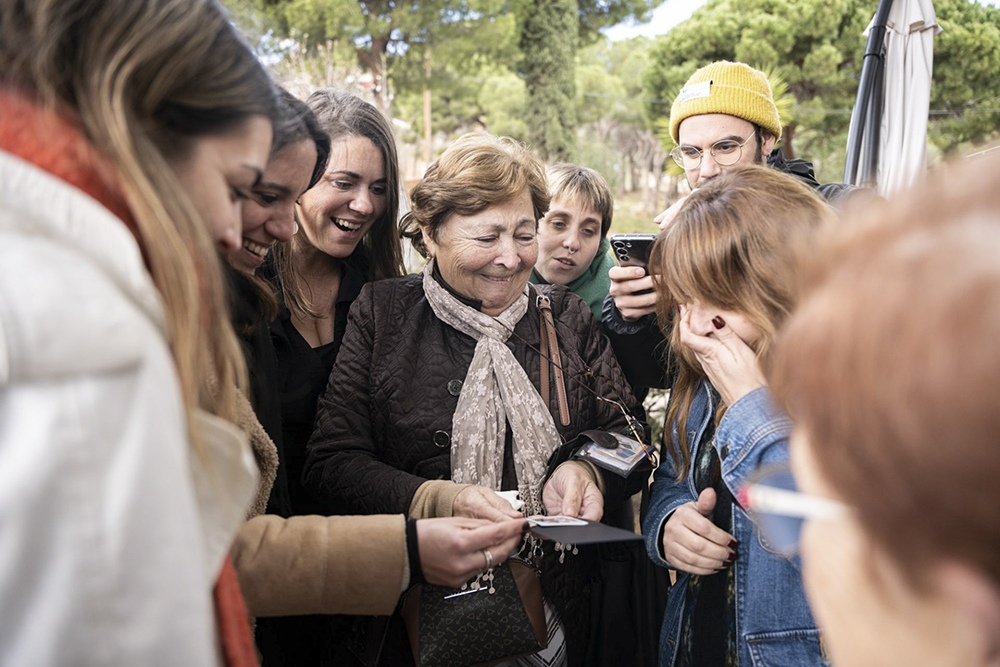
Synthetic Memories begins from that idea. The project, created by Domestic Data Streamers, first took shape years before it had a name, in 2015, when the studio was working with Syrian refugee families in Greece and a grandmother worried that her grandchildren would lose their sense of where they came from. Today the team works with older adults, people living with early-stage dementia, migrant communities and families who lost their photographs to war or displacement. In each session, a person describes a remembered scene, and an interviewer and a prompter work with an image-generation model, correcting it again and again until the person says, in one way or another, “that’s it.”
What makes the project unsettling, in the best sense, is that it refuses the easy answer in both directions. It does not claim that these images restore the past, and it does not treat them as fakes. Instead it asks a quieter question: can an image be true to a person even when it is not a record of an event? Pau Aleikum Garcia is the founder and director of Domestic Data Streamers, the Barcelona studio behind Synthetic Memories. In the conversation below, he explains how a session unfolds, what people’s corrections reveal about the architecture of memory, why the studio deliberately blurs every face, and where the team draws the line between remembering and imagining.
THE CONVERSATION
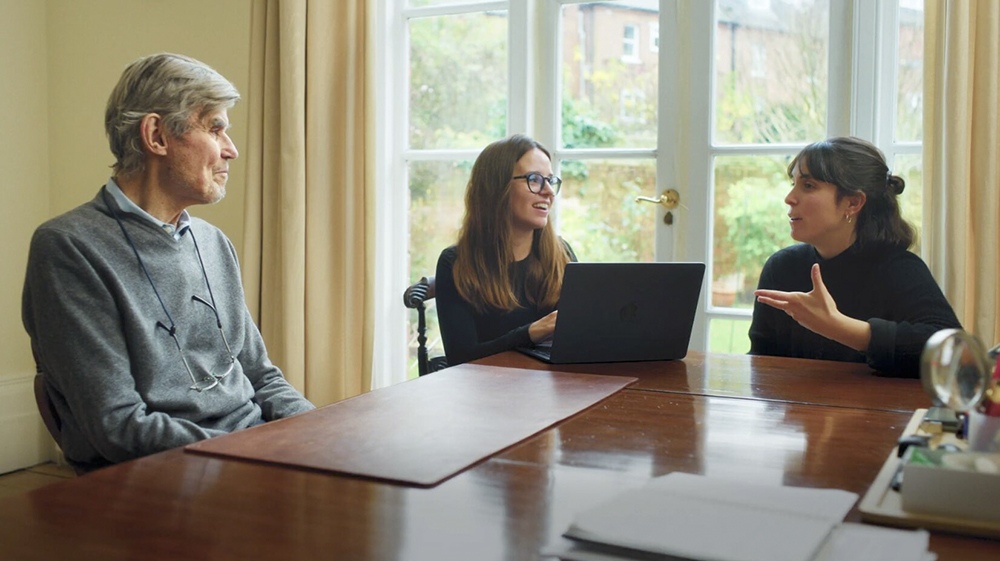
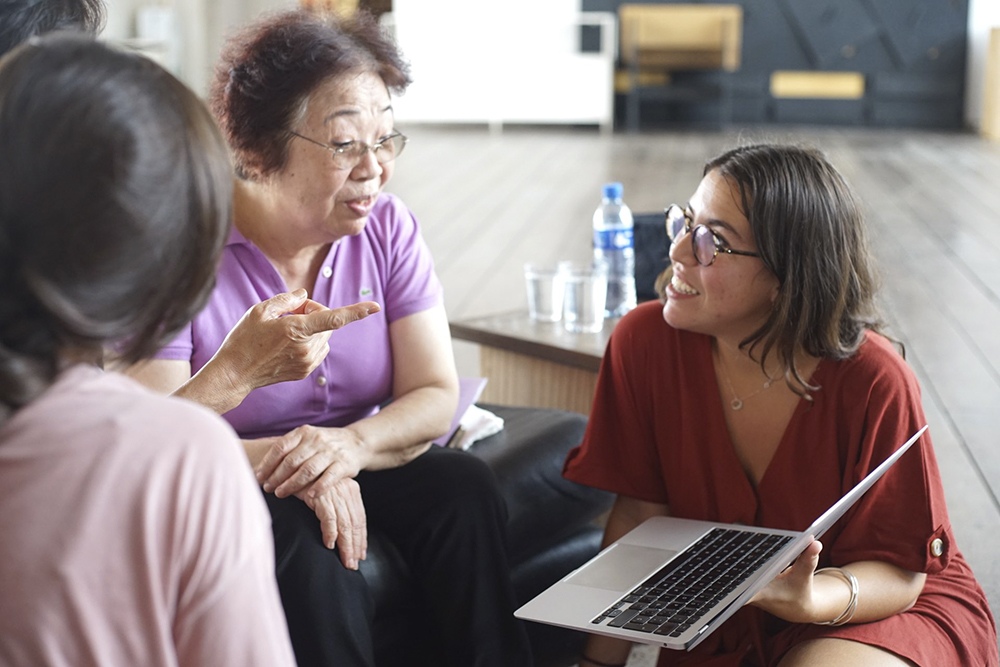
Pau Aleikum Garcia A session needs very little: a table, three chairs, a laptop and a small Polaroid printer. Around the table sit the person who remembers, an interviewer whose job is mostly to listen, and a prompter whose job is to translate what is being said into something a machine can work with. We always start wide, asking about early memories, the houses people lived in, the people who are no longer around, and for the first twenty minutes we are not looking for the most important memory but for the most visible one. Some memories are beautiful but carry no image inside them, a feeling of safety or a voice coming from another room, while others arrive almost complete, with the angle of the light, what was on the table and who was standing in the doorway. Those are the scenes we look for.
Once we have one, the prompter writes it down as a prompt and the first images appear on the screen, and they are almost always wrong. We have learned to see this as the most useful part of the process, because a wrong image works as a much better question than any we could ask. Someone who can’t describe their grandmother’s kitchen in the abstract can tell you exactly what is wrong with ours: the window was on the other side, the floor was darker. Each image takes between 15 and 40 minutes of back and forth until the person accepts it, so in an hour we usually finish two or three.
The person brings the memory and, more importantly, the authority, since they are the only one in the room who was there and who remembers it. We bring questions and some patience. The model brings a statistical summary of millions of images, most of them from the Global North, which explains why it is very good at drawing a Californian kitchen and much less sure about a courtyard in Aleppo. That is the reason we fine-tune our own models, built on Stable Diffusion, with local archives: the city archives of Barcelona for the Citizens’ Office, the hills and the port of Valparaíso, or Emirati photography from the last century, selected together with a visual anthropologist. Internally we call this re-biasing. A model will always carry an opinion about what the world looks like, and the least we can do is give it a better-informed one.
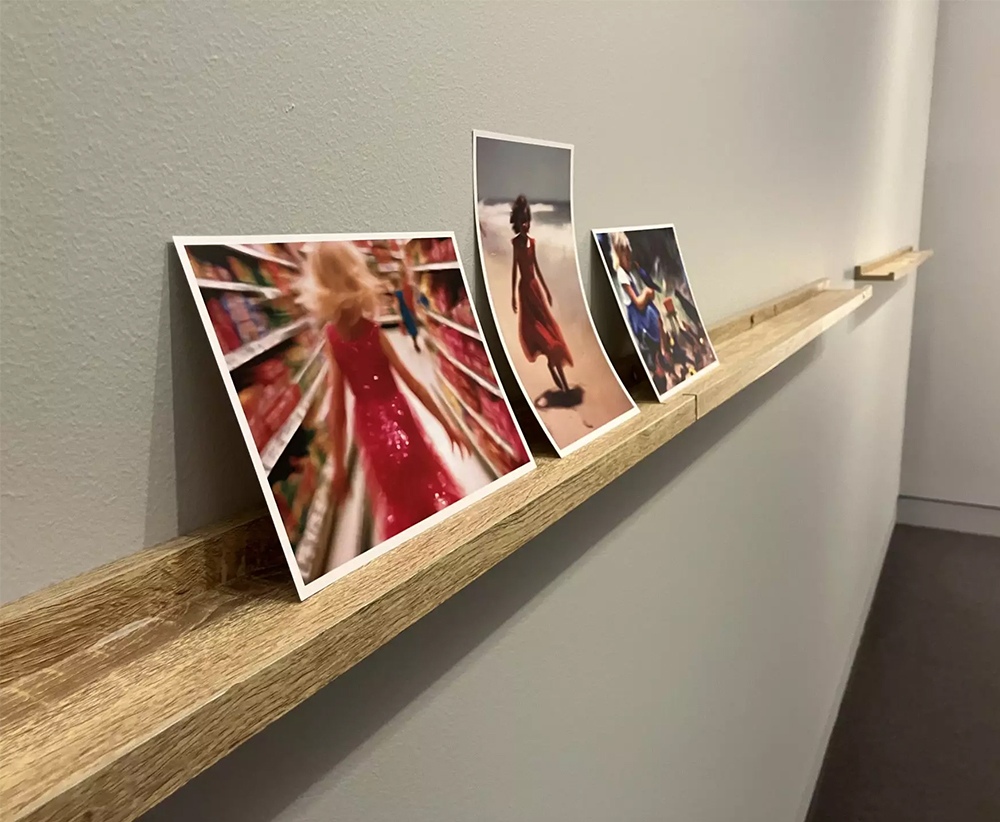
At the end of the session, the person leaves with a printed Polaroid and a digital copy. We call them Memory Vectors, because they don’t store an axonometric reality, a measured and objective drawing of what was there, but point toward how that specific person remembers it.
Pau Aleikum Garcia This is the question we find most interesting, and also the one where we try hardest not to overclaim. Memory behaves less like a hard drive and more like a cover band: every time you remember, you play the song again from scratch with whatever instruments you have that day. The neuroscientist Rodrigo Quian Quiroga showed something close to this with his work on concept cells, the so-called “Jennifer Aniston neurons,” single neurons that fire for her face and also for her name written on a page. What the brain keeps is the idea of a person rather than a photograph of them, and memory works through meaning and association much more than through copies.
When one of our images enters that rebuilding, it becomes one more instrument in the band. We don’t think it replaces the memory; we think it gives the memory something to lean on, which is the reason we call the images vectors: they point toward a memory without pretending to contain it.
What we observe after a session has mostly to do with conversation. People who receive their image tend to start telling stories that never came up in the interview, one image opening a second memory and then another. In our first experiment, in two nursing homes in Barcelona in 2023 with 35 residents, the images became conversation pieces between residents and their families and caregivers, and the 25 young students we had trained as interviewers ended up hearing life stories they would never have thought to ask about. In that sense the image works a bit like an old photo stuck on the fridge, an excuse to say “did I ever tell you about...”
There is also something quieter going on. In correcting the image, people remember more, because saying “no, the chair was over there” is already an act of recall, so the memory is not only represented but also exercised. What we would never claim is that the image leaves the memory untouched. Every reminder changes what it reminds you of, and this is as true of an AI image as of a family photo, or of your brother retelling the same story every Christmas with himself as the hero. This is precisely why we care so much about how the image is designed.
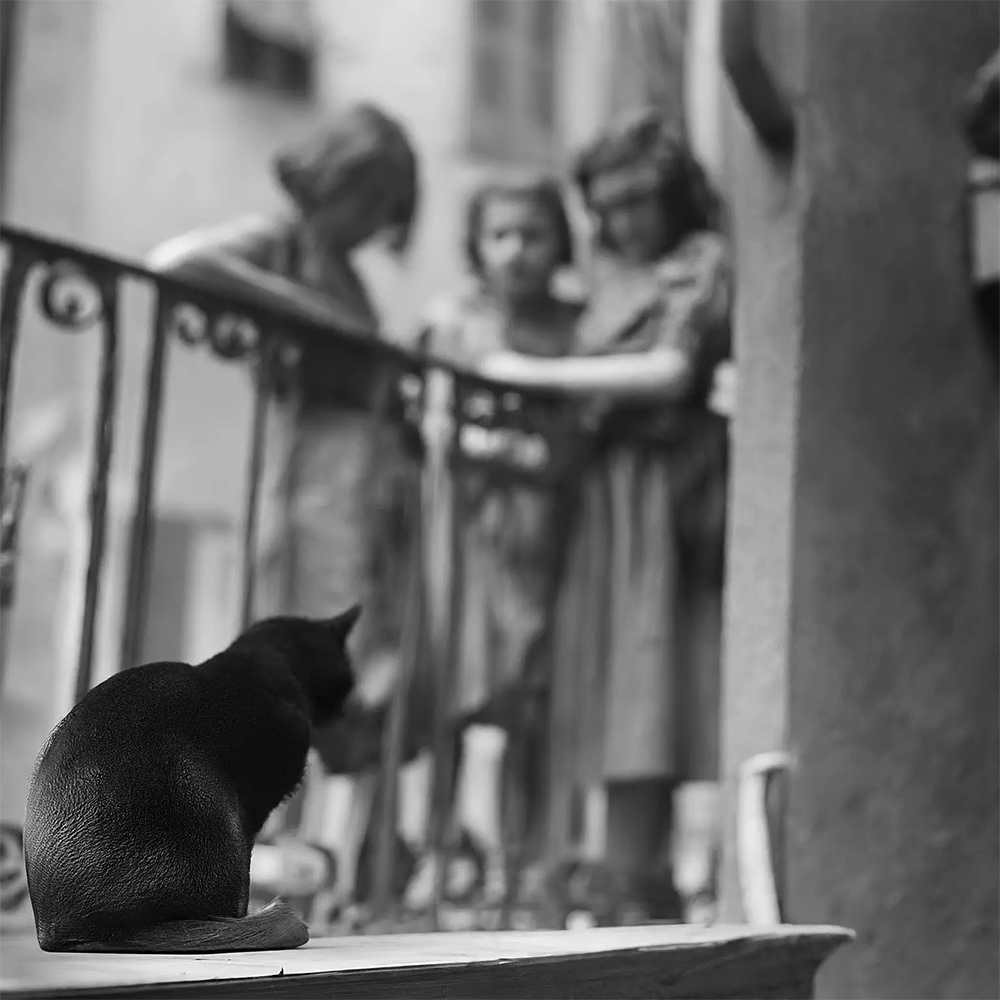
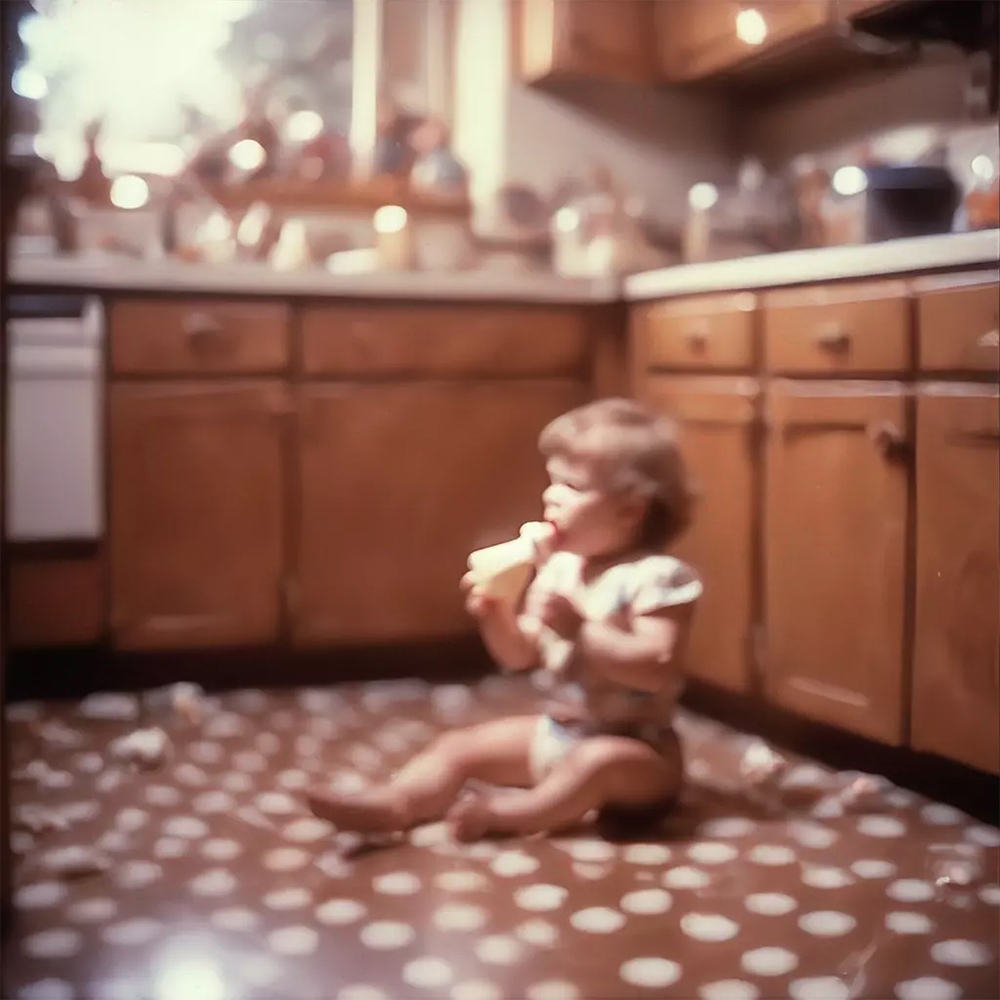
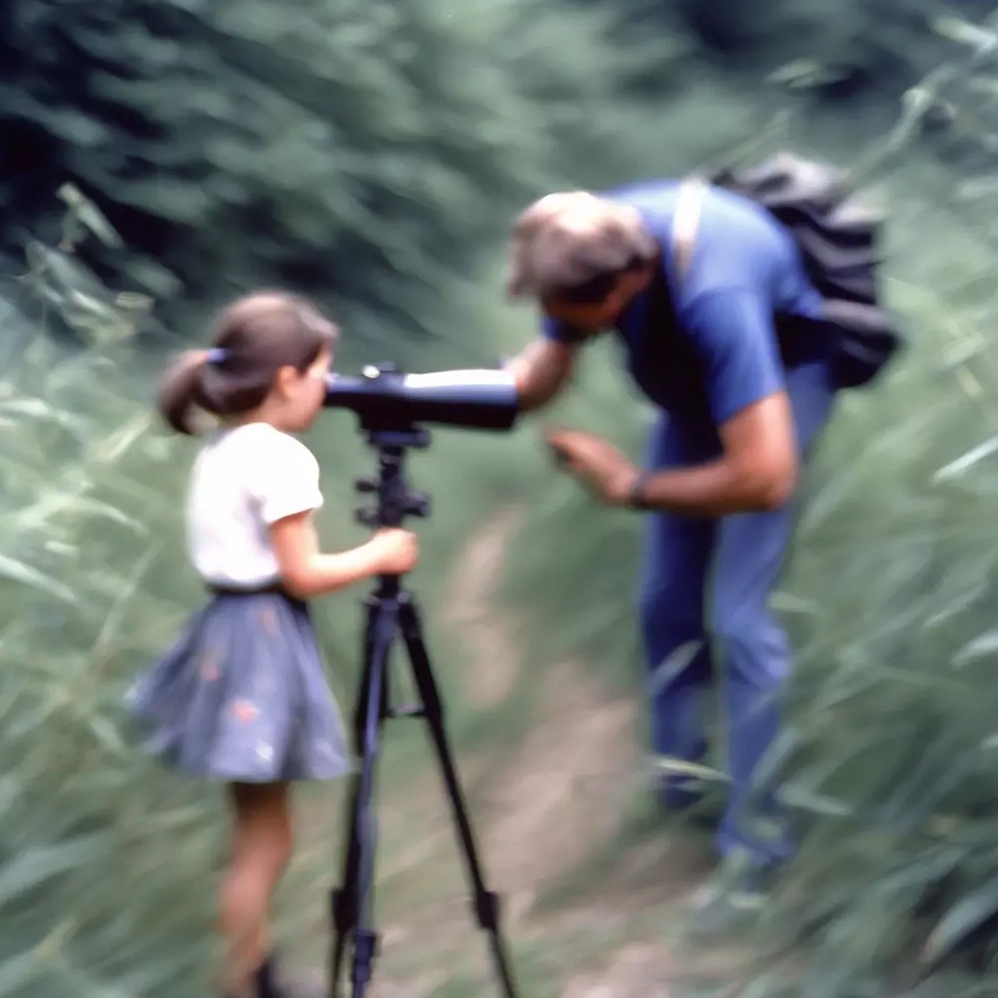
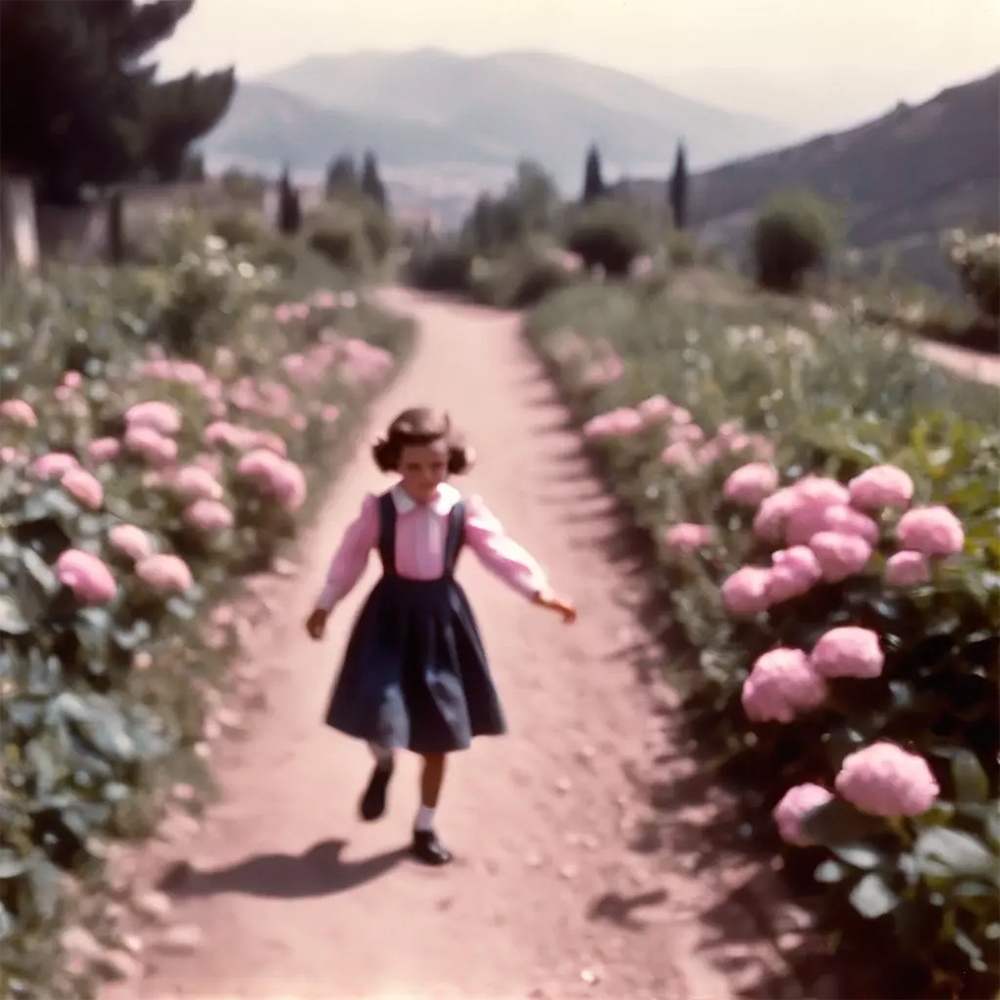
Pau Aleikum Garcia It started as a practical problem and slowly became a principle. In the early days, working first with DALL·E and later with Google’s ImageFX, we noticed that sharpness worked against us. A crisp face is a confident guess, and the model has never met your mother, so what it gives you is a very convincing stranger. Some people looked at a photorealistic version of a parent and felt something close to a small grief, because it was not them and yet the image was so sure that it was. A soft version had the opposite effect: when the face is blurred, the person fills it in, and their memory does the part of the work that the model simply can’t do.
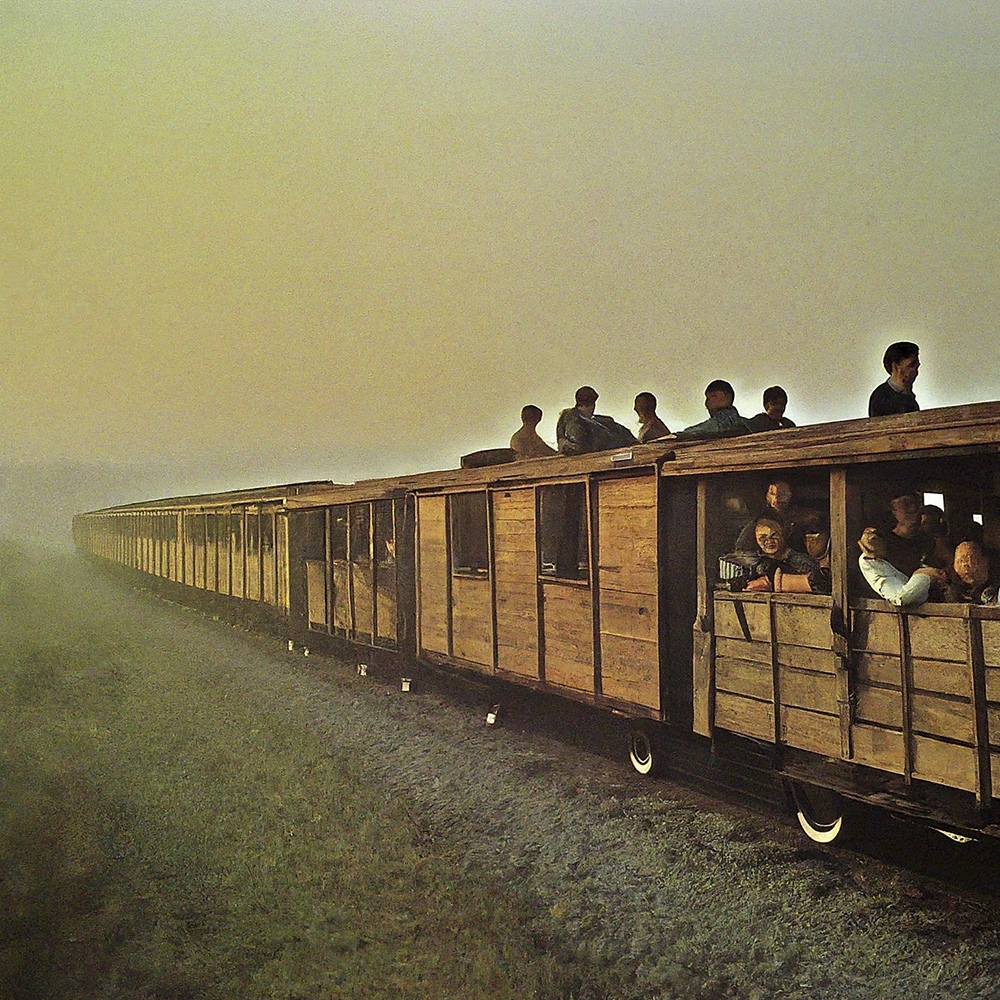
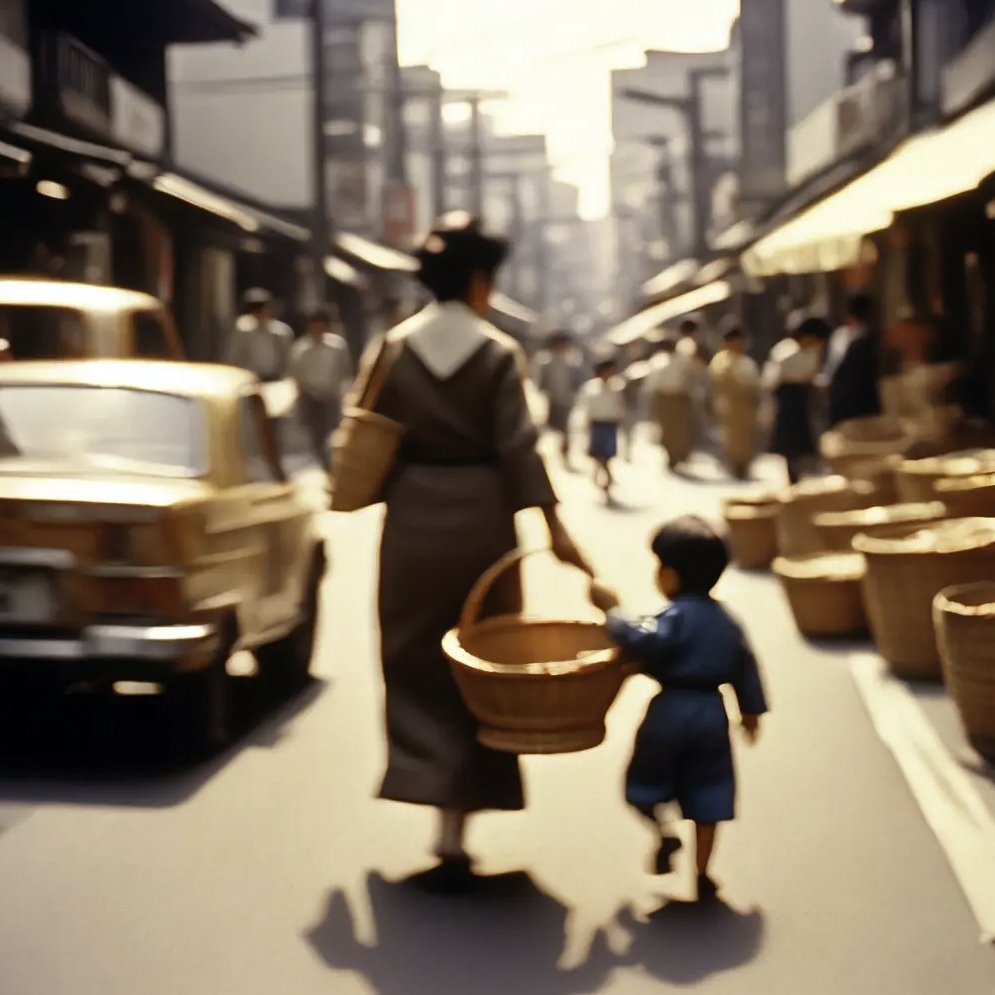
We borrowed the look of old photography and watercolour, partly because many of these memories come from a time when photos actually looked like that, and partly because haze is an honest way of showing something remembered. Memory is hazy. The colour of a dress changes from one retelling to the next and objects drift around the room, so an image that feels like a dream ends up much closer to the experience of remembering than any 4K render.
The second reason is ethical. A photorealistic image of a moment that no camera recorded is, technically, a fake document, and we don’t want our images to end up in a family album that someone opens in 2080 and reads as evidence. The dreamlike look works as a watermark that can’t be cropped out. When we opened the Citizens’ Office of Synthetic Memories in Barcelona in 2024, we signed an ethics code with the Design Museum that put this in writing: memories are personal and emotional reconstructions rather than historical facts, and every image is made in a deliberately dreamlike style so that nobody confuses it with a photograph.
So when the model produces something too precise, we do the counterintuitive thing and make it worse, pushing it back toward blur and softening the faces. The people we work with almost never ask for more sharpness. What they ask for is more truth, and in these sessions truth tends to live in the light and the mood rather than in the pixels.
Pau Aleikum Garcia Nobody needs instructions to know when an image is right, and it is one of the most consistent things we have seen. The recognition is fast and physical and arrives before any words: people lean in or go very quiet, and quite often they laugh.
The moments of “not quite” teach us more, and the corrections tend to fall into a few families that each say something about how memory is built. The first is scale. Things from childhood almost always come out too small in the first image, because the model draws the world at adult height while memory keeps it at the height of a child, so the kitchen table was huge and the street was wide, and we end up making doors taller and fathers bigger. The second is arrangement: people know where things were with a precision they can’t really explain, the radio on the left, the bed facing the window, as if the layout of a room outlasted most other details. Then there is texture and light, corrections like “the floor was colder” or “it was later in the afternoon,” which are rarely about objects and almost always about atmosphere. And finally time, when a scene from 1965 comes out looking like a 2020 filter pretending to be 1965, and people spot the anachronism instantly even when they can’t name what is off.
What surprised us most is what people don’t correct. They will accept an image with the wrong wallpaper and too many chairs if the feeling is right, and reject a technically accurate one if the light is wrong. The “that’s it” is almost never about completeness but about recognising a mood, which confirms something we had suspected for a while: memory keeps meaning first and details second. The details are a scaffolding that the brain rebuilds around a feeling, and when the image matches that feeling the brain fills in the rest, in the same way it quietly fills in the blind spot in your eye without ever bothering to mention it.
Pau Aleikum Garcia We started with people in the early stages of dementia because reminiscence therapy already exists and already helps. Talking about the past with the support of photos, music, smells or objects is common practice in care, and our question was what happens to that practice when there is no photo to start from.
With Edward, a 72-year-old man in London living with early-stage dementia, we reconstructed three of his memories, among them skiing in the Alps and a hitchhiking trip through Spain that ended in a bar in Gibraltar, singing with a local band. What we saw with him, and have seen many times since, is that the image doesn’t only bring back a scene, it brings back the person telling it. For an hour he was the narrator again and not a patient.
We are now running a clinical trial at Al Amal Hospital in Dubai with the Mohammed Bin Rashid Centre for Government Innovation and Emirates Health Services. We trained eight psychologists to lead the sessions and fine-tuned the model with Emirati archives so the images would look like their own past and not somebody else’s. The trial compares Synthetic Memories with traditional reminiscence therapy. The first findings are being prepared for peer review, and until they are published we would rather not draw conclusions about clinical effectiveness. In parallel, our partners at the University of Toronto and the University of British Columbia are studying how older adults feel about AI-assisted reminiscence in the first place, which seems to us the question that should come before all the others.
Responsibility is the hard part. Researchers at the MIT Media Lab, among them Pat Pataranutaporn, Samantha Chan and Pattie Maes, have shown that AI-edited images and videos can implant false memories and distort recollection, and earlier work with Elizabeth Loftus found that conversational AI can amplify false memories in witness interviews. We consider this the strongest argument against what we do, and we would be worried about any project in this space that didn’t take it into account.
Our answer is a set of design decisions rather than a promise. The method doesn’t alter people’s real photographs; it generates new images from their own words, in a style nobody would mistake for a photograph. The person directs every change, so the image follows the memory and not the other way round. We work with consent and in early stages, with caregivers close by, and after a project with victims of police torture at the old Via Laietana police station in Barcelona we learned that sensitive sessions need a psychologist in the room alongside the interviewer and the prompter. Some people may one day find it hard to separate an image from what they lived, and we don’t pretend otherwise. That already happens with family photos, and with stories told so many times that they have hardened into fact. What we can do is make sure the image is honest about what it is.
Pau Aleikum Garcia This is where the project began, years before it had a name. In 2015 we were working with Syrian refugee families in Greece, and a grandmother told us she wasn’t worried about living in the camp, since sooner or later they would find a new place. What worried her was that her grandchildren would always feel like refugees, even with a permanent home, because they would lose access to where they came from: the food, the streets, the rituals and, in the end, their sense of who they were.
A family photo album does a strange job. It looks like an archive, but most of the time it works as a script, giving the older generation a reason to talk and the younger one a reason to ask. When the album is lost, to a war or a border crossing, to a fire or a flood, the stories don’t disappear immediately, they just lose their prompt, and nobody opens the album on a Sunday afternoon because there is no album left to open.
An image that arrives decades late doesn’t repair that loss, and we try never to suggest that it does, but it can restart the conversation. In São Paulo we worked with Casa do Povo in Bom Retiro, a neighbourhood shaped by one wave of migration after another, where people shared what it was like to arrive and adapt, and to watch the neighbourhood change around them. When the images were later shown at Casa do Povo, they turned into a place where neighbours with very different origins could compare what arriving had felt like, and stories that rarely enter official history finally had a wall to hang on.
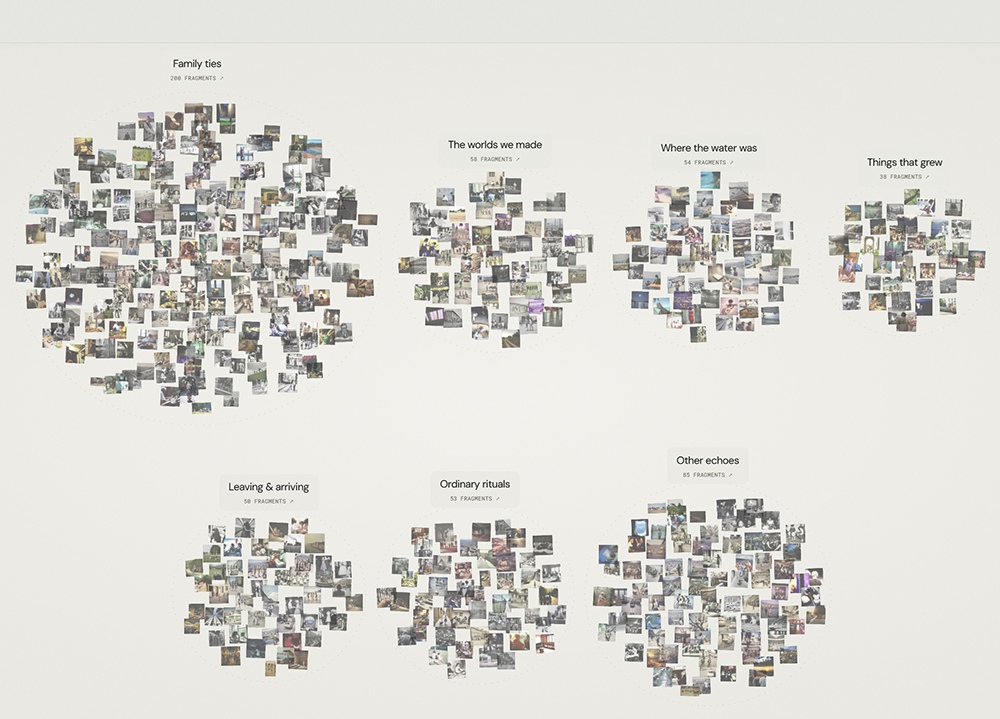
For a family, inheriting one of these images means inheriting a story with an honest caption. It doesn’t say “this is what happened” but “this is how your grandmother remembered it, the year she told us,” and that second date matters a lot. Our archive keeps both, when the memory happened and when it was recalled, together with where it took place, who interviewed, who prompted and which model was used. For us this is what an honest heirloom looks like in times of generative AI: a record of remembering rather than a record of the event.
There is also a second inheritance. In many sessions the interviewer is young and the person remembering is old, and some of the strongest moments don’t happen when the image appears on the screen but when a twenty-year-old realises that the woman sitting in front of them had a whole life before she became anybody’s grandmother.
Pau Aleikum Garcia In Blade Runner, Rachael shows Deckard a photo of herself as a little girl with her mother, as proof that her memories are real. They aren’t, and the photo is the trap. We think about that scene a lot, because our images are designed to be the opposite of Rachael’s photo: they never pretend to be proof.
We would put it like this: a record is true to an event, and a Synthetic Memory is true to a person. A photograph from 1973 tells you what a camera saw, while our image tells you what someone carried in their memory for fifty years. Both are information, but they answer different questions, and the trouble only begins when one is passed off as the other. This is also why it feels right to be part of Full Disclosure: The Edge of Information Design, an exhibition that asks visitors what to trust, and where our images help by stating plainly what they are. MoMA has acquired nine of our works, among them a childhood by the sea, a migrant’s border crossing and the childhood of a girl whose father was persecuted under Franco. None of them are forensic documents, and all of them are true to someone.
The line between remembering and imagining is thinner than most of us are comfortable with. The psychologist Daniel Schacter and others have shown that remembering the past and imagining the future rely on much of the same brain machinery, so remembering is already a kind of imagining. What separates the two is a sort of promise: when you remember, you are trying to be faithful to something that happened. For us the line is not in the image but in the process. It depends on the person keeping authority over their own memory, on whether they are correcting toward what they lived or drifting toward what they would have wished, on their right to withdraw the memory at any time, and on the result being clearly labelled. That is why our archive keeps the metadata visible: the date of the memory and the date it was recalled, the interviewer, the prompter and the model. An image can be imagined and still be faithful, as long as nobody lies about how it was made.
Conclusion
We usually ask images to prove something: that a moment happened, that a place looked a certain way, that a person was there. Synthetic Memories asks them to do something gentler and, in its way, more honest. Its images do not claim to show the past. They show a person’s way of holding it: the table that was enormous to a child, the light of a late afternoon, the feeling that outlasted every detail.
What emerges from this conversation is a quiet reversal. The most useful image is often the wrong one, because it gives memory something to push against. The truest image is not the sharpest but the one that leaves room for the person to fill in a face only they can see. And the line between remembering and imagining turns out to be drawn not in the picture, but in the promise around it: who holds authority over the memory, and whether anyone lies about how the image was made.
Perhaps that is what an heirloom becomes in an age of generated images: not a record of what happened, but a record of someone remembering, with the date they told it, and the care with which it was made.
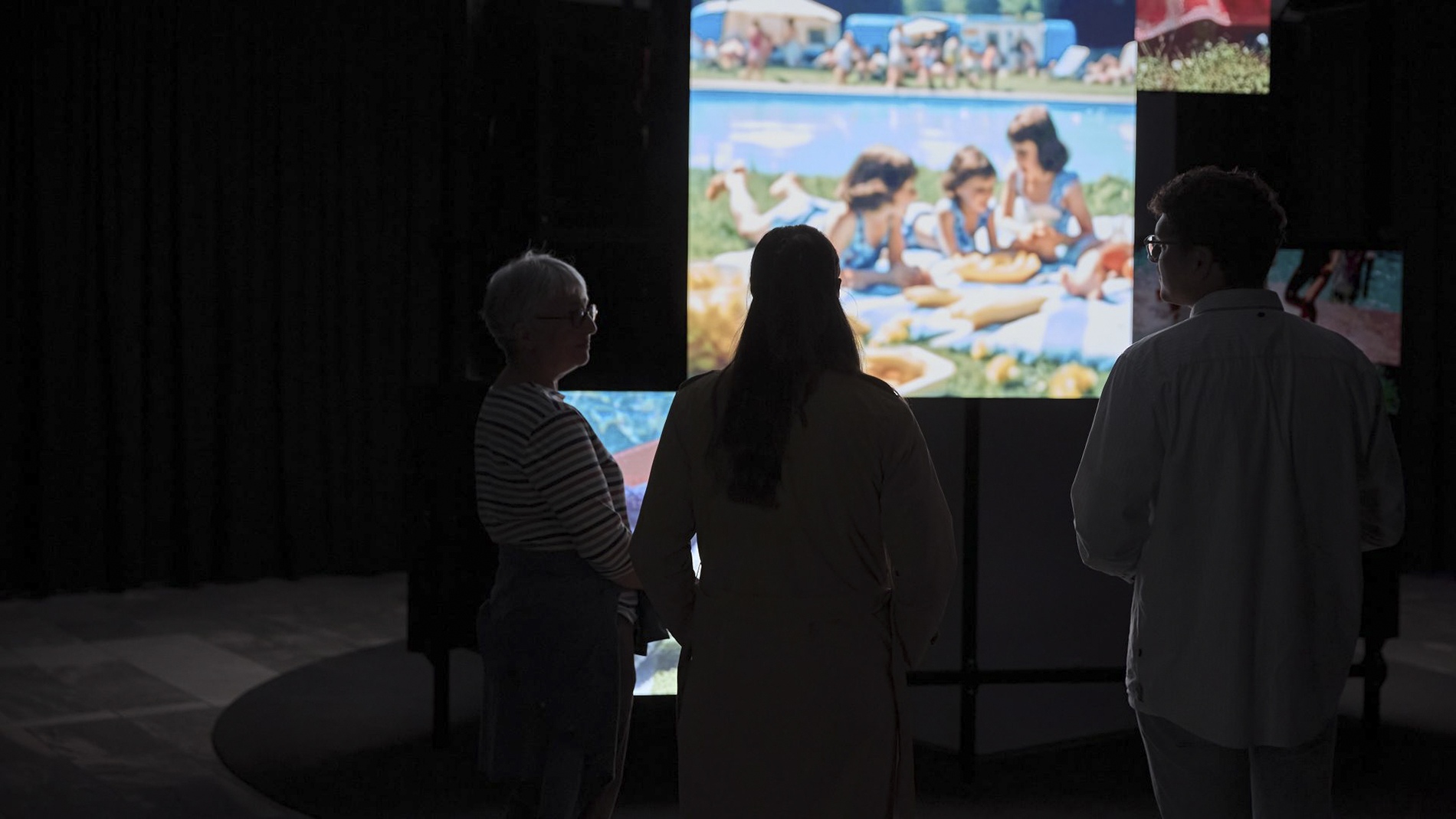
Hero image: Visitors stand before reconstructed memories at The Lost Sense, an exhibition in Berlin (2025) exploring the bond between smell and memory. The images were rebuilt from the recollections of people who lost their sense of smell during the COVID-19 pandemic. Credit: Synthetic Memories, Domestic Data Streamers