
When Chemistry Became Biology
A Nobel laureate explores the moment chemistry first became biology
Somewhere on the early Earth, between three and four billion years ago, chemistry became biology. No one knows exactly where, how, or how many times it might have happened. What we do know is that it happened at least once, and that every living thing today, every cell, every organism, and every genome traces its ancestry to that moment.
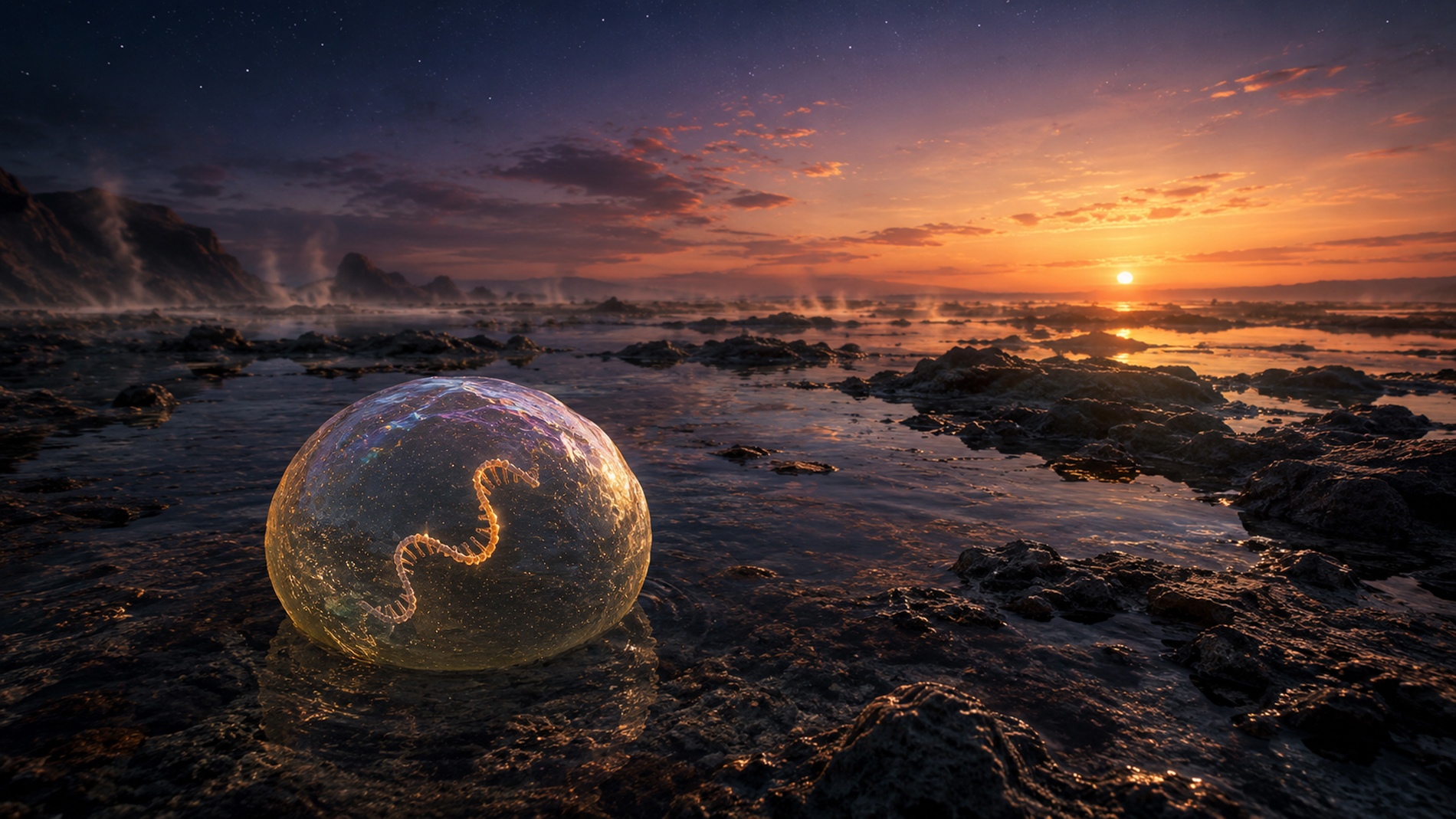
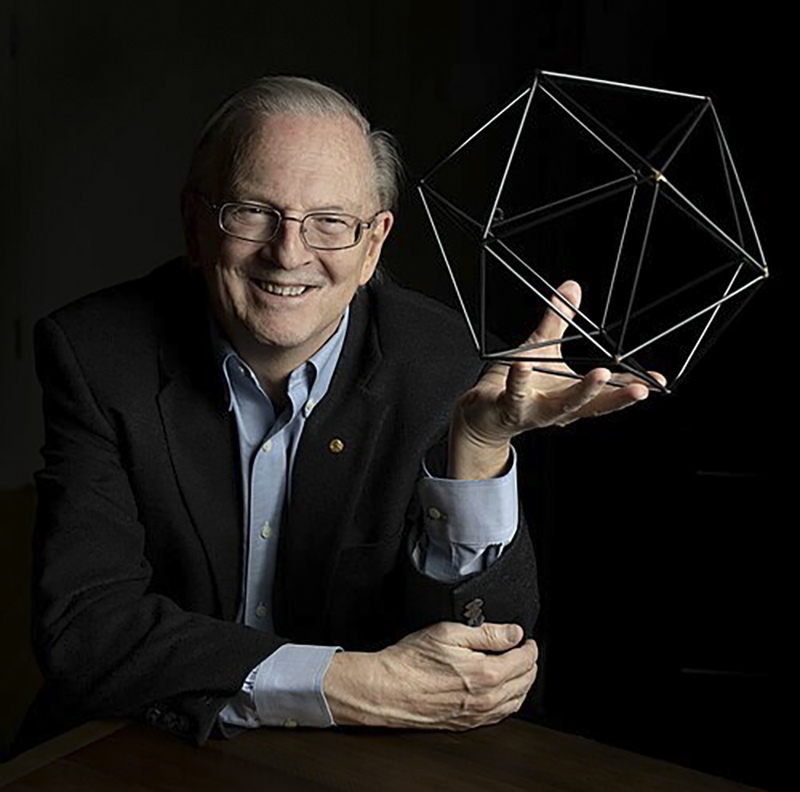
Jack Szostak has spent decades trying to understand how that transition became possible. Not philosophically, but experimentally. His laboratory builds the simplest living systems imaginable, observes what they can and cannot do, and treats every failure as a guide toward the next experiment. His protocell, a fatty acid membrane enclosing a short strand of RNA, is almost astonishingly simple. It is, in essence, little more than a microscopic bubble containing genetic material. Yet that simplicity is precisely the point. Life had to begin simply enough for a collection of molecules to assemble spontaneously into something capable of growth, reproduction, and eventually evolution. The central question driving his laboratory is how the chemistry and physics of the early Earth combined to cross that threshold and give rise to life.
His work has ranged from telomeres and ribozymes to directed evolution, and now to perhaps the deepest biological question of all. Not what life is made of, but how it first learned to make itself. We spoke with him about the RNA world, the mirror life debate, the gradual transition from chemistry to biology, and what it would actually mean to watch a living system emerge from a flask.
The Conversation
On the Core Pursuit
Jack W. Szostak I've been interested in this problem for a very long time, going back to the discovery of ribozymes by Tom Cech and Sid Altman. Their work transformed our understanding of early life by suggesting that it may have been based on a single biopolymer, RNA, with primitive cells carrying RNA genomes whose replication was catalyzed by RNA enzymes. It was such a compelling idea that I felt I had to work on it.
Together with Jennifer Doudna and Rachel Green, I began by trying to get a Group I self-splicing intron, a naturally occurring ribozyme, to carry out replication-like reactions. We made some progress, but it soon became clear that we needed to discover or engineer a ribozyme better suited to replication chemistry.
That breakthrough came from Dave Bartel, who evolved a ribozyme ligase capable of catalyzing the same chemistry used in DNA replication and RNA transcription. Since then, several laboratories around the world have built on that approach, producing ribozymes that have become increasingly effective RNA polymerases. At the same time, the growing complexity of those molecules prompted us to ask whether life might have begun from something even simpler. That question eventually led us to our current work on a purely chemical approach to RNA replication.
As you can see, our research has changed direction several times, but the central question has remained the same. Did life begin with an RNA-based system of genetic replication? If so, how did it happen?
Pursuing that question led us to develop the technology of in vitro selection in 1990. Throughout the 1990s, we used it to explore the laboratory evolution of aptamers, ribozymes, DNAzymes, peptides, and proteins. Although that work was highly productive, it also led me toward an even more fundamental question: how did Darwinian evolution first get started on the early Earth?
On the Protocell
Jack W. Szostak The protocell model may seem almost impossibly simple, but that is exactly the point. Life had to begin simply enough for a collection of molecules to assemble spontaneously into something capable of evolving, adapting, and ultimately giving rise to the biology we know today.
At the same time, the protocell is remarkably complex from a chemical perspective. Its RNA genome is tiny compared with that of any modern cell, yet RNA itself is a highly complex molecule. Its membrane is chemically simpler, consisting of lipids that can assemble on their own, but we still do not know how fatty acids were produced on the early Earth. Beyond that, there are fundamental questions about where the materials needed for growth and division came from, and what kinds of environments could have supported those earliest protocells. The more closely we examine the problem, the more layers of complexity emerge.
Jack W. Szostak We still do not know what the ultimate solution to this paradox will be. Citrate can be produced through relatively simple prebiotic chemistry, but only in small quantities, not enough to protect fatty acid membranes from high concentrations of magnesium.
Several possible solutions remain. One is to find a simpler molecule that can perform the same role as citrate. Another is to use membranes made from neutral lipids that could also have formed under prebiotic conditions, since those lipids are not disrupted by magnesium. A third possibility is to reduce the concentration of magnesium while increasing its catalytic activity through binding to short peptides. Other possibilities may exist as well. At this stage, it remains an open question and an active area of research.
On the RNA World
Jack W. Szostak Yes. The fact that it is the RNA component of the ribosome that synthesizes peptides and proteins tells us that RNA came first and eventually evolved the ability to produce proteins through coded synthesis. It also reflects the fact that proteins are generally better at catalyzing chemical reactions, regulating membrane functions, and building cellular structures.
So yes, DNA and proteins are upgrades, but not to an already perfected system. They transformed an RNA-based system that worked only marginally into one that is vastly more capable.
Jack W. Szostak We're gradually getting closer by solving one problem at a time, but many challenges remain. Right now, we're working hard to improve the accuracy of our chemical RNA copying system. At present, it makes far too many errors to transmit useful genetic information reliably from one generation to the next.
Fortunately, there appear to be several possible solutions, so I'm reasonably optimistic that we'll eventually be able to build a protocell system capable of reproduction and evolution.
Our first versions will probably look rather artificial, but I hope that, over time, we'll learn how to construct protocell systems that more closely resemble those that could plausibly have given rise to the first cells on Earth.
On Mirror Life
Jack W. Szostak At first, I was skeptical that mirror bacteria would pose a serious threat. But the more I learned about the immune system and other biological vulnerabilities, the more convinced I became that creating mirror bacteria is something we should never do.
When I finally appreciated the scale of the risk, I imagined it must have been similar to what physicists felt when they realized that research which had seemed purely fundamental and highly abstract could ultimately produce technologies capable of destroying the world.
To be clear, we are still a long way from being able to build mirror bacteria. That is precisely why now is the time to establish scientific consensus and appropriate regulations that would prevent such work from being carried out. At the same time, there are more immediate risks arising from the engineering of pathogens for biological warfare, and those deserve equal attention.
Jack W. Szostak The choice of which handedness to adopt was completely arbitrary. What was essential, however, was achieving homochirality. RNA, DNA, and proteins simply could not function if they were composed of random mixtures of right-handed and left-handed nucleotides or amino acids.
On Building Life
Jack W. Szostak I don't think there will be a single magical moment when everything suddenly comes together. Instead, I expect we'll see increasingly sophisticated forms of Darwinian evolution emerge step by step. It may begin with simple selection for RNA sequences that are easier to replicate. Then, hopefully, we'll see the first functional RNAs evolve, probably as rather inefficient ribozymes. Eventually, those could give rise to more active ribozymes that provide a selective advantage to the protocells that contain them.
If we can reach that point, then yes, I would consider it creating life.
I also hope that what we create will faithfully reproduce something that actually happened early in Earth's history. Our first protocells will probably look quite artificial, and it may take several rounds of refinement before we arrive at a system that plausibly resembles one that could have existed during the origin of life.
On the Through-Line
Jack W. Szostak A lot of my work throughout my career has been on nucleic acids, either in biology or in chemistry. I started off working on DNA recombination and repair, then telomeres, and then switched to RNA and aspects of directed evolution. Now I am working at a more fundamental level, trying to understand how the beginnings of RNA chemistry led to biology.
On Defining Life
Jack W. Szostak I think the emergence of life was gradual. The more closely you examine the transition from chemistry to biology, the more you find a broad gray zone between the two.
I've always liked the definition of life as a self-sustaining chemical system capable of open-ended Darwinian evolution. But even that definition is a little slippery. What exactly does self-sustaining mean? Life always depends on its environment, and at the beginning it may have been almost entirely dependent on, and controlled by, its surroundings. Over time, living cells evolved increasing control over their own growth and division. In my view, trying to draw a sharp line between a chemical system and a living system is not especially useful. What interests me much more is understanding how one became the other.
Conclusion
Szostak's work ultimately suggests that the origin of life was not a single event waiting to be identified and named. It was a gradual transition, one that unfolded across a landscape no simple definition can fully capture. The protocell is not a metaphor for that transition. It is an attempt to reconstruct it, one chemical problem at a time.
The RNA at the core of the ribosome is billions of years old and still performs its essential role. The fatty acid membranes of protocells remain only partly understood. The citrate paradox has yet to be resolved. And the central question still remains. Did the chemistry and physics of the early Earth inevitably give rise to Darwinian evolution, or did it depend on an extraordinarily specific, perhaps exceedingly unlikely, convergence of circumstances?
What Szostak's laboratory is building is not a proof but an experiment in the deepest sense. It asks whether the universe, given the right molecules and the right conditions, naturally tends toward life, a question he has also explored in his book with Mario Livio. We do not yet know the answer. The experiment is still underway.
Seen in that light, the warning about mirror life is not a rejection of that vision. It is a consequence of it. If we can learn how life is built, we can also learn to build forms of life unlike anything that has evolved on Earth. That is not a reason to stop asking how life begins. It is a reason to pursue the question with great care.