
Digital Sublime Flora
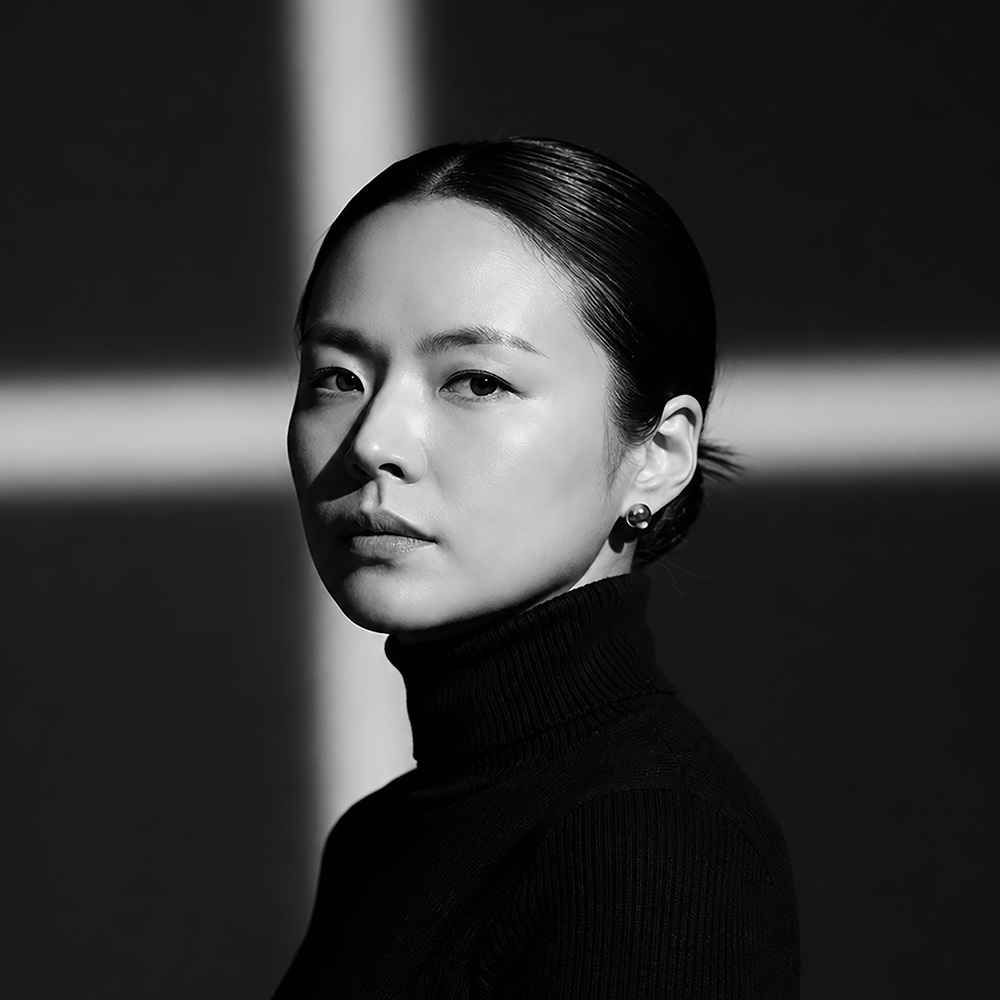
Yeonjeong Jang on stillness, translation, and the shifting boundaries between life and image
The Conversation
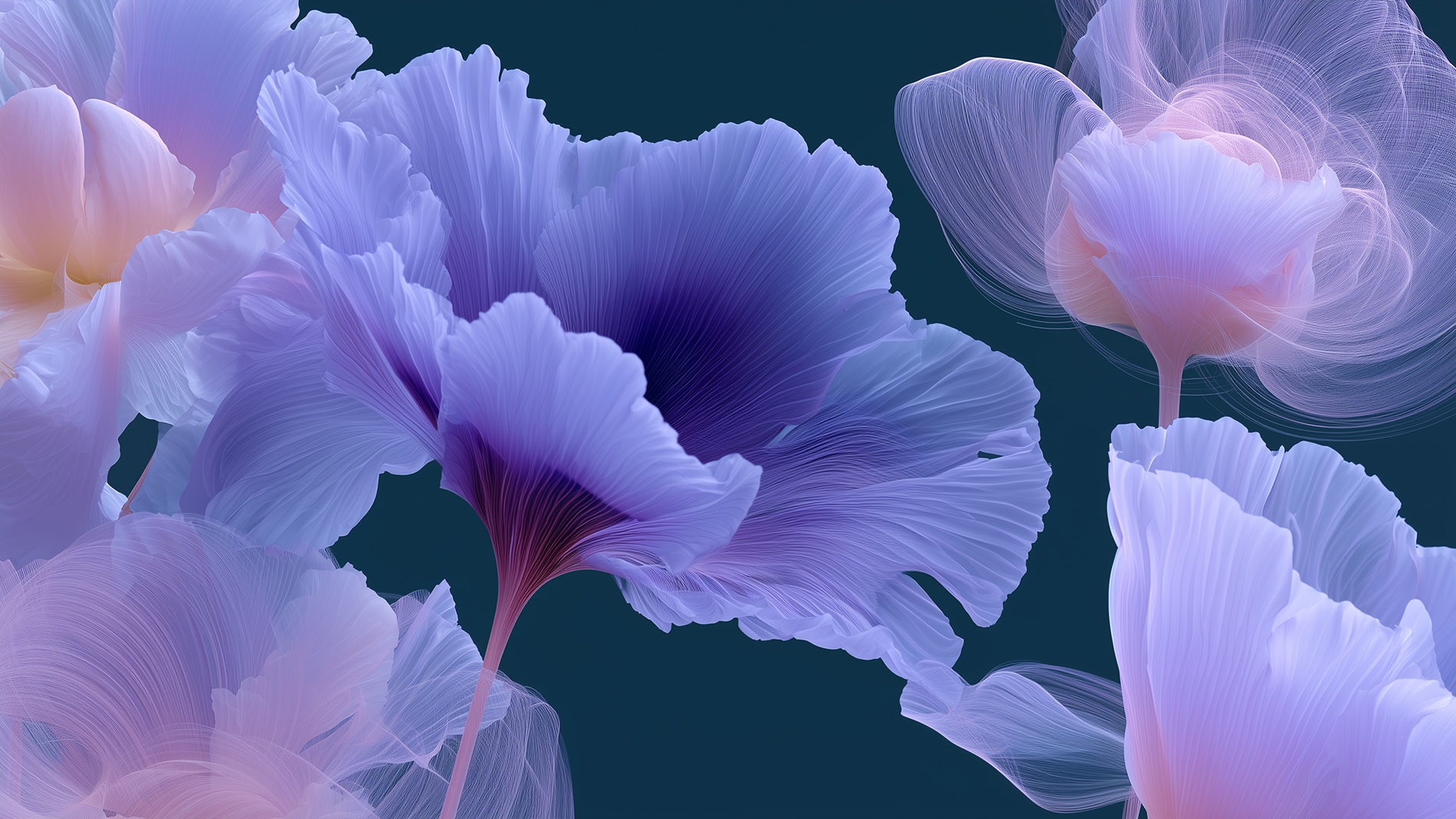
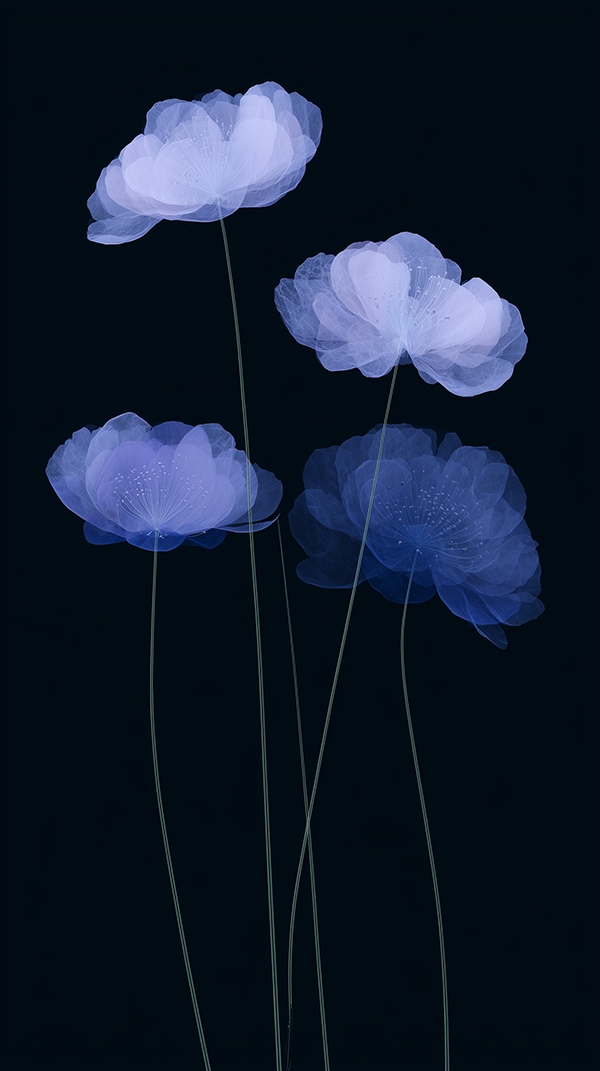
Yeonjeong Jang Rather than depicting the process of blooming and decay, I wanted to create a form of continuous presence that exists outside that familiar narrative of transformation. Flowers are often understood as symbols of time, of birth, fullness, decline, and disappearance. In Digital Sublime Flora, however, the plant is no longer a natural subject that illustrates a life cycle. It remains suspended somewhere between emergence and dissolution, in a state that cannot be reduced to a single moment.
For me, this stillness is not simply the absence of movement. It is a condition in which inner force has been compressed. The forms appear calm, but they are never entirely stable. They seem to contain an invisible pressure and a subtle tension, as though they are continuously sustaining their own existence. Through this suspended tension, I wanted the work to resist directing the viewer toward a particular event or conclusion. Instead, it opens a space in which the viewer can remain, observe, and become more conscious of the act of looking.
As narrative recedes, the viewer is invited to consider not so much what the work is saying, but how it is existing. This continuous presence is also connected to the nature of the digital image itself. A digital flower is never literally born, nor does it physically die; it does not belong to the biological time of nature. I see these forms not as imitations of living flowers, but as new entities situated between nature and artificiality, life and image.
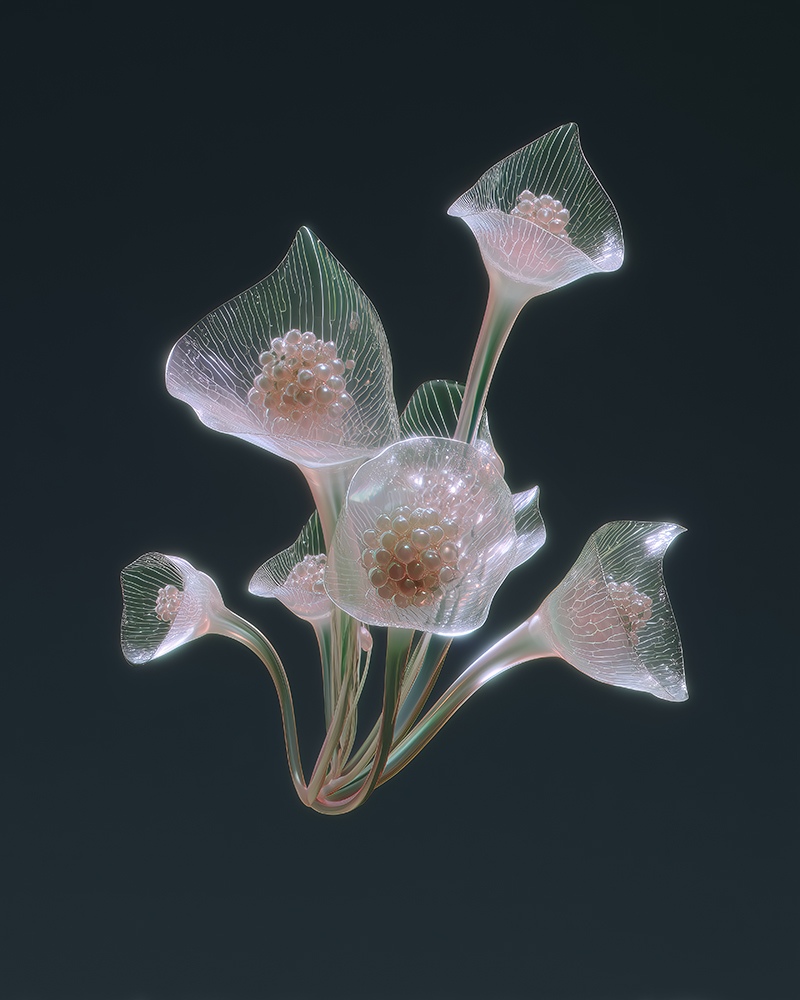
Yeonjeong Jang Yes, there is certainly something ghostlike in the series, something resembling an afterimage of life. But I am less interested in preserving a faithful image of a disappearing natural world than in asking what remains of nature after it has passed through a digital environment. The plants in Digital Sublime Flora are not accurate representations of living organisms. They are the result of memories, sensations, and structures associated with life being reorganized through an algorithmic system. In that sense, I see them not as nature itself, but as its afterimage, a trace of life continuing in the form of an image.
Biological form emerges through growth, mutation, adaptation, and decay. Generative systems, by contrast, construct images through data, probability, repetition, and selection. My work is not intended to make one language simply imitate the other. I am more interested in the tension, distortion, and slippage that appear when one is translated into the terms of the other.
Through this translation, the botanical forms become both familiar and strange. We recognize flowers, leaves, stems, and organic structures, yet we also sense that these entities have never truly grown and will never physically decay. This gap in perception creates their ghostlike quality. For this reason, the afterimage of life in the series is not only an elegy for a disappearing natural world. It also reflects a contemporary condition in which life is increasingly perceived not only through biological matter, but through data, images, archives, and mediated memory.
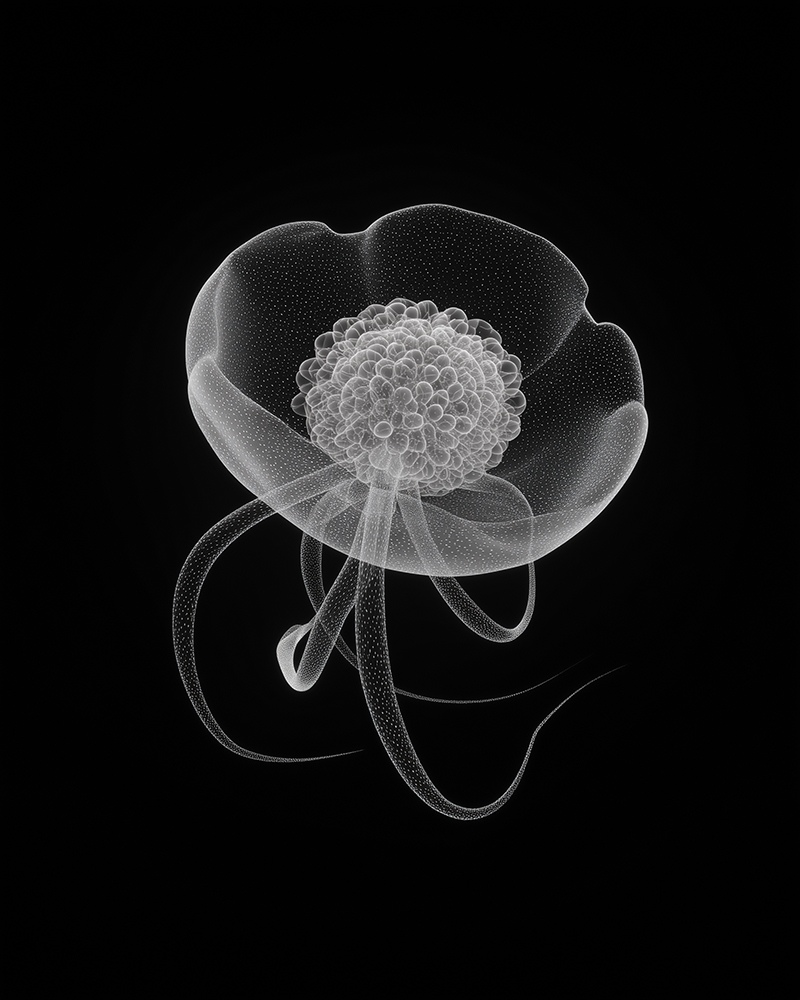
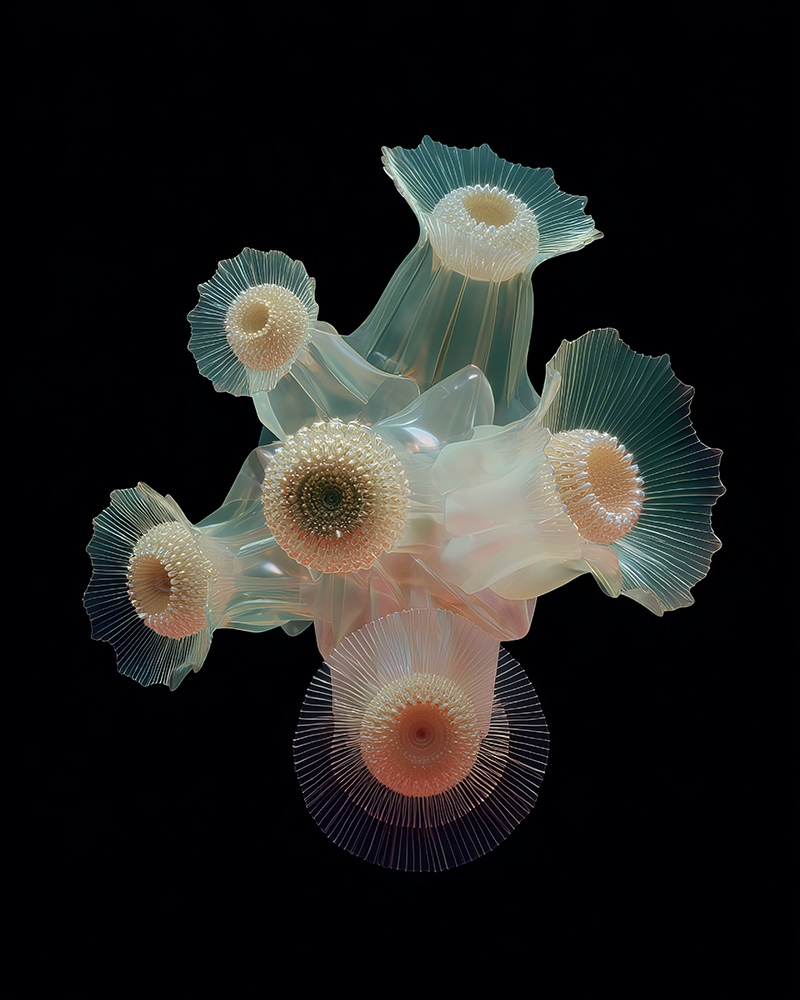
Yeonjeong Jang I am drawn to botanical forms because they hold life and structure, order and uncertainty, at the same time. Plants organize themselves according to highly intricate principles, yet the results are never entirely identical or predictable. This coexistence of repetition and difference reveals that natural order is not a fixed geometry, but an ongoing process of formation. It is here that I find a strong affinity between botanical growth and generative digital systems. Neither plants nor generative systems simply reproduce a predetermined form. They maintain certain structural principles while producing a different outcome each time.
I do believe there is something inherently sublime in plants, although I do not understand the sublime as something produced only by overwhelming scale, such as a mountain or a storm. It can also emerge from the realization that an extraordinarily complex structure is compressed within a small seed, or that invisible systems organize roots, veins, cells, and petals. Plants may appear quiet and fragile, but within them operates a generative force that cannot be entirely perceived, predicted, or controlled by us.
In my work, the botanical is not simply a decorative symbol of nature. It is a conceptual form connecting life and non-life, organic growth and computational generation, order and instability. The sublime quality I find in plants lies less in the beauty of their completed forms than in the unfathomable depth of the processes through which those forms come into being.
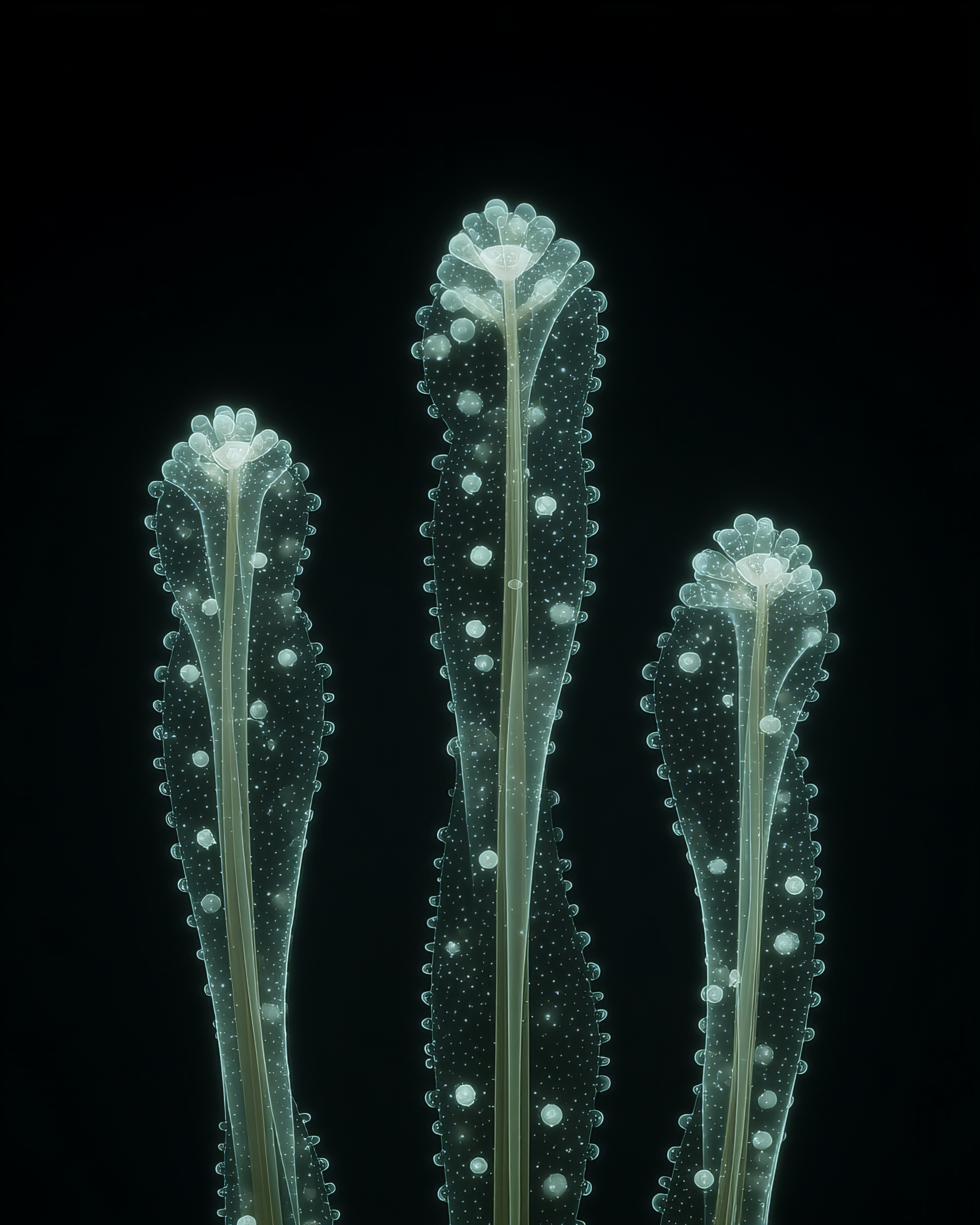
Yeonjeong Jang I retain a significant degree of control throughout the generative process, but it is not the kind of control in which every detail of the final image is predetermined. What I control is not a single finished form, but the conditions and boundaries within which a form can emerge. I define the conceptual framework, visual language, palette, density, composition, direction of light, pace of movement, and, equally importantly, what must be excluded.
Within that field, however, I cannot fully predict what will appear. I would not say that the system suddenly takes over the act of creation. Rather, it introduces differences that remain beyond my complete control. My role is then to judge which of those differences belong within the conceptual and perceptual world of the work. Control and chance are therefore not opposing forces in my practice. Control is not used to eliminate chance, but to construct a field in which meaningful chance can occur.
I do think of myself as a designer, although not only in the conventional sense. The metaphor of the gardener is also useful, someone who does not manufacture the plant directly, but shapes the conditions of its growth, while continually deciding what should be preserved, redirected, or removed. Ultimately, though, I think of my role as something closer to a choreographer of possibilities. I do not command every movement of the system, but I design the space, rhythm, tension, and limits within which movement can occur.
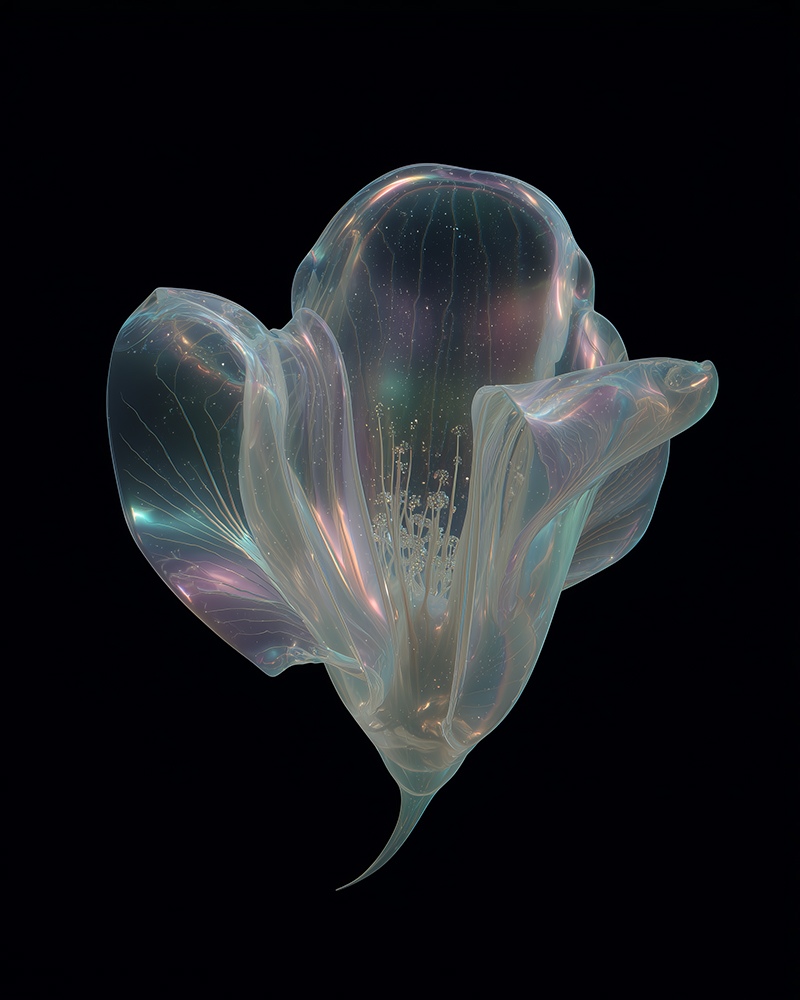
Yeonjeong Jang The discomfort is intentional, but I do not use it simply to unsettle the viewer. What interests me is the threshold at which a familiar form begins to feel strange. The works evoke flowers, leaves, stems, and other recognizable structures, yet on closer inspection they subtly depart from biological logic. The viewer can identify them, but cannot fully define them, and it is within that gap that the uncanny emerges.
This sensation also arises because I am working with a reality that does not entirely exist. The forms are neither direct records of nature nor purely invented fantasies. I think of this as a kind of perceptual delay. The viewer first recognizes a plant, then almost immediately senses that it does not conform to the nature they know. Recognition and doubt occur together. It is precisely because the forms remain so close to living structures that their deviations become more pronounced.
For me, the uncanny is less about fear than about a disturbance in perception. The forms appear to exist, yet they have no material presence. They seem alive, yet they possess no biological lifespan. I am not trying to produce discomfort for its own sake, but to create a moment in which the familiar boundaries of reality become temporarily unstable.
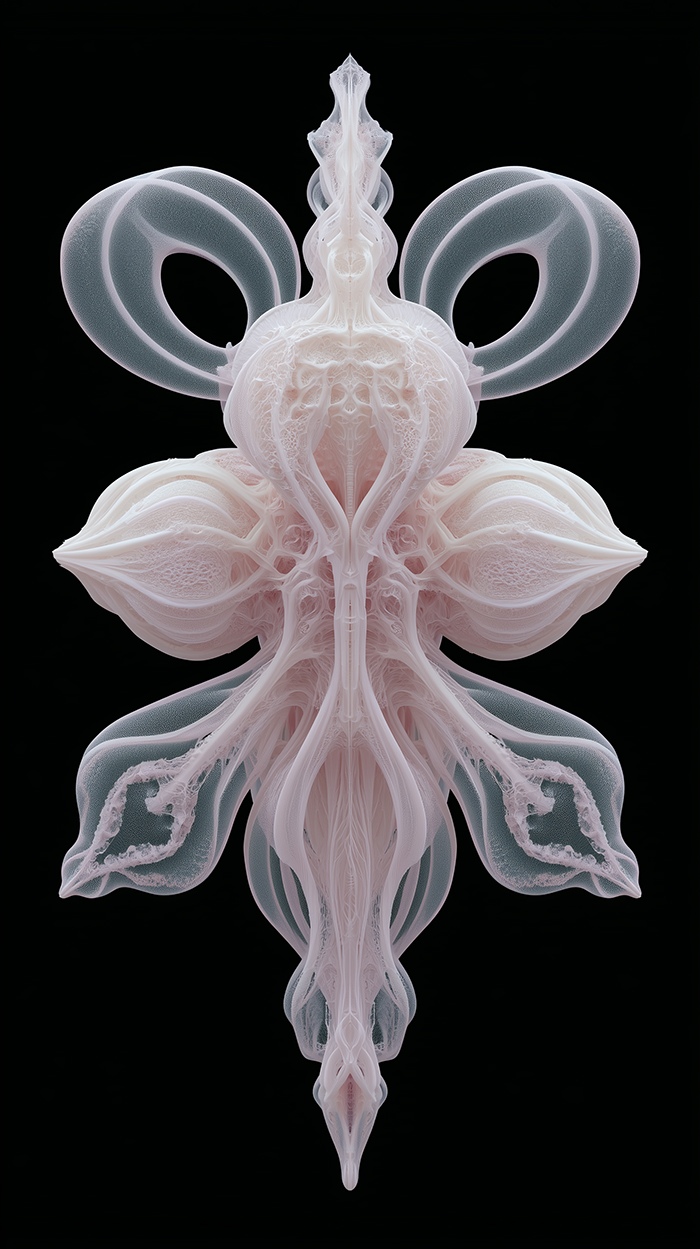
Yeonjeong Jang Yes, significantly. In the past, I might have responded first to a plant's overall form, color, or visual impression. Now I find myself observing more closely how they inhabit and endure time, the pace at which a leaf unfolds, the direction in which a stem turns toward light, the subtle changes in density that occur across seasons.
In a digital process, I can repeat and revise a form, suspend its transformation, or compress time into a controlled sequence. A living plant, by contrast, develops at a pace I cannot fully direct. It never remains a completed image; it continually updates its own condition. The more I create digital botanical forms, the more distinctive the imperfections and asymmetries of living plants appear to me. A real leaf never achieves perfect repetition. It carries traces of its growth, its environment, and the accidents it has encountered. These irregularities no longer seem like flaws, but like evidence that a living form has passed through time.
In this sense, the series has not distanced me from nature. It has returned me to its specificity. I now look less at the plant as a completed form and more at the time accumulated within it, and at the life that is still taking place.
Yeonjeong Jang The question I have been hoping someone might ask is perhaps this: what kind of responsibility can we have toward a digital entity that resembles life?
Digital Sublime Flora is often understood through the relationship between nature and artificiality, or between biological and algorithmic systems. For me, however, the series also asks what makes us perceive something as living, and how our ways of assigning emotion and meaning to life-like forms may be changing. The plants in these works are not biologically alive. They do not feel pain or struggle for survival. Yet viewers may still experience them as fragile, solitary, or deserving of care. I find this response significant because it suggests that our perception of life is not shaped by biological fact alone. It may also be constructed through form, movement, duration, memory, and acts of attention.
The deeper question raised by the series, then, may not be "is this alive," but rather, "what are we beginning to treat as though it were alive." I do not want the work to provide a fixed answer. Instead, I hope it makes viewers conscious of their own responses. Ultimately, what I want to continue exploring is not how accurately digital technology can imitate nature. I am more interested in how living with digital images may reorganize human sensitivity, empathy, and the very concept of life.
Conclusion
Jang's closing question lingers well past the interview itself: what do we begin to treat as though it were alive. It is easy, standing in front of Digital Sublime Flora, to feel a pull toward tenderness, toward the impulse to protect something so quiet and so seemingly fragile, even while knowing, with certainty, that nothing there can be harmed. That contradiction is not a flaw in the work. It is the work.
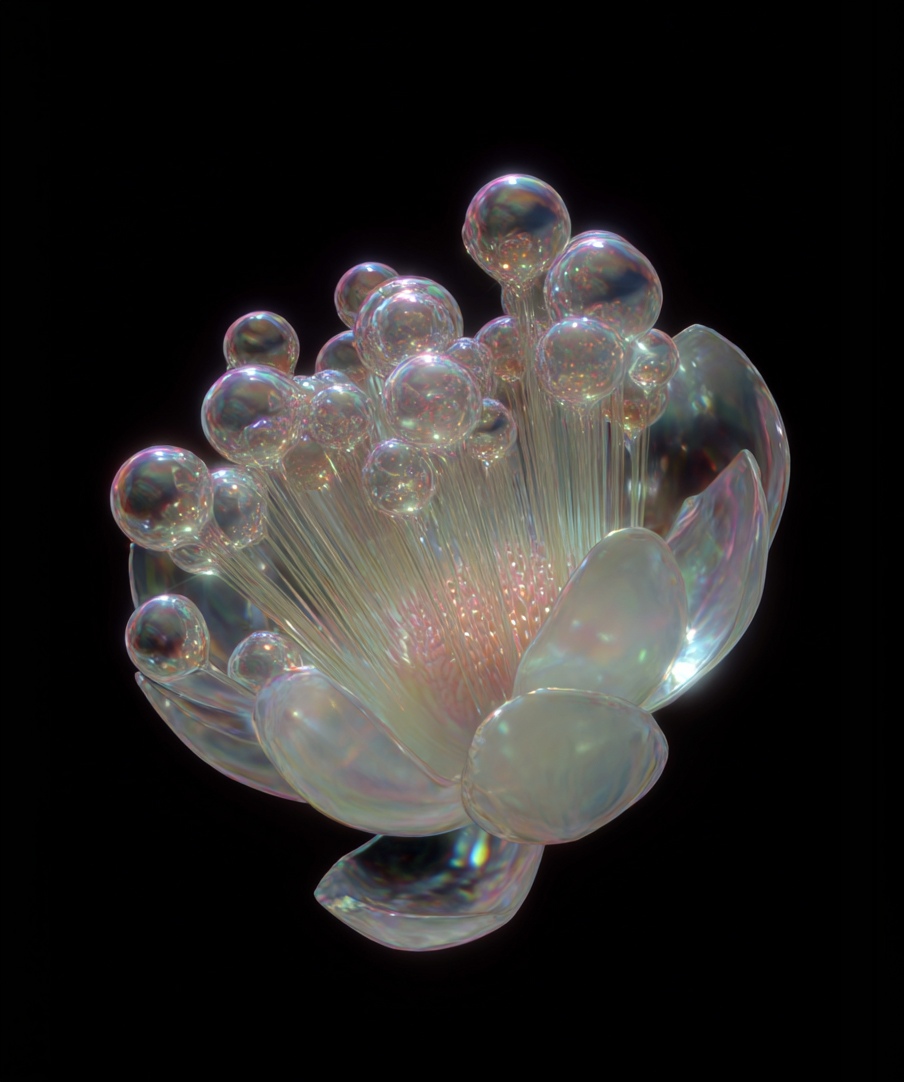
What Jang has built is not a substitute for nature, nor a simple critique of the digital. It is something closer to a carefully constructed field of perception, a set of forms precise enough to trigger recognition, yet strange enough to make us question what that recognition is actually based on. As more of daily life is spent among images, archives, and generated things that carry the shape of life without its biology, that question stops being confined to an art gallery. It becomes, gradually and quietly, a question about what we recognize as life, and what we may come to care for as though it were alive.
About the Artist
Yeonjeong Jang is a digital artist whose ongoing project Digital Sublime, including the Flora series, has been exhibited internationally. She was a finalist in the Moving Image category of the HOFA Gallery Digital Art Awards 2026. Her works are available to collectors through platforms including Sedition.