Where experiences, discoveries and creative journeys meet

Science and Technology

A mind without a center — intelligence as the brain's global architecture, not any single region.

The Architecture of Intelligence

Ramsey Wilcox. Image courtesy of the Decision Neuroscience Laboratory, University of Notre Dame How the brain’s global organization, not any single region, gives rise to the mind’s remarkable unity Editor’s Note For much of modern neuroscience, the search for intelligence resembled a cartographic exercise. Researchers mapped the brain as though its most complex abilities might […]

The Architecture of Intelligence Read More »

For most of modern science, large sections of life's instruction manual have remained unreadable.

AlphaGenome

AlphaGenome How Google DeepMind’s AI is unlocking the 98% of our genome science couldn’t read Editor’s Note For decades, the human genome has been described as the ultimate biological blueprint, yet large sections of it, the so-called “non-coding” regions, remained a silent language we could not translate. We understood the individual letters, but the complex

AlphaGenome Read More »

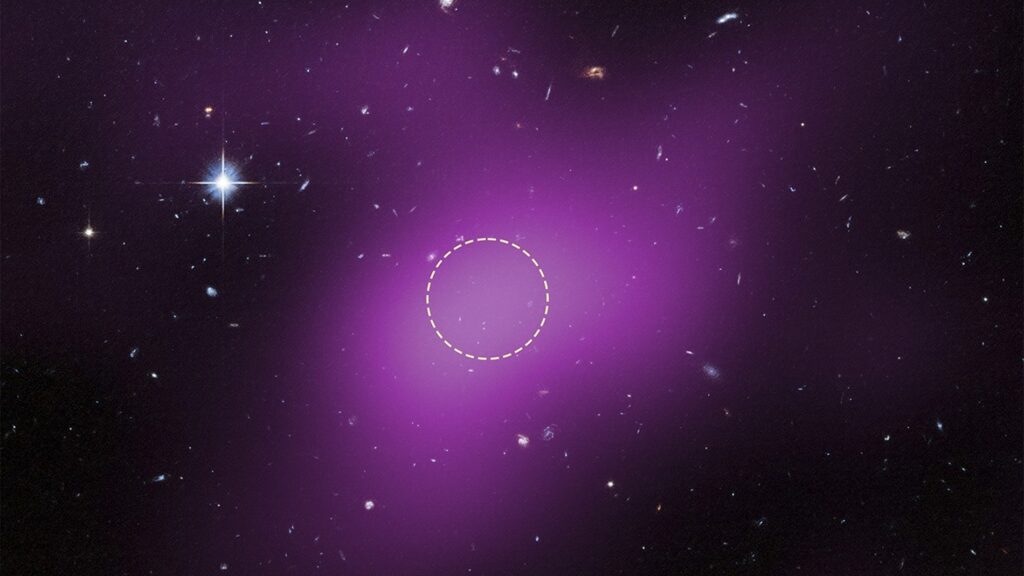
Cloud-9 located approximately 16 million light-years from Earth. Magenta represents VLA radio data detecting hydrogen gas; the dashed circle marks where Hubble's Advanced Camera for Surveys confirmed the absence of stars, proving this is a starless gas cloud dominated by dark matter rather than a dim dwarf galaxy. Visible objects are background galaxies.

Cloud-9: The Failed Galaxy That Proves Dark Matter Theory Right

Dr. Alejandro Benitez-Llambay, principal investigator of the Cloud-9 discovery. Image credit: Dr. Alejandro Benitez-Llambay How Hubble’s dark matter-dominated gas cloud offers a rare window into cosmic structure In the vast cosmic tapestry where galaxies blaze with the light of billions of stars, astronomers have discovered something profoundly different: a starless ghost. Known as Cloud-9, this

Cloud-9: The Failed Galaxy That Proves Dark Matter Theory Right Read More »

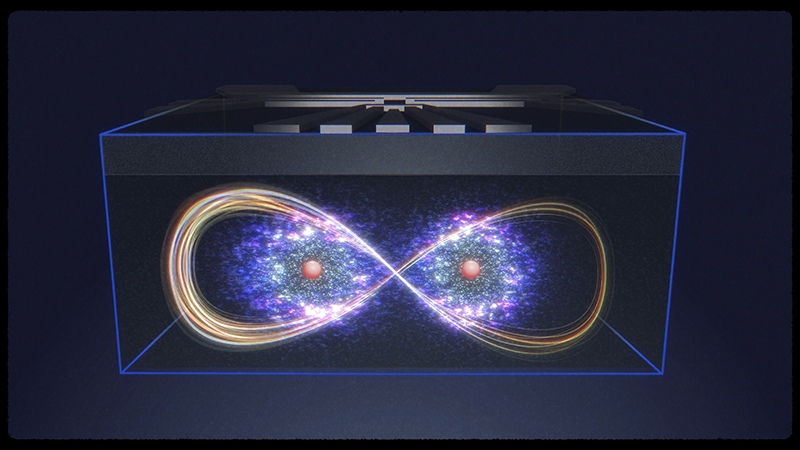
Artist's visualization of remotely entangled nuclear spins coupled via electron-mediated geometric gates.

A Twenty-Nanometer Breakthrough: Electron-Mediated Coupling Advances Silicon Qubit Scaling

The race to build a practical quantum computer has produced numerous competing technologies, each with distinct advantages and limitations. Among these approaches, nuclear spin-based quantum computing in silicon stands out for its compatibility with existing semiconductor manufacturing and…

A Twenty-Nanometer Breakthrough: Electron-Mediated Coupling Advances Silicon Qubit Scaling Read More »